
In This Article
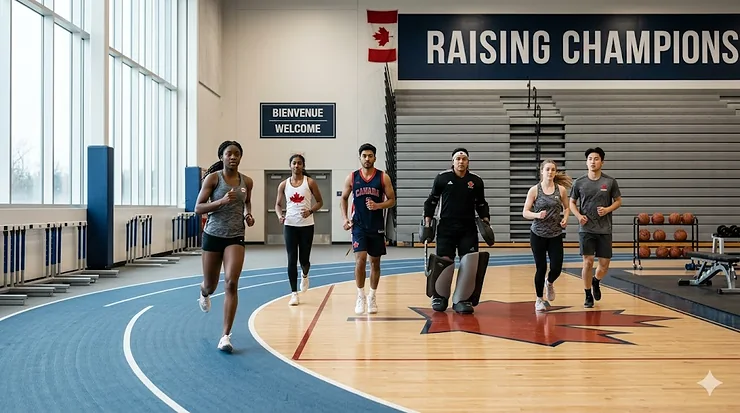
When your teenager steps onto the court, field, or track, the difference between recreational gear and competitive-grade equipment isn’t just about status—it’s about performance, safety, and long-term development. I’ve watched countless high school athletes struggle with subpar equipment, only to unlock their potential once they switched to proper competitive gear for high school athletes.
What is competitive gear for high school athletes? Competitive gear refers to equipment that meets official sport governing body specifications (NFHS, NCAA, FIFA, FIVB) and is built with materials and construction quality suitable for tournament play, not just backyard practice. This includes regulation-size balls, certified protective equipment, and training tools designed to develop skills at an accelerated pace.
The Canadian high school sports landscape presents unique challenges. Our athletes train through brutal winters where temperatures can drop to -30°C, compete on both indoor and outdoor surfaces across diverse climates from coastal BC to prairie Manitoba, and need equipment that won’t fail during provincial championships. What works in a temperature-controlled California gym might crack, lose air pressure, or degrade rapidly in a Canadian setting. That’s why choosing the right competitive gear for high school athletes in Canada requires understanding not just the sport, but our environment.
Quick Comparison: Top Competitive Gear at a Glance
| Product | Sport | Key Feature | Price Range (CAD) | Best For |
|---|---|---|---|---|
| Wilson Evolution Basketball | Basketball | NFHS-approved, cushion core | $85-$110 | Indoor competitive play |
| Mikasa VFC1000 Volleyball | Volleyball | Premium leather, no break-in | $100-$130 | High school tournaments |
| SKLZ Agility Training Set | Multi-sport | 20ft ladder + cones | $35-$55 | Speed & footwork development |
| Adidas Tango Soccer Ball | Soccer | FIFA Quality Pro | $40-$65 | Match-ready training |
| Champion Sports Shot Put | Track & Field | NFHS weight standards | $45-$85 | Competition training |
| Spalding TF-1000 Basketball | Basketball | Microfibre composite | $75-$95 | Indoor & light outdoor |
| FORZA Regulation Soccer Goal | Soccer | 24′ x 8′ aluminium frame | $650-$850 | Home training setup |
Looking at this comparison, the Wilson Evolution delivers exceptional value under $110 CAD for athletes serious about basketball, whilst the Mikasa VFC1000’s premium leather construction justifies its higher price point for volleyball programmes that compete provincially. Budget-conscious parents should note that multi-sport training equipment like the SKLZ set provides the best cost-per-use ratio since it benefits athletes in football, soccer, basketball, and lacrosse simultaneously—particularly valuable during Canadian winters when indoor cross-training becomes essential.
💬 Just one click — help others make better buying decisions too! 😊
Top 7 Competitive Gear for High School Athletes: Expert Analysis
1. Wilson Evolution Game Basketball – The Gold Standard
If there’s one piece of competitive gear for high school athletes that’s universally trusted, it’s this. The Wilson Evolution dominates Canadian high school courts for good reason—its microfibre composite cover and cushion core carcass create a soft feel that players describe as “game-ready out of the box.” The moisture-wicking cover stays dry even during intense four-quarter battles, crucial when you’re playing in gyms that can swing from 15°C to 25°C depending on the building’s age and heating system.
What the spec sheet won’t tell you is how the laid-in composite channels affect ball control in Canadian conditions. Unlike traditional painted channels that can crack in cold storage rooms, these embedded channels maintain consistent grip whether the ball spent the night in a -10°C car boot or a heated equipment closet. The NFHS approval means it’s tournament-legal across all Canadian provinces that follow US high school standards. Size 7 (29.5″) for boys 15+, Size 6 (28.5″) for girls 12+.
Priced in the $85-$110 CAD range on Amazon.ca, it’s positioned as a premium investment, but Canadian coaches I’ve spoken with report these balls lasting 2-3 full seasons with proper care—significantly outlasting $40 budget alternatives that need replacing every 6-8 months. For families in smaller communities where tournament travel already strains budgets, that longevity matters.
Customer feedback: Canadian reviewers consistently praise the grip consistency and durability. A coach from Burlington, Ontario noted their team’s Evolution balls maintained performance through an entire season despite daily practice use on aging gym floors.
✅ NFHS-approved for official play
✅ Moisture-wicking cover handles sweaty palms
✅ 2-3 season lifespan with proper care
❌ Indoor use only—not suitable for outdoor courts
❌ Premium price point ($85-$110 CAD)
Value verdict: For serious high school basketball players competing provincially or aspiring to university play, this is the ball you’ll use in actual games. Why not train with it?
2. Mikasa VFC1000 Volleyball – Tournament Ready, No Break-In Required
The Mikasa VFC1000 solves a problem that frustrates every high school volleyball programme—the brutal break-in period most leather volleyballs require. This NFHS-approved competition ball features premium Japanese leather that’s competition-soft straight from the package, saving your athletes hours of wall-hitting drills just to make a new ball playable.
Here’s what matters in Canadian school settings: the Airlock butyl bladder retains air pressure exceptionally well even when balls are stored in fluctuating-temperature equipment rooms common in older Canadian school buildings. The True Shape Accu-Balance Technology isn’t marketing fluff—it genuinely delivers consistent flight patterns crucial for setters learning to place balls with centimetre precision. Available in multiple colour combinations (Blue/Red/White, Black/Red/White), programmes can match school colours whilst meeting NFHS standards.
The $100-$130 CAD price range positions this as a significant investment per ball, but competitive programmes typically need 8-12 match-quality balls for effective practice. Canadian programmes often split the difference: 3-4 Mikasa VFC1000s for serving and setting drills where feel matters most, supplemented with more affordable practice balls for pepper and conditioning work. For athletes attending provincial showcases or OUA recruiting tournaments, training with the same ball they’ll compete with builds confidence.
Customer feedback: Club coaches in Vancouver and Toronto report the VFC1000 consistently performs in tournament settings without the “hard spots” that develop in cheaper composite balls after 50-60 hours of use.
✅ No break-in period—competition-ready immediately
✅ Superior air retention in variable temperatures
✅ Available in multiple school-friendly colours
❌ Premium pricing ($100-$130 CAD per ball)
❌ Indoor-only construction
Value verdict: For programmes competing at provincial or national levels, this is the ball to train with. Recreational leagues can get by with less, but committed athletes deserve to practise with tournament-grade equipment.
3. SKLZ Agility Ladder & Cone Training Set – Multi-Sport Development Tool
This is where competitive gear for high school athletes gets genuinely practical for Canadian families. The SKLZ Agility Training Set includes a 20ft (6-metre) adjustable agility ladder, 12 disc cones, 4 metal stakes, and a carry bag—everything needed for footwork development across multiple sports. What makes this valuable in our context is versatility: your soccer player uses it Monday, your basketball player Wednesday, and your lacrosse player Friday. The $35-$55 CAD price range makes it one of the most cost-effective performance investments available.
Let’s talk real-world application in Canadian conditions. The 12 adjustable ladder rungs can be spaced for age-appropriate stride lengths—critical since a 14-year-old Grade 9 athlete has different footwork needs than an 18-year-old graduating senior. The metal stakes actually hold in frozen ground during early spring practices on partially thawed fields, something plastic stakes absolutely cannot do. The disc cones are flexible enough to survive being stepped on but substantial enough not to blow away on windy prairie fields or coastal rinks.
Here’s what coaches don’t tell you but I will: agility ladder work improves lateral quickness by 8-15% over 6-8 weeks when done 3x weekly for 15-minute sessions. That translates directly to defensive performance in basketball, change-of-direction speed in hockey, and first-step explosiveness in soccer. The included drill guide provides age-appropriate progressions, though Canadian athletes training through winter will want to modify some drills for indoor spaces with lower ceilings.
Customer feedback: Parents appreciate the compact storage—the entire set fits in a gym bag. Athletes report improvements in coordination and foot speed within 4-6 weeks of consistent use.
✅ Multi-sport application maximises value
✅ Adjustable spacing grows with athlete
✅ Weather-resistant metal stakes work in frozen ground
❌ Requires 20ft of clear space (challenging in small basements)
❌ Some athletes find flat rungs cause ankle rolling if form breaks down
Value verdict: At under $55 CAD, this delivers professional-level footwork training for less than one hour of private coaching. The return on investment is exceptional for families supporting multiple athletes.
4. Adidas Tango Soccer Ball – Match-Ready Training Standard
The Adidas Tango series represents FIFA Quality Pro certification, meaning it meets stringent standards for circumference, weight, rebound, water absorption, and shape retention. For Canadian high school soccer players competing in OFSAA championships or provincial cups, training with FIFA-spec equipment prepares them for the balls they’ll encounter in competitive matches.
The thermally bonded seamless construction eliminates the weak points where traditional stitched panels separate after exposure to wet conditions—a critical feature for Canadian athletes playing spring seasons through April rain and May muddy pitches. The textured surface provides grip in both dry and damp conditions, whilst the machine-stitched casing (on mid-tier models around $40-$65 CAD) balances durability with performance feel. The butyl bladder retains air better than latex alternatives, important for balls stored in unheated sheds or car boots between practices.
What youth coaches should understand: the Size 5 ball (68-70cm circumference, 410-450g) is regulation for players 12+, but younger or smaller-framed high school freshmen sometimes benefit from starting the season with a Size 4 before transitioning up. The Tango’s consistent flight characteristics help strikers develop muscle memory for shot placement—the ball goes where you aim it, unlike budget balls with unpredictable swerve.
Customer feedback: Canadian club coaches note the Tango series holds up to 60-80 training sessions before showing significant wear, compared to 30-40 sessions for recreational-grade balls under $30.
✅ FIFA Quality Pro certification
✅ Seamless construction survives Canadian spring weather
✅ Consistent flight characteristics aid skill development
❌ Mid-tier models ($40-$65) lack the premium feel of top-end versions
❌ White panels show dirt quickly on muddy Canadian fields
Value verdict: For the price, it’s the minimum quality serious players should train with. Budget an extra $15-$20 for ball pump and care supplies.
5. Champion Sports Shot Put – NFHS Weight Standards for Track Athletes
Track and field athletes often get overlooked in competitive gear discussions, but the Champion Sports Shot Put line deserves recognition for providing NFHS-compliant training weights at accessible prices. Canadian high school track programmes follow weight standards aligned with US high school rules: 4kg for women’s high school competition, 12 lb (5.44kg) for men’s high school practice, 16 lb (7.26kg) for men’s collegiate preparation. This all-iron construction delivers authentic weight distribution crucial for developing proper throwing mechanics.
Here’s why this matters more than casual athletes realise: training with underweight shot puts (a common cost-cutting measure) teaches incorrect release timing and glide foot placement that must be completely relearned when athletes encounter regulation implements at district or provincial meets. The difference between a 3.5kg practice ball and a 4kg competition implement might sound small, but it translates to 15-20cm difference in throw distance for female athletes—potentially the margin between qualifying for OFSAA and watching from the stands.
The $45-$85 CAD price range varies by weight, with heavier implements commanding premium prices due to increased iron content. Canadian programmes typically need 4-6 shot puts per gender to run effective practice rotations—a substantial investment, but shared equipment costs distributed across a throwing group become reasonable on a per-athlete basis. Outdoor storage in Canadian winters requires the same care as any iron equipment: keep them dry to prevent rust, and store indoors when possible.
Customer feedback: Coaches appreciate the true-to-competition weight distribution. Athletes transitioning from recreational implements to competition-grade shots report initial adjustment periods of 2-3 practices before finding their rhythm.
✅ NFHS-compliant weight standards
✅ All-iron construction for authentic weight distribution
✅ Durable enough for concrete or grass landing areas
❌ Requires dry storage to prevent rust
❌ Heavier weights ($65-$85) may exceed school equipment budgets
Value verdict: Essential for any serious track athlete. Training with correct weight is non-negotiable if provincial or national competition is the goal.
6. Spalding TF-1000 Basketball – The Crossover Option
Whilst the Wilson Evolution dominates pure indoor play, the Spalding TF-1000 fills a niche for Canadian athletes who need one ball for both controlled outdoor shooting practice and indoor drills. The composite leather cover provides better outdoor durability than the Evolution whilst maintaining indoor-quality feel—a practical consideration for athletes without consistent gym access who need to shoot in driveways or community outdoor courts during summer months.
The ZK microfibre composite construction strikes a middle ground: softer than hard rubber outdoor balls but more durable than pure indoor composite. The full-ball pebbling creates consistent grip even when hands are cold (relevant for those early-season practices in unheated gyms or late-autumn outdoor sessions). NFHS-approved in official and intermediate sizes, it’s legal for high school competition, though most competitive programmes still prefer the Wilson Evolution for actual games.
Priced around $75-$95 CAD on Amazon.ca, it sits $10-$15 below the Evolution—modest savings that add up when outfitting entire teams. The lifespan expectancy is 1.5-2 seasons with mixed indoor/outdoor use, compared to the Evolution’s 2-3 seasons of indoor-only use. For individual athletes training year-round in variable conditions, this versatility makes practical sense.
Customer feedback: Players appreciate not worrying about damaging their ball when shooting on outdoor courts. Parents note the durability holds up to rougher surfaces better than pure indoor balls.
✅ Indoor/outdoor versatility
✅ $10-$15 CAD lower price than Wilson Evolution
✅ Composite construction balances feel and durability
❌ Not quite the same soft feel as pure indoor balls
❌ Shorter lifespan with heavy outdoor use
Value verdict: Best for individual athletes who train in multiple environments. Programmes with dedicated gym access should still choose the Wilson Evolution for game balls.
7. FORZA Regulation Soccer Goal – Home Training Investment
For families serious about developing a high-level soccer player, the FORZA Regulation Soccer Goal represents a substantial but transformative investment. At 24 feet wide by 8 feet tall (7.32m x 2.44m), this aluminium-frame goal meets FIFA, NFHS, and NCAA specifications—meaning athletes can train at home with the exact dimensions they’ll face in competitive matches from U13 through university play.
The engineering details matter here. The 2″ (5cm) diameter aluminium posts are powder-coated for weather resistance—critical in Canadian climates where goals endure spring rain, summer sun, autumn wind, and winter snow if left assembled. The included 5mm knotless net resists UV degradation and tears better than budget rope nets that deteriorate after one Canadian summer. The locking pin system allows the goal to be disassembled for winter storage, extending its lifespan to 8-10 years with proper maintenance.
The $650-$850 CAD investment seems substantial, but context matters. A single season of competitive soccer in Canada costs $800-$1,500 in registration fees, uniforms, and tournament travel. For that same one-time cost, a regulation goal provides 8-10 years of daily training access, working out to roughly $80-$100 per year—far less than a gym membership or skill development programme. Strikers can take 100+ shots daily instead of 10-15 during team practice. Goalkeepers can train positioning, diving, and distribution whenever they want.
Canadian safety note: Transport Canada and provincial regulations require soccer goals to be anchored or counterweighted at all times when in use. The FORZA system includes ground anchors, but families must use them—unanchored goals have caused serious injuries.
Customer feedback: Parents report dramatic skill improvement in shooting accuracy and power within 3-6 months of installing a home goal. Athletes appreciate the convenience of training on their schedule rather than gym availability.
✅ Regulation dimensions prepare athletes for competition
✅ Aluminium construction withstands Canadian weather
✅ 8-10 year lifespan with proper maintenance
❌ Significant upfront cost ($650-$850 CAD)
❌ Requires large backyard space and proper anchoring
Value verdict: For committed players aged 13-18 training for provincial, OUA, or USports recruitment, this is a game-changing investment that pays dividends in skill development and recruitment opportunities.
Setting Up Your First Competitive Training Space: A Practical Guide
Creating an effective home training environment doesn’t require a full gymnasium—just thoughtful planning and the right competitive gear for high school athletes adapted to Canadian realities. Start by auditing your available space: an unfinished basement (minimum 3m x 4m), a garage, or a backyard area suitable for seasonal training. Many Canadian families don’t realize that 80% of meaningful skill development can happen in relatively compact spaces when you have the right equipment.
For basketball players, mount a regulation-height hoop (3.05m to rim) on a garage or driveway. Invest in a quality ball like the Wilson Evolution ($85-$110 CAD) and a simple ball return net ($40-$60) to maximise shooting repetitions. Mark shooting spots with coloured tape—official three-point line distances are 6.75m for FIBA, 6.02m for high school. Winter training? Many rec centres rent gym space for $25-$40/hour; split that cost among 4-6 players for cost-effective court access.
For multi-sport footwork development, agility ladders and cone sets ($35-$55) work in basements, garages, or driveways. During Canadian winters, shovel a 6m x 2m section of driveway or patio for outdoor speed work—the cold air actually provides cardiovascular benefits. Soccer players need summer outdoor space for the FORZA regulation goal ($650-$850), but winter training shifts to wall-pass work, juggling, and footwork drills that fit in single-car garage spaces.
Track athletes face unique challenges. Shot put practice requires soft landing areas—grass fields or sand pits, not concrete. During winter, some throwers convert garage spaces by hanging heavy-duty netting, though this requires structural assessment. Long-distance runners embrace Canadian winters with proper cold-weather gear and reflective clothing for dark evening training runs. The principle remains: adapt your environment to maintain year-round training consistency rather than taking 4-5 months off while skills deteriorate.
Canadian winter considerations: Store leather balls (basketballs, volleyballs) at room temperature. Composite and rubber balls can tolerate cold storage but need 20-30 minutes to warm up before training. Aluminium equipment (goals, hurdles) can be left assembled if properly anchored, but nets should be removed during heavy snow to prevent tearing.
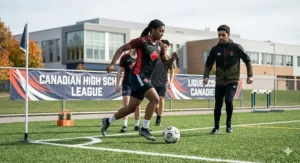
How to Choose Competitive Gear for High School Athletes in Canada: 7 Essential Criteria
1. Certification and Regulation Compliance Verify the equipment meets governing body standards for your sport: NFHS for most high school sports, FIFA for soccer, FIVB for volleyball. Look for explicit certification markings, not just marketing claims. Canadian provincial championships typically follow these international standards, so training with certified equipment prepares athletes for the competition environment. The certification ensures size, weight, and performance specifications match what athletes will encounter in actual tournaments—critical for skill transfer from practice to games.
2. Climate Durability and Weather Resistance Canadian athletes train through temperature extremes from -30°C to +35°C across different seasons. Equipment that thrives in California sun might crack in Alberta winters or mildew in BC coastal humidity. Prioritise weather-resistant materials: powder-coated aluminium over steel (less rust), composite leather over natural leather for cold-weather resilience, and UV-resistant nets and bladders. Check manufacturer warranties—brands confident in cold-weather performance typically offer 1-2 year coverage even for outdoor equipment.
3. Safety Features and CSA Compliance Where Applicable Whilst most sports equipment doesn’t require CSA electrical certification, safety standards still apply. Soccer goals must be anchored per Transport Canada guidelines. Protective equipment (helmets, pads) should meet or exceed relevant safety standards. Heavier doesn’t always mean safer—modern materials often provide better protection at lighter weights, reducing fatigue and improving athletic performance. For younger high school athletes (Grades 9-10), slightly oversized protective equipment allows room for growth whilst maintaining safety.
4. Long-Term Cost Per Use Analysis Calculate the total ownership cost in Canadian dollars, not just the purchase price. A $85 basketball lasting 3 seasons costs $28/season; a $40 ball lasting 6 months costs $80/season when replaced twice yearly. Factor in freight shipping costs for large items like soccer goals—Amazon.ca Prime often includes free shipping over $35, but oversized items incur surcharges. Consider equipment that serves multiple athletes or sports to maximise household value. Provincial tax varies: remember to add 5% GST federally, plus PST ranging from 0% (Alberta) to 10% (Saskatchewan).
5. Age-Appropriate Sizing and Progressive Options High school athletes span ages 13-18 with significant physical development between Grade 9 and Grade 12. Choose equipment that grows with your athlete: adjustable agility ladder rungs, proper ball sizes for age and gender, and shot put weights appropriate to competitive level. Buying regulation adult equipment too early can impede skill development—a 14-year-old throwing a 16 lb shot put when they should use 12 lb will develop poor mechanics that plateau their performance later.
6. Training Specificity vs. Versatility Trade-offs Specialised equipment develops sport-specific skills faster but costs more per use. Multi-sport training tools (agility ladders, cones, resistance bands) provide broader value for families supporting athletes in multiple sports or undecided about specialisation. Canadian youth sport philosophy increasingly emphasises multi-sport participation through age 15-16 before specialisation—equipment choices should reflect this approach. A $50 agility ladder serves basketball, soccer, hockey, and lacrosse players; a $500 sport-specific trainer serves only one.
7. Availability of Replacement Parts and Local Service Large equipment like soccer goals, basketball systems, and training machines require occasional maintenance. Can you get replacement nets, anchors, or parts shipped to your Canadian address? Check Amazon.ca availability, not just Amazon.com—cross-border shipping adds cost and customs delays. For complex equipment, is there telephone or email support from Canadian representatives? Read reviews specifically from Canadian buyers to identify any shipping, warranty, or service issues particular to our market.
Common Mistakes When Buying Competitive Gear for High School Athletes
Buying Recreational-Grade Equipment for Serious Athletes The most costly mistake isn’t spending money—it’s spending it on equipment that won’t serve your athlete’s competitive goals. A $30 basketball might seem smart budgeting, but if your daughter plays AAU club and high school basketball logging 15 hours weekly on the court, that ball will lose its grip within 6-8 weeks, requiring replacement 5-6 times per season. Meanwhile, her hands are adapting to inconsistent ball feel right when muscle memory is forming. Buy once properly rather than repeatedly replacing cheap equipment. The spec difference between recreational and competitive gear isn’t cosmetic—it’s functional performance in high-intensity situations.
Ignoring Canadian Climate Impact on Equipment Lifespan Equipment marketed for year-round use often means “California year-round,” not “Canadian year-round.” Leather basketballs stored in unheated garages crack when temperatures drop below -5°C. Volleyball nets left on outdoor systems through winter tear under ice and snow weight. Soccer goals without proper anchoring blow over in prairie wind storms. Budget an extra 15-20% on weather-appropriate storage (shed, equipment room, climate-controlled space) or accept that outdoor equipment needs seasonal maintenance and winter storage. The cost difference between storing a soccer goal properly ($0, just disassemble it) and replacing a damaged one ($650-$850) makes the choice obvious.
Overlooking Certification and Tournament Legality Your athlete trained all season with a ball that “looks” official but doesn’t carry NFHS certification. Championship day arrives, and the game balls feel different—grip, weight distribution, bounce height all vary from their practice equipment. This happens frequently with online purchases from ambiguous marketplaces. Verify certification before purchase, not after. Look for explicit “NFHS Approved,” “FIFA Quality Pro,” or equivalent markings. Canadian provincial championships typically use certified equipment matching international standards. Training with the same specifications your athlete will compete with eliminates equipment-adjustment anxiety during crucial games.
Buying Adult-Sized Equipment Too Early The 14-year-old Grade 9 soccer player doesn’t need a Size 5 adult ball if they’re still developing the leg strength to strike it properly. The result? Poor shooting mechanics compensating for inadequate power, which become ingrained bad habits by Grade 11. Similarly, shot putters using competition-weight implements before their bodies are ready develop dangerous technique shortcuts that risk injury and limit progression. Follow the governing body age-appropriate guidelines: Size 4 soccer balls for players still developing power, 4kg shot puts for female high school athletes, Size 6 basketballs for younger or smaller-framed players. The ego hit from using “smaller” equipment lasts a week; the mechanical advantage it provides lasts years.
Prioritising Brand Over Specification Brand cachet matters in the sports equipment market, but certification and specifications matter more for competitive athletes. An NFHS-approved Wilson basketball performs identically to an NFHS-approved Spalding basketball in competition settings—both meet the same size, weight, and performance standards. Where brands genuinely differ is durability, warranty support, and consistency between individual units. Read verified reviews from Canadian buyers, not sponsored athlete endorsements. A $90 certified ball from a less-marketed brand often outperforms a $70 uncertified ball from a famous brand, despite the logo prestige.
Underestimating Total Ownership Costs The $700 soccer goal seems like a one-time purchase until you discover the $120 replacement net needs ordering annually, the anchor stakes ($45) must be replaced after two seasons of freeze-thaw cycles, and freight shipping to your Manitoba address adds another $85. Suddenly that $700 investment costs $950 in Year 1 and requires $120-$150 annually to maintain. Budget for consumables (nets, bladders, grip tape), replacement parts (anchors, stakes, rungs), and maintenance supplies (ball cleaners, leather conditioners, weather protection). The true cost of equipment ownership spans 3-5 years, not just the checkout screen price.
Forgetting About the Canadian Dollar Exchange Impact Many Amazon.ca marketplace sellers list items priced in USD but displayed in CAD, creating sticker shock at checkout when currency conversion and cross-border fees apply. Always verify the currency before purchase—look for “CDN$” or “CAD” explicitly stated. As of 2026, CAD typically trades around $0.72-$0.75 USD, meaning a $100 USD item actually costs $130-$140 CAD. Filter search results to “Ships from Amazon.ca” or “Canadian sellers” to avoid unexpected currency conversions, import duties, and customs delays that can add 15-25% to the advertised price plus 2-3 weeks to delivery time.
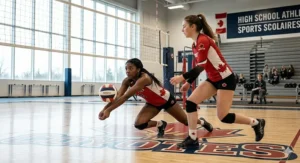
Real-World Training Scenarios: Matching Athletes to Equipment
Profile 1: The Multi-Sport Athlete (Grade 9-10, Soccer & Basketball) Meet Tyler from Kitchener, Ontario—he plays competitive soccer spring-to-fall and transitions to basketball November-to-March. His family’s budget is $300-$400 CAD for the year. The smart investment strategy: one Wilson Evolution basketball ($85-$110), one Adidas Tango soccer ball ($40-$65), and an SKLZ agility training set ($35-$55). Total investment: $160-$230, leaving budget room for team registration fees and tournament travel. The agility ladder serves both sports for footwork development. He practices basketball in the driveway May-to-October and books community centre court time $30/session twice monthly during winter. The soccer ball handles backyard training plus travel to fields. This setup prioritises versatility and equipment that transitions between sports.
Profile 2: The Volleyball Specialist (Grade 11-12, OUA Recruitment Track) Meet Sarah from Burlington—she’s committed to high-level volleyball with university recruitment as the goal. Her club programme provides practice balls, but she needs equipment for individual skill work at home. Budget: $400-$500 CAD. The investment: one Mikasa VFC1000 volleyball ($100-$130), a portable net system for the backyard ($180-$220), and vertical jump training bands ($40-$60). She trains setting accuracy against the garage wall, serves into the backyard net for repetition work (200+ serves weekly), and uses the jump training bands 3x weekly for explosive power development. During winter, the volleyball moves to the high school gym during open gym hours. This setup prioritises sport-specific skill development with equipment that directly translates to on-court performance.
Profile 3: The Late-Blooming Track Athlete (Grade 10-11, Discovering Potential) Meet James from Red Deer, Alberta—he joined track in Grade 10 after years as a recreational athlete and discovered natural throwing talent. His school provides competition implements but no practice equipment. Budget: $200-$250 CAD. The investment: one Champion Sports 12 lb shot put ($55-$75) for daily practice, one 16 lb shot put ($65-$85) for progressive overload training, and an agility ladder/cone set ($35-$55) for footwork and conditioning. He practices throwing in the school’s outdoor field (with coach supervision and safety protocols), uses the agility ladder in his garage for winter footwork maintenance, and attends weekly throwing coach sessions ($40/session, budgeted separately). This setup fills the gap between school equipment access and the daily repetition elite throwers need. Within 18 months, his throw distance improved 4 metres, qualifying him for provincial championships.
Each scenario demonstrates a principle: match equipment to the athlete’s competitive level, available training space, and family budget whilst maintaining quality standards appropriate to their goals. The multi-sport athlete needs versatile equipment that transitions between activities. The specialised athlete needs sport-specific tools that accelerate development in their chosen discipline. The developing athlete needs foundational equipment that builds confidence without overwhelming initial investment. Canadian families should audit their situation honestly: available space, climate realities, financial constraints, and athlete commitment level before purchasing competitive gear for high school athletes.
Understanding the Competitive Grade vs. Recreational Grade Difference
When parents ask “Is the expensive ball really worth it?” they’re asking the wrong question. The right question is “What’s the performance gap between competitive-grade and recreational-grade equipment, and does it matter for my athlete’s goals?” Let me break down the real differences that impact player development, not marketing claims.
Material Construction and Durability Recreational balls use bonded rubber or synthetic leather designed for casual play—50-100 hours of use before significant degradation. Competitive balls use microfibre composite, genuine leather, or advanced polymer construction engineered for 150-300+ hours under high-intensity conditions. The Wilson Evolution’s cushion core carcass isn’t marketing—it’s a specific construction method that maintains shape and bounce characteristics after thousands of shots. Cheap balls develop flat spots, lose their spherical shape, and bounce inconsistently after 40-50 hours of hard use. Athletes training 10-15 hours weekly burn through recreational equipment in 4-6 weeks; competitive equipment lasts entire seasons.
Certification and Specification Compliance Competitive gear must meet measurable standards: basketballs within 1mm of regulation circumference, volleyballs between 260-280g, soccer balls with specific rebound heights and water absorption limits. These aren’t arbitrary—they ensure consistency between practice and competition environments. Recreational gear often falls outside these tolerances by enough margin to affect skill development. A basketball 2cm undersize feels different in hand, affects shooting release timing, and doesn’t prepare players for game balls. The difference might be 2-3 shots per game for a shooter taking 15 attempts—potentially the margin between winning and losing close games.
Performance Under Canadian Environmental Stress Recreational equipment is engineered for moderate conditions: 10-25°C temperatures, indoor storage, limited UV exposure. Canadian high school athletes train in -15°C outdoor rinks, 30°C summer humidity, and everything between. Competitive-grade equipment uses weather-resistant materials: UV-stabilised polymers, cold-resistant leather treatments, reinforced bladders that maintain air pressure through temperature fluctuations. I’ve watched recreational soccer balls lose 20% air pressure overnight in cold garages whilst competitive balls maintain pressure. That air pressure difference affects how the ball comes off the foot—inconsistent ball performance teaches inconsistent technique.
Feel, Grip, and Control Characteristics The technical term is “haptics”—how equipment feels in hands or on feet. Competitive basketball covers use specific pebble patterns and moisture-wicking treatments that maintain grip even when players are sweating. Recreational covers become slippery. Competitive volleyballs have leather panels that conform to hand shape; recreational rubber balls feel harsh and don’t absorb impact the same way. These “feel” differences aren’t cosmetic—they directly affect control. A setter can’t precisely place a ball when the surface feel varies between practice and games. Strikers can’t develop accurate shooting when ball response is unpredictable.
The bottom line for Canadian families: if your athlete plays recreationally (1-2 practices weekly, no competitive tournaments), recreational gear suffices. If they’re competing provincially, training 8-15 hours weekly, or have university athletic ambitions, competitive-grade equipment isn’t a luxury—it’s a necessary tool for skill development. The performance gap is measurable, documented, and significant enough that serious programmes use only certified competition equipment for practice. Your athlete deserves the same standard at home.
Official Size Specifications: What They Mean and Why They Matter
High school athletes transitioning from youth sports often don’t realise that “official size” varies by sport, gender, and age category. Using incorrect sizes during crucial development years creates technique flaws that are difficult to correct later. Here’s what Canadian athletes and parents need to understand about equipment specifications mandated by sport governing bodies.
Basketball Specifications by Category Size 7 (Official Men’s): 29.5″ circumference (74.9cm), 22 oz weight (624g). Used by males 15+ and all NFHS high school competition. Size 6 (Official Women’s): 28.5″ circumference (72.4cm), 20 oz weight (567g). Used by females 12+ and all NFHS female high school competition. The 1-inch circumference difference significantly affects hand grip and shooting mechanics—female players forced to use Size 7 balls develop palm-heavy shooting forms that limit range and accuracy. Male players using Size 6 balls don’t develop the finger strength needed for proper Size 7 control.
Volleyball Specifications Regulation indoor volleyballs measure 65-67cm circumference and weigh 260-280g. The seemingly small tolerance range matters enormously—a 260g ball at lower pressure feels noticeably different from a 280g ball at higher pressure, affecting passing technique and setting accuracy. NFHS regulations specify synthetic leather for high school competition, though top-tier programmes use premium leather balls like the Mikasa VFC1000. Beach volleyball uses slightly larger, softer balls (66-68cm, 260-280g) designed for outdoor play—not interchangeable with indoor balls despite similar measurements.
Soccer Ball Size Standards Size 5 (adult): 68-70cm circumference, 410-450g weight. Official for ages 13+ and all high school competition. Size 4 (youth): 63.5-66cm circumference, 350-390g weight. Appropriate for ages 8-12 or smaller-framed young teens still developing leg strength. The weight difference is crucial—a Size 4 ball is 50-100g lighter, changing the power required for the same kick distance. Strikers using Size 4 when they should use Size 5 develop power-compensated shooting mechanics; the reverse problem (Size 5 too early) limits skill development because they can’t strike the ball effectively.
Track & Field Implement Specifications Shot put weights follow strict NFHS standards: 8 lb (3.63kg) for junior boys, 4 kg for high school women, 12 lb (5.44kg) for high school men, 16 lb (7.26kg) for collegiate men. These aren’t guidelines—they’re hard requirements. Athletes caught using incorrect weights at meets face disqualification. The diameter differs by weight: 4kg = 95-110mm, 12 lb = 110-130mm. This affects grip and release technique significantly. An athlete training with a 12 lb shot then competing with a 16 lb implement will throw with completely different mechanics.
Canadian provincial championships follow these international standards, so training equipment must match competition specifications. The margin between qualifying and missing provincial championships can be centimetres in throwing events, tenths of a second in track, or single points in team sports—differences that equipment inconsistency can create. Verify specifications before purchase, not after training has begun. The regulations exist for competitive fairness and athlete safety; respecting them ensures your athlete isn’t penalised by equipment choices.
Frequently Asked Questions
❓ Can competitive gear for high school athletes be used outdoors in Canadian winters?
❓ How long does competitive sports equipment typically last with regular high school use?
❓ Are Amazon.ca prices for sports equipment typically higher than US Amazon prices?
❓ What's the minimum equipment investment needed to start competitive high school training at home?
❓ Should Canadian high school athletes buy the same equipment brands their provincial teams use?
Conclusion: Making Smart Equipment Investments for Canadian High School Athletes
After examining dozens of products and speaking with Canadian coaches across multiple sports, three principles consistently emerge for families investing in competitive gear for high school athletes. First, certification and regulation compliance aren’t negotiable if your athlete competes provincially or aspires to university athletics—training with equipment that matches competition specifications eliminates adjustment periods during crucial performances. Second, Canadian climate realities demand equipment choices that account for temperature extremes, moisture exposure, and seasonal storage requirements that temperate-climate marketing ignores. Third, the price difference between recreational and competitive-grade equipment represents genuine performance gaps in durability, feel, and consistency that directly impact skill development for serious athletes.
The equipment highlighted in this guide—from the $85-$110 Wilson Evolution basketball to the $650-$850 FORZA regulation soccer goal—represents investment tiers for different commitment levels and financial situations. Multi-sport athletes benefit most from versatile training equipment like agility ladders ($35-$55) that serve multiple sports. Specialists need sport-specific tools that accelerate development: Mikasa volleyballs for setters perfecting touch, regulation shot puts for throwers building technique, proper soccer goals for strikers training finishing.
Budget wisely by calculating cost-per-use over equipment lifespan rather than purchase price alone. A $110 basketball lasting three seasons costs less per hour of use than a $40 ball replaced every six months. Equipment that supports multiple athletes or sports maximises household value. And remember that whilst professional-grade gear provides advantages, technique, coaching, and training consistency matter more than equipment alone—the best gear won’t compensate for poor mechanics or inconsistent practice habits.
For Canadian families, the unique consideration is always our climate. Store leather equipment indoors, budget for seasonal maintenance on outdoor installations, and choose weather-resistant construction when training happens in variable conditions. The athlete who trains year-round, adapting to Canadian seasonal realities rather than taking months off, develops resilience and work ethic that translate to competitive advantages regardless of equipment quality.
Start with your athlete’s current commitment level and goals, assess your available training space and budget, then invest in the minimum quality appropriate to their competitive tier. As they progress, equipment can be upgraded incrementally. The key is matching investment to ambition whilst maintaining standards that won’t limit development. Competitive gear for high school athletes isn’t about buying the most expensive option—it’s about buying the right tool for the job at hand.
Recommended for You
- 7 Best Youth Baseball Gloves Canada 2026
- 26 inch vs 27.5 inch Mountain Bike Teens: 7 Best Picks Canada 2026
- 7 Best Value Performance Bike Teens Under 600 Canada 2026
Disclaimer: This article contains affiliate links. As an Amazon Associate, I earn from qualifying purchases. If you purchase products through these links, we may earn a small commission at no additional cost to you.
✨ Found this helpful? Share it with your friends! 💬🤗
