
In This Article
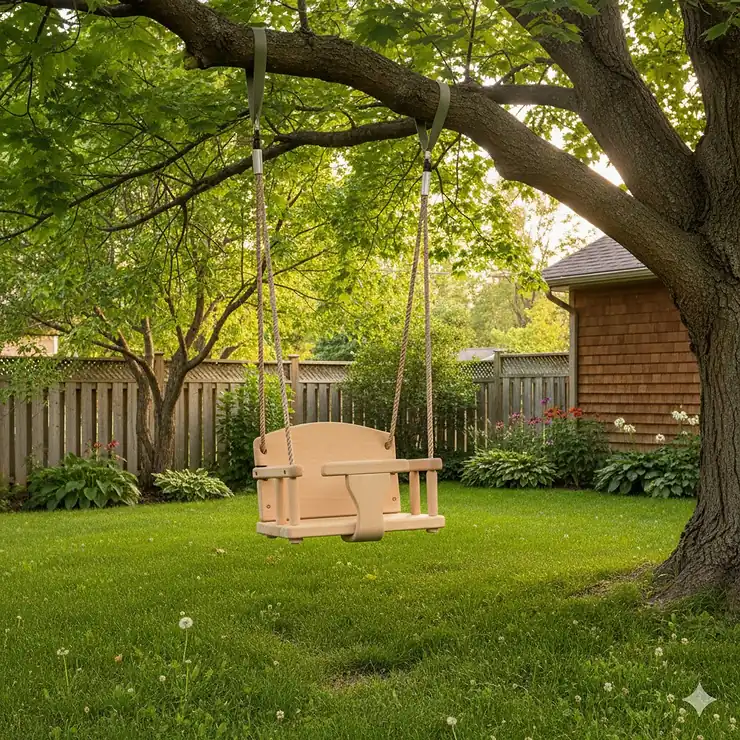
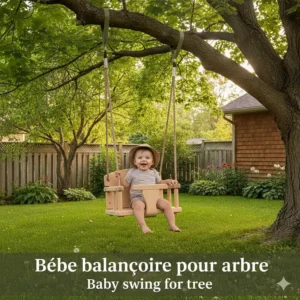
There’s something magical about watching your little one giggle with delight as they gently sway beneath the canopy of your backyard tree. For Canadian families blessed with sturdy trees, a baby swing for tree creates those timeless childhood memories without the need for bulky swing set frames.
Last summer, my neighbour installed a simple bucket swing beneath their massive oak tree, and within days, every toddler on the street was lining up for a turn. The setup cost less than half of what they would have spent on a standalone swing set, and honestly? It looked infinitely better nestled naturally among the branches.
Unlike traditional swing sets that dominate your yard space, a baby swing for tree blends seamlessly into your landscape while providing the same developmental benefits. Swinging helps babies and toddlers develop balance, coordination, and spatial awareness. According to research on playground equipment benefits, the rhythmic motion stimulates the vestibular system, which is crucial for motor skill development in young children.
But here’s the reality many parents discover too late: not every tree branch is suitable, and not every swing is safe. Canadian winters can be harsh, and the wrong materials will crack, fade, or become brittle after a single season. This comprehensive guide cuts through the marketing hype to help you choose a baby swing for tree that’s actually worth your money and, more importantly, will keep your child safe.
Quick Comparison Table: Best Baby Swings for Trees
| Product | Price (CAD) | Weight Capacity | Age Range | Key Feature |
|---|---|---|---|---|
| Little Tikes 2-in-1 Snug ‘n Secure | $37-$40 | 50 lbs | 9 months – 4 years | Adjustable T-bar system |
| Swurfer Coconut | $85-$110 | 50 lbs | 9 months – 3 years | Ergonomic shell design |
| Step2 Infant to Toddler | $45-$55 | 50 lbs | 9 months – 3 years | Weather-resistant ropes |
| Tree Swing Hanging Straps Kit | $25-$35 | 2200 lbs capacity | Universal | Stainless steel carabiners |
💬 Just one click – help others make better buying decisions too! 😊
Top 7 Baby Swing for Tree Products: Expert Analysis
1. Little Tikes 2-in-1 Snug ‘n Secure Swing
The Little Tikes 2-in-1 Snug ‘n Secure dominates the Canadian market for good reason. Available at Toys R Us Canada, Canadian Tire, and The Home Depot, this bucket-style baby swing for tree offers exceptional versatility as your child grows.
Key Specifications:
- Rotating T-bar for easy loading
- Adjustable shoulder straps
- Weight capacity: 50 lbs (22.7 kg)
Canadian Price Range: $37-$40 CAD
This swing transitions beautifully from infant to toddler mode. The T-bar and shoulder straps provide security for babies, then tuck underneath when your child outgrows them. Canadian buyers consistently praise its durability through harsh winters, with one Toronto parent noting it survived two years outdoors with minimal fading.
✅ Pros:
- Budget-friendly price point
- Grows with child from 9 months to 4 years
- Easy to find replacement parts in Canada
❌ Cons:
- Straps may wear after extended outdoor use
- T-bar can be tricky for some parents to operate
2. Swurfer Coconut Baby Swing
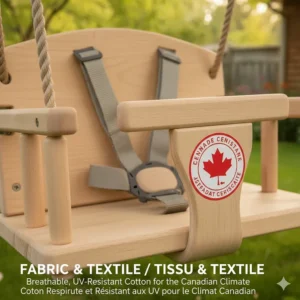
The Swurfer Coconut brings modern aesthetics to the baby swing for tree category. This ergonomically designed swing conforms perfectly to a baby’s natural body curvature, making it wildly popular among Canadian parents who value both safety and style.
Key Specifications:
- 3-point safety harness with quick-click locking
- Blister-free braided rope
- Foam-lined shell for comfort
Canadian Price Range: $85-$110 CAD on Amazon.ca
Available in multiple colours (blue, green, ivory), the Swurfer Coconut features soft fabric harness straps that feel gentler against baby’s skin than plastic alternatives. Canadian reviewers particularly appreciate the weather-resistant ABS plastic construction that handles temperature fluctuations from -30°C winters to +30°C summers.
✅ Pros:
- Premium ergonomic design
- Comfortable 3-point harness system
- Weather-resistant for Canadian climates
❌ Cons:
- Higher price point than basic bucket swings
- Requires separate hanging hardware purchase
3. Step2 Infant to Toddler Swing
The Step2 Infant to Toddler Swing delivers reliable performance at a mid-range price point. This bucket-style baby swing for tree features a secure restraint system and comfortable design that Canadian families trust.
Key Specifications:
- Secure bucket seat with restraint
- Weather-resistant rope included
- Suitable for most swing sets or trees
Canadian Price Range: $45-$55 CAD
Step2’s reputation for durability shines through in this model. The weather-resistant ropes handle Canadian winters admirably, though some British Columbia parents recommend bringing the swing indoors during the wettest months to extend its lifespan. The turquoise colour stays vibrant through multiple seasons.
✅ Pros:
- Mid-range pricing with quality construction
- Ropes included in package
- Easy to clean plastic surface
❌ Cons:
- Restraint system not as robust as premium models
- May require rope replacement after 2-3 years
4. Tree Swing Hanging Straps Kit (Heavy Duty 2200 lbs)
Every baby swing for tree installation requires proper hanging hardware, and the Tree Swing Straps Kit available on Amazon.ca provides professional-grade safety at consumer prices.
Key Specifications:
- 5-foot polyester straps
- 304 stainless steel carabiners
- Weight capacity: 2200 lbs
Canadian Price Range: $25-$35 CAD
These tree-friendly straps distribute weight across a wider surface than rope, protecting both your tree and ensuring longevity. The stainless steel carabiners resist rust even in humid coastal climates or during freeze-thaw cycles. Installation takes under 10 minutes with no drilling required.
✅ Pros:
- Protects tree bark from damage
- Universal compatibility with all swing types
- Includes carrying pouch for portability
❌ Cons:
- 5-foot length may be insufficient for very tall branches
- Requires two sets for a single swing seat
5. HOUSON Tree Swing Hanging Kit (5 Pack)
The HOUSON 5-pack Tree Swing Hanging Kit offers exceptional value for families installing multiple swings or wanting backup straps. This Canadian-available option provides everything needed for secure baby swing for tree installation.
Key Specifications:
- 100% polyester fiber construction
- Maximum load: 2200 lbs
- Length: 13.7 inches per strap
Canadian Price Range: $30-$40 CAD on Amazon.ca
The bulk packaging makes this ideal for cottages, playgrounds, or families with multiple swing locations. Extra stitching on metal ring loops prevents tearing, a critical safety feature that Canadian playground inspectors emphasize.
✅ Pros:
- Best value for multiple installations
- Extra reinforced stitching for durability
- Works with hammocks and various swing types
❌ Cons:
- Shorter length than some alternatives
- May require extension cords for larger trees
6. PANGAEA Tree Swing Hammock Hanging Kit
The PANGAEA Hanging Kit combines premium materials with thoughtful design for parents who refuse to compromise on safety. Available through Amazon.ca, this water-resistant system excels in Canada’s variable weather.
Key Specifications:
- Nylon straps (more durable than polyester)
- Rust-resistant nickel-plated carabiners
- 2200 lbs combined weight limit
Canadian Price Range: $35-$45 CAD
PANGAEA’s nylon straps outperform standard polyester in freezing conditions, maintaining flexibility even at -20°C. The wider strap design (1.5 inches) provides superior tree protection and weight distribution compared to rope or chain alternatives.
✅ Pros:
- Premium nylon construction
- Better cold-weather performance
- Eco-friendly and reusable
❌ Cons:
- Slightly higher price than basic straps
- Limited availability in physical stores
7. Gorilla Playsets High Back Full Bucket Swing
The Gorilla Playsets High Back Bucket Swing brings commercial playground quality to residential baby swing for tree installations. This polyethylene swing offers exceptional durability for Canadian families planning long-term use.
Key Specifications:
- Polyethylene construction
- Plastic-coated chains included
- Commercial-grade design
Canadian Price Range: $55-$70 CAD
Polyethylene’s superior UV resistance prevents the sun-fading common with cheaper plastics. The high back provides excellent support for younger children, while the plastic-coated chains eliminate pinch points that concern Canadian safety standards.
✅ Pros:
- Commercial-grade durability
- Excellent UV and weather resistance
- High back provides superior support
❌ Cons:
- Higher price point for basic bucket design
- Heavier than lightweight alternatives
✨ Don’t Miss These Exclusive Deals!
🔍 Take your backyard play experience to the next level with these carefully selected products available in Canada. Click on any highlighted item to check current pricing and availability on Amazon.ca. These tools will help you create authentic outdoor memories your family will love!
How to Choose the Perfect Branch for Your Baby Swing for Tree
Not all tree branches are created equal, and selecting the wrong one could lead to catastrophic failure. Here’s what Canadian arborists recommend when evaluating branches for baby swing for tree installations.
Branch Diameter Requirements
The golden rule: your branch must be at least 8 inches (20 cm) in diameter at the point of attachment. This substantial thickness ensures the branch can handle dynamic loads created by swinging motion. For reference, that’s roughly the size of a dinner plate.
Why this matters: A 25-pound toddler creates forces exceeding 100 pounds during vigorous swinging. Thinner branches may appear sturdy but will crack under repeated stress, especially after Canadian winter freeze-thaw cycles weaken wood fibers.
Ideal Branch Height
According to the International Association of Certified Home Inspectors, branches should be 10-15 feet (3-4.5 metres) off the ground. This height range provides adequate swing arc without creating dangerous fall heights. Higher branches might seem exciting, but they dramatically increase injury severity.
Canadian winters add complexity: Snow and ice accumulation can add hundreds of pounds to branch weight. A branch that’s marginal in summer could snap under winter load.
Minimum Distance from Trunk
Position your baby swing for tree attachment point where the swing will hang 3-5 feet (0.9-1.5 metres) away from the trunk. This clearance prevents dangerous collisions while ensuring you’re not using the weaker outer portion of the branch.
Tree Species That Work Best in Canada
Excellent Choices:
- Sugar Maple (Acer saccharum)
- Red Oak (Quercus rubra)
- White Oak (Quercus alba)
- Hard Maple varieties
Avoid These Species:
- Willow (brittle wood)
- Poplar (weak branch structure)
- Birch (splits easily)
- Pine/Spruce (brittle, angled branches)
- Elm (prone to disease)
According to Wikipedia’s entry on swings, hardwood trees have supported swings for centuries precisely because their dense wood structure handles dynamic loads effectively.
Branch Health Assessment
Before installing any baby swing for tree, inspect the entire branch carefully:
Red Flags to Avoid:
- Visible cracks or splits
- Areas of missing bark
- Fungal growth or soft spots
- Dead sections without leaves
- Excessive lean or bowing
- Insect damage or holes
Pro tip: Push hard on the branch. It shouldn’t flex noticeably or make creaking sounds. If you can move it by hand, it’s too weak for a swing.
Safe Installation Methods: Protecting Your Tree and Your Child
The way you attach a baby swing for tree determines both its safety and your tree’s long-term health. Two primary methods dominate Canadian installations, each with distinct advantages.
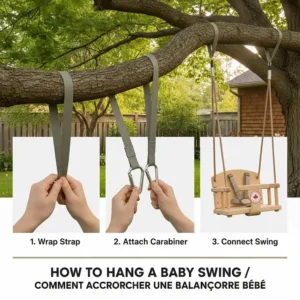
Method 1: Tree Straps (Recommended for Most Families)
Tree straps represent the gold standard for baby swing for tree installations. These wide fabric straps distribute weight evenly, preventing the bark damage that ropes and chains cause.
Installation Steps:
- Drape strap over branch at desired location
- Thread one end through the D-ring on opposite end
- Pull tight to cinch strap securely against branch
- Attach swing seat using heavy-duty carabiners
- Repeat for second strap
Key Advantage: Straps can be repositioned every few years as the tree grows, preventing girdling that eventually kills branches.
Canadian Consideration: In regions with significant temperature swings (looking at you, Prairie provinces), check strap tension monthly. Freeze-thaw cycles can cause loosening.
Method 2: Eye Bolt Installation (Permanent Solution)
Eye bolt installation creates rock-solid attachment points but permanently damages the branch. Use this method only if you’re certain about long-term placement.
Installation Steps:
- Drill vertical hole completely through branch (1/2 inch diameter minimum)
- Insert corrosion-resistant eye bolt
- Secure with washers and nuts on both sides
- Attach swing using carabiners or quick links
- Never attempt removal – tree will grow around bolt
Canadian Consideration: Choose stainless steel or galvanized hardware rated for outdoor use. Coastal humidity and road salt spray accelerate corrosion on standard bolts.
Critical Safety Requirements
Regardless of installation method, follow these non-negotiable rules:
Rope Selection: If using rope instead of straps, choose minimum 1/2-inch (1.27 cm) diameter polyester rope. Natural fiber ropes rot in Canadian humidity and should never be used.
Swing Height: The seat should hang 24 inches (61 cm) above ground when at rest. This height allows easy mounting while minimizing fall risk.
Fall Zone: Clear an 8-foot (2.4-metre) radius around the swing of rocks, roots, and hard objects. Consider adding wood chips or rubber mulch meeting CAN/CSA Z614 standards for protective surfacing.
Regular Inspections: Check all connection points monthly during active use. Replace worn ropes or straps immediately – don’t wait for visible damage to worsen.
The Canadian Standards Association (CSA) publishes CAN/CSA Z614, which provides detailed requirements for playground equipment safety, including swings. While these standards primarily address public playgrounds, they offer valuable guidance for home installations.
Understanding Canadian Safety Standards for Baby Swing for Tree
Canadian playground safety isn’t just good practice – it’s governed by specific standards that courts reference in liability cases. Understanding these standards helps you create a safe baby swing for tree installation that protects your family.
CAN/CSA Z614: Canada’s National Standard
The Canadian Standards Association maintains CAN/CSA Z614: “Children’s Playspaces and Equipment,” last updated in 2020. This comprehensive document covers design, installation, maintenance, and inspection requirements for playground equipment, including swings.
Key Requirements for Swings:
- Minimum 24-inch (61 cm) horizontal spacing between seats
- Minimum 30-inch (76 cm) clearance between swing and support structure
- Seat width narrower than hanger spacing
- Use zones extending beyond maximum swing arc
While CAN/CSA Z614 focuses on public playgrounds, these standards represent best practices for any baby swing for tree installation.
Provincial Variations
Each province may have additional requirements:
Ontario: Licensed childcare facilities must have playground safety policies reflecting CAN/CSA Z614 requirements and conduct regular inspections by Canadian Certified Playground Inspectors (CCPI).
British Columbia: WorkSafeBC requires protective surfacing meeting CSA standards for all playground equipment in licensed facilities.
Alberta: Municipal playgrounds must undergo annual inspections by certified professionals.
For home installations, these requirements aren’t legally binding, but following them demonstrates reasonable care – a critical concept if accidents occur.
The Canadian Certified Playground Inspector Program
The Canadian Playground Safety Institute offers certification courses teaching CAN/CSA Z614 standards. While overkill for most homeowners, understanding basic principles from this program helps create safer baby swing for tree installations.
Liability Considerations
Canadian courts use the “reasonable care” standard when evaluating playground injuries. Installing a baby swing for tree that deviates from CAN/CSA Z614 without compelling reason could constitute negligence if injuries occur.
Practical Protection:
- Document your branch inspection process
- Keep receipts showing proper equipment purchase
- Take photos of installation showing correct spacing and clearances
- Maintain inspection logs noting checks and any repairs
Installation Height: Getting It Exactly Right
The height at which you hang your baby swing for tree dramatically impacts both safety and enjoyment. Too low, and children drag their feet, reducing swing arc. Too high, and fall injuries become more severe.
Optimal Seat Height
The sweet spot: 24 inches (61 cm) above ground when the swing is at rest. This measurement applies to the seat surface, not the bottom of the seat.
Why 24 inches? This height allows toddlers to easily mount and dismount independently while keeping them close enough to the ground that falls result in minor rather than serious injuries.
Adjusting for Canadian Winters
If you leave your baby swing for tree installed year-round (which many Canadians do with weather-resistant models), account for snow depth. A swing that’s perfect in July might drag in February snow.
Options:
- Install at 30 inches (76 cm) to accommodate snow
- Use adjustable-length straps for seasonal changes
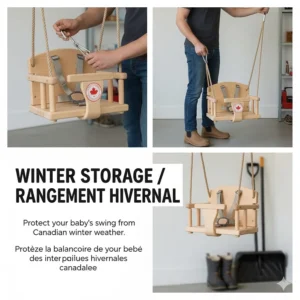
- Remove swing during winter months
Branch Height Requirements
The branch itself should be 10-15 feet (3-4.5 metres) above ground. Lower branches don’t provide adequate swing arc, while higher branches create dangerous fall heights and complicate maintenance.
Canadian arborists note that many common backyard trees – particularly maples and oaks – naturally develop strong horizontal branches in this ideal range.
Arc and Clearance
At the peak of its arc, the swing should:
- Clear the tree trunk by minimum 3 feet (0.9 metres)
- Not approach within 6 feet (1.8 metres) of other obstacles
- Stay within your property boundaries (important consideration in dense urban Canadian neighbourhoods)
Test the full arc before allowing children to use the swing. An adult should test the maximum swing range to identify any collision risks.
Hanging Hardware: What You Actually Need
The hanging hardware connecting your baby swing for tree to the branch deserves careful attention. Quality hardware costs 20% more but eliminates 90% of accident risks.
Essential Components
Tree Straps: Minimum 1.5-inch (3.8 cm) wide polyester or nylon straps rated for 2200+ lbs. Wider straps better protect tree bark and distribute weight more evenly.
Carabiners: Heavy-duty locking carabiners rated for outdoor use. Minimum 3000-lb breaking strength, though 5000-lb models provide better safety margins.
Canadian Consideration: Stainless steel (grade 304 or higher) resists corrosion from road salt and coastal humidity. Don’t cheap out with zinc-plated hardware that rusts within one season.
Quick Links: Screw-gate quick links provide more secure connections than carabiners for permanent installations. Ensure they’re rated for dynamic loads, not just static weight.
Hardware to Avoid
Rope: While traditional, rope damages tree bark through abrasion and eventually fails from UV degradation. Modern tree straps outperform rope in every metric.
Chain: Heavy, causes bark damage, and creates pinch points dangerous for small fingers. Modern materials have rendered chain obsolete for baby swing for tree installations.
Standard Hooks: Common S-hooks and J-hooks aren’t designed for dynamic swing loads and can straighten under stress, dropping the swing.
Where to Buy in Canada
Amazon.ca: Widest selection with customer reviews Canadian Tire: Limited selection but convenient locations Home Hardware: Regional availability varies Rona/RONA+: Good for bulk hardware purchases
Expect to spend $25-$45 CAD on complete hanging hardware for a single baby swing for tree installation. Don’t skimp – quality hardware literally supports your child’s safety.
Installation Tips
- Pre-load test: Hang the empty swing and have an adult test it before allowing children to use it
- Check monthly: Inspect all connection points for wear, especially where metal contacts fabric
- Replace annually: Even high-quality straps degrade with UV exposure and should be replaced yearly
- Document everything: Take photos of your installation for insurance purposes
✨ Don’t Miss These Exclusive Deals!
🔍 Ready to create the perfect backyard play space? These carefully selected products available in Canada will help you install a safe, enjoyable baby swing for tree. Click any highlighted item to check current Amazon.ca pricing and take advantage of free shipping on qualifying orders!
Branch Diameter: Why Size Absolutely Matters
Branch diameter represents the single most important factor in safe baby swing for tree installations. Get this wrong, and everything else becomes irrelevant.
Minimum Diameter Requirements
The universally accepted standard: 8 inches (20 cm) minimum diameter at the attachment point. This isn’t negotiable or approximate – measure carefully with a tape measure or diameter tape.
Why 8 inches? Engineering calculations show this diameter provides adequate strength for a 50-pound child creating dynamic loads up to 200 pounds during vigorous swinging. Smaller branches lack the necessary structural integrity.
Measuring Branch Diameter Correctly
Tools needed:
- Flexible measuring tape
- Ladder or pole saw for reaching high branches
- Helper for safety
Method:
- Identify the point where straps will contact branch
- Wrap measuring tape around branch at that exact point
- Divide circumference by 3.14 to get diameter
- Round down, not up (24.5 inches rounds to 24, not 25)
Canadian Reality Check: Many homeowners overestimate branch diameter. A branch that “looks thick enough” often measures 6-7 inches – dangerously undersized.
The 50% Rule
Here’s a critical guideline many Canadians miss: Never use a branch more than 50% of the trunk diameter.
Branches exceeding 50% trunk diameter have weaker attachments to the main trunk. These connections are more likely to fail under dynamic swing loads, especially after winter stress.
Example: If your tree trunk measures 20 inches diameter, don’t use branches thicker than 10 inches. Counterintuitively, mid-sized branches often provide safer attachment points than the largest branches.
Species-Specific Considerations
Branch diameter requirements vary slightly by species:
Dense Hardwoods (Maple, Oak): 8 inches minimum Softer Hardwoods (Poplar, Willow): 10+ inches minimum (though these species should generally be avoided) Conifers: Generally unsuitable regardless of diameter
Growth and Seasonal Changes
Canadian trees grow 0.5-1 inch diameter per year under ideal conditions. A branch that’s minimally adequate today might support additional swings in 2-3 years.
Conversely, disease or environmental stress can reduce effective diameter. Trees along busy roads exposed to salt spray may develop internal decay not visible externally.
Professional Assessment
When in doubt, consult a certified arborist. For $100-$200 CAD, an arborist can:
- Assess branch structural integrity
- Identify hidden defects
- Recommend optimal attachment points
- Provide documentation for liability protection
The Canadian Standards Association recommends professional assessment for all permanent playground installations, including baby swing for tree setups.
Maintenance Schedule: Keeping Your Baby Swing for Tree Safe Year-Round
Installing a baby swing for tree isn’t a “set and forget” project. Canadian weather creates unique maintenance demands that require regular attention.
Weekly Inspections (During Active Use Months)
Visual Check (5 minutes):
- Scan all connection points for obvious wear
- Look for fraying on fabric straps
- Check carabiners for rust or deformation
- Verify swing seat hasn’t cracked or split
- Ensure fall zone remains clear of debris
Quick Function Test:
- Push swing through full arc empty
- Listen for unusual creaking or groaning
- Verify smooth motion without catching
Monthly Detailed Inspection
Hardware Assessment (15 minutes):
- Examine strap stitching closely for thread breaks
- Test carabiner gates for proper closure
- Check for rust, especially on metal-on-metal contact points
- Verify tree straps haven’t migrated or loosened
Branch Evaluation:
- Look for new cracks or splits in branch
- Check for bark damage under strap locations
- Verify branch hasn’t developed lean
- Inspect upper branches for dead material that could fall
Canadian Consideration: Post-winter inspections are critical. Freeze-thaw cycles stress all materials and connections. Plan your first detailed inspection for late April or early May.
Seasonal Maintenance
Spring (May):
- Replace any components showing winter damage
- Re-tighten all connections
- Clean seat thoroughly
- Check ground surfacing depth
Summer (July):
- Verify UV-exposed components aren’t becoming brittle
- Adjust strap positions if bark shows compression damage
- Monitor branch growth for interference issues
Fall (October):
- Decide whether to leave swing installed for winter
- Apply protectant spray to metal components
- Document condition with photos for spring comparison
Winter (January):
- If swing remains installed, brush off heavy snow loads
- Check for ice damage after major storms
- Verify straps haven’t frozen to branch (can cause tearing when they thaw)
Component Replacement Schedule
Fabric Straps: Replace annually regardless of appearance. UV degradation occurs internally before visible signs appear. Cost: $25-$35 CAD per set.
Carabiners: Replace every 2-3 years or immediately if dropped from height (hidden damage common). Cost: $10-$15 CAD each.
Rope (if used): Replace every 6 months due to UV and moisture damage. Cost: $15-$25 CAD for quality polyester rope.
Swing Seat: Replace when plastic shows brittleness (white stress marks), typically 3-5 years. Cost: $40-$110 CAD depending on model.
Documentation
Keep a simple maintenance log noting:
- Date of each inspection
- Issues identified
- Repairs or replacements made
- Photos showing condition
This documentation proves reasonable care if accidents occur and supports insurance claims.
Frequently Asked Questions
❓ What size branch do I need to hang a baby swing from a tree in Canada?
❓ How high should I install a baby swing for tree in my backyard?
❓ Are tree straps better than rope for baby swings in Canada?
❓ What's the best baby swing for tree under $50 CAD in Canada?
❓ Do I need special hanging hardware for Canadian weather?
Final Thoughts: Creating Safe Outdoor Memories
A baby swing for tree transforms an ordinary backyard into a magical play space where Canadian families create lasting memories. Unlike expensive play structures that dominate yards and depreciate rapidly, a simple tree swing costs under $100 CAD to install and provides years of enjoyment.
The key to success lies in three fundamentals: choosing a healthy branch with adequate diameter, using quality hanging hardware designed for outdoor use, and maintaining everything regularly. Canadian weather creates unique challenges, but weather-resistant materials and proper installation techniques overcome these obstacles easily.
My own childhood memories revolve around the oak tree swing at my grandmother’s Saskatchewan farm. Three generations of children have used that same swing because my grandfather installed it correctly the first time. He chose a massive branch, used proper hardware, and checked it religiously every spring.
That’s the legacy you’re creating when you install a baby swing for tree properly. It’s not just about keeping your child entertained this summer – it’s about establishing a backyard tradition that might serve your grandchildren someday.
Start with any of the seven products reviewed in this guide, follow the safety guidelines for branch selection and installation, and you’ll have everything needed for countless hours of outdoor play. Canadian families blessed with mature trees shouldn’t waste that natural advantage – put it to work creating the childhood memories your family deserves.
Recommended for You 🍁
- 7 Best Bucket Baby Swings Canada 2026
- 7 Best Baby Outdoor Swing Canada 2026 – Safety Guide
- 7 Best Outdoor Baby Swing Canada 2026: Safety-Tested Winners
Disclaimer: This article contains affiliate links to Amazon.ca. If you purchase products through these links, we may earn a small commission at no additional cost to you.
✨ Found this helpful? Share it with your friends! 💬🤗
