
In This Article
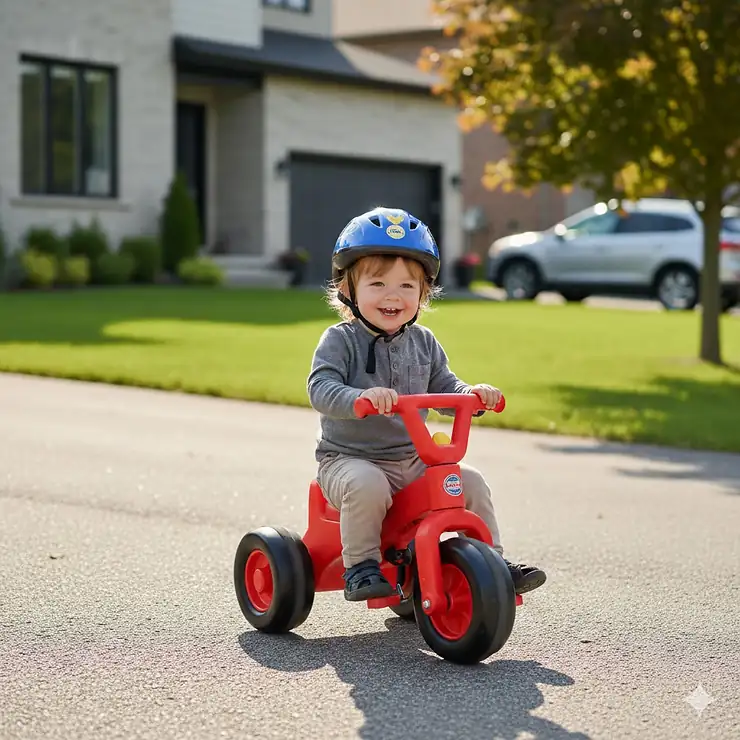
There’s nothing quite like watching your little one’s face light up as they zoom across the driveway on their very first ride-on toy. But as a parent, that joy comes with an important responsibility—choosing toys that keep your toddler safe while they explore the world on wheels.
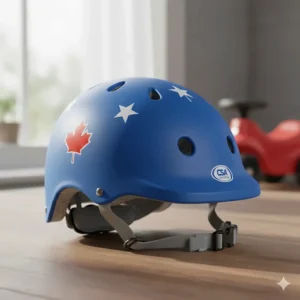
The safest ride on toys for toddlers outdoor combine thoughtful engineering with age-appropriate design, meeting rigorous safety standards while delivering hours of developmental fun. In Canada, where our climate presents unique challenges from scorching summer sidewalks to crisp autumn afternoons, selecting the right outdoor ride-on toy requires careful consideration of durability, safety features, and developmental appropriateness.
According to Health Canada, head injuries remain the leading cause of serious injury and death for children using wheeled toys, making proper helmet use and appropriate toy selection absolutely critical. With ASTM F963-23 safety standards now mandatory and Canadian-specific regulations in place, parents have more protection than ever—but also more responsibility to understand what makes a ride-on toy truly safe.
This comprehensive guide examines the safest ride on toys for toddlers outdoor available in Canada for 2026, with real products, verified CAD pricing, and expert insights on ride on toy safety features that matter most. Whether you’re shopping for a first birthday gift or upgrading your backyard play equipment, you’ll discover exactly what to look for to keep your toddler safe while they ride.
Quick Comparison Table: Top 7 Safest Ride-On Toys for Canadian Toddlers
| Product Name | Age Range | Price (CAD) | Key Safety Features | Best For |
|---|---|---|---|---|
| Little Tikes Cozy Coupe | 18 months – 5 years | $99.99 | Wide base, working horn, parent push handle | Imaginative play, stability |
| Fisher-Price Balance Bike | 2+ years | $33.58 | Puncture-proof wheels, low center of gravity | Balance development |
| Radio Flyer 4-in-1 Stroll ‘N Trike | 9 months – 5 years | $88.18 | 3-point harness, parent control, UV canopy | Multi-stage growth |
| PlasmaCar | 3+ years | $69.95 | No pedals/batteries, 220 lb capacity | Active steering practice |
| Schwinn Roadster Tricycle | 2-4 years | $139.99 | Low center of gravity, adjustable seat | Classic pedaling |
| Step2 Push Around Buggy GT | 1.5-4 years | $85.99 | Seatbelt, storage, parent push handle | Supervised rides |
| Radio Flyer Steady Start Balance Bike | 1-3 years | $64.99 | Extra-wide wheels, tool-free adjustment | Indoor/outdoor beginner |
💬 Just one click – help others make better buying decisions too!😊
✨ Don’t Miss These Exclusive Deals!
🔍 Take your toddler’s outdoor playtime to the next level with these carefully selected products available in Canada. Click on any highlighted item to check current pricing and availability on Amazon.ca. These toys will help you create authentic developmental milestones your family will love!
Top 7 Safest Ride On Toys for Toddlers Outdoor: Expert Analysis
1. Little Tikes Cozy Coupe – The Canadian Backyard Classic
The Little Tikes Cozy Coupe has been Canada’s bestselling ride-on toy since 1979 for good reason. This foot-to-floor powered vehicle features a removable floorboard that allows toddlers to progress from parent-pushed rides to independent scooting as they develop confidence and coordination.
Key Specifications:
- Wide, stable four-wheel base prevents tipping
- High back seat with built-in cup holders
- Working door, horn, and clicking ignition switch
- 50 lb (23 kg) weight capacity
Price: CAD $99.99 at Toys R Us Canada
Canadian parents consistently praise this toy’s durability through multiple seasons. One Ottawa reviewer notes: “We left ours outside through two Canadian winters and it still looks great. The plastic holds up incredibly well to our temperature swings.”
✅ Pros:
- Exceptional stability for new riders
- Weather-resistant construction ideal for Canadian climates
- Encourages imaginative play and gross motor development
❌ Cons:
- Heavier than some alternatives (may be challenging for smallest toddlers to maneuver)
- Gas cap small part requires supervision for younger children
2. Fisher-Price Balance Bike – Budget-Friendly Safety Champion
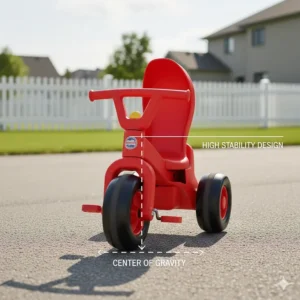
At just CAD $33.58, the Fisher-Price Balance Bike offers remarkable value without compromising safety. This no-pedal design helps toddlers master balance before transitioning to traditional bicycles, with puncture-proof wheels that handle Canadian sidewalks and driveways with ease.
Key Specifications:
- Adjustable seat grows with your child
- Durable puncture-proof big wheels
- Comfortable bicycle trainer handles
- Fun toy balls inside wheels for visual engagement
Price: CAD $33.58 at Toys R Us Canada
The unique no-pedal design aligns with recommendations from physiotherapists and early childhood development experts who suggest balance bikes accelerate bicycle readiness while reducing fall-related injuries compared to training wheels.
✅ Pros:
- Exceptional value for Canadian families
- Lightweight design (easy for toddlers to control and parents to transport)
- Develops core balance skills naturally
❌ Cons:
- Non-adjustable handlebar height
- Limited to approximately 18 months of use before outgrowing
3. Radio Flyer 4-in-1 Stroll ‘N Trike – Ultimate Grow-With-Me Safety
The Radio Flyer 4-in-1 Stroll ‘N Trike transforms from an infant trike with full parent control to a classic tricycle, making it one of the most versatile safety investments for Canadian families. The adjustable UV-blocking canopy provides essential sun protection during those long Canadian summer days.
Key Specifications:
- 4 conversion stages: infant trike, steering trike, learn-to-ride, classic trike
- 3-point safety harness for secure seating
- Removable adult push handle with foam grip
- Wide rear wheels for stability
- Rear storage bucket
Price: CAD $88.18 at Toys R Us Canada
This model addresses a common Canadian parent complaint—toys that children outgrow within months. Toronto parent reviews highlight: “We’ve used this from 10 months to almost 4 years. The conversion system is genius and the build quality justified every penny.”
✅ Pros:
- Four years of use from single purchase
- Parental control maintains safety for younger riders
- UV canopy essential for Canadian summer sun protection
❌ Cons:
- Assembly required (approximately 30 minutes)
- Bulkier design makes indoor storage challenging
4. PlasmaCar – Physics-Powered Safety Innovation
The PlasmaCar represents innovative ride on toy safety features through its unique propulsion system—no pedals, batteries, or gears required. Children simply rotate the steering wheel to activate the toy’s patented mechanism, reaching speeds up to 10 km/h while maintaining full control.
Key Specifications:
- Made from high-quality ABS plastics
- Six-wheel design for stability
- 220 lb (100 kg) weight capacity (adults can ride too!)
- Works on smooth surfaces indoors and outdoors
Price: CAD $69.95 at Toys R Us Canada
This toy excels at teaching cause-and-effect while developing upper body strength and coordination. Canadian physiotherapists often recommend it for children developing spatial awareness and motor planning skills.
✅ Pros:
- No batteries = environmentally friendly and always ready
- Impressive weight capacity allows parent-child bonding rides
- Develops bilateral coordination and core strength
❌ Cons:
- Requires smooth surfaces (gravel/grass surfaces incompatible)
- Learning curve may frustrate some initially
5. Schwinn Roadster Tricycle – Retro Style Meets Modern Safety
The Schwinn Roadster Tricycle combines nostalgic design with contemporary safety engineering. Its low center of gravity and air-filled tires provide exceptional stability, while the adjustable sculpted seat accommodates growing toddlers throughout the preschool years.
Key Specifications:
- 12-inch (30 cm) front wheel with chrome fenders
- Steel frame construction
- Adjustable seat with 5 positions
- Real wood deck with burned Schwinn logo
- Mustache-style handlebars with tassels and bell
Price: CAD $139.99 at Walmart Canada
The air-filled tires absorb bumps effectively, making this ideal for Canadian driveways and sidewalks with frost heave cracks. Multiple Vancouver parents note the tires handle wet conditions better than plastic wheels.
✅ Pros:
- Premium construction ensures multi-child durability
- Air tires provide smooth, quiet ride
- Adjustable seat extends usability
❌ Cons:
- Higher price point than alternatives
- Air tires require occasional inflation
6. Step2 Push Around Buggy GT – Supervised Ride Safety Specialist
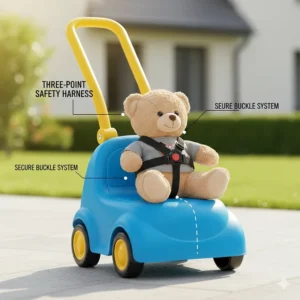
The Step2 Push Around Buggy GT prioritizes parental supervision tips through its design—a parent push handle provides complete control while toddlers enjoy the driving experience. The integrated seatbelt meets ASTM safety standards for ride-on toys while the foot well prevents dangling legs.
Key Specifications:
- Safety belt keeps toddlers secured
- Under-seat storage compartment
- Parent push handle for complete control
- Turning radius ideal for indoor/outdoor use
Price: CAD $85.99 at Canadian retailers
This model addresses concerns from Transport Canada about unsupervised toddler play near roadways. The parent-controlled design ensures caregivers can intervene instantly if needed.
✅ Pros:
- Perfect for younger toddlers (18 months+)
- Seatbelt prevents mid-ride exits
- Compact design stores easily
❌ Cons:
- Shorter use period (most children outgrow by age 3.5)
- Plastic wheels less effective on uneven terrain
7. Radio Flyer Steady Start Balance Bike – Indoor/Outdoor Dual-Purpose Champion
The Radio Flyer Steady Start Balance Bike features extra-wide wheels that provide unmatched stability for beginning riders, making it suitable for both Canadian living rooms during winter months and outdoor adventures in warmer weather.
Key Specifications:
- Extra-wide wheels stand upright when not in use
- Tool-free height adjustment
- Premium handgrips and padded seat
- 42 lb (19 kg) maximum weight capacity
Price: CAD $64.99 at Amazon.ca
The wide wheels address a common complaint about balance bikes—they fall over constantly when toddlers dismount. This model self-stands, preventing frustration and teaching proper storage habits.
✅ Pros:
- Dual indoor/outdoor functionality (essential for Canadian winters)
- No-tool seat adjustment encourages proper fit
- Self-standing design reduces falls when unattended
❌ Cons:
- Wide wheels add bulk for transportation
- Slightly heavier than ultra-lightweight balance bikes
Understanding ASTM Safety Standards Ride-On Toys: What Canadian Parents Need to Know
When selecting the safest ride on toys for toddlers outdoor, understanding ASTM safety standards ride-on toys is essential. ASTM F963-23, the current mandatory standard in North America, underwent significant updates in 2024 to better protect young children.
What ASTM F963-23 Covers for Ride-On Toys
The standard addresses specific hazards unique to wheeled toys, including:
Stability Requirements (Section 4.15): Ride-on toys must not tip forward or backward when tested on a 15-degree incline with simulated child weight. This prevents unexpected falls that cause head injuries—the most serious risk for toddler riders.
Load-Bearing Capacity: All components must withstand specified weight loads without collapsing, creating sharp edges, or exposing mechanical hazards. Toys marketed for toddlers undergo more rigorous testing than those for older children.
Small Parts Restrictions: For toys intended for children under 36 months, strict prohibitions prevent choking hazards from detachable components like wheel caps or decorative elements.
Material Safety: Toxicology requirements ensure plastics, paints, and finishes contain no harmful lead, cadmium, or phthalates—particularly important as toddlers often mouth toy components.
Canadian-Specific Considerations
While Canada recognizes ASTM F963-23, Health Canada adds supplementary requirements through the Canada Consumer Product Safety Act. All ride-on toys sold in Canada must include bilingual labeling (English and French) and meet specific import documentation requirements.
For toys with electrical components (rare in toddler ride-ons but common in preschool models), CSA (Canadian Standards Association) certification provides additional assurance that electrical safety meets Canadian standards.
Ride On Toy Safety Features: The 7 Critical Elements
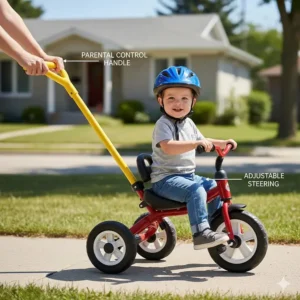
Not all ride on toy safety features carry equal importance. Based on injury data from the Canadian Paediatric Society and engineering analysis, these seven elements matter most:
1. Wide, Stable Base
A low center of gravity with wide wheelbase prevents the tipping incidents that cause 40% of ride-on toy injuries. Toys should maintain stability during sharp turns and uneven terrain.
2. Age-Appropriate Speed Control
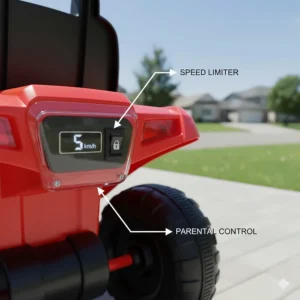
For toddlers under 3, foot-powered models provide inherent speed limitation. Battery-powered models should include parental speed controls and never exceed walking pace (approximately 3 km/h).
3. Smooth Edges and Covered Mechanisms
Exposed gears, sharp plastic edges, or pinch points violate ASTM standards and pose laceration or crushing risks. Premium manufacturers use molded plastic construction that eliminates these hazards.
4. Secure Seating with Proper Back Support
High-back seats prevent backward falls, while contoured seating keeps toddlers positioned correctly. Some models include safety belts—essential for younger riders who may lean or stand unexpectedly.
5. Weather-Resistant, Non-Toxic Materials
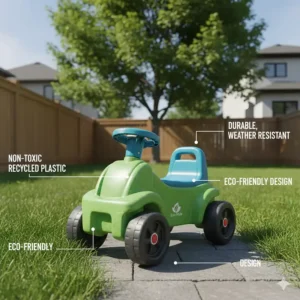
Canadian temperature swings from -30°C to +30°C stress plastic components. Quality ride-ons use UV-stabilized, cold-resistant plastics that won’t become brittle or fade. All materials must pass toxicology testing.
6. Appropriate Wheel Design
Wider wheels increase stability but reduce maneuverability—ideal for beginners. Material matters too: rubber or foam-filled tires grip better than hard plastic on wet Canadian surfaces.
7. Clear Age Labeling and Weight Limits
Manufacturers must specify minimum/maximum ages and weight capacities. Exceeding these limits compromises safety engineering that prevents tip-overs and structural failures.
Outdoor Ride On Toys Age 2: Developmental Appropriateness Matters
The category outdoor ride on toys age 2 requires special attention to developmental milestones. Two-year-olds experience rapid physical and cognitive growth, but their judgment, balance, and spatial awareness remain limited.
Physical Capabilities at Age 2
Most two-year-olds can:
- Walk steadily and run short distances
- Climb stairs with support
- Push and pull large objects
- Kick a ball forward
- Begin pedaling motions (though coordination varies widely)
They typically cannot:
- Judge distances accurately
- Predict consequences of actions
- React quickly to obstacles
- Maintain balance during rapid direction changes
- Understand road safety concepts
Selecting Age-Appropriate Outdoor Ride-Ons
Best choices for 2-year-olds include:
Foot-Powered Ride-Ons: Models like the Little Tikes Cozy Coupe allow toddlers to control speed with their feet, preventing runaway situations. The proprioceptive feedback (feeling their feet contact the ground) aids balance development.
Wide-Wheeled Balance Bikes: Products like the Radio Flyer Steady Start develop balance without the pedaling complexity that frustrates many two-year-olds. Research from the Canadian Paediatric Society suggests balance bikes prepare children for bicycle riding approximately 6 months faster than training wheels.
Parent-Controlled Trikes: Four-in-one models with parent push handles provide outdoor engagement while maintaining adult supervision. The ability to intervene instantly prevents dangerous situations near driveways or roadways.
Avoid for most 2-year-olds:
- Scooters (require advanced balance and coordination)
- Pedal vehicles with complex steering
- High-speed battery-powered models
- Toys with small detachable parts
Helmet Recommendations Toddlers: Essential Protection for Canadian Families
Even on slow-moving ride-on toys, helmet recommendations toddlers cannot be overstated. According to Parachute Canada, properly fitted helmets reduce serious head injury risk by up to 85% during wheeled toy accidents.
Canadian Helmet Certification Standards
Helmets sold in Canada must display one of these certification labels:
- CSA (Canadian Standards Association) – Canadian-specific standard
- CPSC (Consumer Product Safety Commission) – U.S. standard recognized in Canada
- ASTM – Alternative U.S. standard
- Snell – Premium voluntary standard
Health Canada regulations require that toddler helmets (ages 1-5) undergo different testing than adult helmets. Young children’s skulls are less rigid, requiring thicker, less dense foam to properly absorb impacts.
Special Considerations for Toddler Helmets
Size Matters: Measure your child’s head circumference with a soft tape measure. For reference, average sizes:
- 1-year-olds: 45-46 cm
- 2-year-olds: 47-48 cm
- 3-year-olds: 49-50 cm
The 2-V-1 Rule: Canadian safety experts recommend this fitting technique:
- 2 fingers: Width above eyebrows
- V-shape: Straps form a V under each ear
- 1 finger: Space under chin strap when buckled
Top Toddler Helmet Picks for Canada (2026):
Giro Scamp (CAD $39.99-$54.99): Extra small sizing fits the tiniest heads (45-49 cm). Features pinch-free magnetic buckle and integrated visor.
Nutcase Baby Nutty (CAD $69.99): Extended rear coverage protects developing skulls. Available in fun designs that encourage consistent wear.
Schwinn Infant Helmet (CAD $24.99): Budget option with essential safety features and ventilation for Canadian summer heat.
Common Canadian Helmet Mistakes to Avoid
❌ Buying helmets to “grow into” – Improper fit negates protection
❌ Wearing toques underneath – Changes fit and reduces effectiveness
❌ Adding stickers – May weaken plastic or void CSA certification
❌ Using hand-me-down helmets – Unknown crash history compromises safety
❌ Forgetting to replace after 5 years – Plastic becomes brittle with age
Provincial Helmet Laws: Several Canadian provinces mandate helmet use for wheeled activities:
- Ontario: Required for all cyclists under 18
- British Columbia: Required for all ages
- Nova Scotia: Required for all ages
- Alberta: Required for minors under 18
- Quebec: No provincial law (municipal regulations vary)
Even where not legally required, helmets remain essential for toddler ride-on toy safety.
Parental Supervision Tips: Active Engagement Prevents Injuries
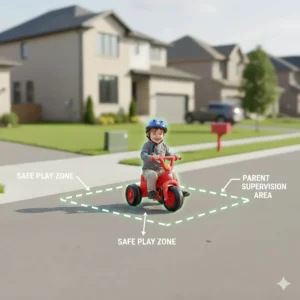
Even with the safest ride on toys for toddlers outdoor, parental supervision tips transform safety from theoretical to practical. Active supervision means more than physical presence—it requires engaged attention and strategic environmental management.
The 4 Levels of Parental Supervision
Level 1: Direct Physical Contact (Ages 1-2) Maintain hand contact or immediate reach. Use parent push handles on appropriate toys. Never allow independent riding near driveways, streets, or water features.
Level 2: Arm’s Length Supervision (Ages 2-3) Stay within 1-2 meters, ready to intervene instantly. Create clear boundaries using cones, chalk lines, or natural landmarks. Toddlers this age lack impulse control—expect sudden directional changes.
Level 3: Visual Contact (Ages 3-4) Maintain constant visual line-of-sight within fenced play areas. Scan environment regularly for new hazards (vehicles backing up, other children’s toys, opened gates).
Level 4: Periodic Check-Ins (Ages 4+) For mature preschoolers in secured areas using age-appropriate toys. Still requires regular status checks, not true independent play.
Creating Safe Outdoor Riding Environments
Ideal Surfaces:
✅ Smooth concrete driveways
✅ Paved walkways
✅ Level asphalt
✅ Indoor flooring (for appropriate models)
✅ Rubber playground surfacing
Surfaces to Avoid:
❌ Gravel (causes loss of control)
❌ Grass (too much resistance for most ride-ons)
❌ Hills/slopes (exceeds toddler braking ability)
❌ Near stairs or drop-offs
❌ Poolside areas
Weather Considerations for Canada:
Summer: Avoid midday heat (plastic surfaces can cause burns). Check surface temperature before allowing play. Ensure adequate hydration breaks.
Spring/Fall: Wet leaves create slippery conditions. Frost makes plastic brittle—inspect toys after cold nights. Clean mud buildup from wheels to maintain traction.
Winter: Most outdoor ride-ons are unsuitable for snow/ice. Transition to indoor models or winter-specific equipment with proper parental supervision.
Teaching Toddlers Safe Riding Practices
Start with Basic Concepts:
- “Feet down means stop”
- “Look before you turn”
- “Stay away from the road”
- “Tell mommy/daddy if something breaks”
Practice Emergency Stops: Regularly role-play stopping quickly. Toddlers need physical practice, not just verbal instruction.
Set Consistent Boundaries: Mark play zones clearly. Toddlers thrive with visual boundaries they can understand (colored tape, garden edging, designated areas).
Model Safe Behavior: Children mimic adults. Wear your own helmet when cycling near your toddler’s play area.
Ride-On Toy Safety Comparison: Traditional vs. Modern Designs
| Feature | Traditional Tricycles | Balance Bikes | Push Cars | Modern Electric |
|---|---|---|---|---|
| Minimum Age | 2-3 years | 18 months | 12 months | 3 years (with parent control) |
| Balance Development | Limited (stable 3 wheels) | Excellent | None | Limited |
| Speed Control | Child-controlled through pedaling | Child-controlled with feet | Parent/child feet | Parental settings critical |
| ASTM Requirements | Stability, load-bearing | Minimal (not motorized) | Height, stability | Battery safety, speed limits |
| Injury Risk | Moderate (tip-overs on hills) | Low (feet contact ground) | Low (parent supervised) | Variable (depends on features) |
| Canadian Winter Storage | Garage/basement | Garage/basement | Can remain outdoors (most models) | Must store indoors |
| Price Range (CAD) | $40-$180 | $30-$120 | $80-$120 | $150-$600 |
Essential Maintenance for Canadian Climate Safety
Canada’s temperature extremes demand proactive maintenance to keep outdoor ride on toys age 2 functioning safely:
Monthly Inspections
🔧 Check all screws and bolts (temperature changes cause loosening)
🔧 Inspect wheels for cracks or wear
🔧 Test steering mechanisms for smooth operation
🔧 Examine plastic for stress fractures
🔧 Verify safety belts/harnesses (if equipped) function properly
Seasonal Transitions
Spring: Deep clean after winter storage. Lubricate moving parts. Check for water damage or mold.
Fall: Inspect for summer UV damage. Tighten components loosened by heat expansion. Prepare for storage.
Winter: Store most models indoors. If outdoor storage necessary, use waterproof covers and elevate off ground to prevent freeze damage.
Replacement Guidelines
🔴 Replace immediately: Cracked frames, broken safety belts, missing wheel components
🟡 Monitor closely: Faded plastics (UV degradation), worn tires, loose handles
🟢 Normal wear: Scratched surfaces, dirty wheels, minor cosmetic issues
Benefits vs Traditional Alternatives
| Outdoor Ride-On Toys | Traditional Play Alternatives |
|---|---|
| Physical Development: Develops gross motor skills, balance, coordination, core strength | Walking, running: Similar benefits but less engaging for sustained periods |
| Cognitive Growth: Spatial awareness, cause-effect understanding, problem-solving | Playground equipment: Comparable cognitive benefits |
| Social Interaction: Parallel play, turn-taking, cooperative games | Team sports: More structured but not age-appropriate for most toddlers |
| Independence: Self-directed exploration within safe boundaries | Sandbox, swings: Less independence, more adult-controlled |
| Sensory Integration: Vestibular input, proprioception, kinesthetic learning | Swimming: Excellent sensory input but requires constant supervision |
| Weather Flexibility: Seasonal variety, indoor/outdoor options | Ball play: More weather-dependent |
Price Range & Value Analysis
Understanding Canadian market pricing helps identify quality investments versus potential safety compromises:
Budget Range (CAD $25-$50)
Examples: Basic push cars, simple balance bikes, basic tricycles
Value Proposition: Entry-level safety features, shorter lifespan, basic materials
Best For: Testing interest before major investment, second/third children using hand-me-down primary toy
Safety Considerations: More critical to verify ASTM certification, as budget manufacturers may cut corners
Mid-Range (CAD $50-$120)
Examples: Little Tikes Cozy Coupe, PlasmaCar, Fisher-Price Balance Bike, Schwinn Roadster
Value Proposition: Excellent safety-to-cost ratio, proven Canadian winter durability, multi-year usability
Best For: Primary ride-on toy purchase for most families
Why This Range: Sweet spot where safety engineering, material quality, and affordability intersect
Premium Range (CAD $120-$200)
Examples: Multi-stage trikes, premium balance bikes, specialized designs
Value Proposition: Extended use (multiple ages), superior materials, advanced safety features, brand reputation
Best For: Families prioritizing longevity, multiple children, gifting
Ultra-Premium (CAD $200+)
Examples: Powered ride-ons with remote control, luxury brand trikes
Value Proposition: Technology integration, premium aesthetics, comprehensive safety features
Best For: Special occasions, specific developmental needs, enthusiast families
Canadian Retailer Pricing Notes:
- Toys R Us Canada: Mid-to-premium range, excellent selection
- Walmart Canada: Budget-to-mid range, competitive pricing
- Amazon.ca: Full range, watch for third-party seller markups
- Canadian Tire: Seasonal availability, clearance opportunities
❓ Frequently Asked Questions
❓ What is the safest age to start using outdoor ride-on toys in Canada?
❓ Do toddlers need helmets for slow-moving ride-on toys in Canadian backyards?
❓ What ASTM safety standards should I look for when buying ride-on toys?
❓ How can I tell if my toddler has outgrown their ride-on toy safely?
❓ What's the best surface for outdoor ride-on toy safety in Canadian climates?
Conclusion: Choosing Safety Without Compromising Fun
Selecting the safest ride on toys for toddlers outdoor doesn’t mean sacrificing excitement or developmental benefits—it means making informed choices that protect your child while supporting their growth. Throughout this guide, we’ve examined seven outstanding options available to Canadian families in 2026, each offering unique safety features and developmental advantages.
From the timeless stability of the Little Tikes Cozy Coupe (CAD $99.99) to the innovative multi-stage design of the Radio Flyer 4-in-1 Stroll ‘N Trike (CAD $88.18), today’s ride-on toys combine rigorous ASTM safety standards with thoughtful engineering that addresses real-world parental concerns.
Remember these essential takeaways:
Prioritize certified safety features: Wide bases, age-appropriate speed control, smooth edges, and proper labeling aren’t luxuries—they’re necessities. ASTM F963-23 compliance and Health Canada approval provide foundational protection.
Match toys to development: A two-year-old’s physical capabilities and judgment differ dramatically from a four-year-old’s. Resist the temptation to buy toys they’ll “grow into”—improper fit compromises safety engineering.
Helmets are non-negotiable: Whether zipping down the driveway on a PlasmaCar or slowly scooting in the living room, properly fitted CSA or CPSC certified helmets protect against the head injuries that cause the most serious long-term consequences.
Active supervision matters most: Even the safest toy cannot prevent injuries without engaged parental attention. Create clear boundaries, establish riding rules, and maintain appropriate supervision levels for your child’s age.
Canadian climate demands quality: Temperature swings from -30°C to +30°C stress materials. Invest in weather-resistant construction from reputable brands that Canadian parents have tested through multiple seasons.
The outdoor ride on toys age 2 category offers remarkable options that support physical development, build confidence, and create joyful childhood memories—all while keeping your toddler safe. By understanding ride on toy safety features, following helmet recommendations toddlers, implementing parental supervision tips, and choosing toys that meet ASTM safety standards ride-on toys, you’re making decisions that will protect your child for years to come.
As your toddler grows and their abilities expand, revisit these guidelines. The ride-on toy that’s perfect for an 18-month-old may no longer suit a confident 4-year-old ready for new challenges. But with the knowledge you’ve gained here, you’re equipped to make safe, smart choices at every stage.
Now get out there and enjoy watching those little wheels roll—safely, confidently, and joyfully across Canadian driveways, parks, and playgrounds this year!
Recommended for You
- 7 Best Toddler Gardening Tools Set Canada 2026 – Safe & Fun
- 7 Best Balance Board for Toddlers Outdoor Canada 2026 Guide
- 7 Best Backyard Splash Pads Canada 2026
Disclaimer: This article contains affiliate links to Amazon.ca. If you purchase products through these links, we may earn a small commission at no additional cost to you.
✨ Found this helpful? Share it with your friends! 💬🤗
