
In This Article
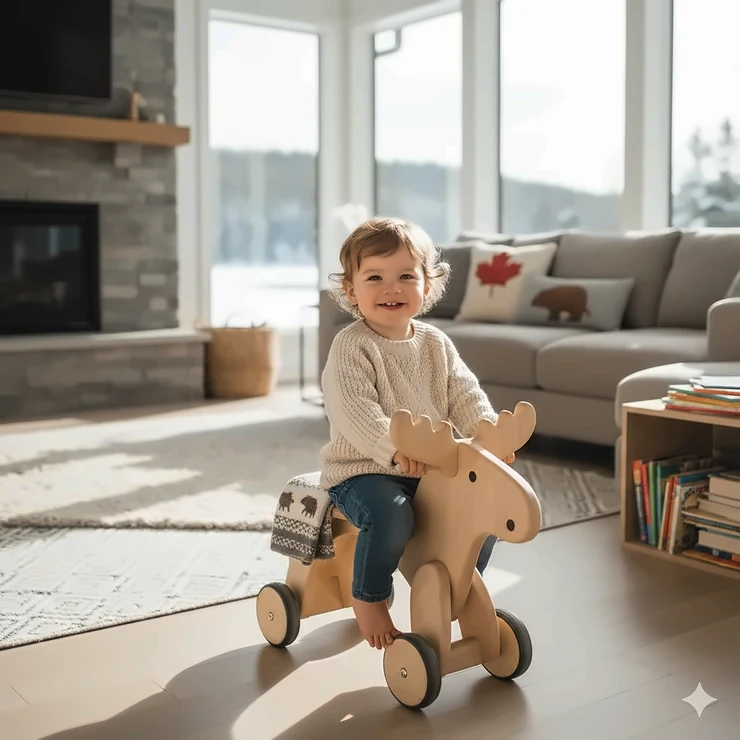
Watching your one-year-old take those first wobbly steps is magical, isn’t it? But what comes next in their mobility journey can be equally thrilling. Ride on toys for 1 year old toddlers aren’t just adorable—they’re developmental powerhouses that transform living rooms and backyards into adventure zones while building crucial motor skills.
Here in Canada, where we navigate everything from cramped condos to spacious suburban yards, finding the right ride-on toy means balancing indoor versatility with outdoor durability. The good news? Today’s market offers incredible options that grow alongside your child, from simple push-along cars to sophisticated 3-in-1 systems that transition as their skills develop.
Think of ride on toys for 18 month old children as more than entertainment. These vehicles help toddlers master balance, strengthen leg muscles, and develop spatial awareness—all while having an absolute blast. Whether you’re looking for toddler ride on cars outdoor adventures or parent handle push cars for guided strolls, this guide covers everything you need to make an informed choice.
We’ve researched dozens of options available on Amazon.ca, comparing prices in CAD, reading Canadian customer reviews, and considering our unique climate challenges. From budget-friendly picks under $60 to premium options exceeding $150, we’ll help you find age appropriate ride on vehicles that fit both your child’s developmental stage and your family’s lifestyle.
Quick Comparison Table
| Product | Age Range | Price (CAD) | Key Feature | Rating |
|---|---|---|---|---|
| Fisher-Price Laugh & Learn 3-in-1 Smart Car | 9-36 months | $66-$80 | Smart Stages learning | ⭐⭐⭐⭐⭐ (4.6/5) |
| Little Tikes Cozy Coupe | 18 months-5 years | $75-$100 | Classic design, 360° wheels | ⭐⭐⭐⭐ (4.5/5) |
| VTech Sit, Stand & Ride Walker | 9-36 months | $70-$90 | 3-in-1 convertible design | ⭐⭐⭐⭐⭐ (4.7/5) |
| Radio Flyer Busy Buggy | 12-36 months | $60-$90 | 17 interactive activities | ⭐⭐⭐⭐ (4.4/5) |
| VTech Stroll & Discover | 9-36 months | $55-$70 | Detachable activity panel | ⭐⭐⭐⭐⭐ (4.5/5) |
| Step2 Push Around Buggy | 18-48 months | $75-$95 | Parent handle, seat belt | ⭐⭐⭐⭐ (4.3/5) |
| Radio Flyer Scoot About Sport | 12-36 months | $70-$100 | Working steering, storage | ⭐⭐⭐⭐ (4.2/5) |
💬 Just one click – help others make better buying decisions too!😊
Top 7 Ride On Toys for 1 Year Old: Expert Analysis
1. Fisher-Price Laugh & Learn 3-in-1 Smart Car 🚗
The Fisher-Price Laugh & Learn 3-in-1 Smart Car absolutely dominates the Canadian market for good reason. This bilingual wonder starts as a walker for early steppers, converts to a bouncing ride, then transforms into a full scooting vehicle—talk about bang for your buck!
Key Specifications:
- Three Smart Stages levels teaching alphabet, counting, opposites, Spanish words
- Interactive dashboard with 100+ songs, sounds, and phrases
- Maximum weight capacity: 19 kg (42 lbs)
- Dimensions: 67 cm L x 23 cm W x 41 cm H
Price Range: $66-$80 CAD on Amazon.ca
Canadian Availability:
✅ In stock with free shipping on orders over $35
This ride-on caught our attention because of its bilingual capabilities—perfect for Canadian families raising kids in both official languages. The Smart Stages technology adapts content as your child grows, which means the toy evolves from teaching basic sounds at 9 months to introducing Spanish vocabulary by age 3.
What Canadian Parents Say: One Toronto mom raved that her grandson’s eyes lit up from the minute he saw it. Several Quebec reviews praised the French-English mix, though some wished they could select one language at a time rather than hearing both.
✅ Pros:
- Three distinct modes provide years of use
- Educational content adjusts to developmental stage
- High-back seat offers excellent support for new walkers
❌ Cons:
- Cannot disable bilingual feature (both languages play simultaneously)
- Requires 2 AA batteries (not included for regular use)
2. Little Tikes Cozy Coupe 🍁
The Little Tikes Cozy Coupe has been making childhood memories since 1979, and it’s still Canada’s bestselling ride-on vehicle. This iconic red-and-yellow car brings that perfect blend of nostalgia and modern durability that Canadian families adore.
Key Specifications:
- Removable floorboard transitions from parent-push to foot-powered
- Working door, horn, ignition switch, and gas cap
- 360-degree front wheel rotation for easy maneuverability
- Weight limit: 23 kg (50 lbs)
Price Range: $75-$100 CAD (varies by retailer)
Canadian Availability:
✅ Available at Toys R Us Canada, Walmart.ca, and Canadian Tire
What sets this classic apart is its incredible durability through Canadian weather. Multiple reviews mention these cars surviving years outdoors (though storage is recommended during harsh winter months). The high seat back and parent handle on the rear make it perfect for parent handle push cars needs.
What Canadian Parents Say: A British Columbia parent mentioned it’s sturdy enough for rough terrain, and the removable floor means even younger toddlers can enjoy rides while parents do the pushing around the neighbourhood.
✅ Pros:
- Proven 45+ year track record of durability
- Works equally well indoors and outdoors
- Spacious trunk storage and cup holders
❌ Cons:
- Assembly required (approximately 30-45 minutes)
- Larger footprint may challenge small apartments
3. VTech Sit, Stand & Ride Baby Walker 🎵
This VTech Sit, Stand & Ride Baby Walker is the Swiss Army knife of toddler toys. Starting as a floor activity panel for sitting babies, it becomes a walker, then transitions into a ride-on—all while teaching letters, sounds, and introducing vehicle vocabulary.
Key Specifications:
- Steering wheel, gear shifter, and light-up dashboard
- 60+ songs, melodies, sounds, and phrases
- Motion sensor activates music during walking/riding
- Two-speed control for beginner and advanced walkers
- Maximum weight: 19 kg (42 lbs)
Price Range: $70-$90 CAD
Canadian Availability:
✅ Ships free from Amazon.ca on eligible orders
The motion sensor technology is brilliant—it rewards movement with cheerful sounds, keeping toddlers motivated to keep moving. Parents appreciate the two-speed settings, letting them adjust wheel resistance as confidence builds. This matters especially on hardwood floors common in Canadian homes.
What Canadian Parents Say: Montreal parents loved how it grows with their child, serving triple duty and justifying the investment. The educational content introduces vehicle types and road safety concepts in both English and French on certain models.
✅ Pros:
- Three toys in one exceptional value
- Adjustable walker speed prevents falls
- Lightweight and easy to move between rooms
❌ Cons:
- Requires 2 AA batteries
- Some parents find the volume quite loud
4. Radio Flyer Busy Buggy 🐝
The Radio Flyer Busy Buggy transforms ride-on play into a sensory learning adventure with 17 interactive activities. This clever design works as both a walker for beginning cruisers and a ride-on for confident movers.
Key Specifications:
- 17 interactive features including interlocking gears, clicking spare tire, spinning beads
- Anti-tip feature for beginner walker safety
- Under-seat storage compartment
- Suitable for ages 12-36 months
- Weight capacity: 19 kg (42 lbs)
Price Range: $60-$90 CAD
Canadian Availability:
✅ Available on Amazon.ca with Prime shipping
What makes this buggy special is how it engages tiny hands while strengthening gross motor skills. The spinning beads introduce letters and numbers, the honking horn teaches cause-and-effect, and the twisting gas cap develops fine motor control. For Canadian winter months when outdoor play is limited, these activities keep toddlers engaged indoors.
What Canadian Parents Say: An Ottawa dad appreciated the walker function during early steps, noting the anti-tip feature provided peace of mind on hardwood floors. Several reviews mentioned it’s quieter than electronic alternatives—a bonus for apartment living.
✅ Pros:
- Exceptional sensory stimulation
- Doubles as walker and ride-on
- No batteries required
❌ Cons:
- Smaller than some competitors
- Limited to smooth indoor surfaces
5. VTech Stroll & Discover Activity Walker 🌟
The VTech Stroll & Discover Activity Walker offers incredible value for budget-conscious Canadian families without sacrificing quality or features. This 2-in-1 design packs serious educational punch into a foldable, storage-friendly package.
Key Specifications:
- Detachable activity panel with 5 light-up piano keys
- Wide base and speed-control wheels
- Foldable legs for easy storage
- Motion sensor rewards walking with lights and sounds
- Recommended: 9-36 months
Price Range: $55-$70 CAD
Canadian Availability:
✅ Toys R Us Canada stocks English and bilingual editions
This walker shines for Canadian families with limited space. The foldable legs mean it tucks neatly into closets during those long winter months when space is at a premium. The speed-control feature is clutch for beginners, preventing runaway walkers on tile or hardwood—which basically describes every Canadian home.
What Canadian Parents Say: A Saskatchewan mom praised how the wheels lock for stationary play, perfect for babies still building standing strength. Multiple bilingual families appreciated the French-English version available at Toys R Us.
✅ Pros:
- Excellent price point under $70
- Folds for compact storage
- Wheels adjust to child’s skill level
❌ Cons:
- Activity panel not as extensive as Sit, Stand & Ride model
- Primarily designed as walker, not ride-on
6. Step2 Push Around Buggy 👶
The Step2 Push Around Buggy serves as the perfect stroller alternative for Canadian families who want control over where their toddler goes. With its extra-wide parent handle and whisper-ride wheels, this becomes your go-to for neighbourhood walks and park adventures.
Key Specifications:
- Easy-latch adjustable seat belt
- Real car horn and working steering wheel
- Under-hood storage for snacks and toys
- Foldable handle for transportation
- Weight limit: 23 kg (50 lbs)
- Ages: 18 months-4 years
Price Range: $75-$95 CAD
Canadian Availability:
✅ Widely available across Canadian retailers
This buggy type excels as parent handle push cars for families who enjoy active outdoor time. The whisper-ride wheels truly live up to their name—you can push your toddler around without disturbing the neighbours, which matters in townhouse complexes and apartment buildings where many Canadian families live.
What Canadian Parents Say: A Vancouver parent mentioned using it instead of a stroller for quick errands, noting the under-hood storage held small grocery items perfectly. The seat belt provided security on sloped sidewalks common in hilly neighbourhoods.
✅ Pros:
- Parents maintain full control during use
- Extremely quiet wheels
- Durable double-walled plastic construction
❌ Cons:
- Child cannot self-propel (parent must push)
- Larger size requires storage space
7. Radio Flyer Scoot About Sport 🏃
The Radio Flyer Scoot About Sport brings legitimate steering capabilities to the toddler ride-on category. Unlike many competitors with decorative steering wheels, this one actually turns, helping kids develop genuine navigational skills.
Key Specifications:
- Working steering develops motor skills
- Ergonomic design with clear kick-path
- Easy-glide wheels for indoor/outdoor use
- Under-seat storage
- Maximum weight: 19 kg (42 lbs)
- Recommended ages: 12-36 months
Price Range: $70-$100 CAD
Canadian Availability:
✅ Amazon.ca with various shipping options
The ergonomic design caught our attention because it specifically addresses how toddlers naturally move. The clear kick-path ensures little legs have room to push without hitting the body, and the wide front wheels provide stability across diverse surfaces—from living room carpet to backyard grass to neighbourhood sidewalks.
What Canadian Parents Say: An Alberta reviewer loved how it handled transition from indoor winter play to outdoor spring adventures. The working steering helped their 18-month-old understand the connection between turning the wheel and changing direction.
✅ Pros:
- Genuine steering functionality
- Versatile for multiple surface types
- Storage accessible during riding
❌ Cons:
- Higher price point
- Smaller than classic car-style ride-ons
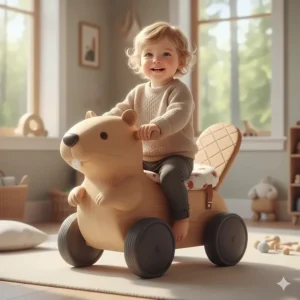
Understanding Developmental Readiness for Ride On Toys
Before you swipe that credit card, let’s talk about whether your little one is actually ready for these wheeled wonders. According to research from Canadian developmental specialists and data from the WHO Motor Development Study, walking independently typically occurs between 8-18 months for most children, with 90% achieving this milestone by 14 months.
Physical Readiness Indicators ✅
Your child might be ready for ride on toys for 1 year old when they can:
Pull to Stand: This foundational skill usually develops around 9-12 months. If your toddler can pull themselves up using furniture or your legs, they’re building the leg strength needed for push toys and eventually riding.
Cruise Along Furniture: When you see them side-stepping while holding onto the couch, they’re developing balance and coordination. This “cruising” phase typically happens 1-2 months before independent walking.
Walk Independently: Once they can take several steps without support—even if wobbly—walker-style ride-ons become appropriate. Don’t worry about perfection; toddlers naturally have wide-based gaits and hesitant steps.
Sit with Control: For ride-on vehicles, your child should sit steadily without toppling over. Most babies master unsupported sitting between 4-9 months, making this the earliest milestone for stationary ride-on toys.
Cognitive and Motor Development Benefits 🧠
Research published in the National Center for Biotechnology Information demonstrates that ride-on toys support development across multiple domains. Gross motor skills—the big movements using large muscle groups—improve dramatically through scooting, pushing, and steering activities.
The benefits extend beyond just physical development:
Spatial Awareness: Navigating around obstacles teaches toddlers about their body’s relationship to surrounding space. This skill foundation supports everything from sports to driving later in life.
Problem-Solving: Figuring out how to get their ride-on toy through doorways or around corners exercises cognitive abilities. They’re literally solving spatial puzzles with every journey.
Independence and Confidence: The ability to move independently—even just across the room—builds self-efficacy. “I did it myself!” isn’t just cute; it’s a crucial developmental marker.
Core Strength: Balancing on moving vehicles engages core muscles, supporting overall stability and preparing the body for more complex movements like running and jumping.
Safety Considerations for Canadian Homes 🏠
Our Canadian homes present unique challenges and opportunities for ride-on toy safety. Hardwood and tile floors—common in most provinces—offer smooth surfaces but can be slippery. Look for toys with textured wheels or speed-control features.
Consider your space layout carefully. Open-concept designs popular in modern Canadian homes provide excellent cruising space, but stairs require vigilant supervision and safety gates. Basement playrooms offer ideal practice areas with softer carpet surfaces that cushion inevitable tumbles.
For outdoor use, assess your specific terrain. Suburban driveways and sidewalks work beautifully, but be mindful of slopes. Urban families with access to parks should seek flatter areas initially, gradually introducing slight inclines as skills improve.
Choosing Between Walker-Style and Traditional Ride-On Designs
The Canadian market offers two distinct categories of ride on toys for 18 month old children, each serving different developmental needs and family situations. Understanding these differences helps you make the right choice for your specific circumstances.
Walker-Style Ride-Ons: The Transitional Champions
Walker-style toys like the Fisher-Price Laugh & Learn 3-in-1 Smart Car and VTech models serve as bridges between baby and toddlerhood. These versatile designs support children as they master walking while providing interactive play opportunities.
Ideal for:
- Babies just starting to pull up (9-12 months)
- First-time parents wanting maximum versatility
- Families with limited space (they serve multiple functions)
- Children who enjoy educational content and lights/sounds
The handle-grip design lets wobbly walkers push the toy for support while taking those tentative first steps. As confidence grows, these same toys convert into ride-ons, eliminating the need for multiple purchases. This matters economically, especially given Canadian price points and shipping costs.
The interactive panels keep babies engaged during floor time before they’re mobile, then continue entertaining during the riding phase. Think of them as the overachievers of the toy world—doing three jobs excellently rather than one job adequately.
Budget Consideration: While initially pricier ($60-$90 CAD), walker-style options actually save money by replacing separate walkers, activity centres, and ride-ons. Over a 2-3 year usage span, the cost-per-month becomes very reasonable.
Traditional Ride-On Cars: The Classic Choice
Classic designs like the Little Tikes Cozy Coupe and Step2 Push Around Buggy focus purely on riding and imaginative play. These are the toys you probably remember from your own childhood—the ones that survive generation after generation.
Ideal for:
- Confident walkers (15+ months typically)
- Families prioritizing imaginative play
- Those with storage for larger toys
- Parents wanting maximum durability
The simplicity is their superpower. Without electronic components to break or battery compartments to corrode, these classics withstand Canadian weather extremes remarkably well. Many families report 5+ years of service, sometimes passing them between multiple children.
The familiar car-shape triggers imaginative scenarios that walker-hybrids can’t match. Your toddler isn’t just scooting around—they’re “driving to grandma’s house” or “going shopping.” This dramatic play supports language development and social skills as they narrate adventures.
Budget Consideration: Higher upfront costs ($75-$100 CAD) are offset by exceptional longevity. With proper care, these become hand-me-downs or resale items, recovering much of the initial investment.
The Parent Handle Question 🤝
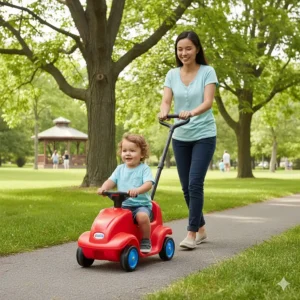
Parent handle push cars deserve special consideration for Canadian families. These ride-ons include rear-mounted handles letting parents guide and control the vehicle’s movement—essentially a stroller alternative.
Benefits specific to Canadian life:
- Navigate icy sidewalks safely during shoulder seasons
- Control speed on sloped driveways common in hilly neighbourhoods
- Manage direction in crowded shopping areas
- Provide outdoor time even before walking independence
The Step2 Push Around Buggy exemplifies this category with its extra-wide ergonomic handle and whisper-ride wheels. Calgary parents rave about using these for winter mall walks, while Vancouver families mention them for rainy-day errands where traditional strollers would be cumbersome.
Consider your lifestyle honestly. Urban families who walk everywhere might use parent-handle models daily, justifying the $75-95 investment. Suburban families with car-dependent lifestyles might find traditional ride-ons more practical for home use.
Indoor vs Outdoor Ride-On Toys: The Canadian Perspective
Canada’s dramatic seasonal shifts make the indoor-outdoor versatility question particularly crucial. You’re not just buying a toy; you’re investing in year-round entertainment that must adapt to everything from -30°C February days to +30°C July heat waves.
Indoor Performance Factors ❄️
With Canadian kids spending significant winter months indoors, interior performance can’t be an afterthought. Here’s what actually matters:
Floor Protection: Hardwood floors dominate Canadian homes, making wheel material critical. Look for soft rubber or plastic wheels rather than hard plastic that scratches. The VTech Stroll & Discover and Radio Flyer Busy Buggy both feature floor-friendly wheels that won’t leave marks on precious oak or maple.
Noise Levels: In apartments and townhouses where noise travels, whisper-ride wheels become essential. The Step2 Push Around Buggy specifically addresses this with its nearly silent operation—your downstairs neighbours will thank you.
Turning Radius: Canadian homes, especially urban condos and older houses, often have tight spaces. The Little Tikes Cozy Coupe’s 360-degree front wheels let toddlers navigate around furniture without getting stuck—reducing frustration for everyone.
Size and Storage: Between November and March, that ride-on lives inside. Foldable options like the VTech Stroll & Discover store in closets when not in use. Larger classics need dedicated space—factor this into your decision if you’re working with 650 square feet of Toronto condo.
Outdoor Durability Requirements ☀️
Canadian outdoor conditions test toy durability in ways gentle-climate regions never experience. Your ride-on must handle:
Temperature Extremes: Plastic becomes brittle in extreme cold. Quality manufacturers like Little Tikes and Radio Flyer use UV-resistant, weather-tested plastics that withstand -40°C winters and blazing summers without cracking.
Moisture Resistance: Spring thaw, summer thunderstorms, and fall drizzle mean moisture exposure. Metal components should be rust-resistant, and electronic toys need protected battery compartments. The Fisher-Price Laugh & Learn 3-in-1 has a sealed electronics area, but still shouldn’t be left in rain.
Surface Versatility: Calgary gravel driveways, Toronto concrete sidewalks, Vancouver wet grass—Canadian outdoor surfaces vary wildly. Models like the Radio Flyer Scoot About Sport with wide, textured wheels handle diverse terrain better than narrow smooth wheels.
Easy Cleaning: Mud, grass stains, and mysterious outdoor gunk require easy cleanup. All-plastic construction beats fabric seats for this reason. A quick spray with the hose, maybe some dish soap, and you’re done.
The Hybrid Approach: Year-Round Flexibility
Smart Canadian parents often choose ride-ons that excel at both indoor and outdoor use, maximizing utility across seasons. Here’s how to identify true dual-purpose champions:
Removable Electronic Components: The VTech Sit, Stand & Ride lets you detach the activity panel, taking electronics inside while the frame lives outdoors. This protects expensive parts from weather while maintaining outdoor play options.
Multiple Wheel Options: Some premium models include interchangeable wheels—smooth for indoors, treaded for outdoors. While rare in the 1-year-old category, it’s worth watching for.
Protective Storage: If storing outdoors between uses, invest in a weatherproof cover or designated shed space. A $15 tarp protects a $90 investment during those unpredictable June rainstorms.
Seasonal Rotation: Many families run two-toy systems: sturdy outdoor classics for summer (Little Tikes), educational walkers for winter indoor time (VTech). This maximizes both toy longevity and developmental benefits.
Climate-Specific Recommendations by Region 🍁
Prairie Provinces (Alberta, Saskatchewan, Manitoba): Extreme temperature swings demand exceptional durability. Choose all-plastic construction over mixed materials. The Little Tikes Cozy Coupe survives Regina winters like a champ.
Coastal BC: Constant moisture makes rust-resistance crucial. Avoid exposed metal components. The Radio Flyer lines use coated hardware that handles Vancouver drizzle.
Ontario/Quebec Urban: Limited indoor space plus cold winters? Opt for compact, foldable models like VTech Stroll & Discover that store easily in 700-square-foot Toronto condos.
Atlantic Provinces: Salt air and moisture? All-plastic bodies without fabric seats. Easy-clean designs let you hose off that persistent fog-moisture film.
Northern Territories: Ultra-long winters mean indoor use dominates. Prioritize quiet, floor-friendly models with robust indoor play features. Electronic learning toys provide mental stimulation during extended dark periods.

Safety Standards and Certifications in Canada 🛡️
When shopping for toddler ride on cars outdoor or indoor use, understanding Canadian safety requirements protects your child and ensures you’re buying legitimate products. Health Canada and the Canadian Standards Association (CSA) maintain specific regulations for children’s toys.
Essential Safety Certifications to Look For
Every ride-on toy sold in Canada must meet certain standards, but not all carry the same certifications. Here’s what to prioritize:
Health Canada Compliance: All toys sold in Canada must comply with the Canada Consumer Product Safety Act and Hazardous Products Act. This ensures products don’t contain lead paint, have appropriate choking hazard warnings, and meet flammability standards.
ASTM F963 Certification: This American Society for Testing and Materials standard is recognized in Canada and covers mechanical, physical, and chemical properties. Look for this marking on packaging.
Age Appropriateness: Products must be labelled with appropriate age ranges. For ride on toys for 1 year old, this typically shows as “12 months+” or “18 months+”. These aren’t suggestions—they’re based on developmental testing and safety assessments.
Weight Capacity Warnings: Most ride-ons specify maximum weight limits, typically 42-50 lbs (19-23 kg) for toddler models. Exceeding these limits risks structural failure and injury.
Material Safety Considerations
The materials contacting your child’s hands and mouth matter immensely. Canadian parents should verify:
BPA-Free Plastics: While Canada banned BPA in baby bottles in 2010, it’s still worth confirming with ride-on toys. Reputable brands like Fisher-Price, Little Tikes, and VTech explicitly state BPA-free construction.
Non-Toxic Paints and Finishes: Toddlers explore everything orally. Ensure painted surfaces use food-grade, non-toxic coatings. Check for “non-toxic paint” or “lead-free” labels.
Phthalate-Free Components: These chemicals, sometimes used to soften plastics, are restricted in Canada. Quality manufacturers explicitly advertise phthalate-free products.
Smooth Edges: Run your hand along all edges before purchase. There should be no sharp corners, rough plastic burrs from molding, or exposed screws. The Little Tikes Cozy Coupe and Step2 Push Around Buggy both excel at smooth finishing.
Assembly and Maintenance Safety 🔧
Even the safest toy becomes dangerous if improperly assembled or maintained. Canadian parents should:
Follow Assembly Instructions Exactly: That “30-45 minute assembly” on the Cozy Coupe? Don’t rush it. Skipping steps or incorrectly tightening bolts compromises structural integrity.
Regular Safety Checks: Monthly inspections catch problems early:
- Tighten any loose screws or bolts
- Check wheels for wear or damage
- Inspect plastic for cracks (especially after outdoor winter storage)
- Test electronic components for water damage
- Verify seat belts still latch securely
Proper Storage: Canadian weather extremes stress materials. Store ride-ons indoors during deep winter if possible. If outdoor storage is necessary, use covered areas and weatherproof covers.
Replacement Parts: Keep manufacturer information for ordering replacement wheels, screws, or components. Radio Flyer and Little Tikes maintain excellent parts availability even for older models.
Supervision Requirements by Age
Health Canada and developmental experts recommend:
12-18 Months: Constant direct supervision. One-year-olds lack spatial awareness and can tip over or crash into furniture. Stay within arm’s reach during use.
18-24 Months: Active supervision with regular check-ins. You can be in the same room but should maintain visual contact.
24-36 Months: General supervision appropriate for known safe spaces. However, stairs, driveways near roads, and pools still require constant attention.
Common Safety Mistakes to Avoid ⚠️
Using on Stairs: Never allow ride-on use near staircases without gates. Even vehicles with parent handles can tip if a wheel goes over a step.
Outdoor Road Use: Driveways near active streets require barriers or constant supervision. Toddlers don’t understand traffic danger.
Modified Toys: Adding seats, ropes, or other modifications voids safety certifications and creates hazards.
Hand-Me-Downs Without Inspection: That Facebook Marketplace deal looks tempting, but thoroughly inspect used toys. Check for recalls via the Health Canada website before buying second-hand.
Ignoring Recalls: Register your product with the manufacturer and check Health Canada’s consumer product recalls database regularly. Little Tikes and Fisher-Price maintain updated recall lists on their websites.
Age Appropriate Ride On Vehicles: Matching Toys to Developmental Stages
Not all age appropriate ride on vehicles serve one-year-olds equally well. The 12-36 month period encompasses massive developmental leaps, and the right toy at the right time maximizes both safety and benefit.
9-12 Months: Pre-Walking Preparation 👶
At this stage, babies are typically pulling up, cruising furniture, and possibly taking those first magical steps. The best ride-on toys support—not rush—this natural progression.
Ideal Features:
- Sturdy walker handles for support (VTech Stroll & Discover, Fisher-Price Laugh & Learn)
- Low centers of gravity preventing tip-overs
- Wide wheelbases for stability
- Speed-control mechanisms slowing premature fast walking
The VTech Stroll & Discover Activity Walker particularly shines here with its adjustable two-speed wheel settings. Place it on setting one, and it provides just enough resistance to support those wobbly first steps without running away from them. As confidence builds over weeks, switch to setting two for less resistance.
Developmental Focus: At this age, the goal isn’t riding—it’s walking support. The activity panels on walker models provide engaging floor-time play before mobility, making them excellent value investments.
Canadian Parent Tip: Our hardwood floors are unforgiving for falls. Walker-style toys with speed control prevent those heart-stopping moments when babies take off running before they’re ready.
12-18 Months: The Transition Period 🚶
Most toddlers walk independently sometime during this window. Walking stabilizes, coordination improves, and suddenly they’re ready to try scooting on actual ride-ons.
Ideal Features:
- Low seat heights (maximum 15-20 cm from ground)
- Foot-to-floor designs letting kids push themselves
- Simple operation without pedals or complex steering
- Under-seat storage encouraging imaginative play
The Radio Flyer Busy Buggy fits this stage perfectly. It’s low enough that 12-month-olds can climb on independently, sturdy enough to support those first scooting attempts, and engaging enough with its 17 interactive activities to hold interest for months.
Developmental Focus: This stage is about mastering gross motor coordination—the big movements. Pushing with legs while steering (even decoratively) builds neural pathways supporting future biking, skating, and other complex activities.
Foot Protection Consideration: Many Canadian toddlers this age wear soft-soled shoes or go barefoot indoors. Removable floorboards like those on the Little Tikes Cozy Coupe protect tiny feet from scraping floors while also allowing foot-to-floor scooting.
18-24 Months: Confident Movers 🏃
By 18 months, most toddlers run, climb, and show genuine vehicle-control skills. They’re ready for more sophisticated ride-ons that challenge growing abilities.
Ideal Features:
- Working steering mechanisms (Radio Flyer Scoot About Sport)
- Higher weight capacities (50 lbs/23 kg) accommodating growth
- Realistic features sparking dramatic play (doors, horns, keys)
- Outdoor durability for expanding play territories
The Little Tikes Cozy Coupe becomes perfect now. Its working door, honking horn, and gas cap fuel elaborate imaginative scenarios. “I’m going to the store!” “I need gas!” These aren’t just cute phrases—they’re language practice, sequencing skills, and social learning combined.
Developmental Focus: Toddlers this age integrate physical and cognitive skills. They’re not just moving—they’re planning routes, solving problems (how to navigate around that chair), and engaging in pretend play.
Canadian Outdoor Safety: This age brings increased outdoor interest. Supervision remains critical near driveways and roads, but toddlers can explore backyards and parks with appropriate oversight. The Step2 Push Around Buggy with parent handle provides control during these outdoor adventures.
24-36 Months: Advanced Riders 🚗
Two-year-olds show remarkable coordination and strength. They’re ready for ride-ons approaching the maximum age ranges on most toys, and might even be eyeing tricycles.
Ideal Features:
- Legitimate steering affecting movement direction
- Larger frames accommodating growing bodies
- Optional parent handles for transition to independence
- Complex interactive elements matching cognitive development
At this stage, children maximize value from sophisticated models like the Fisher-Price Laugh & Learn 3-in-1. The Smart Stages content that seemed advanced at 12 months now matches their vocabulary growth and conceptual understanding.
Developmental Focus: This period emphasizes independence, decision-making, and physical confidence. The right ride-on toy supports their “I do it myself!” phase while still providing appropriate adult oversight.
Transition Planning: By 30-36 months, many kids are ready for pedal tricycles or balance bikes. That doesn’t mean abandoning ride-ons—they often remain favourites for imaginative play even when motor skills have progressed beyond them.
Maximizing Value: Care and Maintenance Tips 💰
Canadian prices for quality ride-on toys range $55-$150 CAD, making proper care essential for protecting your investment. Here’s how to ensure your child’s toy lasts through multiple developmental stages and possibly even younger siblings.
Seasonal Storage Strategies
Winter Indoor Storage (November-March):
- Clean thoroughly before bringing inside (mud, road salt, outdoor debris)
- Remove batteries from electronic toys to prevent corrosion
- Store in climate-controlled spaces—unheated garages experience temperature swings damaging plastic
- Disassemble if space-limited (most require only basic tools)
- Cover with breathable fabric to prevent dust while allowing air circulation
The VTech Stroll & Discover with foldable legs exemplifies winter-friendly design. One Ontario parent mentioned storing it in their hall closet between December and March, then reintroducing it when spring arrived—the toddler treated it like a new toy all over again.
Summer Outdoor Care (June-September):
- Designate covered porch or shed space protecting from direct sun (UV degrades plastic)
- Use weatherproof covers during rain (even “outdoor-rated” electronics shouldn’t sit in standing water)
- Store upside down preventing water accumulation in seats
- Check weekly for spider webs or insect nests in crevices
Spring/Fall Transition Periods: These shoulder seasons see the most weather variability. Quick-drying after rain prevents mold, while bringing toys in during unexpected cold snaps protects against freeze damage.
Cleaning and Sanitization
Regular Cleaning (Weekly During Active Use):
- Wipe down all surfaces with damp cloth and mild dish soap
- Pay special attention to high-touch areas (steering wheels, horns, door handles)
- Clean wheel treads removing accumulated gunk affecting smooth rolling
- Dry thoroughly preventing moisture damage
Deep Cleaning (Monthly):
- Disassemble electronic components if removable (VTech models make this easy)
- Use child-safe disinfectant wipes on all plastic surfaces
- Scrub textured areas with soft brush removing embedded dirt
- Inspect all screws, bolts, and connection points for loosening
Sanitization (As Needed): When illness strikes Canadian households—especially during our brutal cold and flu seasons—sanitize toys your toddler mouths frequently. Most plastic ride-ons tolerate diluted bleach solutions (1 tablespoon bleach per gallon of water). Wipe down, let sit 5 minutes, rinse thoroughly, and air dry.
What NOT to Do:
- Never pressure-wash (forces water into electronic compartments)
- Avoid harsh chemicals like ammonia (can weaken plastic bonds)
- Don’t leave wet—moisture promotes mold in Canadian humidity
- Skip dishwashers (high heat warps plastic)
Repair and Parts Replacement 🔧
Common Repairs You Can Handle:
Loose Wheels: Usually requires tightening the axle bolt. Keep appropriate wrench sizes handy. The Little Tikes Cozy Coupe manual specifies 13mm for most connections.
Worn Wheel Treads: Replacement wheels cost $8-15 CAD on manufacturer websites. Both Radio Flyer and Little Tikes stock parts for models dating back years.
Battery Corrosion: White crusty buildup in battery compartments? Remove batteries immediately. Clean contacts with vinegar on a cotton swab, dry completely, and insert fresh batteries.
Cracked Plastic (Minor): Small cracks can be reinforced with plastic epoxy rated for children’s toys. For cracks near stress points or potential pinch areas, replacement is safer.
Extending Lifespan Through Smart Use
Indoor Surface Protection: Place rugs or foam mats under primary riding areas. This protects both floors from wheel marks and toys from hard-floor impact during inevitable topples.
Outdoor Surface Selection:
Concrete driveways accelerate wheel wear compared to grass or rubber playground surfaces. Rotate usage areas to distribute wear evenly.
Load Management: Respect weight limits. That tempting “let’s give your big brother a ride!” moment stresses joints and wheels designed for toddler weights.
Multi-Child Household Timing: If you have multiple young children, introduce ride-ons to the older child first, then hand down to younger siblings. This maximizes usage years and justifies higher initial investments in premium models like the Little Tikes Cozy Coupe built to survive 5+ years.
When to Retire a Ride-On Toy
Safety should always trump sentimentality. Replace when:
Structural Integrity Fails:
- Cracks propagate near weight-bearing areas
- Wheels no longer roll smoothly or have chunks missing
- Seat shows wear allowing pinching or catching
Outgrown Stage:
- Child’s weight exceeds maximum specification
- Feet drag rather than push effectively (time for larger vehicles)
- Interest has completely waned despite encouragement
Recall Issues: Check Health Canada’s product recall database before purchasing used toys and periodically for owned items. Manufacturers sometimes issue recalls years after release.
Resale and Hand-Me-Down Potential 💵
Quality ride-ons maintain surprisingly strong resale value in Canada. A well-maintained Little Tikes Cozy Coupe originally costing $100 CAD often sells for $40-60 after 2-3 years of use on Facebook Marketplace or Kijiji.
Maximizing Resale Value:
- Keep original packaging (improves presentation)
- Document maintenance and cleaning
- Take well-lit photos showing condition honestly
- Include all original accessories and manuals
- Price slightly below current retail for quick sales
Hand-Me-Down Success: Within families, ride-ons often serve 2-3 children sequentially. The Fisher-Price Laugh & Learn 3-in-1, while initially $80 CAD, divides to under $30 per child when shared among siblings—exceptional value for an educational toy.
Budget Considerations: Finding Quality at Every Price Point
Canadian families shopping for ride on toys for 1 year old face a wide price range, from $55 budget options to $150+ premium models. Understanding what drives these differences helps you make informed choices that balance quality, features, and affordability.
Budget Tier: $55-$70 CAD 💵
This price range offers excellent value for families prioritizing function over flash. The VTech Stroll & Discover Activity Walker ($55-70 CAD) exemplifies budget-tier quality—it’s not cheap, it’s economical.
What You Get:
- Basic but functional educational features
- Sturdy construction from reputable brands
- Single-purpose or simple 2-in-1 designs
- Standard safety features meeting Canadian requirements
- Limited extras (no parent handles, basic storage)
What You Sacrifice:
- Fewer interactive elements
- Less sophisticated educational content
- Shorter lifespan before outgrowing
- Limited or no convertibility
Best For:
- First-time purchases when unsure of child’s interest
- Families planning multiple children (buy budget now, upgrade later)
- Apartment dwellers prioritizing compact size over features
- Those on tight budgets who still want quality
Mid-Range Tier: $70-$90 CAD 💰
The sweet spot for most Canadian families falls here. Models like the Fisher-Price Laugh & Learn 3-in-1 ($66-80 CAD) and Radio Flyer Busy Buggy ($60-90 CAD) deliver exceptional feature-to-price ratios.
What You Get:
- 2-in-1 or 3-in-1 versatility extending usage years
- Robust educational content with Smart Stages or equivalent
- Superior build quality from industry-leading brands
- Multiple play modes supporting different developmental stages
- Better weather resistance for outdoor use
What You Sacrifice:
- Not quite the ultra-durability of premium classics
- Possibly lighter plastic than highest-end models
- May lack parent handles or premium control features
Best For:
- Most families seeking long-term value
- Those wanting educational benefits alongside physical play
- Households with limited space requiring multi-purpose toys
- Parents who appreciate convertibility as kids grow
Premium Tier: $90-$150 CAD 💎
Premium options like the Little Tikes Cozy Coupe ($95-100 CAD) and Step2 Push Around Buggy ($75-95 CAD) represent investments in classic durability and specialized features.
What You Get:
- Exceptional build quality surviving years of hard use
- Premium materials resisting Canadian weather extremes
- Sophisticated features (parent handles, realistic details)
- Higher weight capacities accommodating larger/older toddlers
- Strong resale value recovering significant initial investment
- Brand heritage and proven track records (Cozy Coupe since 1979!)
What You Sacrifice:
- Higher upfront cost straining some budgets
- Often single-purpose (though that purpose is perfected)
- May lack electronic educational components
- Larger sizes requiring more storage space
Best For:
- Families planning multiple children (one purchase serves all)
- Those prioritizing imaginative play over electronic learning
- Parents wanting hand-me-down potential or resale value
- Households with dedicated toy storage space
Hidden Costs to Consider 🔍
Battery Replacement: Electronic toys need ongoing battery purchases. The Fisher-Price Laugh & Learn 3-in-1 uses 2 AA batteries lasting approximately 2-3 months with regular use. Budget roughly $20-30/year for batteries, or invest in rechargeable AA batteries ($25-35 upfront but paying for themselves within a year).
Replacement Parts: Wheels wear out, especially with outdoor use on rough Canadian surfaces. Replacement wheels cost $8-15 per set. Knowing your manufacturer stocks parts helps—Radio Flyer and Little Tikes maintain extensive part inventories.
Safety Equipment: While not strictly part of the ride-on cost, proper helmets for outdoor use on sloped surfaces run $20-40 CAD. Some experts recommend helmets for faster ride-ons even at this age.
Storage Solutions: If storing outdoors, weatherproof covers cost $15-30. Indoor storage might require bins, shelving, or garage organization systems.
Seasonal Sales and Discounts 🎁
Smart Canadian shoppers time purchases strategically:
Black Friday/Cyber Monday (Late November): Expect 20-40% off retail on Amazon.ca and major retailers. This is when the Fisher-Price and VTech models see deepest discounts.
Boxing Week (December 26-31): Canadian retailers clear holiday inventory. Both Toys R Us Canada and Canadian Tire historically offer strong ride-on toy discounts.
Spring Clearing (March-April): As retailers make room for summer inventory, winter-stored ride-on stock gets reduced. Great time for budget finds.
Amazon Prime Day (July): Significant discounts appear on select models. Set alerts for your wishlist items.
Back-to-School (August-September): Counterintuitively, toy discounts emerge as retailers make room for school supplies.
Where to Buy in Canada 🇨🇦
Amazon.ca:
- Pros: Vast selection, customer reviews, Prime shipping
- Cons: Prices fluctuate, hard to inspect before purchase
- Best for: Specific model research, comparing prices
Toys R Us Canada:
- Pros: Knowledgeable staff, hands-on testing, easy returns
- Cons: Higher base prices (though price-match policy helps)
- Best for: First-time buyers needing guidance
Canadian Tire:
- Pros: Extensive outdoor toy selection, Canadian Triangle Rewards
- Cons: Limited educational/electronic models
- Best for: Classic outdoor ride-ons and seasonal sales
Walmart Canada:
- Pros: Competitive pricing, convenient locations
- Cons: Limited selection compared to specialty retailers
- Best for: Budget-conscious shoppers prioritizing price
Facebook Marketplace/Kijiji:
- Pros: Significant savings (40-60% off retail)
- Cons: No returns, must inspect carefully, recall checking required
- Best for: Budget shoppers comfortable with used items
Cost-Per-Use Analysis 📊
Let’s break down real-world value using examples:
Budget Option: VTech Stroll & Discover ($60 CAD)
- Usage period: 9-24 months (15 months)
- Cost per month: $4.00
- Battery cost year one: ~$20
- Total first-year cost: $80 ($5.33/month)
Mid-Range Option: Fisher-Price Laugh & Learn 3-in-1 ($75 CAD)
- Usage period: 9-36 months (27 months)
- Cost per month: $2.78
- Battery cost year one: ~$25
- Total first-year cost: $100 ($8.33/month first year, then $25/year)
Premium Option: Little Tikes Cozy Coupe ($100 CAD)
- Usage period: 18-60 months (42 months)
- Cost per month: $2.38
- Battery cost: $0 (no batteries)
- Resale value after use: ~$45-60 CAD
- Net cost: $40-55 ($0.95-$1.30/month)
When calculated this way, premium options often deliver superior value despite higher initial prices—especially when factoring resale potential or hand-me-down use for subsequent children.
FAQ: Your Top Questions About Ride On Toys Answered
❓ What is the best age to introduce ride on toys for 1 year old in Canada?
❓ Are ride on toys safe for toddlers to use indoors on Canadian hardwood floors?
❓ How much should I expect to spend on quality ride on toys for 18 month old in Canada?
❓ Do parent handle push cars work better than self-propelled ride-ons for beginners?
❓ What are the most important safety features for toddler ride on cars outdoor use in Canada?
Conclusion: Making the Right Choice for Your Canadian Family
Choosing the perfect ride on toys for 1 year old isn’t about finding a single “best” option—it’s about matching the right toy to your child’s unique developmental stage, your family’s lifestyle, and the specific demands of Canadian living.
Throughout this guide, we’ve examined seven outstanding options available on Amazon.ca, each excelling in different ways. The Fisher-Price Laugh & Learn 3-in-1 Smart Car leads for educational value and developmental versatility, growing from walker to bouncer to ride-on while teaching bilingual content. For pure durability and nostalgic charm, the Little Tikes Cozy Coupe remains unmatched after 45+ years of making childhood memories across Canadian backyards.
Budget-conscious families will find exceptional value in the VTech Stroll & Discover Activity Walker, delivering multiple play modes and educational content for under $70 CAD. Meanwhile, active families who love outdoor adventures should seriously consider the Step2 Push Around Buggy with its parent handle providing control during neighbourhood walks and park visits.
Remember these key considerations as you shop:
Developmental Appropriateness: Match the toy to your child’s current skills, not their age alone. Walker-style models support early cruisers, while traditional ride-ons reward confident walkers.
Space and Storage: Canadian homes vary dramatically from 600-square-foot Toronto condos to sprawling prairie houses. Choose toys fitting your available space, considering seasonal storage needs.
Indoor vs. Outdoor Balance: Our climate demands toys performing well in both environments. Prioritize floor-friendly wheels for hardwood, weather-resistant plastics for outdoor durability.
Multi-Purpose Value: With prices ranging $55-$150 CAD, convertible 2-in-1 or 3-in-1 models often deliver superior long-term value despite higher upfront costs.
Safety First, Always: Check weight limits, verify proper assembly, maintain regular inspections, and never compromise on safety certifications from Health Canada and ASTM.
The best ride-on toy for your family might be the budget-friendly walker supporting first steps, the interactive buggy with 17 sensory activities, or the classic coupe that’ll serve multiple children over many years. What matters most is choosing thoughtfully based on your specific needs rather than following trends or marketing.
Canadian parents have access to exceptional ride-on options through Amazon.ca, Toys R Us Canada, Canadian Tire, and other retailers. Take advantage of seasonal sales, read detailed customer reviews from fellow Canadians, and don’t hesitate to ask in-store staff for hands-on demonstrations.
Your child’s journey from tentative first steps to confident scooting adventures deserves support from quality toys that safely encourage exploration, build motor skills, and create those priceless early childhood memories. Whether you choose the tech-forward VTech models, the timeless Little Tikes classics, or the innovative Radio Flyer designs, you’re investing in developmental tools disguised as pure fun—and that’s parenting magic at its finest.
Recommended for You
- 7 Best 3-in-1 Baby Swing Outdoor 2026 (Canada)
- 7 Best Portable Baby Swing Outdoor 2026
- 7 Best Baby Swing for Tree Options Canada 2026
Disclaimer: This article contains affiliate links to Amazon.ca. If you purchase products through these links, we may earn a small commission at no additional cost to you.
✨ Found this helpful? Share it with your friends! 💬🤗
