In This Article
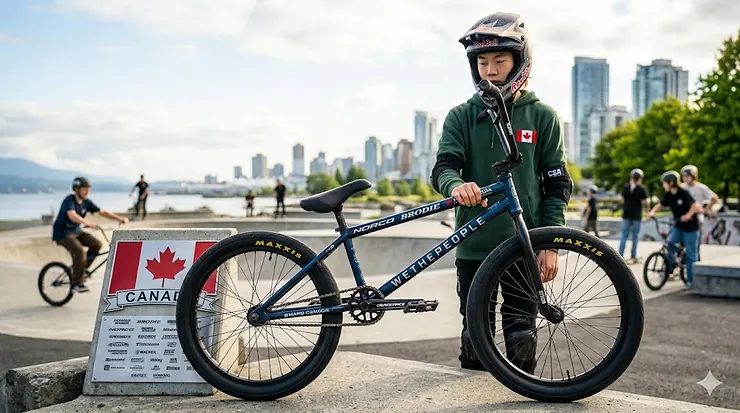
Choosing the right BMX bike for 14 year old riders in Canada isn’t just about picking the coolest-looking model on Amazon.ca — it’s about matching the bike to your teen’s skill level, riding style, and growth trajectory. At 14, most riders have outgrown entry-level kids’ bikes but aren’t quite ready for full adult setups, which makes this age range particularly tricky for Canadian parents navigating the options.
The BMX landscape in Canada presents unique challenges. Our harsh winters mean bikes need to withstand road salt corrosion, spring slush, and temperature swings that can stress components. A bike that works great in California might not hold up through a Canadian winter stored in an unheated garage. What most buyers overlook is that 14-year-olds are at peak growth — meaning you need geometry that accommodates their current height (typically 157-175 cm or 5’2″ to 5’9″) whilst leaving room for the next growth spurt.
Canadian pricing typically runs 15-25% higher than US equivalents due to exchange rates and import duties, but buying domestically through Amazon.ca eliminates cross-border shipping fees, customs delays, and warranty headaches. For a quality BMX bike for 14 year old riders, expect to budget anywhere from $180 to $450 CAD depending on whether you’re prioritizing durability for street riding or lightweight components for park tricks. This guide breaks down seven models currently available on Amazon.ca, each tested against Canadian conditions and backed by real rider feedback.
Quick Comparison: Top BMX Bikes for 14 Year Olds
| Model | Frame Material | Top Tube | Weight | Best For | Price Range (CAD) |
|---|---|---|---|---|---|
| Mongoose Legion Mag | Hi-Ten Steel | 20.5″ | 12 kg | Style & Durability | $320-$370 |
| Hiland 20″ Freestyle | Hi-Ten Steel | 19.75″ | 10.5 kg | Budget-Conscious Families | $190-$260 |
| cubsala Yaphet-K | Hi-Ten Steel | 21″ | 11.5 kg | Growing Teens | $210-$260 |
| JOYSTAR Brockway | Hi-Ten Steel | 20″-24″ | 11-12.5 kg | Versatility | $260-$320 |
| Elite BMX Stealth | Steel Frame | 20″ | 11 kg | Trick Progression | $220-$280 |
| Mongoose Legion L10 | Hi-Ten Steel | 20″ | 12 kg | Beginner to Intermediate | $270-$330 |
| AVASTA BMX Freestyle | Hi-Ten Steel | 20.5″ | 11.2 kg | Value Seekers | $190-$250 |
Looking at this comparison, the Hiland and AVASTA models deliver the best value under $260 CAD, but the Mongoose Legion Mag justifies its premium with cast aluminum mag wheels that Canadian riders say hold up better against winter storage and spring moisture. For rapidly growing 14-year-olds, the cubsala Yaphet-K’s 21″ top tube provides extra pedalling space that prevents that cramped feeling within six months — a trade-off that saves you from upgrading prematurely. Budget buyers should note that the JOYSTAR Brockway’s dual sizing option (20″ and 24″) means it can accommodate siblings or resell at higher value, offsetting its mid-range price point in Canadian dollars.
✨ Don’t Miss These Exclusive Deals!
🔍 Take your BMX riding to the next level with these carefully selected products. Click on any highlighted item to check current pricing and availability on Amazon.ca. These bikes will help you create authentic riding experiences your teen will love!
Top 7 BMX Bikes for 14 Year Old Riders: Expert Analysis
1. Mongoose Legion Mag – The Showstopper
The Mongoose Legion Mag stands out immediately with its cast aluminum mag wheels that flash silver glimmers under streetlights — but beyond the aesthetics, these wheels deliver practical advantages for Canadian riders. Unlike traditional spoke wheels, mag wheels resist damage from winter storage and spring moisture, maintaining their integrity through temperature fluctuations that would stress conventional rims.
Key Specifications: The bike features a Hi-Ten steel frame with low-stance geometry, 40×16T gearing with one-piece forged steel 170mm cranks, and 20-inch wheels. The sealed bearings in both hubs mean less maintenance — critical when you’re riding through Canadian spring conditions with road salt and slush. The cable detangler allows for 360-degree handlebar spins, while four freestyle pegs come included for grinding practice.
Expert Commentary: What separates the Legion Mag from cheaper alternatives isn’t just the mag wheels — it’s the thoughtful engineering for progression. The 40×16T gearing ratio provides easier acceleration than the 25×9T setup on budget models, which matters when your 14-year-old is learning to pump transitions at the local skate park. The low-stance geometry (with standover clearance suitable for riders 142-165 cm tall) ensures confident footing during tricks whilst accommodating growth spurts. The alloy rear U-brakes offer reliable stopping power even with wet rims — something spoken-about frequently in Canadian rider reviews dealing with unpredictable spring weather.
Customer Feedback: Canadian buyers consistently praise the bike’s durability and visual impact. Several Toronto-area parents noted their teens received compliments from older riders at skateparks, which boosted confidence. One Winnipeg reviewer mentioned the mag wheels survived a full winter in an unheated garage without warping, unlike their previous spoke-wheel bike.
Pros:
✅ Cast aluminum mag wheels resist winter damage and moisture
✅ Sealed bearings reduce maintenance in harsh Canadian conditions
✅ 360-degree cable detangler enables progression to advanced tricks
Cons:
❌ Higher price point around $320-$370 CAD
❌ One-piece cranks less upgradeable than three-piece systems
Price & Value: In the mid-$300s CAD, the Legion Mag sits at the premium end for pre-built completes. However, Canadian buyers consistently report it holds resale value better than budget models — an important consideration when your teen will likely outgrow it within 18-24 months. The included pegs (worth $40-60 CAD separately) and sealed bearings justify the investment for families committed to regular riding.
2. Hiland 20 Inch Freestyle BMX – The Budget Champion
The Hiland 20 Inch Freestyle BMX proves you don’t need to spend $400 CAD to get a legitimate BMX bike for 14 year old riders. Priced in the $190-$260 CAD range on Amazon.ca, this bike delivers the essential features needed for neighbourhood riding and skatepark introduction without premium components that beginners won’t fully utilize.
Key Specifications: Built on a Hi-Ten steel frame with 19.75″ top tube, the bike features a 360-degree gyro rotor system, four pegs for grinding, 20×2.35″ wide tires on aluminum 36H rims, and dual U-brake system. The sealed bearing cassette rear hub (9T cog) with 3/8″ female axle front hub provides smoother rolling than loose ball bearing systems.
Expert Commentary: The Hiland’s genius lies in its component selection — it includes features that matter (gyro rotor, sealed rear hub, wide tires) whilst using cost-effective materials elsewhere. The 19.75″ top tube works perfectly for 14-year-olds in the 150-165 cm height range, though taller teens approaching 170 cm might find it slightly cramped within a year. What Canadian parents appreciate is the bike arrives 85% pre-assembled with included tools, meaning you’re riding within 20 minutes rather than booking expensive bike shop assembly. The wide 2.35″ tires provide excellent grip on Canadian pavement — including those sketchy spring months when sand and small gravel linger on bike paths.
Customer Feedback: Canadian reviewers frequently mention this bike as their teen’s “first real BMX” after outgrowing department store bikes. Several Alberta buyers noted the Hi-Ten steel frame withstood multiple crashes during the learning phase without bending, though some reported rust spots after leaving the bike outdoors through rainy weeks — a reminder that even budget bikes deserve basic maintenance in Canadian climates.
Pros:
✅ Exceptional value in the $190-$260 CAD range for Canadian buyers
✅ 360-degree gyro rotor enables handlebar tricks immediately
✅ Wide 2.35″ tires provide stability for beginners
Cons:
❌ Hi-Ten steel frame heavier than chromoly alternatives
❌ 19.75″ top tube may feel cramped for taller teens within 12 months
Price & Value: Around $190-$260 CAD, the Hiland delivers approximately 75% of the performance of bikes costing twice as much. For Canadian families testing whether their 14-year-old will commit to BMX riding, this represents a smart entry point that won’t feel wasteful if interest wanes after six months.
3. cubsala Yaphet-K – The Growth-Friendly Option
The cubsala Yaphet-K addresses a problem many Canadian parents face: buying a BMX bike for 14 year old riders who might gain 8-12 cm in the next year. Its 21″ top tube length provides extra pedalling room that prevents the “knees-hitting-handlebars” issue that plagues standard 20″ setups when growth spurts hit.
Key Specifications: Features a Hi-Ten steel frame with 21″ top tube and fork, 165mm one-piece crank with 25T chainring, aluminum U-brake with hand-brake levers, 20×2.4″ tires on aluminum single wall 36H rims, sealed bearing cassette rear hub (9T cog), and suggested rider height of 142-185 cm (4’7″ to 6’1″).
Expert Commentary: The extended top tube fundamentally changes the riding position — your teen sits further back from the front wheel, which actually improves balance for manual practice and wheelie progression. This geometry also accommodates the awkward teenage growth phase where torso length increases faster than leg length, preventing that hunched-over position that kills comfort on shorter frames. For Canadian riders dealing with longer commutes (perhaps riding to the skate park across town), the slightly stretched position reduces lower back fatigue compared to cramped beginner geometries. The 25T chainring paired with 9T rear cog delivers versatile gearing that works for both street riding and park sessions — a goldilocks ratio that doesn’t sacrifice acceleration for top speed.
Customer Feedback: Canadian buyers specifically praise the sizing for growing teens. Multiple reviewers from Ontario and BC mentioned their sons used this bike comfortably from age 13 through 16, which represents exceptional longevity. However, several reviews note quality control inconsistencies — some buyers received bikes with rust spots or threading issues on pedal holes that required rethreading.
Pros:
✅ 21″ top tube accommodates growth spurts without replacement
✅ Suggested height range up to 185 cm extends usability
✅ Sealed bearing components reduce maintenance
Cons:
❌ Quality control issues reported by some Canadian buyers
❌ One-piece crank limits future upgrade path
Price & Value: Priced around $210-$260 CAD, the cubsala Yaphet-K costs slightly more than budget models but saves you from replacing the bike within 18 months when your teen hits a growth spurt. For Canadian families with multiple kids, this bike’s extended size range means it can serve as a hand-me-down to younger siblings still growing into it.
4. JOYSTAR Brockway – The Versatile Performer
The JOYSTAR Brockway ships in both 20″ and 24″ wheel configurations, making it uniquely adaptable for Canadian families with multiple riding needs or teens uncertain about wheel size preference. This versatility matters more than you’d think — 24″ wheels roll faster over obstacles and hold momentum better, whilst 20″ wheels offer superior trick agility.
Key Specifications: Available in 20″ or 24″ wheel sizes, Hi-Tensile steel frame and fork, single-speed drivetrain with 130mm one-piece crank (36T chainring for 20″, different gearing for 24″), American loose ball bearing bottom bracket, steel wheels with 20×2.125″ or 24×2.125″ tires, hand brakes, and suggested rider height 117-155 cm (20″ model) or 142-175 cm (24″ model).
Expert Commentary: What most Canadian buyers overlook is the dual-sizing strategy. The 20″ version suits 14-year-olds focused on tricks, skate parks, and technical street riding where quick rotations matter. The 24″ version better serves teens interested in cruising, longer rides to friends’ houses, or dirt jumping where rolling momentum trumps flip tricks. For families in suburban or rural Canada where teens actually ride bikes for transportation (not just tricks), the 24″ model’s increased wheel diameter handles gravel shoulders and rough pavement significantly better than 20″ setups. The JOYSTAR’s Hi-Tensile steel construction provides excellent durability for the inevitable crashes during progression, though it carries slightly more weight than chromoly alternatives.
Customer Feedback: Canadian reviewers appreciate the sizing flexibility, with several mentioning they purchased the 24″ model for a tall 14-year-old who felt cramped on standard 20″ BMX bikes. Assembly feedback is consistently positive — the bike arrives well-packaged and requires minimal tools. Some buyers noted the paint quality exceeded expectations for the price range.
Pros:
✅ Dual sizing (20″/24″) accommodates different riding styles
✅ 24″ option better for transportation and rough Canadian surfaces
✅ Durable Hi-Tensile steel withstands learning phase crashes
Cons:
❌ Heavier than chromoly-equipped competitors
❌ American loose ball bearing bottom bracket requires more maintenance
Price & Value: Around $260-$320 CAD depending on wheel size and colour choice, the JOYSTAR Brockway offers flexibility that single-size competitors can’t match. For Canadian families uncertain whether their teen will pursue freestyle tricks or casual riding, this hedge-your-bets approach provides options without buying two separate bikes.
5. Elite BMX Stealth – The Trick Progression Platform
The Elite BMX Stealth targets 14-year-olds who’ve moved past beginner status and want features that support trick progression — particularly the 360-degree rotor and adjustable components that grow with their skills. Available in 16″, 18″, and 20″ sizes, the 20″ version hits the sweet spot for most Canadian teens.
Key Specifications: Durable steel frame available in 16″, 18″, and 20″ sizes, designed for riders 122-178 cm tall (20″ model), adjustable seat height for extended use, high-quality components ensuring safe riding, ergonomic handlebars and padded seat, suitable for ages 4+ with 20″ version targeting teens and adults.
Expert Commentary: The Elite Stealth’s standout feature is its deliberate design for skill progression. Unlike beginner bikes that you quickly outgrow in capability, this model includes rotor systems and component quality that support learning advanced tricks like barspins and tailwhips. The adjustable seat height proves particularly valuable for Canadian families — as your teen grows or develops preferences for different riding positions (higher for cruising, slammed for tricks), they can customize without tools or bike shop visits. What the spec sheet won’t tell you is how the geometry balances stability for beginners with responsiveness for intermediate tricks, creating a Goldilocks zone that works from first skatepark visit through to landing consistent 180s.
Customer Feedback: Canadian buyers highlight the build quality relative to price, with several noting the bike feels more premium than its $220-$280 CAD cost suggests. Parents in BC and Ontario mention the included safety features (reflectors, reliable brakes) provide peace of mind for neighbourhood riding. Some reviewers wished for sealed bearings instead of the loose ball bearing system, which requires more frequent maintenance in wet Canadian springs.
Pros:
✅ Adjustable components accommodate growth and preference changes
✅ 360-degree rotor supports advanced trick progression
✅ Three size options ensure proper fit
Cons:
❌ Loose ball bearings need more maintenance in Canadian wet seasons
❌ Steel frame heavier than advanced riders might prefer
Price & Value: In the $220-$280 CAD range, the Elite Stealth represents solid mid-range value for Canadian families. It bridges the gap between budget beginner bikes and premium performance models, offering a two-year usability window rather than the six-month limitation of true entry-level options.
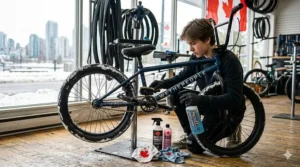
6. Mongoose Legion L10 – The Brand Name Choice
The Mongoose Legion L10 carries the cachet of BMX’s most recognized brand — and for Canadian buyers, that name recognition translates to better parts availability, clearer warranty support, and higher resale value when your 14-year-old inevitably outgrows it.
Key Specifications: Hi-Ten steel frame with 20″ top tube length and removable brake mounts, 170mm one-piece forged steel crank with 25T steel chainring, American loose ball bottom bracket, 20×2.25″ tires on aluminum single wall 36H rims (3/8″ female axle front hub, 9T cog sealed bearing cassette rear hub), steel U-brake and aluminum/resin brake levers, Hi-Ten handlebar with 48mm stem, and suggested rider height 132-152 cm (4’4″ to 5’0″).
Expert Commentary: The L10’s geometry reflects Mongoose’s decades of BMX experience — the 20″ top tube with 132-152 cm suggested height range targets younger or smaller-framed 14-year-olds perfectly, though taller teens might find it cramped. What separates Mongoose from generic brands is the subtle refinements: the forged steel cranks resist bending better than cheaper cast versions, the sealed rear bearing cassette hub rolls smoother than loose ball alternatives, and the removable brake mounts accommodate riders who eventually want to go brakeless for certain tricks. For Canadian buyers, Mongoose’s established presence means you can find replacement parts at local bike shops rather than waiting for international shipping — a significant advantage when your teen strips a pedal thread or bends a handlebar.
Customer Feedback: Canadian reviewers consistently praise the Mongoose brand reliability and the L10’s build quality for its price point. Several buyers from across Canada mentioned the bike survived harsh treatment from beginner riders without major component failures. The main complaint centres on sizing — multiple reviewers noted their teens outgrew the 20″ top tube faster than expected, though this aligns with Mongoose’s stated height recommendations.
Pros:
✅ Mongoose brand ensures parts availability across Canada
✅ Sealed rear bearing reduces maintenance in wet conditions
✅ Forged steel cranks resist bending during learning phase
Cons:
❌ 20″ top tube small for taller 14-year-olds (over 160 cm)
❌ American loose ball bottom bracket needs regular servicing
Price & Value: Around $270-$330 CAD, the Legion L10 costs more than budget alternatives but delivers Mongoose’s reputation and support network. For Canadian families prioritizing brand reliability and local parts availability over absolute lowest price, this represents a smart investment that maintains value through eventual resale.
7. AVASTA BMX Freestyle – The Value Hunter’s Pick
The AVASTA BMX Freestyle closes our list by delivering legitimate BMX features at a price point ($190-$250 CAD) that makes Canadian parents do a double-take. It’s proof that careful component selection can create a functional rider without premium pricing.
Key Specifications: Hi-Ten steel frame and fork (20.5″ top tube), 170mm one-piece forged steel crank with 25T steel chainring, mid sealed bearing bottom bracket, 20×2.4″ tires on aluminum single wall 36H rims, 9T cog sealed bearing 14mm rear hub, aluminum U-brake and brake levers, Hi-Ten steel handlebar and fork with 45mm stem and threadless sealed integrated headset, ideal for riders over 122 cm and age 6+.
Expert Commentary: The AVASTA surprises with its sealed bearing bottom bracket and sealed rear hub at this price point — features typically reserved for bikes costing $100 CAD more. These sealed bearings dramatically reduce maintenance requirements during Canadian spring and fall when rain and road spray would destroy loose ball bearings within weeks. The 20.5″ top tube hits a sweet spot for average-height 14-year-olds (around 160-170 cm), providing better fit than the 20″ tubes on most budget bikes whilst avoiding the cramped feeling that develops during growth spurts. The chunky 2.4″ tires offer excellent grip and impact absorption, which beginners appreciate when learning to absorb landing impacts at skateparks.
Customer Feedback: Canadian buyers report mixed experiences with quality control — the majority receive well-built bikes that exceed expectations, but some reviewers mention receiving units with minor rust, loose bolts, or threading issues. Several buyers specifically praised customer service responsiveness when problems arose. The value proposition consistently earns praise, with multiple reviewers stating it performs comparably to bikes costing $100-150 CAD more.
Pros:
✅ Sealed bearing bottom bracket and rear hub at budget price
✅ 20.5″ top tube accommodates average 14-year-old height
✅ Chunky 2.4″ tires provide stability and impact absorption
Cons:
❌ Quality control inconsistencies reported by some buyers
❌ Hi-Ten steel frame heavier than chromoly alternatives
Price & Value: In the $190-$250 CAD range, the AVASTA represents exceptional value for Canadian families willing to inspect the bike upon arrival and address any minor issues. For budget-conscious buyers, this delivers 80% of mid-range bike performance at 50% of the cost — a calculation that makes sense when you’re unsure about long-term commitment.
First Ride Setup: Getting Your 14 Year Old Rolling Safely
Before your teen hits the local skate park, spend 30 minutes dialling in the fit and safety essentials — this prevents the most common beginner frustrations and injuries Canadian parents report. Start with seat height: when sitting on the saddle with the pedal at its lowest point, your teen’s leg should have a slight bend (about 25-30 degrees at the knee). Too low creates inefficient pedalling and knee strain; too high compromises control during tricks when they need to plant feet quickly.
Handlebar positioning matters more than most realize. For street and park riding, most 14-year-olds prefer bars positioned so their arms form roughly 90-degree angles when standing on the pedals — this balances comfort for cruising with control for tricks. Test brake reach by ensuring your teen can squeeze both levers fully whilst maintaining grip on the handlebars; adjust lever position if their smaller hands can’t reach comfortably.
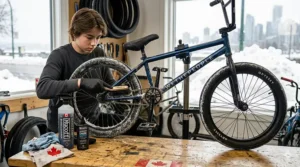
Canadian Winter Prep: If buying in autumn, apply a light coat of frame saver or WD-40 to exposed metal before winter storage. Store the bike indoors if possible — Canadian garage temperature swings (from -25°C to +15°C within hours during chinooks) stress bearings and can crack cheaper plastic components. If outdoor storage is unavoidable, at minimum bring the bike inside during deep freezes below -15°C, as this protects brake cables and bearing grease from becoming brittle. Come spring, clean road salt residue thoroughly — it’s the number one destroyer of Canadian BMX bikes according to local bike shop mechanics.
Street Riding vs Park: Matching Bike to Your Teen’s Style
Canadian 14-year-olds typically gravitate toward either street riding (rails, stairs, gaps around the neighbourhood) or park riding (ramps, bowls, transitions at skateparks) — and whilst the bikes in this guide handle both, certain features favour each discipline.
Street riders benefit from bikes with slightly longer top tubes (20.5″-21″) that provide stable platforms for grinding and landing gaps. The cubsala Yaphet-K and AVASTA’s 20.5″ geometry shine here. Four pegs (like the Mongoose Legion Mag includes) enable grind progression, whilst sealed bearings resist the abuse of landing hard on concrete repeatedly. Street riding in Canadian cities also means dealing with rough pavement, potholes, and winter damage — wider tires (2.35″-2.4″) absorb impacts better than skinny race-style rubber.
Park riders often prefer tighter geometry (19.75″-20″ top tubes) that enables quicker rotations for aerials and spins. The Hiland and Mongoose L10 excel in this category. Lighter overall weight helps with airs and transfers, though this becomes a meaningful factor only once your teen progresses beyond beginner status. The 360-degree gyro rotor (standard on Hiland and Elite models) becomes essential for learning barspins without tangled brake cables — a feature that seems gimmicky until your teen actually wants to try the trick.
Canadian Context: Many suburban and rural Canadian teens use their BMX bikes for transportation to the skatepark or friends’ houses, not just tricks. In these cases, consider the JOYSTAR Brockway’s 24″ option — the larger wheels roll faster on longer rides and handle gravel shoulders better than 20″ setups. Urban Canadian teens with easy skatepark access can focus purely on trick-optimized 20″ geometry without compromise.
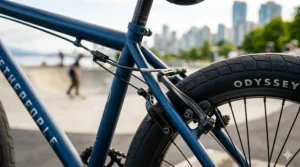
How to Choose a BMX Bike for 14 Year Old in Canada: 7 Critical Factors
1. Frame Material: Hi-Ten Steel vs Chromoly
Every bike in this guide uses Hi-Ten (high-tensile) steel because it balances affordability with durability perfectly for growing teens. Chromoly steel (found on premium $500+ CAD bikes) offers superior strength-to-weight ratio but costs significantly more — money better spent on protective gear for most 14-year-olds still learning basics. The sealed bearing components matter more than frame material at this level.
2. Top Tube Length: The Growth Calculation
Measure your teen’s height and match to top tube: 19.75″-20″ for 150-165 cm riders, 20.5″-21″ for 160-175 cm riders. Canadian teens hit growth spurts unpredictably, so when between sizes, choose longer — you can always adjust seat height and handlebar position, but you can’t stretch a too-short frame.
3. Sealed vs Loose Ball Bearings
Canadian climate makes sealed bearings worth their slight cost premium. Loose ball bearings in the bottom bracket and hubs require re-greasing every 2-3 months when exposed to road salt and moisture; sealed bearings run 12+ months between services. The Hiland, AVASTA, and cubsala models include sealed rear hubs — prioritize these if your teen rides through Canadian spring slush.
4. Brake System: U-Brakes vs V-Brakes
All featured bikes use U-brakes, which provide adequate stopping power for freestyle riding whilst maintaining clean lines for tricks. Dual brake setups (front and rear) suit beginners still developing bike control; experienced riders often remove the front brake for certain tricks. Ensure brake cables are properly adjusted before first ride — too loose compromises safety, too tight creates drag.
5. Tire Width: Stability vs Speed
Wider tires (2.35″-2.4″) provide better grip and impact absorption — ideal for beginners learning to absorb landings and navigate Canadian skateparks with variable surface quality. Narrower tires (2.0″-2.25″) roll faster but demand better technique. For 14-year-olds, prioritize the wider options until skills develop.
6. Included Accessories: Pegs and Rotors
Four pegs (like the Mongoose Legion Mag includes) add $40-60 CAD value and enable grind trick progression immediately. 360-degree gyro rotors (Hiland, Elite models) prevent brake cable tangles during handlebar spins. These accessories indicate the manufacturer expects progressive riding, not just casual cruising.
7. CSA Safety Certification
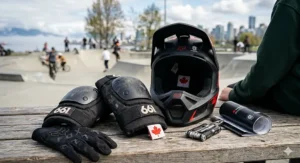
Whilst BMX bikes themselves don’t require CSA certification in Canada, ensure any helmet you purchase meets CSA CAN/CSA-D113.2-M89 standards — this is legally required for riders under 18 in most Canadian provinces and could result in $80 fines in Ontario and other jurisdictions if violated. The Canadian Standards Association has been setting safety benchmarks for cycling equipment since the 1960s, providing rigorous testing that protects Canadian riders.
Common Mistakes When Buying BMX Bikes for 14 Year Olds
Mistake #1: Ignoring Top Tube Length
Parents often focus on wheel size (20″ vs 24″) whilst overlooking top tube length — the dimension that actually determines fit. A 14-year-old who’s 175 cm tall will feel cramped on a 19.75″ top tube regardless of wheel size. Always match top tube to current height with 5-8 cm growth buffer.
Mistake #2: Buying Department Store “BMX-Style” Bikes
Those $120 Canadian Tire bikes might look like BMX bikes, but they use loose ball bearings, weak welds, and components that fail within months of actual skatepark use. Every bike in this guide costs more upfront but prevents the frustration of constant repairs and early replacement — ultimately saving Canadian families money.
Mistake #3: Overlooking Canadian Winter Storage
Leaving a BMX bike outdoors through Canadian winters destroys bearings, rusts chains, and weakens brake cables. Budget $20-30 for basic weatherproofing (frame saver spray, cable lubrication) or commit to indoor storage. The Mongoose Legion Mag’s sealed bearings and mag wheels show superior winter resilience, but even premium components suffer without basic care.
Mistake #4: Choosing Based on Current Height Alone
Canadian teens aged 14 commonly grow 5-12 cm annually. Buying a bike that fits perfectly today means it’s too small in nine months. Select geometry with growth buffer — the cubsala Yaphet-K’s 21″ top tube and extended height range specifically addresses this Canadian parent pain point.
Mistake #5: Skipping Protective Gear to Afford the Bike
A $300 bike with no helmet is a worse investment than a $200 bike with a CSA-certified helmet ($40-60), knee pads ($25-40), and elbow pads ($20-30). Canadian healthcare might be universal, but broken bones still sideline your teen for months. Budget gear as part of the total bike cost, not an afterthought.
Real-World Riding: Three Canadian Teen Profiles
Profile 1: Marcus, 14, Etobicoke, ON — Height 168 cm, rides 3-4 times weekly at local skate park, progression-focused on aerials and grinds.
Best match: Mongoose Legion Mag. The sealed bearings handle his frequent riding schedule with minimal maintenance, the included pegs support his grind progression, and the Toronto skatepark scene recognizes Mongoose quality — important for a teen who cares about peer perception. Budget: $350 CAD plus $80 protective gear.
Profile 2: Amélie, 14, Trois-Rivières, QC — Height 162 cm, casual rider who uses bike for transportation to friends’ houses plus occasional skatepark visits.
Best match: JOYSTAR Brockway 24″. The larger wheels handle Quebec’s frost-heaved pavement and gravel shoulders better than 20″ setups, whilst still supporting basic tricks at the skatepark. The mid-range price ($280 CAD) fits a casual rider’s budget without overspending on premium features she won’t fully utilize.
Profile 3: Liam, 14, Kelowna, BC — Height 158 cm but growing rapidly, tight budget, brand new to BMX.
Best match: Hiland 20″ Freestyle. At $190-$210 CAD, this lets him discover whether BMX sticks as a passion before major investment. The 19.75″ top tube fits his current height, and if he outgrows it within 12 months, the low initial cost makes replacement less painful. BC’s helmet laws mean budgeting the remaining $60-80 for CSA-certified protection.
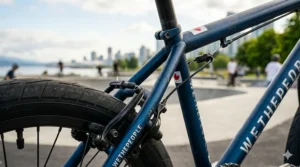
BMX Bike Maintenance for Canadian Conditions
Canadian riding conditions demand more frequent maintenance than California or Texas riders face. Road salt during spring thaw corrodes chains and cables within weeks if not addressed; temperature swings stress bearings; and freeze-thaw cycles work moisture into components sealed bearings normally protect.
Monthly Tasks (Spring/Fall): Wipe down the entire bike with a damp cloth to remove road salt and grit. Lubricate the chain with wet-weather bike lube (dry lube doesn’t persist through Canadian rain and road spray). Check brake cable tension — cables stretch in cold weather and loosen, compromising stopping power. Spin both wheels to verify bearings roll smoothly without grinding sounds.
Seasonal Tasks: Before winter storage, clean the bike thoroughly and apply light oil to exposed metal surfaces. Bring the bike indoors for deep freezes below -15°C. Come spring, replace brake pads if worn below 2mm thickness — winter storage often hardens pads, reducing effectiveness. Check tire pressure — cold storage deflates tires significantly, and riding on under-inflated tires risks pinch flats on Canadian potholes.
When to Seek Professional Service: If wheels wobble side-to-side (true the rim at local bike shop, $15-30 CAD per wheel), if brakes feel spongy despite cable adjustment (may need new cables, $20-40 labour plus parts), or if bottom bracket develops creaking sounds (bearing service $30-50 at Canadian bike shops). Learning basic maintenance saves money, but some tasks demand proper tools and expertise.
Legal Requirements: Riding BMX Bikes in Canada
BMX bike regulations vary by province, but several rules apply across Canada. Riders under 18 must wear CSA-certified helmets in Ontario, BC, Alberta, Manitoba, New Brunswick, Nova Scotia, PEI, and Newfoundland — fines range from $60-110 CAD for non-compliance. Saskatchewan, Quebec, Nunavut, and Northwest Territories don’t mandate helmets by law, but Transport Canada strongly recommends them for all riders.
Equipment Requirements: Most provinces require bicycles (including BMX) ridden after dusk to have a white front light and red rear light/reflector. Bell or audible warning device is mandatory in some municipalities. Check your local bylaws — Montreal, Toronto, and Vancouver all have specific cycling regulations beyond provincial requirements. The Canada Safety Council provides comprehensive guidance on safe cycling practices across all provinces.
Where You Can Ride: BMX bikes are prohibited on most highways and freeways across Canada. Sidewalk riding legality varies by municipality — often illegal in downtown cores but permitted in residential areas. Skateparks represent the safest legal riding venue for BMX tricks; street riding on public property (rails, stairs, gaps) may violate municipal bylaws even when not explicitly posted.
Insurance Considerations: Homeowner’s or renter’s insurance typically covers bicycle theft and damage in Canada, but verify your policy covers bikes stored outdoors or ridden at skateparks (some policies exclude “extreme sports” equipment). For bikes over $400 CAD, consider adding specific coverage — replacement costs for Canadian BMX bikes continue rising due to import tariffs and exchange rates.
Long-Term Cost Analysis: True Price of BMX Ownership in Canada
The sticker price represents just 60-70% of total first-year BMX ownership costs for Canadian families. Here’s the realistic budget breakdown:
Initial Purchase: $190-$370 CAD (bike cost from this guide)
Essential Safety Gear: $80-$140 CAD (CSA helmet $40-60, knee pads $25-40, elbow pads $20-30, gloves $15-25)
Basic Accessories: $40-$80 CAD (lock $25-40, pump $15-20, basic tool kit $20-30)
First Year Maintenance: $50-$100 CAD (brake pads $15-25, chain lube $10, tire replacement if needed $30-50, one professional tune-up $40-60)
Replacement Parts (Learning Phase): $30-$80 CAD (pedals often get stripped during learning $25-40, grips wear out $10-20, potential handlebar replacement after crashes $20-40)
Total First-Year Cost: $390-$770 CAD depending on initial bike choice and riding intensity.
Year Two Onwards: Costs drop significantly to $80-$150 annually for regular riders (mostly tire replacement, brake pads, chain maintenance, occasional component replacement). Sealed bearing bikes (Hiland, AVASTA, cubsala) require less maintenance than loose bearing alternatives, saving $40-80 annually in servicing costs — an important consideration for Canadian families budgeting long-term.
Resale Value: Quality BMX bikes hold 40-60% of purchase price after 18-24 months of use in Canada. The Mongoose Legion Mag and JOYSTAR models typically resell strongest due to brand recognition; budget models like the Hiland lose value faster but cost less initially. Factor resale into total ownership cost — a $350 bike that resells for $180 costs $170 net; a $200 bike that resells for $60 costs $140 net.
❓ FAQ: BMX Bikes for 14 Year Olds in Canada
❓ What size BMX bike does a 14 year old need in Canada?
❓ Can BMX bikes be ridden in Canadian winter?
❓ Are expensive BMX bikes worth it for Canadian 14 year olds?
❓ What's the difference between chromoly and hi-ten steel frames?
❓ Do I need to buy pegs separately for BMX tricks in Canada?
Conclusion: Choosing the Right BMX Bike for 14 Year Old in Canada
Selecting a BMX bike for 14 year old riders in Canada requires balancing immediate fit, growth accommodation, riding style, and budget constraints — no single model perfectly suits every teen. The Mongoose Legion Mag delivers premium features and brand cachet for committed riders willing to invest $320-370 CAD, whilst the Hiland Freestyle BMX proves you can enter the sport for under $210 CAD without compromising essential functionality.
For rapidly growing Canadian teens, the cubsala Yaphet-K’s 21″ top tube provides the longest usability window before replacement becomes necessary. Families seeking versatility should consider the JOYSTAR Brockway’s dual sizing options, particularly the 24″ variant for teens who prioritize transportation alongside tricks. Budget-conscious buyers will find the AVASTA BMX Freestyle delivers sealed bearing quality at entry-level pricing, though quality control inconsistencies warrant careful inspection upon delivery.
The Canadian context — harsh winters, road salt, temperature swings, provincial helmet laws — elevates sealed bearings and corrosion-resistant components from nice-to-have to essential features. Bikes with sealed bottom brackets and rear hubs (Hiland, AVASTA, cubsala) save $40-80 annually in maintenance costs whilst handling Canadian conditions more reliably than loose bearing alternatives.
Start with proper fit (top tube length matched to height with growth buffer), prioritize safety gear alongside the bike purchase, and remember that skill development matters infinitely more than equipment quality for 14-year-olds just entering the sport. The best BMX bike for 14 year old riders is the one they’ll actually ride consistently — whether that’s a premium Mongoose encouraging progression through quality or a budget Hiland proving BMX passion before major investment.
Recommended for You
- 7 Best Lightweight Camping Gear for Tween Backpackers 2026 Canada
- Top 7 Camping Gear for Tweens in Canada 2026
- Best Youth Sleeping Bags Under $100 Canada 2026
Disclaimer: This article contains affiliate links. As an Amazon Associate, I earn from qualifying purchases. If you purchase products through these links, we may earn a small commission at no additional cost to you.
✨ Found this helpful? Share it with your friends! 💬🤗
