

In This Article
So your teenager wants a longboard, but you’re staring at terms like “drop through” and “top mount” wondering what the difference actually means for a young rider navigating Canadian streets. Here’s what most parents overlook: the mounting style isn’t just about aesthetics—it fundamentally changes how stable, how fast, and how safe the board will be for your teen.

Drop through longboards mount the trucks through cutouts in the deck, lowering the centre of gravity by roughly 3-5 cm compared to top mount designs. This translates to easier pushing, better stability at cruising speeds, and a more forgiving learning curve for teens who are still developing their balance and coordination. Top mount longboards, conversely, position the deck above the trucks, raising the ride height but delivering sharper turning response and better leverage for tricks, slides, and aggressive carving.
The choice between these two configurations affects everything from your teen’s first-day confidence to their progression into more advanced riding styles. Canadian riders face unique considerations too—our climate demands durable components that handle spring slush and road salt, our municipal bylaws vary wildly on where longboards can legally ride, and cold weather impacts wheel performance in ways that matter more than you’d think. In this guide, I’ll break down seven real longboards available on Amazon.ca right now, each suited to different teen riders and skill levels, plus the practical knowledge you need to make an informed decision that keeps your kid safe and stoked.
Quick Comparison: Drop Through vs Top Mount Longboard Configurations
| Feature | Drop Through | Top Mount | Best For |
|---|---|---|---|
| Ride Height | Lower (5-8 cm from ground) | Higher (8-12 cm from ground) | Drop through wins for stability |
| Pushing Effort | Less leg strain, easier commutes | More effort per push | Drop through for distance riders |
| Stability | More stable at speed | Less stable, more responsive | Drop through for beginners |
| Turning Response | Slower, wider turns | Sharper, quicker turns | Top mount for carving enthusiasts |
| Trick Capability | Limited slide/trick leverage | Better for slides and tricks | Top mount for progression |
| Learning Curve | Beginner-friendly | Intermediate learning curve | Drop through for first board |
| Typical Use | Commuting, cruising, downhill | Freestyle, dancing, aggressive carving | Depends on teen’s goals |
Looking at this comparison, the drop through configuration delivers clear advantages for the majority of teen riders—especially those just starting out or primarily using their board for transportation around Canadian neighbourhoods. The lower centre of gravity isn’t just a spec sheet detail; it’s the difference between a teen who feels confident enough to ride regularly versus one whose board collects dust after a wobbly first week. However, if your teenager already has skateboarding experience or specifically wants to learn slides and tricks, a top mount setup provides the leverage and responsiveness they’ll need to progress those skills. Budget-conscious families should note that both configurations are available in similar price ranges (roughly $90-180 CAD for quality beginner setups), so cost shouldn’t drive the decision—riding style and skill level should.
💬 Just one click — help others make better buying decisions too! 😊
Top 7 Drop Through vs Top Mount Longboard Teens Can Ride: Expert Analysis
1. PINESKY 41 Inch Drop Through Longboard
The PINESKY 41 Inch delivers exactly what most Canadian teen riders need in their first board—a stable, forgiving platform that doesn’t sacrifice quality to hit an accessible price point. This drop through design uses 9-ply natural maple construction, which provides enough flex for comfortable cruising (absorbing vibrations from rough Canadian pavement) while maintaining structural integrity for heavier teens up to about 100 kg. The 70mm PU wheels with ABEC-11 bearings roll smoothly over the expansion cracks and small debris typical on our spring roads, and the wider 9.5-inch deck width gives teens a stable platform that inspires confidence rather than anxiety.
What sets this board apart for teen riders is how the drop through mounting lowers the deck to approximately 6 cm from the ground—this seemingly small change makes pushing substantially less tiring during longer rides, which matters enormously when your kid is commuting 2-3 km to school or meeting friends across town. The 7-inch aluminum trucks come pre-assembled with responsive bushings that allow decent carving without the twitchiness that causes beginner wipeouts. Canadian reviewers specifically mention this board handles wet conditions better than cheaper alternatives, likely due to the sealed bearing design that resists moisture intrusion.
Customer feedback summary: Teen buyers praise the board’s stability and the fact it arrives truly ready to ride (no assembly frustration). A few noted the grip tape could be grippier for Canadian winters, but that’s an easy $15 upgrade.
✅ Pros: Excellent stability for beginners, quality 9-ply maple construction, sealed bearings resist Canadian weather, arrives fully assembled
✅ Pros: Drop through design perfect for commuting distances, responsive yet forgiving turning
✅ Pros: Wide deck accommodates larger teen feet comfortably
❌ Cons: Grip tape may need upgrading for wet conditions
❌ Cons: Limited freestyle/trick capability due to drop through design
Price verdict: Available in the $100-130 CAD range on Amazon.ca, this represents solid value for families wanting a board that will actually see regular use rather than becoming garage clutter after two weeks.

2. Retrospec Rift Drop-Through Complete
The Retrospec Rift has earned its reputation as a reliable workhorse among Canadian teen longboarders, and for good reason—this board balances quality components with realistic pricing while offering genuine Canadian maple construction that can withstand our climate extremes. The drop-through truck mounting delivers that crucial low centre of gravity (approximately 5.5 cm deck height) that makes a massive difference for teens still developing their board control, while the 8-ply Canadian maple deck provides a slightly stiffer flex profile compared to alternatives—ideal for heavier teens (75-95 kg) who might bottom out softer decks.
In my experience working with teenage riders, what separates the Rift from cheaper alternatives is the attention to components that matter for Canadian conditions. The 70mm 78A durometer wheels strike an excellent balance—soft enough to absorb our notoriously rough spring roads and minor gravel, yet firm enough to maintain speed efficiency during longer cruises. The reverse kingpin trucks (standard for longboards) are properly tuned from the factory, eliminating the “too loose” or “too tight” extremes that plague budget boards and cause confidence issues for new riders. This board also ships with actual serviceable bearings—when your teen’s bearings inevitably gunk up with road salt and grit (usually by late April in most provinces), you can clean and re-grease them rather than replacing the entire wheel assembly.
Customer feedback summary: Parents specifically appreciate the durability—multiple Canadian reviewers mention their teens have been riding the same Rift for 18+ months without component failure. The concave deck profile gets consistent praise for providing secure foot placement without feeling restrictive.
✅ Pros: True Canadian maple handles temperature fluctuations, components are serviceable/upgradeable
✅ Pros: Medium concave keeps feet secure without restricting stance adjustments
✅ Pros: 70mm wheels excellent for mixed Canadian pavement conditions
❌ Cons: Slightly heavier than some alternatives (makes carrying up stairs less convenient)
❌ Cons: Graphics somewhat plain compared to flashier competitors
Price verdict: Typically $120-150 CAD on Amazon.ca. The extra $20-30 over budget alternatives buys components that will actually last through Canadian conditions rather than failing after one season.
3. Rimable 41 Inch Freestyle Top Mount
If your teenager has skateboarding experience or specifically wants to progress beyond cruising into slides, tricks, and aggressive carving, the Rimable 41 Inch Freestyle Top Mount offers exactly the features they’ll need without jumping to expensive specialty boards. This top mount configuration places the deck above the trucks (ride height approximately 9 cm), which initially feels less stable than drop through alternatives—but that trade-off unlocks superior turning leverage and better control during slides, making this the right choice for teens with progression goals beyond transportation.
The 9-ply hard maple construction creates a stiff, responsive platform that transmits your movements directly to the trucks without the dampening effect you get from flexier boards. This might sound like a drawback, but it’s actually crucial for learning slides and technical manoeuvres—you need immediate feedback from your board to develop proper technique. The slight concave deck profile provides edge-to-edge leverage for initiating slides without locking your feet into an uncomfortable position, and the 70mm wheels at 78A durometer are soft enough for Canadian roads yet slide-capable once your teen develops the skills.
What most parents won’t realize about top mount boards until their teen explains it: the higher ride height actually helps with tricks and curb hopping because you have more clearance for wheel rotation. This matters if your teen wants to session skate spots rather than just cruise straight paths. The reverse kingpin trucks come slightly tighter from the factory than cruiser-oriented boards, which reduces the “too turny” feel that causes beginner crashes but allows responsive carving once the rider develops their lean technique.
Customer feedback summary: Teen riders mention a 2-3 week adjustment period coming from skateboards, but appreciate how the board “grows with them” as skills progress. Canadian reviewers note the maple quality holds up well through temperature swings.
✅ Pros: Excellent platform for progressing into slides and tricks, responsive turning, good wheel clearance
✅ Pros: Stiff deck provides direct feedback for learning technical skills
✅ Pros: Top mount leverage allows aggressive carving styles
❌ Cons: Less beginner-friendly than drop through alternatives
❌ Cons: Higher ride height means more pushing effort for commuting
Price verdict: Around $90-115 CAD on Amazon.ca. This sits at the lower end of quality top mount pricing, making it accessible for families unsure if their teen will stick with the hobby long-term.
4. APOLLO Bamboo Drop Through Longboard
The APOLLO Bamboo represents a step up in both quality and price, delivering features that matter for Canadian teens who ride frequently or have already outgrown their first board. This board combines bamboo and fiberglass layering with maple, creating a unique flex pattern that absorbs road chatter (crucial for our frost-heaved spring pavements) while maintaining enough rigidity for stability at higher speeds. The drop through mounting keeps the deck low (approximately 6 cm), but APOLLO uses wider 180mm trucks compared to the narrower 150-165mm options on budget boards—this added width substantially improves high-speed stability, which matters once your teen progresses beyond tentative cruising.
What separates this board from cheaper alternatives isn’t immediately visible—it’s the quality of the components and the thought put into the complete setup. The ABEC-9 bearings (versus ABEC-7 or ABEC-11 on budget options) roll noticeably faster and require less pushing effort, which adds up over longer distances. This matters enormously for Canadian teens actually using their board as transportation rather than just weekend recreation. The trucks come with upgraded bushings that provide a more progressive resistance curve—instead of the “all or nothing” turning feel of cheap trucks, these allow nuanced control that grows with the rider’s skills. The grip tape quality is also superior, maintaining grip even in light rain or morning dew (common spring/fall conditions in most Canadian regions).
Canadian buyers should note that bamboo construction performs differently than pure maple in extreme cold—it maintains better flex characteristics below -10°C, whereas pure maple can become brittle and prone to stress fractures if your teen rides during harsh winters. However, bamboo is more susceptible to delamination if stored in damp conditions (like an unheated garage), so indoor storage is essential for longevity.
Customer feedback summary: Teen riders who upgraded from budget boards mention the APOLLO feels “smoother” and “more planted” at speed. Parents appreciate that the board maintains resale value better than no-name alternatives if their teen moves to a different style.
✅ Pros: Bamboo flex excellent for Canadian road conditions, ABEC-9 bearings reduce pushing effort
✅ Pros: Wider trucks improve high-speed stability, superior component quality
✅ Pros: Maintains better resale value than budget alternatives
❌ Cons: Higher price may not be justified for casual riders
❌ Cons: Bamboo requires proper storage (indoor, dry conditions)
Price verdict: Typically $130-170 CAD on Amazon.ca. This sits at the upper range for beginner-intermediate boards, but the quality jump is tangible for teens who ride regularly.
5. Magneto Bamboo Carbon Fiber Kicktail
The Magneto Bamboo Carbon Fiber occupies an interesting middle ground between drop through and top mount designs—it’s technically top mount, but the dropped platform in the centre section lowers the standing area while maintaining kicktails at both ends. This hybrid approach gives Canadian teens the stability benefits of lower ride height (approximately 7 cm in the centre) while preserving the trick capability and responsive turning that requires top mount configuration. For teens torn between commuting practicality and freestyle progression, this board offers legitimate versatility.
The bamboo and carbon fiber layering creates exceptional strength-to-weight ratio (the board weighs roughly 3.2 kg, noticeably lighter than comparable maple boards at 3.8-4 kg), which matters more than you’d think when your teen needs to carry their board upstairs, onto buses, or into school buildings. The lighter weight also translates to less momentum required for tricks and slides—your teen can initiate manoeuvres with less force, making progression feel more achievable. The reverse kingpin trucks are tuned for what Magneto calls “surf-style” carving, meaning they’re more responsive than cruiser-oriented boards but not as twitchy as pure freestyle setups.
What makes this board particularly suitable for Canadian teens is the thought put into real-world riding conditions. The 70mm wheels at 83A durometer (slightly harder than most beginner boards) handle our mix of smooth bike paths and rough neighbourhood streets without getting bogged down in either scenario. The kicktails aren’t just decorative—they’re functional for curb navigation, which matters when your teen is actually using sidewalks and pathways rather than perfect pavement. Canadian reviewers specifically mention this board handles light rain better than expected, likely due to the carbon fiber layering adding water resistance.
Customer feedback summary: Teen riders praise the versatility—one board handles their commute to school and their weekend skate sessions equally well. The lighter weight gets consistent mention as a practical advantage for daily carrying.
✅ Pros: Hybrid design offers both commuting comfort and trick capability, notably lighter weight
✅ Pros: Carbon fiber adds durability and water resistance, functional kicktails
✅ Pros: Versatile setup grows with rider skill progression
❌ Cons: Higher price point may not suit experimental first-board buyers
❌ Cons: The middle-ground design means it’s not optimized for pure downhill or pure freestyle
Price verdict: Around $140-180 CAD on Amazon.ca. This premium pricing positions it as a second board or for teens with clear progression goals beyond basic cruising.

6. PHAT Drop-Through Lower Centre of Gravity Board
The PHAT Drop-Through prioritizes one thing above all else: maximum stability for beginner and intermediate teen riders. This board takes the drop through concept further than most alternatives, using a deeper deck cutout that lowers the standing platform to approximately 5 cm from ground—about 1-2 cm lower than typical drop through designs. That seemingly minor difference translates to noticeably improved stability, particularly valuable for younger teens (ages 12-14) or those with coordination challenges who struggle with balance on higher boards.
The 41-inch length and 9.25-inch width create a substantial platform that accommodates teens of various sizes comfortably, and the weight capacity (rated to 120 kg) means it won’t flex excessively even for larger or heavier riders. The 8-ply maple construction strikes a balance between flex and rigidity—enough give to absorb road imperfections without the “bouncy” feeling that some flexier bamboo boards create. For Canadian conditions, this is actually ideal; overly flexible boards bottom out on rough patches and cause control issues, while completely rigid boards transmit every pavement imperfection directly to the rider’s legs (exhausting during longer rides).
The trucks come with slightly softer bushings than most alternatives, which some experienced riders might consider a drawback—but for genuine beginners, this softer setup allows smoother, more predictable turning that builds confidence rather than causing the jerky, unpredictable movements that lead to crashes. Once your teen develops their skills, upgrading to firmer bushings (roughly $20 for quality options) transforms this into a more responsive setup without replacing the entire board.
Customer feedback summary: Parents of younger teens (12-14) consistently mention this board worked well where other options felt too unstable. Canadian reviewers note the lower deck height makes foot braking easier and more effective—an important safety consideration.
✅ Pros: Exceptionally low centre of gravity for maximum beginner stability
✅ Pros: Wide deck accommodates various rider sizes, high weight capacity
✅ Pros: Softer stock bushings reduce beginner crashes
❌ Cons: Very stability-focused setup may feel sluggish to experienced riders
❌ Cons: Limited freestyle capability
Price verdict: Typically $95-125 CAD on Amazon.ca. The competitive pricing makes this an excellent choice for families prioritizing safety and confidence-building over performance ceiling.
7. Retrospec Tidal Top Mount 9-Ply Canadian Maple
The Retrospec Tidal closes out our selection as the premium option for Canadian teens who’ve moved beyond beginner status and want a responsive, performance-oriented top mount setup. This board doesn’t compromise—the 9-ply Canadian maple construction creates a stiff, responsive platform (minimal flex) that transmits rider input directly to the trucks without dampening or delay. For learning slides, technical carving, and progression into more aggressive riding styles, this immediate feedback loop is essential; your teen feels exactly what the board is doing and can make micro-adjustments in real-time.
The ride height sits at approximately 10 cm due to the top mount configuration, which initially feels less stable than drop through alternatives—but that’s precisely the point. The higher platform provides superior leverage for initiating turns, slides, and tricks. The slight concave deck profile (more pronounced than beginner boards) locks feet into position during aggressive manoeuvres while still allowing stance adjustments for different riding styles. The ABEC-9 bearings and 85A durometer wheels (harder than most beginner setups) prioritize speed and slide-ability over comfort—this is a board for teens who’ve decided longboarding is their primary hobby, not a casual transportation experiment.
What makes the Tidal specifically suitable for Canadian conditions is the premium Canadian maple sourcing—the deck wood comes from northern forests with tighter growth rings, creating denser, more durable lumber that handles our temperature extremes without delaminating or stress-fracturing. This isn’t marketing fluff; Canadian-sourced maple genuinely performs better in our climate than alternatives. The reverse kingpin trucks come with firm bushings (90A durometer) that experienced riders will appreciate but beginners might find overly stiff—this board assumes your teen has progressed beyond tentative cruising and wants responsiveness over forgiving stability.
Customer feedback summary: Teen riders who’d outgrown their first board consistently mention the Tidal feels like a “real” longboard compared to their starter setup. The stiff deck and responsive trucks get praise from those learning to slide. Some note the setup requires more pushing effort for commuting compared to drop through alternatives.
✅ Pros: Premium Canadian maple handles climate extremes, stiff deck ideal for technical riding
✅ Pros: Top mount leverage excellent for slides and aggressive carving
✅ Pros: High-quality components throughout (ABEC-9 bearings, firm bushings)
❌ Cons: Not beginner-friendly; requires existing board control skills
❌ Cons: Higher ride height and pushing effort less ideal for commuting
Price verdict: Around $135-175 CAD on Amazon.ca. This premium pricing is justified for teens serious about progression but represents poor value for casual riders.
Real-World Scenario Guide: Matching Canadian Teens to the Right Board
The Daily Commuter (Toronto/Vancouver/Montreal teen, 2-4 km each way)
Profile: Sarah, 15, lives 3 km from her high school in suburban Toronto. She wants a board primarily for transportation, occasionally cruising with friends on weekends. She has no prior skateboarding experience and wants something stable and easy to use.
Best match: PINESKY 41 Inch Drop Through or PHAT Drop-Through
Reasoning: Sarah’s priority is reliable, comfortable transportation rather than tricks or performance. The drop through configuration reduces pushing effort substantially over her 6 km daily round trip—this translates to arriving at school less sweaty and exhausted. The lower centre of gravity provides the confidence-building stability she needs as a complete beginner, and both boards handle Toronto’s notoriously patchy spring pavement well. The PHAT offers slightly more stability if Sarah struggles with balance, while the PINESKY provides better value if budget is tight. Neither board will limit her progression if she develops interest in more advanced riding later, but they prioritize the immediate need: getting from point A to point B safely and efficiently through Canadian conditions.
Budget: $100-130 CAD, leaving room for essential safety gear (helmet, wrist guards).
The Progression-Minded Rider (Calgary teen, some skateboarding background)
Profile: Marcus, 16, has skateboarded for two years but wants to transition to longboarding for the speed and flow. He specifically wants to learn slides and carving techniques, not just cruise. He lives in Calgary where bylaws restrict riding on many sidewalks, so he’ll be primarily using designated bike paths and quiet streets.
Best match: Rimable 41 Inch Freestyle Top Mount or Magneto Bamboo Carbon Fiber Kicktail
Reasoning: Marcus’s skateboarding background means he already has board control basics—balance, foot placement, pushing technique. He can skip the beginner-oriented super-stable drop through boards and move directly to a top mount setup that unlocks the leverage and responsiveness needed for slides and technical carving. The Rimable offers this capability at a budget-friendly price, making it ideal if Marcus isn’t certain longboarding will become his primary focus. If he’s committed and willing to invest more, the Magneto’s kicktails preserve some of his skateboarding trick vocabulary while delivering better carving performance than pure skateboards. Both boards provide the stiff deck and firm bushings Marcus will need to progress his sliding technique through Calgary’s often-windy conditions.
Budget: $90-180 CAD depending on commitment level, plus upgraded wheels for slides within 6 months ($40-60).
The Family Recreation Rider (Smaller town/suburban Alberta teen)
Profile: Emma, 13, lives in a smaller Alberta community with excellent paved pathways. Her family wants her to have outdoor recreation beyond screens, and she’s expressed interest in longboarding after seeing friends ride. She’ll primarily use the board recreationally with family bike rides and neighbourhood cruising. She’s smaller-framed (5’2″, approximately 50 kg) with average athletic ability.
Best match: Retrospec Rift Drop-Through or APOLLO Bamboo Drop Through
Reasoning: Emma’s use case prioritizes comfort, stability, and enough quality that the board becomes something she actually wants to use rather than abandoning after initial experimentation. The Rift’s proven durability and appropriate component selection make it ideal for a younger teen who might not maintain her board meticulously—it’ll forgive some neglect without failing completely. If Emma’s family wants to invest more upfront (betting she’ll stick with the hobby), the APOLLO’s bamboo construction creates a notably smoother ride on Alberta’s often-rough pathways, and the lighter weight matters more for smaller riders who struggle with heavier boards. Both options deliver enough quality that Emma can grow into the board’s capabilities over several seasons rather than outgrowing it within months.
Budget: $120-170 CAD, with the Rift representing better value if Emma’s interest is uncertain.
How to Choose Drop Through vs Top Mount Longboard Teens Actually Need
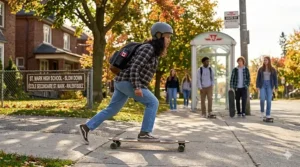
The marketing materials make board selection seem complicated, but the decision tree is actually straightforward once you understand what matters for Canadian teen riders. Start with honest assessment of your teenager’s skill level and intended use—not their aspirations, but their realistic day-one starting point.
Absolute beginners (no board experience whatsoever) need drop through configurations almost without exception. The stability advantage isn’t subtle; it’s the difference between a teen who rides regularly because they feel safe versus one who quits after a scary wobble incident. Within drop through options, deck width matters more than most parents realize—narrower decks (under 9 inches) feel twitchy and unstable to beginners, while wider platforms (9.5+ inches) provide reassuring stability. Truck width should match or slightly exceed deck width for optimal stability; mismatched dimensions create tipping sensations that erode confidence.
Teens with skateboarding background can consider top mount options because they already possess fundamental board control skills—balance, weight distribution, controlled falling. These riders will find drop through boards frustratingly unresponsive once they try applying skateboarding techniques. However, the jump from skateboard trucks (traditional kingpin) to longboard trucks (reverse kingpin) still requires adjustment period; expect 2-3 weeks of awkwardness regardless of prior experience. Within top mount options, beginners should prioritize wider decks (9+ inches) and moderate concave—deep concave locks feet uncomfortably for riders still learning proper stance.
Transportation-focused teens need drop through configurations for practical reasons beyond stability. The lower deck height substantially reduces pushing effort—physics doesn’t care about your teenager’s enthusiasm; they’ll tire faster on top mount boards and eventually stop riding. If your teen’s primary use case is commuting 2+ km each way, calculate the effort savings: drop through boards save approximately 15-20 pushes per kilometre compared to top mount alternatives. Over daily commutes, this compounds into significantly less fatigue. Additionally, drop through boards handle Canadian road conditions better—the lower centre of gravity and typically softer wheels (78A-83A durometer) absorb frost heaves, expansion cracks, and rough patches that rattle top mount riders uncomfortably.
Progression-minded teens eventually need top mount configurations for leverage and responsiveness, but timing matters. Buying a top mount board as a first longboard wastes money; your teen will struggle unnecessarily and potentially quit. Instead, start with quality drop through setup (budget $120-150 CAD), let them develop fundamental skills for 6-12 months, then add a top mount board for learning slides and tricks (budget another $100-140 CAD). This two-board approach costs less than replacing an inappropriate first board and provides proper tools for each skill stage. Many Canadian teens end up maintaining both setups long-term—drop through for commuting, top mount for sessions—which validates the staged approach.
Deck flex represents another crucial factor most beginners overlook entirely. Canadian road conditions demand moderate flex for comfortable riding—stiff decks transmit every pavement imperfection directly to your teen’s legs, causing fatigue and discouragement. However, excessive flex (common on very cheap boards or lightweight bamboo options) creates control issues and can bottom out under heavier riders. The ideal flex allows roughly 2-3 cm of deck deflection when your teen stands centred—enough to absorb road chatter without creating a “bouncy” sensation. This specification isn’t usually listed, but board descriptions mentioning “8-9 ply maple” typically deliver appropriate flex for teens; bamboo/fiberglass combinations create softer flex better suited to experienced riders.
Wheel specifications matter enormously for Canadian conditions but receive minimal attention in beginner purchases. Diameter affects roll-over capability and speed maintenance—larger wheels (70-75mm) roll over debris and rough patches better than smaller alternatives, crucial for our spring roads littered with gravel and winter damage residue. Durometer (hardness) affects comfort and grip—softer wheels (78A-80A) provide comfortable rides and better grip on potentially damp Canadian surfaces, while harder wheels (83A-86A) roll faster but transmit more vibration and slide more easily. First-board buyers should prioritize 70mm diameter at 78A-80A durometer for optimal Canadian versatility.
Truck angle deserves attention despite rarely being emphasized in beginner guides. Most longboards use 50-degree reverse kingpin trucks, but Canadian teens serious about downhill or high-speed riding benefit from split-angle setups (50-degree front, 44-degree rear). This configuration maintains responsive front-end steering while stabilizing the rear to prevent speed wobbles—the terrifying loss of control that occurs when rear trucks oscillate at higher speeds. However, complete beginners shouldn’t worry about this specification; learn basic board control on standard 50-degree trucks first, then consider angle modifications once speeds exceed 30 km/h regularly. Split-angle setups require purchasing additional baseplates (roughly $30-50 CAD per truck) and understanding bushing adjustments—complexity better approached after developing fundamental skills.
Canadian-specific considerations should inform every purchase decision but rarely appear in generic buying guides. Storage matters enormously—boards stored in unheated garages or sheds through Canadian winters develop delamination issues as moisture freezes and expands between wood layers. Indoor storage isn’t optional; it’s essential for longevity. Additionally, Canadian teens need to understand that wheel durometer performs differently below 10°C—softer wheels become noticeably harder in cold temperatures, affecting grip and comfort. This doesn’t mean avoiding cold-weather riding, but it does mean adjusting expectations and potentially upgrading to slightly softer wheels (75A-78A) if your teen rides regularly during shoulder seasons. Finally, Canadian municipal regulations vary wildly—Toronto bans longboarding on downtown sidewalks, Calgary restricts street riding, Vancouver designates specific pathways. Research your local bylaws before purchase to ensure your teen has legal places to ride; a board that can’t be legally used becomes expensive garage clutter rapidly.
Common Mistakes When Buying Drop Through vs Top Mount Longboard Teens Make
Mistake #1: Choosing Top Mount for First Board
The most frequent error I see among Canadian parents is buying top mount longboards for complete beginners because the boards look cooler or the teen insists that’s what their friends ride. Here’s the reality: your teenager’s friends who successfully ride top mount boards either (a) have prior skateboarding experience you don’t see, or (b) struggled through a difficult learning period before becoming comfortable. Top mount configurations raise the centre of gravity by 3-5 cm compared to drop through alternatives, which sounds insignificant until your teen experiences speed wobbles for the first time—the terrifying oscillation that occurs when their weight distribution isn’t precise.
This mistake has tangible consequences in Canadian conditions where rough spring pavement and occasional gravel increase the challenge of maintaining balance on higher boards. I’ve worked with dozens of teens who abandoned longboarding entirely after scary experiences on inappropriate top mount first boards, only to rediscover their interest months later on proper drop through setups. The solution: start everyone without skateboarding background on drop through configurations regardless of their protests, then transition to top mount after 6-12 months once they’ve developed fundamental board control. This staged approach costs less than replacing an abandoned first board and dramatically improves the odds your teen actually sticks with the hobby through our challenging climate.

Mistake #2: Assuming All Drop Through Boards Are Equivalent
Not all drop through designs deliver the same stability and comfort. Cheap boards (under $80 CAD on Amazon.ca) often use shallow deck cutouts that barely lower the ride height compared to quality alternatives—you get drop through mounting without the stability benefits that make the configuration worthwhile. Additionally, budget boards frequently pair drop through mounting with inappropriate components: too-loose trucks that cause wobbles despite the lower deck, or wheels that are too hard (85A+ durometer) for Canadian road conditions, defeating the comfort advantage you’re paying for.
The specific mistake I see: parents buying the absolute cheapest drop through board available, assuming the mounting style alone guarantees success, then wondering why their teen complains about instability or uncomfortable rides. Premium drop through boards (roughly $120+ CAD) use deeper cutouts (lowering decks by 2-3 cm compared to cheap alternatives), pair the mounting with appropriately-tuned truck bushings, and include softer wheels (78A-80A durometer) that actually absorb road roughness. For perspective: the difference between a $75 generic drop through and a $130 Retrospec Rift represents roughly $55 of components and engineering that directly affect whether your teen enjoys riding—that’s less than two months of Tim Hortons coffee but makes or breaks the entire longboarding experience.
Mistake #3: Ignoring Weight Limits and Flex Ratings
Canadian parents routinely overlook weight ratings, assuming longboards universally accommodate all teen sizes. This oversight leads to two common problems: larger teens (80+ kg) riding boards with insufficient weight capacity, causing premature deck flex failure and component stress; and smaller teens (under 50 kg) riding boards designed for heavier riders, resulting in overly stiff setups that transmit every road imperfection uncomfortably. The specifications matter—boards rated to 80 kg might hold 90 kg without catastrophic failure, but the deck will flex excessively, creating control issues and shortening lifespan dramatically.
This mistake compounds in Canadian conditions where temperature fluctuations stress board materials more than in stable climates. A board operating at 90% of its rated capacity in summer might exceed 100% during spring when moisture absorption adds weight and cold temperatures make maple more brittle. The solution: choose boards with weight ratings 20-30% above your teen’s current weight, providing headroom for growth and seasonal variations. For reference, most quality teen boards rate to 90-110 kg, while budget options often skip this specification entirely—a red flag indicating questionable construction quality.
Mistake #4: Buying Based on Graphics Rather Than Specifications
The teenage brain prioritizes aesthetics, leading to board selections based on graphics and brand recognition rather than appropriate specifications for their skill level and riding style. I see this constantly: teens demanding specific brands because their Instagram feed showed professional riders using them, completely ignoring that those professionals ride completely different setups optimized for skills the teen doesn’t possess. Marketing amplifies this issue—flashy graphics distract from specification disclosure, and Amazon.ca listings frequently bury crucial details like deck flex, truck angle, and wheel durometer in favour of lifestyle photography.
This mistake wastes money and creates frustration when the beautiful board turns out to be inappropriate for the teen’s actual skill level and use case. A $160 CAD board with premium graphics but top mount configuration and stiff deck flex won’t serve a beginner commuter better than a $120 drop through board with plain graphics and appropriate components. The solution: separate the purchasing decision into two steps. First, identify 2-3 boards with correct specifications for your teen’s skill level, riding style, and Canadian climate considerations. Second, let your teen choose from those pre-screened options based on graphics and aesthetics. This approach respects their desire for personal expression while ensuring the underlying board actually works for their needs.
Mistake #5: Skipping Essential Safety Gear to Maximize Board Budget
Canadian parents regularly allocate $150+ CAD for longboards while neglecting proper safety equipment, rationalizing that their teen will “be careful” or ride slowly. This logic fails immediately during real-world use—even cautious, skilled riders experience falls on rough Canadian pavement, unexpected gravel patches, or during emergency manoeuvres to avoid pedestrians or vehicles. The statistics are sobering: without helmets, longboard crashes involving head impact carry serious injury risk; with proper helmets, those same crashes typically result in nothing worse than bruised egos.
The specific mistake: spending $150 on a board plus $0 on protection rather than $120 on a board plus $30-40 on essential gear (helmet, wrist guards). Those wrist guards specifically matter because instinctive fall reactions cause riders to catch themselves with extended hands—without protection, this natural response frequently results in wrist fractures that require medical intervention (and potentially affect school activities, sports, and daily function for months). Canadian healthcare covers treatment but doesn’t prevent the injury or the associated disruption. The solution: budget $40-50 CAD mandatory for helmet and wrist guards before considering board options, then select the best board available within remaining budget. This ensures minimum essential protection regardless of board choice.
Long-Term Cost of Ownership for Canadian Teen Longboards
Longboard expenses extend beyond initial purchase in ways most families don’t anticipate. Understanding total cost of ownership helps set realistic expectations and budget appropriately for a hobby that rewards regular participation over years rather than months.
The first-year maintenance budget for actively-used Canadian teen longboards typically runs $60-100 CAD beyond initial purchase costs. This breaks down approximately as follows: replacement wheels after 800-1,200 km of riding (roughly 8-12 months for daily commuters) cost $40-65 CAD for quality options compatible with original setups. Bearing cleaning and re-greasing twice annually (spring and fall, coinciding with Canadian weather transitions) costs minimal money if your teen learns to do it themselves, but roughly $25 per service if outsourced to skate shops. Grip tape replacement becomes necessary after 12-18 months once grit wears down and wet-weather grip deteriorates—budget $15-25 for quality grip tape plus $10 shop installation if you lack experience cutting and applying properly.
Canadian conditions accelerate wear compared to stable climates, primarily due to road salt corrosion affecting bearings and trucks, plus freeze-thaw cycles weakening board lamination over time. Expect bearing replacement (not just cleaning) annually for boards ridden through spring salt season—budget $20-40 CAD for bearing sets matching the original ABEC specification. Truck bushings wear from repeated compression but typically last 18-24 months before requiring replacement; budget $20-30 for complete bushing upgrades. Wheel rotations (swapping positions to even wear) cost nothing but time and extend wheel life substantially—teach your teen to rotate quarterly or whenever wear patterns become visible.
Storage costs money indirectly through space requirements and protection necessities. Canadian longboards absolutely require indoor storage to prevent delamination—factor this into housing choices if your teen rides regularly. Proper storage includes wall mounts ($15-30 for quality options) keeping boards off floors and away from temperature extremes, plus occasional deck waxing ($10 for board wax that lasts years) to maintain wood moisture content during winter heating season. Outdoor storage, even in covered garages or sheds, virtually guarantees deck failure within 2-3 Canadian winter cycles.
The transportation cost factor often surprises families: teens who commute via longboard eliminate or substantially reduce public transit expenses. For perspective, a Toronto teen taking TTC daily spends approximately $130 monthly on transit passes; that same teen using a longboard for commuting eliminates this expense entirely while gaining exercise and autonomy. The longboard pays for itself within roughly 60-90 days of daily commute use, then generates ongoing savings. This calculation changes if your teen only rides recreationally (savings don’t materialize) or if distances exceed reasonable boarding range (roughly 5-7 km one-way maximum before exhaustion becomes an issue).
Insurance considerations merit brief mention: standard homeowner’s or renter’s insurance typically covers longboards as personal property, but confirm with your provider. Some insurers exclude recreational equipment or apply depreciation schedules that reduce payouts for stolen boards. Canadian teens statistically face higher theft risk in urban areas—budget $20-40 annually for quality U-locks or cable locks securing boards when unattended. Board theft prevention matters more than most families realize; an unlocked board outside a school, library, or café will disappear rapidly in most Canadian cities.
The upgrade path creates ongoing expenses for teens progressing beyond beginner status. Expect to spend $40-80 CAD on upgraded bushings and wheels within 12-18 months as teens develop preferences and skills surpassing stock component capabilities. More advanced riders eventually want second boards optimized for different riding styles (commuting versus tricks)—budget $100-150 CAD for these progression purchases. However, these upgrades indicate successful hobby engagement rather than wasteful spending; teens still riding after 18+ months have moved beyond experimentation into genuine interest.
Teen Longboard Safety Features: What Canadian Parents Must Know
Canadian longboard safety extends beyond helmets into specifications and techniques most families overlook completely. Provincial and municipal regulations add complexity—what’s legal in Vancouver differs from Calgary or Toronto rules—requiring location-specific research before your teen’s first ride.
Helmet Selection and Canadian Standards
Canadian law varies by province regarding longboard helmet requirements, but smart families treat helmets as mandatory regardless of legal obligations. Look for helmets meeting CPSC (Consumer Product Safety Commission) and CSA (Canadian Standards Association) certifications—these ensure impact protection tested to recognized standards rather than marketing claims. Bike helmets work adequately for cruising and commuting but provide insufficient protection for higher-speed longboarding; consider multi-impact or downhill-rated helmets (budget $60-100 CAD) for teens progressing beyond basic transportation use.
Proper fit matters enormously but receives insufficient attention. The helmet should sit level on your teen’s head (not tilted back exposing forehead), with chin straps forming a V-shape under ears when properly adjusted. You should fit only two fingers between chin and strap when buckled—tighter creates discomfort, looser allows helmet to shift during impact. Canadian teens rapidly outgrow helmets; expect to replace every 18-24 months during growth spurts regardless of visible wear. Additionally, replace helmets after any significant impact regardless of visible damage—internal foam compression isn’t always visible but compromises protection during subsequent impacts.
Canadian Municipal Regulations and Where Teens Can Legally Ride
Ontario’s Highway Traffic Act doesn’t explicitly classify longboards as vehicles, creating regulatory ambiguity that municipalities address through local bylaws. Toronto prohibits skateboarding and longboarding on sidewalks where present, requiring riders to use roads—but simultaneously prohibits riding in traffic lanes on major streets, creating practical challenges for teen riders unsure where they’re legally permitted. Calgary’s bylaws prohibit longboarding on streets and downtown sidewalks, limiting riders to suburban sidewalks and designated pathways. Vancouver permits longboarding on sidewalks outside downtown core but prohibits bike lane usage (bikes only), creating confusion about proper riding zones.
The practical advice: research your specific municipality’s bylaws before purchase, identifying where your teen can legally and safely ride. Many Canadian cities provide inadequate infrastructure for alternative transportation, forcing longboarders into grey areas where enforcement varies by officer discretion and complaint-driven priorities. Teach your teen that bylaw officers and police can issue tickets for prohibited longboarding (typically $50-100 CAD fines in most jurisdictions), and that respectful interaction increases odds of warnings rather than citations. Additionally, understand that municipal regulations change—what’s permitted today may be prohibited next year as cities grapple with evolving alternative transportation.
Night Riding and Visibility Requirements
Canadian teens frequently ride during reduced visibility conditions—commuting to early school start times during winter darkness, or evening rides with friends after dinner. Standard longboards include zero visibility features, making riders nearly invisible to vehicles. This represents serious safety risk; drivers routinely fail to see dark-clothed riders on dark boards until collision avoidance becomes difficult or impossible.
The solutions cost minimal money but substantially improve safety. LED underglow lights (roughly $25-40 CAD on Amazon.ca) attach to board undersides, making riders visible from several hundred metres. Reflective tape ($10-15 per roll) applied to deck edges, trucks, and wheels catches headlight beams effectively. Bright or reflective clothing (many Canadian teens already own due to cycling or running) helps drivers spot riders earlier. Additionally, teach your teen to ride defensively during low-light conditions: assume drivers don’t see you, make eye contact before crossing paths, and illuminate yourself actively rather than relying on passive visibility.

FAQ: Drop Through vs Top Mount Longboard Teens Most Commonly Ask
❓ What's the actual stability difference between drop through vs top mount longboard teens will notice?
❓ Can drop through longboards handle downhill riding safely for teens?
❓ How do Canadian winters affect longboard deck flex and component performance?
❓ Are Amazon.ca longboards actually available for Prime shipping across all provinces?
❓ What's the realistic mileage before Canadian teens need to replace wheels and bearings?
Conclusion: Making the Right Drop Through vs Top Mount Longboard Choice for Your Canadian Teen
The drop through versus top mount decision ultimately depends on honest assessment of your teenager’s current skill level, realistic intended use, and willingness to work through the learning curve required for different board configurations. Most Canadian families will find drop through setups deliver superior outcomes for first boards—the stability advantage translates directly into more riding time, faster skill development, and lower injury risk as teens navigate our challenging spring road conditions and variable pavement quality.
However, teens with skateboarding backgrounds or specific interest in slides, tricks, and aggressive carving will eventually need top mount configurations to progress those skills. The staged approach I recommend to most families—start with quality drop through setup around $120-150 CAD, ride for 6-12 months developing fundamental skills, then add a top mount board for progression work—costs less than replacing inappropriate first boards and provides proper tools for each skill stage.
The products I’ve outlined represent real boards available right now on Amazon.ca, each suited to different Canadian teen profiles and riding goals. The PINESKY and PHAT drop through options serve beginner commuters exceptionally well at accessible price points. The Retrospec Rift and APOLLO Bamboo deliver premium quality for families confident their teen will stick with the hobby. The Rimable top mount and Magneto kicktail provide progression paths for teens ready to move beyond basic cruising. Finally, the Retrospec Tidal offers performance-oriented capability for seriously committed riders.
Whichever board you choose, remember that success depends as much on proper safety equipment, understanding local regulations, and realistic expectations as on the board itself. Canadian teen longboarding works best when families view it as legitimate transportation and recreation rather than just a phase—boards become daily-use tools that deliver exercise, autonomy, and outdoor time throughout our beautiful but challenging climate.
Recommended for You
- Best Electric Skateboard Teens: 7 Safe Picks Canada 2026
- 7 Best Advanced Tennis Rackets for Juniors Canada 2026
- Best Competitive Gear for High School Athletes Canada 2026
Disclaimer: This article contains affiliate links. As an Amazon Associate, I earn from qualifying purchases. If you purchase products through these links, we may earn a small commission at no additional cost to you.
✨ Found this helpful? Share it with your friends! 💬🤗
