
In This Article
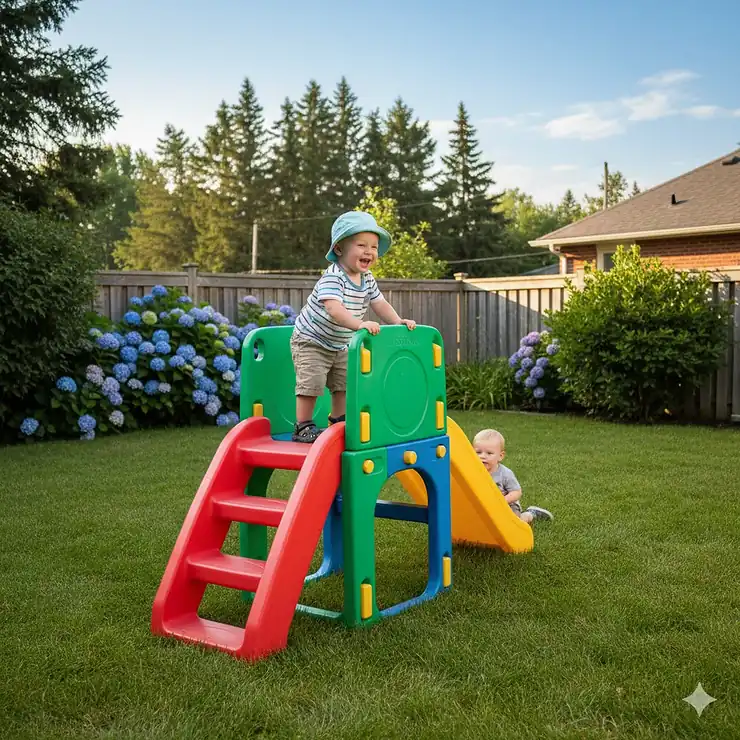
Picture this: your 2-year-old scrambling up a colourful climber in your backyard, giggles echoing through the air as they discover what their little body can do. That’s the magic of a small outdoor climber for toddlers—it transforms your yard into a developmental playground where confidence blooms with every brave step up.
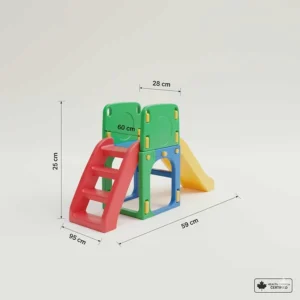
But here’s the challenge Canadian parents face in 2026: finding the right climber that fits both your space and your budget while surviving our unpredictable weather. Not too big, not too small, and definitely sturdy enough for multiple kids. Research from Canada.ca shows outdoor play provides unequivocal benefits for children’s physical, mental, emotional, social and environmental health, making your choice even more important.
I’ve spent weeks researching products available on Amazon.ca, analyzing customer feedback from Canadian buyers, and comparing specifications across dozens of toddler climbing toys outdoor options. Whether you’re in Vancouver battling rain or Edmonton enduring winters, this guide covers climbing dome for toddlers outdoor choices, climber weight limits you need to know, modular climbing structures for growing families, and anti-slip climbing surfaces that keep little ones secure.
You’ll discover budget-friendly options starting under $100 CAD, mid-range gems around $150-$300 CAD, and premium structures worth the investment. Let’s find the perfect climber that’ll have your toddler developing gross motor skills, building confidence, and burning energy outside instead of bouncing off your living room walls!
Quick Comparison Table
| Product | Age Range | Weight Limit | Key Feature | Price (CAD) | Rating |
|---|---|---|---|---|---|
| Step2 Game Time Sports Climber | 2-5 years | 27 kg per child | Basketball hoop + soccer goal | $65-$110 | ⭐⭐⭐⭐⭐ |
| Little Tikes Hide & Seek Climber | 1-4 years | 20 kg per child | Crawl tunnel + gentle slide | $150 | ⭐⭐⭐⭐ |
| Step2 Woodland Climber | 2-6 years | 109 kg total | Dual climbing walls + hiding spot | $315-$400 | ⭐⭐⭐⭐⭐ |
| Lifetime Geometric Dome Climber | 3-10 years | 454 kg total | 10-foot geodesic structure | $300-$450 | ⭐⭐⭐⭐⭐ |
| Qaba 4-Piece Foam Climbers | 1-3 years | N/A (soft play) | Indoor/outdoor modular set | $120-$180 | ⭐⭐⭐⭐ |
| Little Tikes Rock Climber & Slide | 2-6 years | 27 kg per child | Adjustable slide height | $119 | ⭐⭐⭐⭐ |
| EASY OUTDOOR Space Dome | 3-9 years | 454 kg total | UV-resistant steel frame | $180-$250 | ⭐⭐⭐⭐⭐ |
💬 Just one click – help others make better buying decisions too! 😊
Top 7 Small Outdoor Climber for Toddlers: Expert Analysis
1. Step2 Game Time Sports Climber
If your toddler’s already showing signs of being a mini-athlete, this climber is your best bet for under $120 CAD. The Step2 Game Time Sports Climber packs serious play value into a compact footprint perfect for smaller Canadian backyards.
Key Specifications:
- Maximum weight: 27 kg per child (up to 3 kids simultaneously)
- Dimensions: Compact design for small yards
- Material: Weather-resistant HDPE plastic
What makes this climber special? It’s essentially a sports complex miniaturized for toddlers. Kids can shoot hoops with the built-in basketball net, score goals through the crawl-through soccer goal, and use the scoreboard clicker knobs to keep track (which they absolutely love). The climbing ladder features anti-slip climbing surfaces with molded grips on both sides, and the slide has a gentle slope perfect for beginners.
Canadian parents on Toys R Us Canada rave about its durability through summer rain and winter storage. One reviewer from Ontario mentioned: “Good quality and durable in summer weather (rain & sunshine).” The compact size means it fits on apartment balconies or small patios—a huge win for urban Canadian families.
✅ Pros:
- Budget-friendly ($65-$110 CAD)
- Multi-activity design keeps kids engaged longer
- Easy assembly (under 30 minutes)
❌ Cons:
- Weight limit may be restrictive for larger toddlers
- Smaller slide compared to premium models
Price Range: $65-$110 CAD (varies by retailer) Canadian Availability: Available at Toys R Us Canada and Amazon.ca with free shipping on orders over $75
2. Little Tikes Hide & Seek Climber
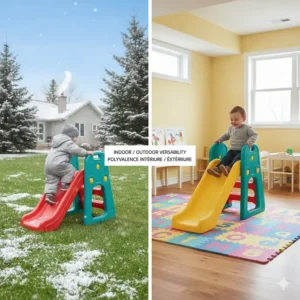
For parents prioritizing imaginative play alongside physical development, the Little Tikes Hide & Seek Climber delivers exceptional value around $150 CAD. This is one of the most popular toddler climbing toys outdoor in Canada, and for good reason.
Key Specifications:
- Suitable for ages 1-4 years
- Maximum weight: 20 kg per child
- Features crawl-through tunnel and beginner rock wall
This climber focuses on exploration rather than height, making it ideal for nervous parents or first-time climbers. The beginner-friendly rock wall has large, easy-to-grip holds, and the tunnel underneath creates a natural hiding spot that sparks imaginative play. The gentle-slope slide ensures soft landings, and the clubhouse windows let kids peek out during games of hide-and-seek.
Canadian reviewers consistently mention how it grows with their child. As one mother from BC shared, this climber worked perfectly for her 18-month-old and remained engaging well past age 2.5 years. The compact size (approximately 132 cm long) means it fits comfortably in most Canadian yards without dominating the space.
Weather resistance is solid—the HDPE plastic construction handles Canadian winters when stored properly. Several Quebec parents reported leaving it outside year-round under a cover with no deterioration.
✅ Pros:
- Perfect starter climber for young toddlers (1-2 years)
- Tunnel adds imaginative play element
- Lightweight enough to move for lawn mowing
❌ Cons:
- Age range may be limiting (outgrown by age 4)
- No additional activities like basketball hoops
Price Range: $150 CAD Canadian Availability: Widely available at Toys R Us Canada, Well.ca, and Amazon.ca
3. Step2 Naturally Playful Woodland Climber
When you’re ready to invest in a climber that’ll last through multiple children and years of play, the Step2 Naturally Playful Woodland Climber is Canada’s top-rated premium choice. At $315-$400 CAD, it’s a significant investment that Canadian parents consistently rate 4.7/5 stars.
Key Specifications:
- Ages 2-6 years
- Total weight capacity: 109 kg (240 lbs)
- Dimensions: Platform height 68.6 cm (27 inches)
- Dual climbing walls with realistic wood grain texture
This isn’t just a climber—it’s a complete outdoor adventure system. Two rock climbing walls lead to an elevated platform with a rotating steering wheel that encourages pretend play. The hiding spot underneath creates a cozy den for quiet time or imaginative games. The colourful slide and ladder challenge balance and coordination as kids navigate between activities.
What sets this apart from cheaper options? The modular climbing structures design allows multiple kids to play simultaneously without crowding. Canadian parents with multiple children consistently mention this as a key selling point. The realistic wood grain finish actually blends beautifully with Canadian backyard aesthetics rather than looking like plastic playground equipment.
Canadian buyers report excellent durability through harsh winters. One Alberta parent mentioned: “Easy to assemble. Good quality and easy to assemble. Worth the price.” The climber weight limits (109 kg total) mean even parents can occasionally join the fun.
✅ Pros:
- Exceptionally high weight capacity for family play
- Natural wood aesthetic enhances yard appearance
- Multiple play areas reduce sibling conflicts
❌ Cons:
- Higher price point ($315-$400 CAD)
- Requires larger yard space
- Ships without overbox (visible packaging upon delivery)
Price Range: $315-$400 CAD (prices vary seasonally) Canadian Availability: Toys R Us Canada, Amazon.ca, major retailers across Canada
4. Lifetime Geometric Dome Climber
For families seeking a climbing dome for toddlers outdoor that challenges older kids too, the Lifetime Geometric Dome Climber delivers unmatched longevity. This 10-foot geodesic structure supports kids from age 3 through 10, making it potentially the only climber you’ll ever need to buy.
Key Specifications:
- Ages 3-10 years
- Weight capacity: 454 kg (1000 lbs!)
- Diameter: 3 metres (10 feet)
- Powder-coated steel construction with rock climbing grips
The engineering behind this dome is impressive. Made from 1.5-inch diameter powder-coated steel tubing, it’s built to withstand Canadian weather extremes. The rust-resistant coating ensures years of outdoor use, and the structure can accommodate 3-5 children climbing simultaneously.
What makes dome climbers special for child development? Research shows outdoor play environments with varying challenges promote physical, mental, and social skill development. The three-dimensional climbing opportunities help kids develop spatial awareness and problem-solving skills as they figure out different paths to reach the top.
Canadian parents appreciate that this grows with their family. A Toronto reviewer noted assembling it took about 4 hours but said “it’s perfect for outdoor play and several kids can play at once.” The 454 kg weight capacity means even adults can climb alongside kids, creating bonding opportunities you can’t get with smaller climbers.
Assembly requires two people and takes 3-4 hours, but the stability once completed is worth the effort. Several Canadian reviewers recommend tightening all bolts thoroughly for maximum stability.
✅ Pros:
- Exceptional 454 kg weight capacity
- 7-year age range (3-10) provides best value
- Encourages creative climbing paths
❌ Cons:
- Requires significant yard space (3-metre diameter)
- Longer assembly time (3-4 hours)
- Higher initial cost ($300-$450 CAD)
Price Range: $300-$450 CAD Canadian Availability: Amazon.ca, Walmart.ca, specialty outdoor retailers
5. Qaba 4-Piece Foam Climbing Blocks
Not every Canadian family has space for a large outdoor climber, which is where the Qaba 4-Piece Foam Climbing Blocks shine. At $120-$180 CAD, these modular climbing structures offer incredible versatility for indoor winter play and outdoor summer fun.
Key Specifications:
- Ages 1-3 years (soft play, no weight limit listed)
- 4 modular pieces: ramps, steps, and geometric shapes
- High-density foam with PU leather washable covers
- Lightweight for easy rearrangement
These foam climbers solve a uniquely Canadian problem: what do toddlers do for active play during our long winters? The soft construction means they’re safe for indoor use in playrooms, basements, or living rooms. Come summer, simply move them outside for backyard play. The anti-slip climbing surfaces prevent sliding on both carpet and grass.
The modular design is brilliant for developmental play. Young toddlers use individual pieces for crawling over, while older kids stack and arrange them to create custom obstacle courses. Canadian parents report these pieces last through multiple children with minimal wear.
What about cleaning? The PU leather covers are waterproof and wipe clean easily—essential when Canadian mud season hits. Several daycare centres in Canada use these foam climbers because they meet safety standards and withstand heavy daily use.
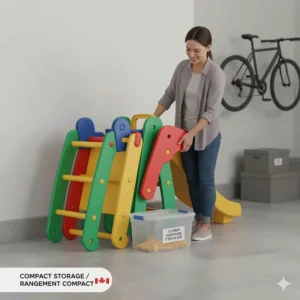
Canadian buyers particularly appreciate the storage aspect. Unlike rigid plastic climbers, these foam pieces stack compactly when not in use. Perfect for condo dwellers or families who need to reclaim their living room for dinner parties occasionally!
✅ Pros:
- Indoor/outdoor versatility ideal for Canadian climate
- Soft construction safe for youngest toddlers
- Easy to clean and store
❌ Cons:
- Limited challenge for kids over 3 years
- Not suitable as primary outdoor climber
- May compress slightly over time with heavy use
Price Range: $120-$180 CAD Canadian Availability: Amazon.ca, Aosom Canada, Home Depot Canada
6. Little Tikes Rock Climber & Slide
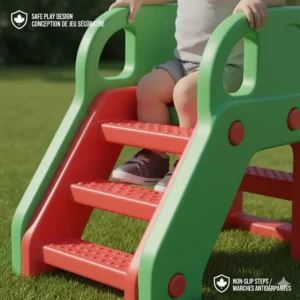
Offering exceptional value at $119 CAD, the Little Tikes Rock Climber & Slide has earned its reputation as Canada’s best mid-range option. This climber literally grows with your child through its adjustable features.
Key Specifications:
- Ages 2-6 years
- Weight limit: 27 kg per child (up to 3 kids)
- Adjustable slide height
- Two climbing walls with reconfigurable climbing holds
The genius of this design lies in its adaptability. Start with the slide at a lower height for beginner climbers, then raise it as confidence grows. The climbing walls feature separate holds that parents can reconfigure to create easier or more challenging climbs. This customization extends the climber’s useful life significantly—Canadian parents report it remaining engaging from age 2 through 6.
The telescope and steering wheel add pretend play elements that keep imaginative toddlers engaged beyond simple climbing. One Ontario parent shared: “Perfect backyard jungle gym for toddlers. This climber includes plenty of places to crawl, hide and climb.”
Assembly is straightforward, taking about 45 minutes with two people. The structure comes with several separate climbing rocks that attach via hooks, allowing parents to customize difficulty levels. This adaptability makes it worth the slightly higher price compared to basic climbers.
Canadian weather performance is solid. The HDPE plastic resists fading and cracking through summer heat and winter cold. Store indoors during harshest winter months for maximum longevity.
✅ Pros:
- Adjustable features extend age range
- Reconfigurable climbing holds maintain interest
- Excellent mid-range value at $119 CAD
❌ Cons:
- Weight limit restricts use to smaller children
- Requires adult supervision for height adjustments
- Ships in visible packaging (no overbox)
Price Range: $119 CAD Canadian Availability: Toys R Us Canada, Amazon.ca, major Canadian retailers
7. EASY OUTDOOR Space Dome Climber
Rounding out our list, the EASY OUTDOOR Space Dome Climber offers Canadian families premium quality at a mid-range price point around $180-$250 CAD. This 2.3-metre dome strikes the perfect balance between challenge and accessibility.
Key Specifications:
- Ages 3-9 years
- Weight capacity: 454 kg (1000 lbs)
- Dimensions: 2.3m x 1.2m (91″ x 46″)
- UV and rust-resistant steel construction
What makes this dome special? The design specifically targets the 3-9 age range with bar spacing and height optimized for smaller climbers. The UV-resistant steel coating is crucial for Canadian summers—no fading or weakening under intense sunlight. The rust-resistant finish means this dome handles our wet springs and snowy winters without deterioration.
Canadian buyers consistently praise the value proposition. As one Alberta reviewer noted: “It was less than $200 at Walmart.ca. I assembled it myself, loosely at first then tightened up all the screws with an impact wrench while a second person held the Allen wrench in the screw tops.”
The assembly process deserves mention. While it takes 3-4 hours initially, one person can manage it if they’re mechanically inclined. The key is loosely assembling all pieces first, then systematically tightening. Several Canadian reviewers recommend using an impact wrench for the final tightening to ensure maximum stability.
The 454 kg weight capacity is exceptional at this price point. Multiple kids can climb simultaneously, and parents can join in occasionally for bonding moments. The three-dimensional climbing challenges develop spatial awareness and motor planning skills that simple slides can’t match.
✅ Pros:
- Excellent weight capacity (454 kg) for the price
- UV and rust-resistant for Canadian weather
- Compact 2.3m size fits medium yards
❌ Cons:
- Assembly requires patience (3-4 hours)
- May be too challenging for kids under 3
- Heavy structure (difficult to relocate once assembled)
Price Range: $180-$250 CAD Canadian Availability: Amazon.ca, Walmart.ca (often better pricing than Amazon)
✨ Don’t Miss These Exclusive Deals!
🔍 Take your outdoor play setup to the next level with these carefully selected products available in Canada. Click on any highlighted item to check current pricing and availability on Amazon.ca. These climbers will help you create authentic developmental moments your family will cherish for years!
Understanding Toddler Developmental Needs Through Climbing
Before diving into buying considerations, let’s talk about why a small outdoor climber for toddlers matters more than you might think. Canadian research published on Canada.ca confirms outdoor play provides unequivocal benefits for children’s physical, mental, emotional, social and environmental health, well-being and development.
Physical Development Milestones
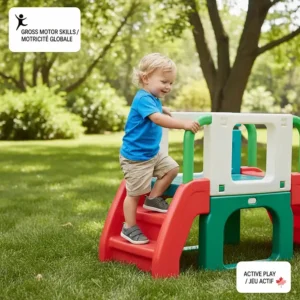
Between ages 1-3, toddlers experience explosive gross motor development. They progress from wobbly first steps to confident running, jumping, and yes—climbing. A well-designed climber challenges these emerging skills in a safe, age-appropriate way.
Climbing specifically develops core strength, bilateral coordination (using both sides of the body together), and vestibular processing (balance and spatial awareness). When your toddler carefully plans which foot to place on the next step, they’re not just playing—they’re building neural pathways that’ll support complex movements for life.
Canadian winters can severely limit outdoor play opportunities. Having a dedicated outdoor climber encourages families to bundle up and get outside even in marginal weather. This year-round outdoor exposure builds resilience and healthy habits from toddlerhood.
Cognitive and Emotional Growth
Here’s something fascinating: toddler climbing toys outdoor serve as three-dimensional puzzles. Kids must plan routes, assess risks, and problem-solve in real-time. “Can I reach that next handhold? Should I go over or around?” These micro-decisions build executive function skills that extend far beyond physical play.
The emotional benefits are equally powerful. Successfully navigating a climber builds genuine confidence. Unlike participation trophies, climbing achievements are immediately obvious—”I climbed to the top all by myself!” This intrinsic motivation fuels further exploration and risk-taking in healthy ways.
Social Skills Development
When multiple kids use a climbing dome for toddlers outdoor, magic happens. They naturally negotiate turn-taking, cooperate to solve climbing challenges, and develop empathy by helping younger or less confident climbers. These organic social interactions beat structured playdates for authentic relationship building.
Canadian public health experts emphasize the importance of unstructured outdoor play for social development. Unlike organized activities with adult-imposed rules, free play on climbers lets children create their own social frameworks and solve conflicts independently.
Safety Considerations for Canadian Families
Safety standards differ slightly between Canada and the US, so let’s address what Canadian parents need to know when selecting a small outdoor climber for toddlers.
CSA Standards and Certifications
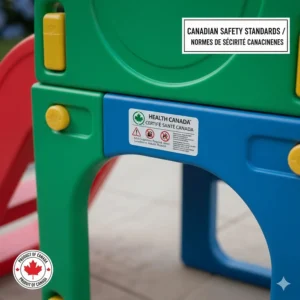
Look for climbers that meet or exceed CSA Z614-20 standards—Canada’s playground safety guideline. While backyard equipment isn’t legally required to meet these standards, reputable manufacturers design products that comply. This ensures appropriate fall heights, spacing between components, and structural stability.
The Step2 and Little Tikes products mentioned earlier are manufactured to international safety standards that align with Canadian requirements. Always check that weight limits match your child’s size and that the climber provides adequate parental supervision points.
Surface Considerations
Here’s a reality Canadian parents face: grass alone doesn’t provide sufficient impact absorption. The Canadian Standards Association recommends impact-absorbing surfaces under climbers. Practical options include:
- Rubber mulch (lasts longer in Canadian weather)
- Engineered wood fibre (needs frequent replenishment)
- Rubber safety tiles (expensive but permanent)
- Sand pits (great drainage but attracts neighbourhood cats)
For climbers under 1.5 metres tall (like the Little Tikes models), good grass coverage over relatively soft soil may suffice. Taller structures like the Lifetime Dome benefit from dedicated safety surfacing extending at least 1.8 metres from the structure in all directions.
Weather-Related Safety
Canadian weather creates unique safety considerations. Ice formation on metal climbing domes can occur during freeze-thaw cycles—supervise carefully during shoulder seasons. UV degradation affects plastic climbers differently across Canada; Calgary’s intense sun demands higher-quality HDPE plastics than Vancouver’s cloudy climate.
Summer heat presents another challenge. Metal structures can become uncomfortably hot under direct sun. Several Canadian parents report adding shade sails over their climbers or strategically placing them under tree cover to prevent burns from hot surfaces.
Age-Appropriate Supervision
Research shows that allowing children opportunities for risky play outdoors helps them build confidence, autonomy, resilience, problem-solve and learn their own limits. This doesn’t mean abandoning supervision—it means finding the sweet spot between helicopter parenting and dangerous neglect.
For 1-2 year olds, stay within arm’s reach as they explore new climbers. By age 3-4, most kids can independently navigate familiar climbers while you supervise from nearby (close enough to intervene, far enough to let them problem-solve). Always supervise multiple children actively to prevent pushing, crowding, or risky behaviour.
Choosing the Right Size for Your Space
Not all Canadian yards are created equal. Let’s break down space requirements realistically.
Small Yard Solutions (Under 500 sq ft)
Urban Canadian families often work with compact yards, patios, or even balconies. The Step2 Game Time Sports Climber or Little Tikes Hide & Seek Climber excel here. Their footprints measure approximately 1.5m x 1.0m—small enough to leave room for other activities.
Consider vertical space too. Compact climbers maximize play value within limited square footage by incorporating multiple levels and activities. The step ladder, slide, and play features stack vertically rather than sprawling horizontally.
For truly tiny spaces, the Qaba Foam Climbers offer the ultimate flexibility. Move them around as needed, bring them indoors during gatherings, and stack for storage. One Ottawa condo dweller reported using hers on their 6′ x 8′ balcony successfully.
Medium Yard Sweet Spot (500-1500 sq ft)
Most suburban Canadian yards fall into this category. Here, you have genuine choice. The Step2 Woodland Climber fits comfortably with its approximately 2m x 2m footprint, leaving room for other yard activities like trampolines or sandbox play.
Consider traffic flow around the climber. Leave at least 1 metre of clear space on all sides for safe approach and dismount. This “use zone” should remain free of hard obstacles like fence posts, garden edges, or decorative rocks.
The Little Tikes Rock Climber works brilliantly in medium yards because the adjustable features keep it relevant as kids grow. You’re not locked into a specific configuration, allowing the play space to evolve with your family’s needs.
Large Yards (1500+ sq ft)
Canadian families blessed with larger properties can consider full-sized climbing dome for toddlers outdoor like the Lifetime Geometric Dome or EASY OUTDOOR Space Dome. These structures need approximately 4m x 4m including safety zones.
Placement becomes crucial in larger yards. Position climbers where you can easily supervise from kitchen windows or deck areas. Morning sun exposure helps dry dew faster (important for rust prevention), but avoid all-day blazing sun that makes metal too hot to touch.
Some Canadian families create dedicated “adventure zones” combining climbers with other outdoor play equipment. This concentrates messy play in one area while preserving lawn quality elsewhere—particularly valuable in regions where growing seasons are short.
Indoor/Outdoor Hybrid Options
Canadian climate reality: weather doesn’t always cooperate. Modular climbing structures like the Qaba Foam Climbers solve this beautifully by transitioning between indoor basement play and outdoor summer fun.
For families with finished basements or large playrooms, having a climber available year-round maintains physical activity during our infamously long winters. The soft foam construction protects floors and walls while providing safe climbing challenges even during February’s darkest days.
Material Quality and Weather Resistance
Let’s get real about how Canadian weather tests outdoor equipment.
HDPE Plastic Climbers
High-Density Polyethylene (HDPE) is the gold standard for plastic climbers in Canada. Both Step2 and Little Tikes use commercial-grade HDPE that resists:
- UV degradation (no fading, cracking, or brittleness)
- Temperature extremes (-40°C to +40°C)
- Moisture absorption (prevents mold/mildew)
- Chemical damage (safe for pressure-treated deck proximity)
Quality HDPE maintains structural integrity for 10+ years outdoors. The trade-off? Higher initial cost compared to cheaper plastics that crack after 2-3 Canadian winters. Canadian buyers consistently report Step2 climbers lasting through multiple children with minimal degradation.
Steel Frame Construction
Metal climbing domes require powder-coated steel to survive Canadian weather. The Lifetime and EASY OUTDOOR domes use powder-coating that creates a protective barrier against:
- Rust formation from rain and snow
- Corrosion from road salt exposure (if near driveways)
- UV damage to the coating itself
- Physical scratches that expose bare metal
Even quality powder-coating eventually shows wear. Plan to inspect metal climbers annually for coating damage and touch up with rust-inhibiting paint as needed. This maintenance extends lifespan significantly in harsh climates.
Foam and Fabric Components
The Qaba Foam Climbers use PU (polyurethane) leather coverings over high-density foam cores. This combination provides weather resistance while remaining soft enough for safe indoor use.
PU leather repels water effectively but isn’t truly waterproof over prolonged exposure. Canadian parents report covering foam climbers during extended rain or bringing them into garages overnight. The washable covers make this practical—simply unzip, wash, and reassemble.
Hardware and Fasteners
Pay attention to hardware quality. Stainless steel or zinc-plated fasteners resist rust far better than standard steel. The Lifetime Dome includes all necessary hardware with anti-corrosion treatment—a detail that matters tremendously in Canada’s wet climate.
Check fastener tightness semi-annually. Temperature swings cause expansion and contraction that can loosen bolts over time. A quick tightening session each spring and fall prevents dangerous wobbling and extends structural lifespan.
Maximizing Play Value Through the Seasons
Here’s how smart Canadian parents extend play beyond basic climbing.
Spring Activities (April-May)
Spring’s unpredictable weather calls for flexibility. Use climbers for:
Mud Kitchen Integration: Position a small table beside the climber. Kids fetch “ingredients” from the yard, climb up to “watch them cook,” then serve the masterpiece to stuffed animals arranged on the platform.
Nature Scavenger Hunts: Create lists of items to find (dandelions, twigs, smooth rocks). Designate the climber’s platform as “base camp” where treasures get displayed. This combines physical activity with observation skills.
Water Play Preparation: As temperatures rise, attach water table accessories near climbers. The elevation adds excitement to simple pouring and splashing activities.
Summer Fun (June-August)
Peak climbing season demands creativity to maintain interest:
Obstacle Course Integration: Combine your climber with other yard toys. Crawl through a tunnel, climb to the top, slide down, then hop across stepping stones. Time each round to build speed and coordination.
Themed Play: Transform the climber into a ship, castle, or space station using fabric, cardboard boxes, and imagination. The physical structure becomes part of larger imaginative narratives.
Social Playdates: Multiple kids naturally create games. “Pirates” take turns defending the ship (platform) from “sharks” swimming below. These self-directed games build social skills organically.
Fall Adventures (September-October)
Autumn’s gorgeous weather deserves outdoor time:
Leaf Collection Station: The climber becomes a leaf fort. Kids gather colourful fall leaves, carry them up, and create piles on the platform. This combines physical activity with seasonal observation.
Apple Picking Practice: Hang plastic apples from nearby tree branches (or use a portable clothesline). Kids must climb, reach, and collect “apples”—building problem-solving as they figure out how to carry items while climbing.
Harvest Festival Setup: Create a fall festival atmosphere. The climber hosts the “pumpkin toss” game where kids climb up then gently toss small foam pumpkins into baskets below.
Winter Considerations (November-March)
Canadian winter demands different thinking. While climbers can remain outside, usage changes:
Snow Structure Integration: Pack snow around the climber base to create tunnels and caves. The permanent structure provides stability for elaborate snow forts.
Ice Safety Checks: Before any winter use, inspect for ice buildup on anti-slip climbing surfaces and rungs. A quick spray of rubbing alcohol melts ice without damaging materials.
Photo Opportunities: Snow-covered climbers create magical photography backdrops. One Toronto parent captured stunning winter photos of their kids playing in light snow on their climber—memories worth tolerating the cold!
Indoor Transfer: For families with Qaba Foam Climbers, bring pieces indoors November through March. Basement climbing burns energy during cabin fever days.
Maintenance Tips for Canadian Climate
Proper maintenance extends climber lifespan from 5 years to 15+ years—worth your attention.
Seasonal Cleaning Routines
Spring Deep Clean (April):
- Remove winter debris (leaves, twigs, sand)
- Wash all surfaces with mild soap and garden hose
- Inspect for winter damage (cracks, loose bolts, rust spots)
- Tighten all hardware
- Apply protective spray to metal components
Summer Quick Maintenance (Monthly):
- Hose off dirt and bird droppings
- Check weight-bearing components for stability
- Ensure slide remains smooth (apply car wax if needed)
- Clear grass/weeds from around base
Fall Preparation (October):
- Deep clean to prevent mold growth over winter
- Tighten all fasteners before freeze-thaw cycles
- Apply rust inhibitor to any exposed metal
- Consider winter cover (breathable, not sealed)
Winter Storage Decisions:
Small climbers like the Step2 Game Time can move into garages or sheds. Larger structures like the Lifetime Dome must stay outside—these benefit from covers that shed snow while allowing air circulation.
Never use completely sealed tarps—moisture gets trapped underneath, accelerating rust and mold. Breathable covers or leaving uncovered (with regular snow removal from platforms) works better in most Canadian climates.
Repairing Common Issues
Faded Plastic: UV exposure eventually fades even quality HDPE. Restore colour with automotive plastic restorer products (available at Canadian Tire). These coat surfaces, restoring vibrancy and providing additional UV protection.
Rust Spots: Catch these early! Wire-brush the affected area to bare metal, apply rust converter, then touch up with matching spray paint. Left untreated, small rust spots expand rapidly through Canadian freeze-thaw cycles.
Loose Fasteners: Replace rather than repeatedly tightening. Repeated tightening strips threads, creating dangerous instability. Keep spare fasteners in appropriate sizes—hardware stores carry replacements cheaply.
Cracked Plastic: Small cracks can be repaired with plastic welding or marine epoxy. Large cracks require part replacement. Contact manufacturers—both Step2 and Little Tikes sell replacement components, often cheaper than buying a new climber.
Budget Planning: Getting Best Value
Let’s talk money realistically for Canadian families.
Initial Purchase Costs
Budget climbers ($65-$150 CAD) like the Step2 Game Time or Little Tikes Hide & Seek provide 3-5 years of use before outgrowing. Cost per year: approximately $20-$40 CAD.
Mid-range options ($150-$300 CAD) like the Little Tikes Rock Climber extend use to 5-7 years through adjustable features. Cost per year: $25-$45 CAD.
Premium climbers ($300-$450 CAD) such as the Lifetime Dome serve families 7-10+ years and often accommodate multiple children simultaneously. Cost per year: $30-$45 CAD, but potential to serve two or three children makes actual cost per child around $10-$20 CAD annually.
Hidden Costs to Consider
Safety Surfacing: Budget $100-$500 CAD depending on material choice. Rubber mulch costs around $150 CAD for coverage under a small climber. Safety tiles run $300-$500 CAD for proper coverage.
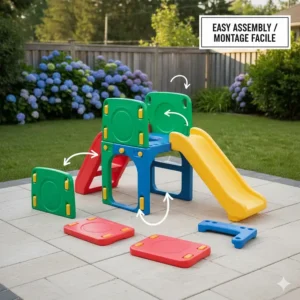
Assembly Services: Most climbers require assembly. DIY saves money but takes 1-4 hours. Professional assembly services charge $75-$150 CAD—worthwhile for complex structures like dome climbers.
Maintenance Supplies: Annual cleaning, rust prevention, and minor repairs cost approximately $30-$50 CAD yearly. This includes rust spray, cleaning solutions, replacement fasteners, and touch-up paint.
Shipping Costs: Amazon.ca offers free shipping over $35 CAD. Walmart.ca provides free shipping over $50 CAD. Toys R Us Canada typically includes free shipping over $75 CAD. Plan purchases accordingly to avoid $30-$80 CAD shipping fees.
Maximizing Resale Value
Quality climbers retain 40-60% of original value if well-maintained. List on Facebook Marketplace or Kijiji Canada in spring when demand peaks. Include original assembly instructions and emphasize maintenance history.
The Step2 Woodland Climber routinely resells for $150-$225 CAD in good condition. The Lifetime Dome holds value exceptionally well due to durability—expect to recoup $200-$300 CAD even after 5 years of use.
Canadian parents often “trade up” by selling starter climbers as kids outgrow them, then applying proceeds toward larger equipment. One Manitoba family sold their Little Tikes climber for $100 CAD after 3 years, effectively reducing their cost of ownership to about $17 CAD per year.
Installation Best Practices
Proper installation ensures safety and longevity—worth doing right the first time.
Site Selection
Choose locations that balance supervision accessibility with appropriate sun exposure. Too much direct sun makes metal unbearably hot (40°C+ surface temperatures in July). Too much shade increases rust risk from perpetual dampness.
Ideal placement provides morning sun (dries dew/frost quickly) with afternoon shade (prevents overheating). Near kitchen windows or deck areas allows supervision while preparing meals or relaxing.
Avoid low-lying areas where water pools. Canadian spring runoff can turn poor drainage spots into muddy messes that damage grass and create unsafe conditions.
Ground Preparation
Level ground prevents tipping and ensures structural stability. Use a carpenter’s level to verify flatness within 5cm across the entire installation area.
For permanent installations like the Lifetime Dome, some Canadian parents pour small concrete footings at anchor points. This adds stability and prevents sinking in soft soil—particularly valuable in prairie provinces with clay-heavy ground.
Assembly Pro Tips
Read Instructions Completely First: Seems obvious, but many Canadian parents report regretting midway pivots after skipping this step. Understanding the entire process prevents errors requiring disassembly.
Use Quality Tools: Cheap Allen wrenches strip bolt heads. Invest $25 CAD in a decent tool set that includes properly-sized wrenches, screwdrivers, and possibly a socket wrench. The assembly goes faster and results are more secure.
Two-Person Assembly: Even “one-person assembly” claims benefit from a second set of hands. One person holds components in place while the other fastens. Particularly critical for dome climbers where multiple connection points must align simultaneously.
Don’t Fully Tighten Initially: Assemble all components with fasteners snug but not fully tightened. Once the entire structure is together, systematically tighten every connection. This prevents alignment issues that occur when individual sections are locked before the whole structure takes shape.
Impact Wrench Final Pass: For metal climbers, a final pass with an impact wrench ensures maximum tightness. One Alberta reviewer credited this step with eliminating the wobbling other reviewers complained about.
Common Mistakes to Avoid
Learn from other Canadian parents’ experiences.
Mistake #1: Ignoring Weight Limits
Climber weight limits exist for safety, not suggestion. The Little Tikes Hide & Seek supports 20 kg per child—approximately a 4-year-old. Allowing a 6-year-old on this climber risks structural failure and injury.
When kids approach weight limits, transition to larger equipment. The cost of a new climber beats the cost of emergency room visits.
Mistake #2: Inadequate Supervision
Research emphasizes that outdoor risky play with appropriate supervision is essential for healthy child development—the key word being “appropriate.” This means being present, attentive, and ready to intervene if genuine danger appears, while resisting the urge to hover over every minor challenge.
Canadian parents report the sweet spot: close enough to intervene within 2-3 seconds if needed, far enough that kids feel independence. This usually means staying within 5-7 metres rather than immediately adjacent.
Mistake #3: Wrong Size Selection
The most common Canadian buyer regret? Purchasing climbers too small for their child’s current abilities hoping to “grow into” them. A 4-year-old doesn’t gain much from a climber designed for 1-3 year olds.
Better strategy: Choose climbers at the upper end of your child’s current ability. They’ll be challenged immediately and have room to grow. The Little Tikes Rock Climber’s adjustability makes this easier—start with easier configurations, increase difficulty as skills develop.
Mistake #4: Forgetting Canadian Seasonal Reality
That gorgeous summer day you assembled the climber? It’ll face 8 months of Canadian weather including snow, ice, temperature swings from -30°C to +35°C, and spring flooding. Select materials rated for outdoor year-round use in extreme conditions.
Cheap plastic climbers marketed for “occasional outdoor use” fail rapidly in Canadian conditions. Invest in HDPE plastics or powder-coated steel explicitly rated for permanent outdoor installation.
Mistake #5: Overlooking Yard Drainage
That seemingly flat spot where you installed your climber? If it’s actually a very gentle depression, spring melt creates a pond around your climber’s base. This damages grass, creates muddy messes tracked into your house, and accelerates wear on ground-contact components.
Canadian parents recommend observing yard drainage during one full rain before finalizing climber placement. Water accumulation spots become obvious—avoid them.
FAQ
❓ What is the best age to introduce a small outdoor climber for toddlers in Canada?
❓ How do climber weight limits work for multiple children playing together?
❓ Can plastic climbers stay outside during Canadian winters?
❓ Are foam climbing blocks suitable for outdoor use in Canada?
❓ What safety surfacing is required under outdoor climbers in Canada?
Conclusion
Choosing the best small outdoor climber for toddlers in Canada isn’t just about buying playground equipment—it’s about investing in your child’s development, creating backyard memories, and providing year-round physical activity opportunities despite our challenging climate.
From budget-friendly options like the Step2 Game Time Sports Climber ($65-$110 CAD) perfect for urban spaces, to premium choices like the Lifetime Geometric Dome ($300-$450 CAD) serving entire neighbourhoods of kids for a decade, there’s a perfect climber for every Canadian family’s needs and budget.
Remember these key takeaways: match climber difficulty to your child’s current abilities with room to grow, prioritize weather-resistant materials rated for Canadian extremes, ensure proper safety surfacing underneath, and commit to regular maintenance for maximum longevity. Canadian research confirms that outdoor play provides essential benefits for children’s physical, mental, emotional, and social development—making your climber investment one of the most valuable purchases you’ll make for your toddler’s early years.
Whether you’re in Vancouver managing rain, Calgary enduring temperature swings, or Toronto navigating humidity and snow, the right climber transforms your backyard into a developmental playground where confidence, strength, and joy grow together. Your toddler won’t remember the exact price you paid—but they’ll absolutely remember the exhilaration of reaching the top of their climber all by themselves. That’s priceless.
Ready to transform your backyard? Start with your space and budget constraints, review the detailed product comparisons above, and select the climber that’ll serve your family for years to come. Canadian parents report their biggest regret isn’t the cost of quality climbers—it’s waiting too long to buy them and missing precious toddler years of outdoor play.
Recommended for You
- 7 Best Bubble Machine for Toddlers Outdoor Canada 2026 Guide
- 7 Best Slides for 2 Year Olds Outdoor 2026 Canada
- 7 Best Toddler Wagons Canada 2026: Ultimate Buyer’s Guide
Disclaimer: This article contains affiliate links to Amazon.ca. If you purchase products through these links, we may earn a small commission at no additional cost to you.
✨ Found this helpful? Share it with your friends! 💬🤗
