
In This Article
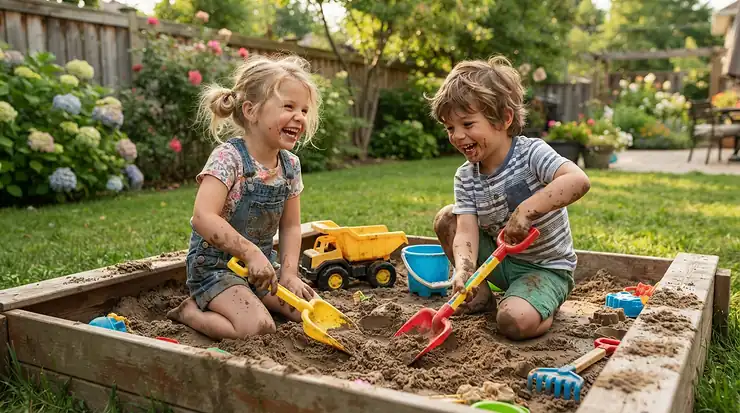
Here’s the thing nobody mentions at the garden centre: choosing play sand for kids sandbox use is less a toy decision than a materials decision. The stuff your toddler will dig, dump, taste (yes, taste) and carry home in both shoes is ground-up rock. And rock comes in very different grades.

Some sand is washed, screened and dried until it feels like brown sugar. Some is dusty enough to make you cough from the driveway. A few products skip quartz entirely and use other minerals. Then there’s the moldable, never-dries kinetic stuff, which behaves like wet sand in a tuxedo.
Why the fuss? Because the real concern isn’t the grains you can see. Workplace safety agencies note that respirable crystalline silica is made of particles at least 100 times smaller than the ordinary sand found on beaches and playgrounds, the fine dust created when stone is cut, ground or crushed. A kid with a plastic shovel is not a jackhammer. Still, dust control is a smart habit, and it starts at the store.
This guide is built for Canadian families in 2026. You’ll get seven real products listed on Amazon.ca, honest analysis of what their specs mean, and the practical stuff listings skip: non-toxic play sand Canada labelling, a reality check on dust-free sandbox sand, a sandbox fill quantity calculation and a simple sand sanitizing routine.
One transparency note. I haven’t handled any of these products. Everything below comes from manufacturer specs, retailer listings, aggregated ratings and published safety guidance. Where I couldn’t verify something, I’ll say so.
Quick Comparison: Top 7 Play Sand for Kids Sandbox at a Glance
Before the deep dive, here’s the shortlist. Sizes are metric first, with pounds in brackets.
| Product | Size | Sand type (per listing/maker) | Best For | Price range (CAD) |
|---|---|---|---|---|
| Sandtastik Sparkling White Play Sand (50 lb) | 22.6 kg | Feldspar-family; “no free silica” | Low-dust backyard or mid-size box | C$100-C$110 |
| Sandtastik Therapy Sand (10 lb) | 4.5 kg | Coarse; “no dust, no free silica” | Indoor trays, sensory tables | C$40-C$45 |
| Sun Joe Silica Play Sand (PLYSAND50) | 22.7 kg | Ultra-fine silica sand | Budget-minded bulk fills (keep damp) | Check current price |
| Kinetic Sand Natural Brown Play Sand (11 lb) | 5 kg | Natural sand plus polymer | Sensory bins, refills | Check current price |
| Kinetic Sand Beach Sand (3.25 lb) | 1.5 kg | Larger-grain natural sand plus polymer | Tabletop beach play | Under C$30 |
| Kinetic Sand Construction Site Folding Sandbox (2 lb) | 0.9 kg | Kinetic-style sand in a foldable box | Travel, apartments, toddlers | Check current price |
| National Geographic Play Sand (2 lb) | 0.9 kg | Kinetic-style sand with molds | Gifts, party favours | Mid-C$10s |
Looking at the table, the Sandtastik Sparkling White Play Sand (50 lb) is the only pick here with a genuine backyard-fill profile and a low-dust reputation. The Sun Joe Silica Play Sand (PLYSAND50) is the bulk alternative if you’re disciplined about keeping sand damp. Everything else, including the Kinetic Sand trio and the National Geographic Play Sand (2 lb), is small-batch sensory play, not sandbox fill. Prices marked “check current price” are ones I couldn’t verify reliably.
💬 Just one click — help others make better buying decisions too!😊
Top 7 Play Sand for Kids Sandbox: Expert Analysis
Seven products, three jobs: fill a real box, stock a sensory tray, or make a gift. Here’s what each spec means in practice.
1. Sandtastik Sparkling White Play Sand (50 lb) — lowest-dust feel for backyard boxes
The standout here is the grain. The retailer spec for the smaller 25 lb box lists particle sizes of roughly 0.08-0.6 mm with minimal fine content. That’s fine enough to pack into a castle when damp, yet coarse enough that it doesn’t hang in the air like flour. The maker says the sand comes from the feldspar family of rock and contains no free silica or quartz. The 25 lb version is listed as certified non-toxic to ASTM D-4236, an American art-materials labelling standard, not a Canadian regulation.
Based on the spec comparison, this is the pick for parents whose top worry is dust, especially with under-threes who still treat sand as a snack. The catch is arithmetic, which I’ll get to below.
On aggregated sentiment, the Amazon.ca listing showed roughly 4.3 out of 5 across several thousand ratings at the time of research. A parent’s question on a product-safety Q&A site called its reputation strong but flagged the cost versus hardware-store sand and the need for multiple bags to fill a box.
Pros:
- ✅ Minimal fine particles for a soft, non-gritty feel
- ✅ Maker states no free silica or quartz
- ✅ Bright colour makes debris easy to spot
Cons:
- ❌ Very high cost per kilogram for big boxes
- ❌ A 22.6 kg box is awkward to haul
Price: around C$100-C$110 at the time of research; check current price. Verdict: excellent for small-to-mid boxes, hard to justify for a full backyard fill.
2. Sandtastik Therapy Sand (10 lb) — coarse, settle-fast sand for indoor trays
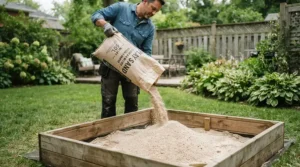
Its hook is coarseness. The Amazon.ca listing calls it premium, non-toxic, “no dust, no free silica.” A US retailer describes the larger therapy sand as coarse, intended for indoor sand trays, and tested by toxicologists with the ACMI “AP” seal.
Coarser grains matter because they fall instead of floating. Anyone who has vacuumed a living room after a fine-sand session will see the appeal. The trade-off is moldability. Coarse grains lock together less tightly, so castles are slumpier.
My analytical take: this suits sensory tables, a balcony tray or a winter play corner, and it isn’t meant for packing towers. I couldn’t verify enough Amazon.ca review text to summarize, so skim recent reviews for words like “texture” and “clumping” before buying.
Pros:
- ✅ Coarse grains settle instead of drifting
- ✅ Toxicologist-tested, ACMI-labelled (per retailer)
- ✅ 4.5 kg size fits trays and small spaces
Cons:
- ❌ Weaker castles than finer play sand
- ❌ Expensive per kilogram
Price: around C$40-C$45 at the time of research; check current price. Verdict: sensible for a tray, wasteful for an outdoor box.
3. Sun Joe Silica Play Sand (PLYSAND50) — bulk multipacks for budget-minded fills
The standout is scalability. The listing family includes 20 lb and 50 lb bags and multipacks, which suits anyone filling a large box in one go. It’s described as ultra fine silica sand for sandboxes, sensory tables and gardens.
“Silica” here simply means quartz-type sand, the ordinary stuff. “Ultra fine” is the part to weigh. Fine grades feel soft but can drift as dust when dry. I couldn’t verify washing or screening details from the listing, so read the product page closely.
Here’s what to weigh: this suits buyers who will keep the sand lightly damp and won’t mind a bit more dust discipline. It’s a poor match for toddlers who dig, then fling dry handfuls. I couldn’t verify review themes, so filter recent reviews for “dust.”
Pros:
- ✅ Multipacks suit large bulk fills
- ✅ Soft, fine texture for molding
- ✅ Doubles for garden and craft use
Cons:
- ❌ Ultra-fine grade can mean more airborne dust
- ❌ Silica content demands extra dust habits
Price: I couldn’t confirm a reliable current price; check the live listing. Verdict: potentially the cheaper Amazon route, but compare against a local supplier first.
4. Kinetic Sand Natural Brown Play Sand (11 lb) — moldable refill in sensory-bin size
The hook is the 5 kg refill size. The Amazon.ca listing describes natural brown play sand for arts and crafts and sandbox use, sold as an Amazon Exclusive. The brand blends natural sand with a polymer so the grains stick to each other and not to hands.
Five kilograms sounds hefty until you do the maths. A 1.2 m square box filled 20 cm deep needs roughly 90 of these bags. So this is a sensory bin product, not a backyard fill.
Where it shines is cleanup. Self-clumping sand scatters less on floors, which makes it a good indoor winter option. A Kinetic Sand parent who plays on a mat will vacuum far less than with loose sand. I couldn’t verify review themes for this exact listing.
Pros:
- ✅ Self-clumping texture limits scatter
- ✅ Natural brown colour hides dirt
- ✅ 5 kg size suits sensory bins
Cons:
- ❌ Far too small for outdoor sandbox fills
- ❌ Much pricier per kilogram than loose sand
Price: check current price; I couldn’t verify a reliable figure. Verdict: great for indoor refills, poor value for outdoor boxes.
5. Kinetic Sand Beach Sand (3.25 lb) — larger grains, more real-beach feel
Its distinction is grain size. A Canadian deal-site description says the beach version uses larger grains of natural sand blended with polymers, and calls it hypoallergenic and non-toxic for ages 3+. The Amazon.ca listing sells it as an Amazon Exclusive in a 3.25 lb (1.5 kg) size.
Larger grains give a gritty, closer-to-beach feel while keeping the self-sticking behaviour. Kids who find classic kinetic sand slick often prefer this texture.
Treat it as tabletop play. For a parent with a small sensory tray, it’s a fun upgrade from plain sand. For a backyard box, it’s irrelevant. I couldn’t verify detailed Amazon.ca review text, so check the live page for notes on grain size and cleanup.
Pros:
- ✅ Beach-like grain with self-sticking cleanup
- ✅ Described as hypoallergenic and non-toxic
- ✅ Small bag suits trays and travel
Cons:
- ❌ Tiny quantity for any real sandbox
- ❌ Costs far more per kilogram than loose sand
Price: Canadian deal listings have shown a regular price around C$20; under C$30 is a reasonable expectation, but check current price. Verdict: fair for sensory play, not for volume.
6. Kinetic Sand Construction Site Folding Sandbox (2 lb) — a sandbox in a storage case
The hook is portability. The Amazon.ca listing describes a folding sandbox with 2 lb (0.9 kg) of sand, a toy truck and a storage case. In other words, the sand lives inside a unit you can fold up and stash.
That matters for apartments, cottages and road trips, where free-range sand is the enemy. At 0.9 kg, this is a play set that happens to contain sand. It’s not a bulk product.
Parents of toddlers who love trucks may find the construction theme more engaging than a plain bag. Parents wanting a backyard fill will be disappointed. I couldn’t verify Amazon.ca review themes.
Pros:
- ✅ Sand stays in a foldable tray
- ✅ Storage case keeps toys together
- ✅ Truck adds construction-themed play
Cons:
- ❌ Very small sand quantity
- ❌ Priced like a toy set, not material
Price: check current price; I couldn’t verify a reliable range. Verdict: smart as an indoor or travel kit, wrong for the yard.
7. National Geographic Play Sand (2 lb) — mould-and-tray starter kit
The standout is the ready-to-play kit: 2 lb (0.9 kg) of sand, a tray and six molds. A Canadian deal post describes it as kinetic, “perpetually wet” sand that doesn’t dry out, with non-toxic, hypoallergenic claims and a satisfaction guarantee.
Never-dry sand solves a classic problem, because regular play sand needs water and re-wetting. The molds suit castles and pyramids right out of the box.
It’s a natural gift, party favour or classroom bin filler. I couldn’t verify current review themes, so confirm availability and recent ratings on Amazon.ca before buying.
Pros:
- ✅ Includes tray and six molds
- ✅ Stays moldable without re-wetting
- ✅ Gift-friendly and easy to store
Cons:
- ❌ Small quantity limits big builds
- ❌ Not a sandbox-fill product
Price: a Canadian deal site once listed it at C$14.44 against a regular C$16.99, so think mid-C$10s; check current price. Verdict: good value as a kit, irrelevant for bulk.
What Is Play Sand for Kids Sandbox?
Play sand for kids sandbox use is washed, screened and dried sand with a soft, fairly uniform grain, so it packs when damp and releases little dust. Most is natural quartz-type sand, though some brands use other minerals. Quality hinges on grain size, washing and silica content.
The three families you’ll meet
Natural washed sand is the hardware-store classic. For example, SAKRETE’s 20 kg play sand at Home Depot Canada is described as washed, dried and graded. Non-quartz mineral sands, such as the Sandtastik line, swap quartz for other minerals and market themselves as free of free silica. Binder-coated kinetic sands like Kinetic Sand add polymer so grains cling together.
Why the distinction matters
A sandbox is a closed system. Kids breathe it, sit in it and occasionally eat it. So three things matter: how fine the dust fraction is, whether the material was washed, and what the maker will actually put in writing. If a brand won’t say what’s in the bag, that silence tells you something.
Grain shape matters too. Naturally rounded grains feel smooth and pack well. Crushed stone sand tends to be angular and can include more fines, which is one reason “play sand” made from crushed rock is worth avoiding for toddlers.
How to Choose Play Sand for Kids Sandbox: 6 Steps
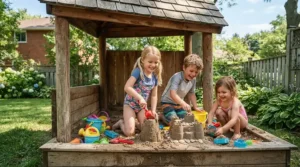
Short on time? Follow these six steps in order.
- Identify the mineral. Ask whether it’s quartz-type sand, a non-quartz mineral or a polymer blend. The label should say.
- Confirm washed, screened and dried. Washing removes the fine silt that becomes dust. If the product doesn’t say it’s washed, assume it isn’t.
- Match grain to age. Fine, moldable sand suits castle builders; coarser sand suits toddlers who fling handfuls.
- Count bags before you cart. Run the sandbox fill quantity calculation below first. Many parents discover a premium-priced 50 lb bag becomes a four-figure line item.
- Ask for paperwork. Reputable suppliers will provide a safety data sheet (SDS) on request. Reluctance is a red flag.
- Plan the lid and the upkeep. The best play sand for kids sandbox use still needs a cover, raking and a replacement schedule, as covered below.
What most buyers overlook is step four. People fixate on safety claims, then fill a box with whatever’s cheapest in the cart, or fall for a premium product and quietly blow the budget. Do the maths first and the right product usually becomes obvious.
Non-Toxic Play Sand Canada: What the Label Does (and Doesn’t) Promise
“Non-toxic” is reassuring and slippery. For non-toxic play sand Canada shoppers, it helps to know where the phrase comes from.
Several products cite ASTM D-4236, a US standard for labelling art materials. It’s a useful signal, but it isn’t a Canadian certificate for sandbox fill. Under the Canada Consumer Product Safety Act, as I understand it, products on the Canadian market must not pose an unreasonable danger to health or safety. That’s a general duty rather than a “play sand” seal. CSA Z614 covers children’s playspaces and equipment, but it isn’t a sand-quality certification either.
Bulk landscape sand also isn’t normally sold as a tested toy. That doesn’t make it dangerous; plenty of families use washed hardware-store sand happily. It just means the safety claim rests on supplier practice, not a children’s-product regime.
So what should a careful buyer do? Read the material statement (“no free silica” or “washed and screened”), ask for the SDS, and favour brands that publish specifics over ones that shout “100% safe.” For non-toxic play sand Canada parents, specificity beats adjectives. And remember: non-toxic never means edible. Supervise the youngest sand-tasters, and wash hands after play.
Silica Dust Safety: What Canadian Parents Should Actually Worry About
Let’s keep this proportionate. The alarming numbers come from workplaces. CAREX Canada estimates about 429,000 Canadians are exposed to crystalline silica at work, and occupational exposure is linked to roughly 570 lung cancers a year. Those figures reflect jobs like construction, where stone is cut, ground and drilled for hours.
A backyard sandbox is a very different exposure. I didn’t find Canadian guidance specific to quartz sand in home sandboxes, so treat the following as prudent practice, not a medical rule. The common-sense takeaway of silica dust safety is simple: dust is the problem, not the sand.
Practical silica dust safety habits
- Keep sand slightly damp. Moist sand doesn’t float. A quick sprinkle before play beats any other tip.
- Avoid dry dumping. Pouring a 22.6 kg bag creates a puff. Open it low, pour slowly and stand upwind.
- Skip crushed-stone products for toddlers if the listing is vague about washing.
- Never sweep dry sand into the air. Wet it down or use a vacuum with a good filter.
- Wash hands and faces after play.
If you’re comparing options, products stating no free silica, like the Sandtastik Sparkling White Play Sand (50 lb), sidestep the question entirely. Silica-based products like the Sun Joe Silica Play Sand (PLYSAND50) can still be reasonable, as long as you follow these habits and verify washing details.
Dust-Free Sandbox Sand: Does It Actually Exist?
Honest answer: not literally. Any dry granular material sheds some fines. But low-dust sandbox sand exists, and the difference is real.
What produces a dusty bag? Unwashed silt, a wide grain range with lots of tiny particles, and crushed (angular) stone. What produces a calmer one? Washing, screening, narrower grain sizes and moisture. Some reviewers of conventional hardware-store sand on Amazon have complained of dust clouds and scratchy throats, according to one parent’s account on a product-safety Q&A site. That’s anecdote, but it’s consistent with the physics.
So how should you shop for dust-free sandbox sand? Look for phrases like “minimal fine particle content” (the Sandtastik line uses this), “no dust” (the Sandtastik Therapy Sand (10 lb) listing) or binder-coated grains that clump instead of float, as with the Kinetic Sand Natural Brown Play Sand (11 lb).
Then do your part. A dust-free sandbox sand strategy is half product, half habit: damp sand, slow pouring and a lid that stays on. If you remember nothing else, remember this: moisture beats marketing.
Play Sand vs Kinetic Sand: Which Belongs in Your Sandbox?
Short answer: loose sand for the yard, kinetic-style for the living room. The details explain why.
| Feature | Natural/mineral play sand | Kinetic-style sand | Best For |
|---|---|---|---|
| Cost per kg | Lowest (e.g., local bulk); premium for Sandtastik Sparkling White Play Sand (50 lb) | Highest (e.g., Kinetic Sand Beach Sand (3.25 lb)) | Big boxes vs small trays |
| Dust | Low if washed and damp | Minimal scatter | Allergy-conscious homes |
| Cleanup | Sweeps and tracks | Clumps and lifts | Indoor play |
| Outdoor durability | Excellent; rain-tolerant | Picks up grass and dirt | Backyards |
| Volume available | Tonnes | 1-5 kg | Fill vs tray |
Looking at the table, kinetic-style products win on cleanliness and lose on cost and scale. A 1.2 m box simply can’t be filled economically with Kinetic Sand bags. Loose play sand wins outdoors, where water, bugs and grass would turn binder-coated sand into a clumpy mess. Think of them as complements: one for the box, one for the indoor tray on a rainy day.
Bulk Play Sand for Kids: Bags, Supersacks or a Local Supplier?
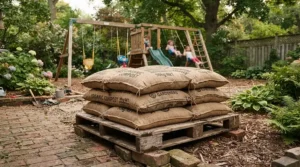
Here’s where the math bites. For a typical 1.2 m square box, you need roughly 21 bags of 22.7 kg. At around C$100-C$110 per Sandtastik Sparkling White Play Sand (50 lb) bag, that’s north of C$2,000. Premium sand makes sense for a table, but hardly for a yard.
So where does bulk play sand for kids actually come from in Canada? Three routes:
- Hardware-store bags. Home Depot Canada lists SAKRETE play sand in 20 kg bags, described as washed, dried and carefully graded. It’s not an Amazon.ca product, but it’s a useful reference point.
- Landscape suppliers. Sold by the tonne, usually delivered. Ask for “washed, screened play sand” and request an SDS.
- Amazon.ca multipacks, such as the Sun Joe Silica Play Sand (PLYSAND50) family, which are convenient but require checking the per-kilogram price against local options.
For bulk play sand for kids, ask suppliers three questions: Is it washed? Is it screened? What’s the silica situation? Reputable yards answer quickly. And in Canada, timing matters: spring is peak season, so order before the long weekend rush.
✨ Ready to Fill That Sandbox?
🔍 Click any highlighted product name above to check current pricing and availability on Amazon.ca, then match the size to your box before you buy. 🏖️ A few smart choices now mean a calmer, cleaner summer of castles!
Sandbox Fill Quantity Calculation: How Much Play Sand Do You Need?
Nobody wants to haul one bag too many or, worse, make a second run in the rain. The sandbox fill quantity calculation is three steps.
- Volume (m³) = length × width × depth (all in metres).
- Weight (kg) = volume × 1,600. That figure comes from a 50 lb (22.7 kg) bag of play sand occupying about 0.5 cubic feet, which works out near 1,600 kg per cubic metre dry. Wet sand is heavier.
- Bags = weight ÷ 22.7, then round up and add a little for compaction.
| Sandbox size (L × W × D) | Volume | Approx. weight | 22.7 kg (50 lb) bags | Best For |
|---|---|---|---|---|
| 0.9 × 0.9 × 0.15 m | 0.12 m³ | 194 kg | 9 | Toddlers, patios |
| 1.2 × 1.2 × 0.20 m | 0.29 m³ | 461 kg | 21 | Most backyards |
| 1.5 × 1.5 × 0.20 m | 0.45 m³ | 720 kg | 32 | Siblings, playdates |
| 2.0 × 2.0 × 0.25 m | 1.00 m³ | 1,600 kg | 71 | Large yards (use a supplier) |
Notice the jump. Once you pass about 30 bags, buying by the tonne almost always beats bags. A cubic metre of play sand is roughly 1.6 tonnes, so the biggest box is a delivery job.
Here’s a sanity check worth running. One popular cover-equipped box (110 × 88 cm) lists a 113 kg sand capacity at Best Buy Canada. At 1,600 kg/m³, that’s only about 7 cm of sand. Good for sprinkling, not for serious digging, so many families will want deeper fill and should size the box accordingly. I couldn’t find an official depth standard; 15-20 cm is a practical range.
Sand Sanitizing: A Step-by-Step Schedule That Actually Works
Let’s be blunt about the risk. Cats, dogs and raccoons treat uncovered sandboxes as toilets. A veterinary parasitologist quoted by CTV News called cats the biggest contamination risk and said covering the sandbox is the biggest preventive step. The same story notes that Canada’s winter freeze helps keep parasite populations down, though simple steps make them rarer still.
So what does sand sanitizing look like in practice? Not a spray bottle. Think of sand sanitizing as a routine, not a product.
The weekly and seasonal routine
- Every play session: lid on afterward. This single habit does more than any disinfectant.
- Weekly: rake or sift for debris and anything that doesn’t belong. Cats bury what they leave.
- If you find stool: remove it plus the sand around it using a shovel, avoiding skin contact, as parasitology guidance recommends.
- After rain: let wet sand dry before covering, to discourage bacterial growth.
- Each spring: inspect, turn the sand and top up.
- Every year or two (sooner if uncovered): replace the sand. Guidance suggests changing it a few times a year if the box is uncovered.
What doesn’t work? Spraying disinfectant over a deep layer. It only touches the surface and can leave residues you don’t want your toddler handling. For any specific concern, ask your veterinarian or local public health unit.
Ready for the best part? Good sand sanitizing is cheap: a lid, a rake and a calendar reminder.
Problem → Solution Guide: Dust, Damp, Cats and Clumps
Four common sandbox headaches, each with a fix.
Problem 1: Dust clouds. Dry fine sand drifts. Solution: dampen lightly before play and switch to a coarser product such as the Sandtastik Therapy Sand (10 lb) for indoor trays.
Problem 2: Soggy, smelly sand. Rain plus a loose lid breeds trouble. Pediatric guidance says to let wet sand dry thoroughly before covering and to rake regularly. Solution: a vented cover, a sunny location and a drainage layer under the box.
Problem 3: Cats. Solution: a tight-fitting cover. Humane deterrents like repellent plants or sprinklers help, but the lid is non-negotiable.
Problem 4: Sand in the house. Solution: a boot tray at the door, a hose-down station and, for rainy days, a contained kit like the Kinetic Sand Construction Site Folding Sandbox (2 lb) or the National Geographic Play Sand (2 lb).
Notice the pattern. Most fixes are habits, not products. Even the best play sand for kids sandbox use will misbehave without a lid and a rake.
FAQ
❓ How much should I budget for bulk play sand for kids in Canada?
❓ Is non-toxic play sand Canada-approved for toddlers who mouth sand?
❓ Can I mix kinetic sand into my regular sandbox sand?
❓ How deep should the sand in a sandbox be?
❓ Can I leave my sandbox sand out over a Canadian winter?
Conclusion
Here’s the short version. If dust is your biggest worry and the box is small, the Sandtastik Sparkling White Play Sand (50 lb) is the cleanest-feeling option in this lineup. If you’re filling a large box, price becomes the story, and a washed, screened local supplier probably beats any 22.6 kg Amazon.ca bag. The Sun Joe Silica Play Sand (PLYSAND50) is a reasonable bulk candidate for disciplined damp-sand parents. For indoor tables, the Sandtastik Therapy Sand (10 lb) and the Kinetic Sand line are all about cleanup, not volume, and the National Geographic Play Sand (2 lb) works as a gift.
Whatever you choose, the habits do the heavy lifting: do the sandbox fill quantity calculation first, keep sand damp, rake weekly, cover it every time and refresh the sand on a schedule. Good play sand for kids sandbox use is part material, part routine.
Remember, I haven’t handled these products, and several prices and review themes couldn’t be verified. Check live Amazon.ca listings for current pricing, availability and recent ratings before you buy.
Recommended for You
- Sand And Water Table Combo: 7 Best Picks In Canada (2026)
- Sandbox Cover To Keep Animals Out: 7 Proven Picks (2026)
- Plastic vs Wooden Sandbox For Toddlers: 7 Real Picks (2026)
Disclaimer: This article contains affiliate links. As an Amazon Associate, I earn from qualifying purchases. If you purchase products through these links, we may earn a small commission at no additional cost to you.
✨ Found this helpful? Share it with your friends! 💬🤗
