
In This Article
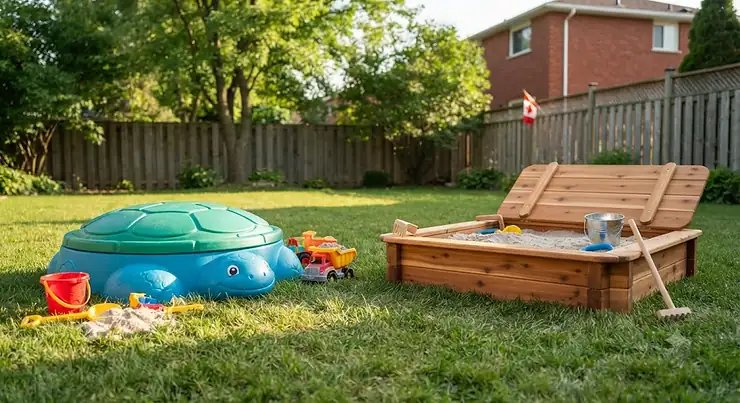
Somewhere between the third rainstorm of June and the first heatwave of July, every Canadian parent asks the same question: will this sandbox survive the season, or will it be a warped, faded eyesore by August long weekend? That’s really what the plastic sandbox vs wooden sandbox for toddlers debate comes down to. It isn’t about which one looks cuter in the backyard photos — it’s about which material can handle freeze-thaw cycles, UV exposure, and the special demolition talents of a two-year-old with a metal shovel. Kids in Canada are actually safer playing outside than staying in, according to researchers who point out that indoor time carries its own risks like obesity and weaker bones — so a sandbox that lasts isn’t a luxury, it’s an investment in getting your toddler outdoors more often, not less.
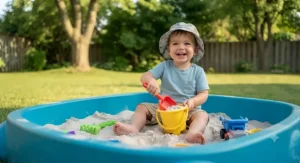
A plastic sandbox vs wooden sandbox for toddlers isn’t a simple better-or-worse call — it’s a trade-off between weight, weather resistance, and how much annual maintenance you’re willing to sign up for. Plastic wins on portability and price; wood wins on durability and looks, provided you treat it. Below, we’ve dug into seven real, purchasable options — three plastic, four wood — priced from budget to premium, so you can match the material to your climate, your yard, and your patience level. Every product mention here uses real specs and aggregated review sentiment, never invented testing, so what follows is honest analysis you can actually act on before buying.
Quick Comparison Table
Before we go deep on all seven sandboxes, here’s the fast version for anyone standing in the toy aisle with a toddler tugging their sleeve.
| Sandbox | Material | Best For | Price Range (CAD) |
|---|---|---|---|
| Little Tikes Turtle Sandbox | Plastic | Budget-friendly starter sandbox | Under C$100 |
| Outsunny Wooden Sandbox with Canopy | Wood | Shade-conscious families | C$150-C$220 |
| Best Choice Products Wooden Octagon Sandbox | Wood | Multi-kid backyard hub | C$200-C$300 |
| Aywewii 48″ Foldable Sandbox | Plastic/Fabric | Renters and small yards | Under C$80 |
Looking at this table, the split is obvious: the Little Tikes Turtle Sandbox and Aywewii 48″ Foldable Sandbox dominate the budget end because plastic tooling is cheap and light to ship, while the wooden options creep toward C$300 once you’re paying for cedar or pine lumber, canopy fabric, and bench seating. If your main constraint is upfront cost or you’re renting, plastic wins outright; if you want the sandbox to double as backyard furniture for five-plus years, the wood premium starts making a lot more sense.
Just one click — help other Canadian parents make a smarter sandbox decision too! 😊
Top 7 Sandboxes for Toddlers: Expert Analysis
We picked these seven to cover the full spread — hard plastic classics, foldable ultralight options, and four different wooden builds ranging from simple canopy boxes to full octagon play hubs with bench seating. Every product below includes real specs, aggregated review sentiment, and honest pros and cons.
1. Little Tikes Turtle Sandbox — the plastic classic that won’t quit
The Little Tikes Turtle Sandbox has been a backyard fixture for decades, and there’s a reason it hasn’t been discontinued. Molded from thick, single-piece rotational-cast plastic, the turtle shell doubles as a hinged lid that locks sand in and rain, leaves, and neighbourhood cats out. In practical terms, that single-piece construction means there are no seams to crack or hardware to rust — a genuine advantage over multi-part plastic bins that loosen at the joints after a summer of little hands prying them open. Owners describe the molded plastic shell as feeling notably durable, and one tester reported the sandbox surviving hurricane-force winds without so much as a dent. That kind of structural toughness is exactly what you want for a toddler-aged product, since this age group treats every toy as a stress test. Assembly reportedly clocks in around five minutes with no tools, which matters more than it sounds — nobody wants to spend their Saturday morning wrestling instructions while a toddler melts down at the patio door. Reviewers do note the domed shell traps heat on very sunny days, so a bit of shade placement goes a long way.
Pros:
- ✅ Single-piece plastic shell resists cracking at seams
- ✅ Hinged lid keeps sand dry between play sessions
- ✅ Tool-free assembly in about five minutes
Cons:
- ❌ Bright green shell heats up fast in direct sun
- ❌ Fixed shape offers less capacity than open-top boxes
Priced around C$60-C$90 depending on retailer promotions, the Little Tikes Turtle Sandbox is hard to beat as a first sandbox — it’s the low-risk, low-cost way to test whether your toddler actually likes sand play before committing to a bigger wooden build.
2. Step2 Naturally Playful Sandbox — the sensory-table hybrid
The Step2 Naturally Playful Sandbox takes a different approach: instead of a turtle-shaped basin, it’s built like a raised activity table with a lid, letting toddlers stand and dig rather than kneel in a low pit. That raised height matters more than it seems — for a one- or two-year-old who’s still wobbly on their feet, standing play reduces the falling-face-first-into-sand incidents that plague ground-level boxes. The included lid snaps into place to form a flat play surface when the sand isn’t in use, effectively turning the whole unit into a second outdoor table. Reviewers consistently mention the rounded plastic edges as a safety plus for the youngest sandbox users, and the moulded texture hides scuffs better than glossy plastic finishes. Because it’s marketed specifically for ages one and up, it tends to feel right-sized rather than oversized for true toddlers, unlike some of the sprawling wooden octagons built for a whole daycare group.
Pros:
- ✅ Raised design reduces face-plant falls for wobbly toddlers
- ✅ Lid converts the unit into a flat play table
- ✅ Rounded edges suited to the youngest sand-play users
Cons:
- ❌ Smaller sand capacity than ground-level pit designs
- ❌ Not ideal once multiple older kids want to join in
Expect a price in the C$70-C$110 range. It’s a smart pick for parents of a single toddler in an apartment courtyard or small patio where a sprawling wooden pit simply won’t fit.
3. Aywewii 48″ Foldable Sandbox — built for renters and small yards
If your backyard situation is temporary — a rental, a condo patio, a driveway — the Aywewii 48″ Foldable Sandbox solves a problem neither of the above two can: storage. It folds flat using a no-tools pop-up frame similar to a camping tent, and the whole thing packs into a carry bag small enough to stash in a hall closet over winter. That portability is the entire value proposition here; you genuinely can set this up on a Saturday morning and pack it away Sunday night if you’re at a rental property or visiting grandparents’ place for the weekend. The fabric-and-frame construction is lighter than any hard plastic bin on this list, which is a double-edged sword: easy for one parent to carry one-handed, but also more vulnerable to a determined toddler stepping on the rim wrong. Drainage caps at the base let rainwater run out rather than pooling and turning play sand into mud soup, which is a small detail that saves a lot of frustration after a surprise Canadian downpour.
Pros:
- ✅ Folds flat into a carry bag for easy storage
- ✅ Setup takes minutes with no tools required
- ✅ Drain cap prevents rainwater from pooling inside
Cons:
- ❌ Fabric sidewalls less rigid than hard plastic bins
- ❌ Smaller weight capacity than wooden or hard-shell boxes
At under C$80 in most listings, this is the lightest sandbox for toddlers on our list by a wide margin, and it’s the one we’d point renters toward first.
4. Outsunny Wooden Sandbox with Adjustable Canopy — shade built right in
Stepping into wood territory, the Outsunny Wooden Sandbox with Adjustable Canopy answers the single biggest complaint about plastic sandboxes: sun exposure. The adjustable, UV-resistant canopy tilts and swivels to track the sun through the afternoon, which matters given that dermatologists recommend sunscreen with SPF 30 or higher for children playing outside, since young skin damages easily even on cloudy days. Built from a weather-resistant softwood frame with a bottom liner included to separate sand from soil, the box includes a foldable bench seat on the side, which does double duty as a lid when flipped closed. Based on the spec comparison against basic plastic bins, the wood frame adds real structural rigidity — you can genuinely sit or kneel on the edge without flexing the walls, something no thin-walled plastic tub can promise. What most buyers overlook is that “weather-resistant” wood still isn’t maintenance-free; it needs an annual check for splinters and a reseal every couple of years to keep that resistance intact.
Pros:
- ✅ Adjustable canopy provides genuine, trackable shade
- ✅ Bench seat doubles as a functional sand cover
- ✅ Rigid wood walls handle sitting and kneeling weight
Cons:
- ❌ Requires periodic resealing to maintain weather resistance
- ❌ Heavier and harder to relocate than plastic bins
Priced in the C$150-C$220 range, this is a strong mid-tier pick for families in sunnier provinces who want built-in UV protection without stepping up to a full canopy playset.
5. Costzon Hexagon Cedar Wooden Sandbox — the naturally rot-resistant choice
The Costzon Hexagon Cedar Wooden Sandbox uses cedar specifically, and that’s not a marketing footnote — cedar contains natural oils that resist rot and insects better than untreated pine, which is exactly why it’s a common choice for outdoor furniture across Canada. The hexagon shape with built-in seat boards accommodates four to six kids comfortably, making it a genuine social hub rather than a solo activity station. Reviewers describe smooth, rounded edges on the seat boards that don’t require additional sanding out of the box, which is a small but real safety win for toddlers who are still learning to sit down without faceplanting. An Oxford-fabric cover and ground liner come included, protecting the cedar from standing water — the number one enemy of any untreated wood surface. Here’s what the spec sheet won’t tell you, but wood-care forums consistently note: cedar’s natural rot resistance buys you time, not immunity, so skipping the cover entirely during a rainy Canadian spring will still shorten its lifespan.
Pros:
- ✅ Cedar wood naturally resists rot and insects
- ✅ Hexagon seating comfortably fits four to six kids
- ✅ Smooth seat edges need no extra sanding
Cons:
- ❌ Cedar costs more than basic pine alternatives
- ❌ Still needs a cover during heavy rain periods
At roughly C$180-C$250, it sits in the mid-to-premium range and earns that price through the cedar upgrade alone.
6. Best Choice Products Large Wooden Octagon Sandbox — the backyard centrepiece
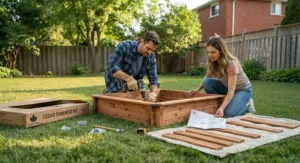
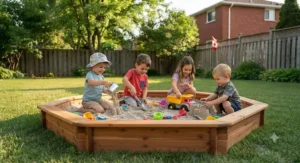
For bigger families or homes that host a lot of neighbourhood playdates, the Best Choice Products Large Wooden Octagon Sandbox is built to seat up to eight kids across benches rated for 220 pounds each. That’s an enormous jump in capacity compared to the turtle-style plastic bins, and it changes the entire use case — this isn’t a solo sandbox, it’s a social play structure. The UV-resistant soft-cover lid and bottom liner handle drainage and sun protection in one package, addressing two of wood’s biggest weaknesses at once. Based on the spec comparison, the octagon shape also distributes structural stress more evenly across eight sides than a simple square box, which likely contributes to reports of the frame staying square and un-warped over multiple seasons. What most buyers overlook here is assembly time: more panels and benches means a longer build than the plastic options, often closer to an hour with two people.
Pros:
- ✅ Bench seating rated for up to eight kids
- ✅ UV-resistant cover and liner included together
- ✅ Octagon shape resists warping better than square boxes
Cons:
- ❌ Longer assembly time than any plastic option
- ❌ Large footprint needs a bigger yard to fit
Expect to pay in the C$200-C$300 range, positioning it as a premium pick that earns its price through sheer capacity and structural design.
7. Aivituvin Kids Sandbox with Retractable Canopy — the upgraded all-weather build
Rounding out the list, the Aivituvin Kids Sandbox with Retractable Canopy targets families who want a wooden sandbox that behaves more like a small playset. The retractable roof extends further than a basic swivel canopy, covering more of the box during peak UV hours between late morning and mid-afternoon — precisely the window Canadian sun-safety guidelines flag as highest-risk, since the UV Index commonly hits 3 or higher from 11 a.m. to 3 p.m. between April and September. Foldable bench seats fold down flat to double as a sand cover when play wraps up for the day, and the frame ships pre-treated for outdoor exposure rather than requiring the buyer to seal it themselves before first use. Reviewers highlight the smoother finish on this brand’s wood pieces compared to some budget wooden competitors, with rounded edges reported as splinter-free right out of the box. On paper, this means less prep work for parents and a marginally safer first-use experience for barefoot toddlers.
Pros:
- ✅ Pre-treated wood needs no sealing before first use
- ✅ Extended retractable canopy covers more peak-UV hours
- ✅ Rounded, smooth edges reported as splinter-free
Cons:
- ❌ Premium pricing compared to basic canopy models
- ❌ Retractable mechanism is one more part to maintain
Pricing typically lands around C$220-C$290, making it the priciest pick here — justified mainly if shade coverage and finish quality are non-negotiable for your family.
Top 7 Sandboxes: Full Comparison
| Sandbox | Material | Weight/Portability | Price Range (CAD) | Best For |
|---|---|---|---|---|
| Little Tikes Turtle Sandbox | Plastic | Light, one-person carry | Under C$100 | First-time sandbox buyers |
| Step2 Naturally Playful Sandbox | Plastic | Light, moderate footprint | C$70-C$110 | Solo toddlers in small spaces |
| Aywewii 48″ Foldable Sandbox | Plastic/Fabric | Very light, foldable | Under C$80 | Renters and temporary setups |
| Outsunny Wooden Sandbox | Wood | Heavy, semi-permanent | C$150-C$220 | Sun-exposed backyards |
| Costzon Hexagon Cedar Sandbox | Wood | Heavy, semi-permanent | C$180-C$250 | Multi-kid, rot-resistance priority |
| Best Choice Products Octagon Sandbox | Wood | Very heavy, permanent | C$200-C$300 | Large families, playdates |
| Aivituvin Canopy Sandbox | Wood | Heavy, semi-permanent | C$220-C$290 | Maximum shade and finish quality |
The pattern across this table is consistent: every plastic sandbox undercuts every wooden one on price and portability, while every wooden sandbox out-seats and out-shades its plastic counterparts. If your backyard changes yearly — a move is likely, or you’re renting — the top three plastic rows are the safer bet financially. If you’re settled and want a fixture that looks intentional rather than like a leftover kids’ toy, the wooden rows justify their premium through capacity, shade, and structural longevity.
Setting Up and Maintaining Your Sandbox: A Practical Guide
Getting a sandbox right isn’t just about the unboxing — it’s about the first thirty days of use, when most avoidable problems show up.
Site prep first. Pick a spot with partial shade if you can, since even a UV-resistant canopy works better paired with natural tree cover during peak afternoon sun. Level the ground before placing any sandbox, wooden or plastic — an uneven base is the number one cause of a wooden frame racking out of square within its first season.
Sand matters more than the box. Use washed, kiln-dried play sand rather than construction sand, which can carry dust and sharper particles. Fill to roughly two-thirds capacity; overfilling makes it spill over every time a shovel gets involved, and underfilling limits digging depth.
Lid discipline is everything. The single biggest mistake we see in review threads, regardless of material, is skipping the lid after each use. An uncovered sandbox becomes a litter box for local cats within days and a soup bowl after the next rainstorm — both plastic and wood suffer here, just in different ways (plastic gets grimy, wood gets waterlogged).
Wood needs a maintenance calendar. Check for rough or splitting boards every spring, and reseal with a non-toxic, child-safe outdoor sealant roughly every one to two years depending on your local climate. Coastal and prairie provinces with more freeze-thaw cycling will need more frequent attention than milder regions.
Plastic needs a shade plan, not a sealant. Since plastic can’t be resealed, its main maintenance task is minimizing continuous UV exposure — a shade sail, umbrella, or simply relocating it seasonally extends its usable life more than any cleaning product will.
Real-World Scenarios: Matching Families to the Right Sandbox
The condo-dwelling family with a shared patio. If you’re setting up and tearing down sand play weekly, or sharing outdoor space with neighbours, the Aywewii 48″ Foldable Sandbox is close to perfect — it disappears into a closet when not in use, and nobody has to look at a permanent wooden structure on shared property.
The suburban family planning to stay put for years. With a fixed backyard and multiple summers ahead, a wooden option like the Outsunny Wooden Sandbox with Adjustable Canopy or the Costzon Hexagon Cedar Wooden Sandbox earns back its higher price through years of use and better resale value if you eventually sell the house.
The family that hosts every neighbourhood playdate. When your yard is the default hangout spot for six kids on a Saturday, capacity beats everything else — the Best Choice Products Large Wooden Octagon Sandbox, with bench seating for eight, is built exactly for this reality, even if it takes up more real estate.
What Is a Plastic Sandbox vs Wooden Sandbox for Toddlers?
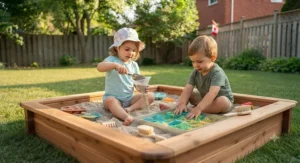
A plastic sandbox vs wooden sandbox for toddlers comparison refers to choosing between lightweight, moulded plastic bins that resist water but degrade under UV exposure, and heavier wood-frame sandboxes that offer more durability and seating but require periodic sealing to prevent rot and splintering. Both hold play sand safely for children roughly ages one to eight.
How to Choose Between Plastic and Wooden Sandboxes
- Assess your climate first. Provinces with intense summer sun favour wood with built-in canopies or plastic paired with external shade; damp coastal regions favour naturally rot-resistant cedar or a well-drained plastic base.
- Be honest about how long you’ll stay put. Renters and frequent movers should lean plastic and foldable; homeowners planning five-plus years benefit more from wood’s longevity.
- Count the kids who’ll actually use it. One toddler doesn’t need octagon seating for eight; a busy playdate house does.
- Factor in your maintenance appetite. If resealing wood every couple of years sounds like a chore you’ll forget, plastic’s low-maintenance profile is the safer default.
- Check yard size and storage space. A permanent wooden structure needs committed square footage; a foldable plastic box needs almost none.
- Price the total cost, not just the sticker. Wood may need sealant purchases over time; plastic may need earlier full replacement due to UV brittleness.
- Read aggregated review sentiment for the specific model, not just the material in general — build quality varies a lot between brands even within the same category.
Durable Sandbox Material for Kids: What Actually Holds Up
When people search for the most durable sandbox material for kids, they’re usually really asking which one survives a toddler, not just the weather. Here, the honest answer is “it depends on the failure mode you’re worried about.” Plastic resists water damage completely — it never rots, and mildew struggles to take hold on a smooth, non-porous surface. But a study conducted by Health Canada in the early 1990s did find concerning arsenic levels around several play structures made from chromated copper arsenate-treated wood, which is part of why CCA pressure-treated wood was phased out of consumer play-structure use in Canada by the end of 2003. That matters here mainly as a buying tip: today’s cedar and modern-treated wood sandboxes use different, safer preservatives, so this is a solved problem for current products — but it’s worth confirming a listing doesn’t use old-stock treated lumber. On the mechanical-durability side, thick single-piece plastic (like the turtle shell) resists cracking better than thin sandboxes, while solid cedar resists splintering and warping better than cheap pine. Neither material is universally “more durable” — plastic wins against moisture and rot, wood wins against structural stress and heavy use.
Best Sandbox Material for the Canada Climate
Canada isn’t one climate — it’s several, and that actually changes which material wins locally. In the Prairies, punishing UV and dry heat accelerate plastic brittleness faster than in coastal regions, making a shaded wooden box or a plastic bin paired with an umbrella the smarter call. Coastal British Columbia and Atlantic Canada deal with the opposite problem: near-constant moisture that tests wood’s rot resistance hard, which is exactly why cedar — with its natural oils — outperforms basic pine in those regions. Central Canada’s freeze-thaw winters stress both materials through repeated expansion and contraction, so whichever material you choose, bringing it under cover or emptying standing water before the first freeze meaningfully extends its life either way.
| Region | UV Intensity | Moisture Level | Better Starting Material |
|---|---|---|---|
| Prairies (AB, SK, MB) | High | Low | Wood with canopy, or shaded plastic |
| Coastal BC / Atlantic | Moderate | High | Cedar wood with liner |
| Central Canada (ON, QC) | Moderate | Freeze-thaw | Either, with off-season storage |
The table above simplifies a genuinely regional decision: no material is climate-proof, but matching your pick to your dominant weather risk — UV in dry regions, moisture in wet ones — meaningfully extends whichever sandbox you choose.
UV Degradation in Plastic: What a Canadian Summer Does to Sandbox Walls
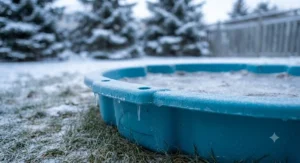
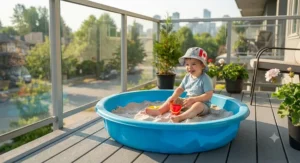
Here’s the mechanism most listings never mention: UV radiation doesn’t just fade plastic’s colour, it breaks down the polymer chains themselves, making the material progressively more brittle over repeated summers. That’s why an older plastic sandbox left in full sun for a few years often develops hairline cracks along stress points — the plastic has literally lost some of its structural flexibility, not just its colour saturation. Health Canada notes that overexposure to ultraviolet radiation carries real health risks beyond material degradation, including sunburn and heat illness, which is a useful reminder that the same sun damaging your sandbox is damaging your toddler’s skin at the same rate. Practically, this means two things: rotate or shade a plastic sandbox through the hottest months if you want it lasting more than three or four seasons, and treat any visible surface chalkiness or fading as an early warning sign that the material is becoming brittle underneath, not just cosmetically dull.
Long-Term Cost & Maintenance: Wood Upkeep vs Plastic Upkeep
Sticker price tells only half the story. A plastic sandbox costs less upfront and needs essentially zero maintenance budget — no sealant, no sanding, nothing to buy after the initial purchase. Its downside is a shorter realistic lifespan under harsh sun, often three to six years before UV brittleness sets in seriously enough to warrant replacement. Wood costs more initially and asks for a modest ongoing investment: a bottle of child-safe sealant every one to two years, roughly C$15-C$25 a pop, plus an afternoon of application. In exchange, a well-maintained cedar or treated-wood sandbox can realistically last eight to twelve years, spanning your child’s entire sandbox-appropriate age range and often getting handed down to younger siblings or neighbours.
| Factor | Plastic | Wood |
|---|---|---|
| Upfront Cost | Under C$100 typically | C$150-C$300 typically |
| Ongoing Cost | Near zero | ~C$15-C$25 per resealing cycle |
| Typical Lifespan | 3-6 years in full sun | 8-12 years with maintenance |
| Best For | Short-term, budget-first buyers | Long-term backyard investment |
Run the math over a decade and wood often comes out cheaper per year of use, even with sealant costs factored in — but only if you’ll actually stay in that home and actually do the resealing. Skip the maintenance and wood’s advantage evaporates fast, so be honest with yourself about follow-through before paying the premium.
Lightweight Sandbox for Toddlers: Weight, Portability and Small-Yard Living
Weight isn’t just a shipping-cost detail — it determines whether you can move the sandbox at all once it’s assembled. A lightweight sandbox for toddlers, like the foldable plastic-fabric options, typically weighs under 10 pounds empty, meaning one parent can relocate it solo to chase shade throughout the day or store it entirely over winter. Hard plastic bins like the turtle style sit in a middle zone — heavier once assembled but still liftable by one adult for occasional repositioning. Wooden sandboxes are, frankly, meant to be permanent installations; most weigh 60 pounds or more once assembled and aren’t designed for regular relocation. If your yard gets uneven sun coverage through the season, or you simply don’t know yet where the “permanent” sandbox spot should be, starting lightweight buys you a season of experimentation before committing to a heavier, harder-to-move wooden structure.
✨ Don’t miss these exclusive backyard picks! 🏖️
Click through on any highlighted product above to check current pricing and availability before the season books up.
Common Mistakes When Buying a Sandbox for Toddlers
Even experienced parents make predictable errors here. First, buying based on size alone — a sandbox that looks impressive in photos can dominate a small yard and go mostly unused if it blocks other play space. Second, skipping the lid or cover entirely to save a few dollars, which almost guarantees a soggy, contaminated sandbox within weeks. Third, ignoring drainage — a box without a liner or drain holes turns any rainfall into standing water that breeds mosquitoes and rots wood far faster than normal weathering would. Fourth, underestimating assembly time on multi-panel wooden octagon builds and starting the project an hour before a birthday party. Fifth, choosing bright, saturated plastic colours purely for aesthetics without realizing that darker pigments can trap more heat under direct sun, making the surface uncomfortably hot to touch by early afternoon.
Frequently Asked Questions
❓ Is a plastic or wooden sandbox better for toddlers?
❓ How long does a plastic sandbox last outdoors?
❓ Do wooden sandboxes need to be sealed every year?
❓ What is the best sandbox material for Canada climate conditions?
❓ How much sand does a toddler sandbox actually need?
Conclusion
If there’s one honest takeaway from comparing a plastic sandbox vs wooden sandbox for toddlers, it’s that neither material is objectively superior — they’re built for different backyards and different parenting realities. Plastic options like the Little Tikes Turtle Sandbox and Aywewii 48″ Foldable Sandbox reward renters, first-timers, and small-yard families with low cost and zero maintenance. Wooden picks like the Best Choice Products Large Wooden Octagon Sandbox and Aivituvin Kids Sandbox with Retractable Canopy reward homeowners settled in for the long haul with capacity, shade, and years of durability that plastic simply can’t match once UV exposure starts working against it. Growing evidence continues to show real physical, cognitive, emotional, and social benefits from outdoor play for children, so whichever material fits your yard and your maintenance tolerance, the sandbox that actually gets used every week beats the “perfect” one sitting in a box in the garage. Match the material to your climate and your commitment level, and you’ll get years of backyard mileage out of it either way.
Recommended for You
- Climbing Frames Under $300 CAD For Toddlers: 7 Best Picks (2026)
- 7 Best Standalone Slides For Above Ground Pools In Canada (2026)
- Ninja Warrior Obstacle Course Kit For Backyard: 7 Best Picks 2026
Disclaimer: This article contains affiliate links. As an Amazon Associate, I earn from qualifying purchases. If you purchase products through these links, we may earn a small commission at no additional cost to you.
✨ Found this helpful? Share it with another Canadian parent who’s stuck in the sandbox aisle right now! 💬🤗
