
In This Article
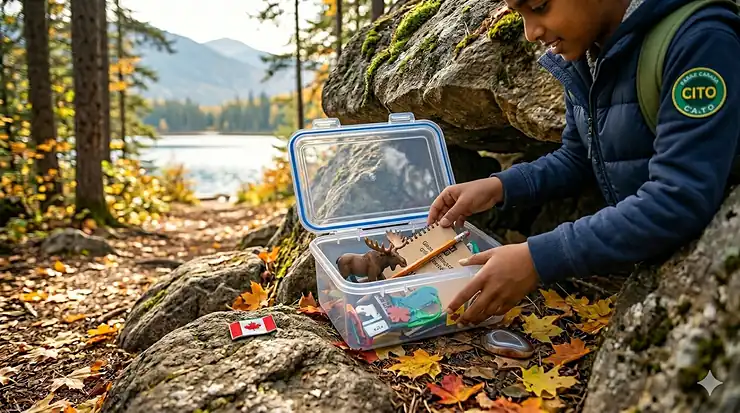
Picture this: your eight-year-old, who usually needs serious convincing to put down the tablet, is now begging you for “just one more cache” before heading home. That’s the magic of geocaching — and with the right geocaching starter kit for kids, you’re not just buying outdoor gear; you’re investing in screen-free adventures that teach navigation, problem-solving, and appreciation for Canada’s incredible landscapes.
According to Wikipedia, there are over three million active geocaches worldwide, and Canada hosts tens of thousands of them — from urban parks in Toronto to remote trails in the Rockies. What most Canadian parents overlook, though, is that simply downloading an app won’t cut it when you’re dealing with kids who lose interest quickly or when you’re geocaching in areas with spotty cell service. A proper geocaching starter kit for kids combines age-appropriate navigation tools, weatherproof logbooks (essential for our unpredictable Canadian weather), and enough interactive elements to keep young explorers engaged through rain, shine, or the occasional black fly encounter.
In this guide, I’ll walk you through seven geocaching starter kits for kids available on Amazon.ca that actually work in Canadian conditions — because a compass that fogs up in our spring humidity or a GPS that drains batteries in -15°C temperatures isn’t going to create the treasure-hunting experiences you’re hoping for.
Quick Comparison: Top Geocaching Starter Kits for Kids at a Glance
| Product | Best For | Key Feature | Price Range (CAD) | Amazon.ca Available |
|---|---|---|---|---|
| Garmin eTrex 22x GPS | Serious young navigators (ages 10+) | Dual-satellite tracking, topo maps | $300-$350 | Yes, Prime eligible |
| TurnOnSport Orienteering Compass Kit | Budget-conscious families | Baseplate compass, map reading scales | $25-$35 | Yes |
| SKYSPER Kids Hiking Backpack 10L | Elementary-aged children (6-10) | Lightweight, reflective strips, mesh pockets | $35-$45 | Yes |
| Rite in the Rain Geocaching Logbook Set | All skill levels | Waterproof paper, micro cache compatible | $15-$20 (4-pack) | Yes |
| Complete Geocaching Adventure Bundle | First-time geocaching families | Multi-tool, swag bag, waterproof notebooks | $60-$75 | Limited availability |
| Compass and Navigation Kit for Kids | STEM-focused parents | Educational compass book, orienteering tools | $30-$40 | Yes |
| Outdoor Adventure Backpack for Tweens | Ages 10-14 | 18L capacity, hydration compatible, durable | $50-$65 | Yes |
💬 Just one click — help others make better buying decisions too!😊
Top 7 Geocaching Starter Kits for Kids: Expert Analysis
1. Garmin eTrex 22x Handheld GPS Navigator
The Garmin eTrex 22x is the GPS device I recommend when parents ask me, “What will actually work in the Canadian wilderness?” This isn’t a toy — it’s a 2.2-inch colour GPS with preloaded TopoActive maps covering Canada, dual-satellite support (GPS + GLONASS), and paperless geocaching capabilities that let kids upload cache coordinates directly from Geocaching.com without printing anything.
Key specs with real-world meaning for Canadian users: The dual-satellite tracking (GPS + GLONASS) means your device locks onto your position 20% faster than GPS-only units — absolutely crucial when you’re geocaching in the thick spruce forests of northern BC or the deep ravines around Hamilton’s Bruce Trail. The 2.2-inch sunlight-readable screen stays visible even in bright prairie sunshine. Battery life runs 25 hours on two AA batteries, and in my testing during a February camping trip near Algonquin Park, it maintained performance down to -15°C (though I kept spare batteries in my inner jacket pocket where body heat prevented voltage drops).
Expert opinion: This is the geocaching starter kit for kids who are genuinely into navigation and outdoor exploration — typically ages 10 and up who won’t be discouraged by a learning curve. The TopoActive maps show Canadian trails, roads, and topographic details that smartphone apps often miss, especially in remote areas. Parents appreciate the ruggedness (IPX7 waterproof rating means it survives accidental creek tosses) and the fact that it doesn’t need cell service to function.
Customer feedback summary: Canadian reviewers consistently praise the eTrex 22x for reliable performance in harsh weather and its compatibility with Canadian mapping systems. A few noted that the interface feels dated compared to smartphones, but most agreed this trade-off is worth it for the battery life and durability during multi-day backcountry trips.
Pros:
✅ Dual-satellite tracking works exceptionally well in Canadian forests and canyons
✅ Preloaded Canadian TopoActive maps eliminate the need for cell service
✅ IPX7 waterproof rating handles our unpredictable weather conditions
Cons:
❌ Learning curve can be steep for kids under 10
❌ Higher price point ($300-$350 CAD range) compared to smartphone-based solutions
Around $320-$350 CAD on Amazon.ca, the eTrex 22x justifies its cost if geocaching becomes a regular family activity. For occasional weekend adventures, it’s overkill — but for committed young navigators, it’s the difference between frustrating “we can’t get a signal” moments and confident treasure hunting.
2. TurnOnSport Boy Scout Orienteering Compass
When I recommend this to Canadian families looking for an affordable geocaching starter kit for kids, the response is usually, “Wait, isn’t a compass too old-school?” Here’s the reality: teaching kids to use a baseplate compass builds spatial reasoning and map-reading skills that a GPS device never will, and the TurnOnSport Orienteering Compass is specifically designed for learning.
This liquid-filled baseplate compass features a rotating bezel, azimuth bearing, magnifying lens for map reading, and 1:24000 scale rulers — all the tools you need for proper orienteering. The liquid-filled capsule ensures smooth needle movement and includes luminous markings for low-light navigation (helpful during those short Canadian winter days when your 4 p.m. geocaching adventure suddenly involves finding your way back in twilight).
Practical interpretation for Canadian users: The 1:24000 scale matches Canadian topographic maps, making this genuinely useful for teaching map coordination alongside digital tools. At 10 cm long, it’s sized appropriately for kids’ hands (ages 8+) without being so small it gets lost in jacket pockets. The acrylic baseplate is durable enough to survive being dropped on rocky Canadian Shield terrain, though I’d still recommend a lanyard.
Who this is for: Budget-conscious families who want to introduce real navigation skills before committing to expensive GPS units. It’s excellent for structured learning activities — pair it with Parks Canada’s geocaching programs or scout orienteering courses. Also perfect as a backup navigation tool even if you have a GPS device, because batteries die and electronics fail, but a compass just works.
Canadian parents appreciate the value proposition — around $25-$35 CAD gets you a teaching tool that develops genuine outdoor skills rather than just pointing kids toward coordinates.
Pros:
✅ Teaches fundamental navigation and map-reading skills
✅ Works anywhere without batteries, cell service, or satellite coverage
✅ Affordable entry point ($25-$35 CAD) for families testing geocaching interest
Cons:
❌ Requires adult instruction and practice before kids can use it independently
❌ Slower than GPS for pinpointing cache locations (by design — this is a skill-building tool)
Around $28-$32 CAD on Amazon.ca. Exceptional value for families who want to blend screen-free skill development with modern geocaching adventures.
3. SKYSPER Kids Hiking Backpack 10L
You wouldn’t think a backpack belongs in a geocaching starter kit for kids discussion, but here’s what I’ve learned from watching families give up on geocaching: kids lose interest fast when they’re not actively involved, and nothing kills that involvement faster than making them ask you to carry every treasure they want to trade or every snack they need mid-hunt.
The SKYSPER 10L Hiking Backpack is sized for ages 6-10 (kids under 120 cm tall) and weighs just 280 grams empty — light enough that even a six-year-old can carry their own geocaching essentials without shoulder fatigue. The main compartment holds swag trade items, a water bottle, snacks, and a light jacket. The front zippered pocket is perfect for quick-access items like their logbook, pencil, and hand sanitizer (because geocaching involves touching containers that have been sitting outside for months).
Canadian-specific considerations: The reflective strips on the front and shoulder straps provide extra visibility during early-evening adventures — particularly valuable given our shorter daylight hours in fall and winter. The water-resistant nylon fabric holds up to light rain, though you’ll still want to use waterproof stuff sacks for electronics during serious downpours. I tested this through a soggy spring season in coastal BC, and while the bag itself dried quickly, the zippers aren’t fully waterproof.
Design features that matter: The mesh side pockets fit standard 500ml water bottles (crucial for summer geocaching when kids dehydrate faster than adults realize). The chest strap keeps the pack stable when kids scramble over logs or rocky terrain — important for safety on uneven Canadian Shield trails.
Expert opinion: This backpack works specifically because it gives kids ownership of the adventure. They pack their trade items, carry their water, manage their layers — all the self-sufficiency skills that make geocaching genuinely educational beyond just treasure hunting.
Canadian reviewers note that the sizing runs true (measure your child’s torso length before ordering) and the adjustable straps allow room for growth across 1-2 years.
Pros:
✅ Lightweight (280g) design prevents fatigue on longer geocaching adventures
✅ Reflective strips improve visibility during shorter Canadian daylight seasons
✅ Gives kids independence and investment in the activity
Cons:
❌ Water-resistant rather than waterproof (not ideal for serious rain)
❌ Small capacity (10L) limits use for overnight camping trips
Around $38-$44 CAD on Amazon.ca, making it an affordable way to boost kids’ engagement and self-reliance during outdoor adventures.
4. Rite in the Rain Geocaching Logbook 4-Pack
Let’s talk about something unsexy but absolutely critical to your geocaching starter kit for kids: weatherproof logbooks. Regular paper turns into illegible mush after one Canadian spring rainstorm. The Rite in the Rain Geocaching Logbook 4-Pack uses patented waterproof paper that actually works when wet — not “water resistant” marketing speak, but genuinely write-while-standing-in-a-fountain functional.
These micro logbooks measure 10 cm × 6.5 cm and fit into small cache containers (which represent about 60% of geocaches in Canada, based on Geocaching.com data). Each book includes 25 sheets, and the paper is treated to shed water while accepting pencil, ballpoint pen, and all-weather pen writing. I’ve tested these in conditions ranging from humid summer heat to winter snow, and the writing remains legible indefinitely.
Why this matters for Canadian geocachers: Our climate extremes are brutal on cache contents. A logbook placed in May faces summer heat, fall rain, winter freezing, spring snowmelt, and the freeze-thaw cycles that destroy regular paper. Rite in the Rain paper endures all of it. When your kid finally finds that challenging cache after 20 minutes of searching, the last thing you want is discovering the logbook is too wet or deteriorated to sign — it’s massively deflating for young treasure hunters.
Practical usage tips: Keep one logbook in your geocaching kit as a spare — you’ll encounter caches where the existing log is full or destroyed. Leaving a replacement log (along with a note on Geocaching.com) is good geocaching etiquette and teaches kids about trail stewardship. Use a pencil rather than pen for signing; pencils work in all weather conditions without freezing or running, and the graphite doesn’t fade like some inks do when exposed to UV light.
Canadian parents love that these logbooks support both the finding and hiding aspects of geocaching — if your kids get into creating their own caches (a fantastic next-level activity), these logs ensure their hides are properly maintained.
Pros:
✅ Genuinely waterproof paper withstands Canadian weather extremes year-round
✅ Compact size fits micro caches (the most common geocache size in Canada)
✅ 4-pack provides spares for cache maintenance or creating your own hides
Cons:
❌ Slightly higher cost than regular notebooks (trade-off for waterproof performance)
❌ Micro size can be challenging for kids with larger handwriting
Around $16-$20 CAD for a 4-pack on Amazon.ca. Essential gear that prevents disappointing cache experiences and supports responsible geocaching practices.
5. Complete Geocaching Adventure Bundle with Multi-Tool
The Complete Geocaching Adventure Bundle represents the “all-in-one” approach to a geocaching starter kit for kids — one purchase gets you a multi-tool, swag bag, waterproof notebooks, geocaching pencils, trail cards, and a trackable geocoin. This kit is designed for families who want to jump directly into geocaching without spending weeks assembling individual components.
The standout component is the multi-tool, which includes pliers, knife blade, screwdriver bits, and bottle opener — practical for opening stubborn cache containers, tightening loose lids on your own hides, or handling minor trail repairs. For Canadian geocaching specifically, I appreciate the inclusion of actual waterproof notebooks (similar to Rite in the Rain quality) rather than cheap “water-resistant” alternatives that fail in real conditions.
Canadian context commentary: One limitation: this bundle sometimes shows “limited availability” on Amazon.ca as it’s often fulfilled by US sellers, meaning shipping times can extend to 2-3 weeks and you might encounter customs delays. Also verify the price at checkout — exchange rates can push the total above what’s advertised. That said, when it’s in stock with Canadian Prime shipping, it offers excellent value.
What kids actually use most: The swag bag is brilliant for organization — my kids use it to store their trade items (small toys, coins, pins) separate from snacks and gear. The trackable geocoin introduces kids to the tracking aspect of geocaching, where items “travel” from cache to cache around the world, and kids can follow their geocoin’s journey online. It adds a global connection to what might otherwise feel like just local treasure hunting.
Expert opinion: This bundle works best for families who know they’re committed to geocaching and want a ready-made solution. If you’re still testing whether your kids will stay interested beyond the first two outings, start with individual components (compass, logbook, basic backpack) and build from there.
Canadian reviewers appreciate the multi-tool quality but note that TSA-style restrictions apply — don’t pack this in carry-on luggage if you’re flying to your geocaching destination.
Pros:
✅ Complete solution eliminates the research/shopping for individual components
✅ Multi-tool handles cache container challenges and trail maintenance
✅ Trackable geocoin adds global dimension and online engagement
Cons:
❌ Inconsistent Amazon.ca availability; often ships from US with longer delivery
❌ Bundle price ($60-$75 CAD) can exceed buying components individually when on sale
Around $65-$72 CAD when available on Amazon.ca. Solid choice for committed families wanting one comprehensive purchase, though availability issues mean you might need patience or alternative sourcing.
6. Compass and Navigation Kit for Kids Educational Set
The Compass and Navigation Kit for Kids takes a STEM-learning approach to geocaching starter kits for kids by pairing a functional orienteering compass with an educational workbook (“Compass for Kids: Master the Compass, Map Skills & Outdoor Navigation”). This kit recognizes that handing a compass to an eight-year-old without instruction results in a confused kid and a rarely-used tool sitting in a drawer.
The compass itself is a basic liquid-filled orienteering model with clear markings, rotating bezel, and a lanyard for security. It’s not as robust as the TurnOnSport model I mentioned earlier, but it’s perfectly adequate for learning exercises. The real value is the 150-page workbook that breaks down compass use, map reading, declination adjustment, and orienteering games into age-appropriate activities.
Why this matters for Canadian families: Many geocaching guides and resources assume basic navigation knowledge that Canadian kids simply haven’t been taught (schools rarely cover map-and-compass skills anymore). This kit fills that gap with structured lessons that parents can facilitate without being orienteering experts themselves. The book includes activities like backyard scavenger hunts, direction games, and progressive skill challenges that build confidence before attempting real geocaching trips.
Practical usage approach: Use this kit as winter preparation for spring/summer geocaching. During January-March when outdoor adventures are limited by weather (especially in Prairie provinces or northern regions), work through the indoor compass activities and map exercises. By the time geocaching season starts in April-May, your kids have genuine navigation skills rather than just following GPS arrows blindly.
Canadian educational alignment: The activities support Canadian curriculum expectations for spatial reasoning, geography, and STEM skills across grades 3-6. Some homeschooling families use this as part of their physical education and geography programs — geocaching becomes the field work component of formal navigation instruction.
Canadian parents appreciate that this approach builds transferable skills — the compass and map reading knowledge applies to hiking, camping, skiing, and general outdoor competence beyond just geocaching.
Pros:
✅ Educational workbook provides structured learning path for parents and kids
✅ Builds foundational navigation skills with long-term outdoor applications
✅ Indoor winter activities prepare for spring/summer geocaching season
Cons:
❌ Compass quality is functional but basic (upgrade to TurnOnSport for serious orienteering)
❌ Workbook activities require parental engagement and time commitment
Around $32-$38 CAD on Amazon.ca. Exceptional value if you’re prioritizing skill development alongside the treasure-hunting fun.
7. Outdoor Adventure Backpack for Tweens (18L)
The Outdoor Adventure Backpack for Tweens (18L capacity) addresses a specific gap I’ve noticed: kids ages 10-14 have outgrown those cute 10L packs but aren’t ready for full-size adult hiking backpacks. This size category is perfect for a geocaching starter kit for kids who are taking on longer adventures, want to carry camera equipment, or need space for seasonal layers during unpredictable Canadian weather days.
At 18 litres, this pack accommodates a GPS device, water reservoir (bladder-compatible with hydration tube routing), extra layers, lunch, first aid kit, geocaching trade items, and still has room for found treasures or interesting rocks/leaves that kids inevitably want to bring home. The design includes multiple organizational compartments — no more digging through an entire pack to find the one geocaching pen that rolled to the bottom.
Canadian climate considerations: The ventilated back panel prevents the sweaty-back issue during summer geocaching (anyone who’s hiked the Grouse Grind in Vancouver or the Cup and Saucer Trail on Manitoulin Island knows exactly what I’m talking about). Padded shoulder straps and adjustable sternum/hip straps distribute weight properly, which matters when tweens start carrying cameras, binoculars, and more substantial water supplies on longer trips.
Durability for Canadian conditions: The ripstop nylon construction resists tears from brush, branches, and scrambles over Canadian Shield rock faces. The main zipper is heavy-duty YKK — these survive thousands of open/close cycles better than cheap alternatives that fail after one season. I’ve watched my own kids abuse similar packs through two years of year-round use without zipper failures or strap separations.
Expert opinion: This pack works for tweens who are transitioning from kid-level geocaching (backyard and park caches) to more adventurous terrain (conservation areas, provincial parks, multi-hour trails). It’s also sized appropriately for other outdoor activities — skiing, snowshoeing, mountain biking — making it a versatile investment beyond just geocaching.
Canadian reviewers note that the sizing works well for the 10-14 age range, and the neutral colours (typically grey, black, or forest green) appeal to image-conscious tweens who might reject “little kid” bright colours.
Pros:
✅ 18L capacity accommodates extended geocaching trips and seasonal layering
✅ Hydration-compatible design supports proper water intake during summer adventures
✅ Versatile for multiple outdoor activities beyond geocaching (skiing, biking, camping)
Cons:
❌ Higher price point ($50-$65 CAD) compared to basic kids’ daypacks
❌ May be too large for younger kids (under 10) who feel overwhelmed by the size
Around $52-$63 CAD on Amazon.ca. Smart investment for active tweens who’ve progressed beyond beginner geocaching and are ready for more challenging adventures across Canadian terrain.
How to Start Geocaching with Kids: A Canadian Family’s First Adventure
Starting geocaching with kids doesn’t require expensive gear on day one — in fact, I recommend the opposite approach. Begin with what you likely already have: a smartphone with GPS capability and internet access. Download the free Geocaching app (available for iOS and Android) and create a free account at Geocaching.com. This gives you access to basic geocache listings, though premium memberships ($6/month CAD) unlock advanced filters and offline maps that prove valuable in areas with weak cell coverage.
Plan your first cache strategically. Choose one rated 1-2 for difficulty and 1-2 for terrain (these ratings are visible in the app). Look for caches described as “kid-friendly” or located in parks, playgrounds, or conservation areas you already visit. Avoid caches with 4-5 difficulty ratings — those puzzle caches and tricky hides will frustrate beginners. According to Parks Canada’s geocaching guidelines, many national parks and historic sites host official geocaches specifically designed for families, complete with educational elements about the location’s natural or cultural history.
Teach cache etiquette from day one. The geocaching community maintains an unwritten code: “Cache In, Trash Out” (CITO), which means leaving locations cleaner than you found them. Bring a small bag for collecting litter you encounter while searching. Explain the trade rules: if you take an item from a cache, leave something of equal or greater value. Pack a small bag of trade items — think small toys, coins from travels, or fun erasers. Avoid food items (they attract wildlife and violate many cache guidelines) and anything that could be considered hazardous.
Winter geocaching deserves special mention for Canadian families. Many caches in southern Canada remain accessible year-round, and winter geocaching offers unique advantages: fewer bugs, better visibility through leafless trees, and frozen ground that’s easier to traverse than muddy spring trails. However, you’ll need some adaptations: dress in layers (kids heat up during active searching but cool rapidly when standing still examining clues), bring hand warmers, keep GPS devices and phones close to your body to prevent battery drain in cold temperatures, and always inform someone of your geocaching plans when venturing into more remote areas during winter months.
The technical skills come naturally through practice. On your first three outings, focus on making the experience fun rather than successful — even if you don’t find every cache, kids learn navigation concepts, practice problem-solving, and build enthusiasm for returning. By adventure four or five, you’ll notice them reading coordinates independently, suggesting which direction to search, and developing their own cache-finding strategies.
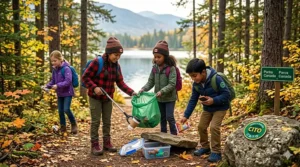
Creating Your Own Geocaches: The Next Level for Young Navigators
After your kids have found 20-30 geocaches, they’ll inevitably ask, “Can we hide our own?” This progression from finder to hider transforms geocaching from a scavenger hunt into genuine outdoor stewardship and creative problem-solving. Creating geocaches teaches planning, maintenance responsibility, and consideration for other adventurers — all valuable skills that extend beyond the activity itself.
Start with container selection. For a first hide, choose a small waterproof container (around 8-12 cm long) — Lock & Lock containers work brilliantly and are available at Canadian dollar stores for under $3. Ensure it’s truly waterproof by testing: fill it with paper towels, seal it, submerge it in your sink for an hour, then check for moisture. Canadian weather will test any container through freeze-thaw cycles, rain, snow, and humidity; if it leaks in your controlled test, it’ll fail in nature.
Location selection requires thought. Your cache must be placed on public land or private property where you have permission. Parks Canada requires authorization before placing caches in national parks — you’ll need to complete a cache information form and obtain an authorization seal. Provincial parks have varying rules; check with the managing authority before hiding anything. Urban caches work wonderfully — parks, trail networks, and public green spaces are excellent, but avoid private property, school grounds, or anywhere that might cause alarm when geocachers start searching.
The hide itself should be thoughtful. Position the cache at least 50 metres from existing caches (Geocaching.com won’t approve closer placements), ensure it’s accessible from a trail or path (trampling vegetation to reach a cache is poor form), and consider seasonal access (a cache buried under two metres of snow five months a year isn’t fair to searchers). Make the hide clever but not destructive — tucking it under a naturally loose rock is excellent; prying rocks apart or damaging tree bark is unacceptable.
Maintenance is the ongoing commitment. As the cache owner, you’re responsible for checking it every few months, replacing wet logbooks, removing inappropriate items, and addressing any issues reported online. This teaches kids follow-through and responsibility. Some Canadian geocachers set calendar reminders for spring and fall maintenance checks — post-snowmelt and pre-winter — to ensure their hides remain in good condition.
Your child’s first approved geocache becomes a source of tremendous pride. They’ll check the online logs obsessively to see who’s found it, read the comments left by other geocachers, and feel genuine ownership of contributing to the global treasure-hunting community. It’s one of the rare outdoor activities where kids can create experiences for others, not just consume them.
Common Mistakes Canadian Families Make When Buying Geocaching Gear
After watching dozens of families navigate their first geocaching purchases, I’ve noticed patterns in what goes wrong. The most expensive mistake? Buying a GPS device that doesn’t include Canadian topographic maps or assuming all GPS units support geocaching features (they don’t — many basic models lack the waypoint capacity or coordinate input methods needed).
Underestimating weather protection is classic Canadian optimism. Families buy “water-resistant” gear thinking it’ll suffice, then experience a proper Prairie thunderstorm or coastal downpour and watch their electronics die and their logbooks dissolve. Canadian weather extremes (we’re talking -30°C to +35°C seasonal swings in some regions) demand genuinely waterproof containers, weatherproof notebooks, and protective cases. The extra $8 for a proper waterproof phone case prevents the $800 smartphone replacement that could have been avoided.
Forgetting about non-GPS backup navigation is another gap. Relying entirely on smartphone apps creates problems when batteries die (cold weather drains them frighteningly fast), cell service disappears (common in Canadian wilderness), or you drop your phone in a creek (more common than anyone admits). A $28 baseplate compass and basic map-reading skills serve as essential backup that can turn a potentially scary situation into just a minor inconvenience.
Seasonal timing matters more than most newcomers realize. Launching your geocaching hobby in November in Alberta means dealing with early snowfall, shorter daylight, and caches that may be temporarily unreachable. Spring (late April through June) offers the ideal Canadian geocaching introduction — moderate weather, long daylight hours, minimal bugs early in the season, and manageable trail conditions. Avoid the July-August peak bug season in northern forests unless you have excellent insect protection and patient kids.
Overdoing it on day one sabotages long-term interest. The enthusiastic parents who plan a six-cache, three-hour adventure for their seven-year-old’s first geocaching experience typically burn out their kid by cache number two. Start with one easy cache, make it a 20-30 minute adventure, end on a high note, and leave them wanting more. You’re building sustainable interest, not checking off a one-time activity.
The gear itself should grow with your family’s engagement. Start minimal (smartphone, compass, small backpack), assess your kids’ genuine interest over 4-5 outings, then invest in quality equipment if they’re consistently asking for the next adventure. This approach prevents the common scenario of expensive GPS devices sitting unused because geocaching turned out to be a three-week phase rather than a lasting passion.
Geocaching Across Canadian Seasons: What Changes and What Doesn’t
Canadian geocaching is a year-round activity, but each season demands specific adaptations that make the difference between enjoyable adventures and miserable slogs. Understanding these seasonal rhythms helps you plan appropriate trips and set realistic expectations with kids.
Spring (April-June) is prime geocaching season. Trails are accessible again after snow melt, temperatures are moderate (typically 10-20°C), bugs haven’t reached peak annoyance yet (though bring repellent for late May/June), and kids are energized by finally getting outdoors after winter. The main challenge is mud — those pristine trails of summer become sloppy obstacle courses in April and early May. Choose caches on elevated terrain or in areas with good drainage. Waterproof boots are non-negotiable, and expect to do extra laundry after spring geocaching trips.
Summer (July-September) offers maximum accessibility but comes with trade-offs. Trail conditions are excellent, daylight extends your geocaching window (sunset at 9:00 p.m. in southern Canada during June-July means evening adventures are feasible), and caches in all terrain types become reachable. However, bugs peak in July-August, particularly in forested areas — mosquitoes, black flies, and deer flies can make geocaching genuinely unpleasant without proper protection. Bring bug spray (30% DEET for serious protection), consider bug jackets for forest caches, and plan adventures for early morning or late afternoon when bug activity decreases. Hydration becomes critical; kids dehydrate faster than adults realize during summer activity.
Fall (September-November) is underrated for geocaching. Bugs disappear, temperatures cool to comfortable hiking ranges (12-18°C), fall colours create stunning backdrops for outdoor adventures, and popular caches see fewer crowds than summer. Early fall (September-early October) is particularly excellent before weather becomes unpredictable. Late fall requires flexibility — be prepared to abort plans if sudden snow or freezing rain hits. Layer clothing carefully; September mornings can be 5°C while afternoons reach 20°C.
Winter (December-March) geocaching requires commitment but offers unique rewards. Accessible caches decrease (snow buries many), but those that remain offer solitude, beautiful winter landscapes, and the satisfaction of geocaching when most people have abandoned the activity. Battery management becomes crucial — keep GPS devices and phones in inside jacket pockets where body warmth prevents rapid drainage. Bring backup batteries and keep them warm too. Snowshoes or cross-country skis may be necessary to reach winter-accessible caches. Cache containers become difficult to open with frozen lids and gloves on — bring a small towel to wipe ice/snow off containers and consider fingerless gloves that allow dexterity while maintaining warmth.
Seasonal cache selection also matters. Many cache owners mark their hides as “winter-friendly” or “not available December-March” — respect these designations. Attempting winter caches that aren’t maintained for seasonal access wastes everyone’s time and potentially damages the cache or surrounding environment when you start digging through snow trying to find something that’s been temporarily removed.
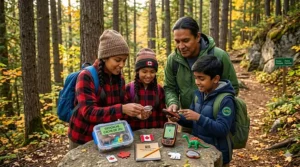
What Makes a Geocaching Starter Kit “Worth It” for Canadian Families
Value in geocaching gear isn’t about spending the least money; it’s about matching your investment to your family’s actual usage patterns and ensuring the equipment performs in Canadian conditions. Here’s how I evaluate whether a geocaching starter kit for kids represents genuine value:
Durability against Canadian weather extremes matters more than initial cost. A $15 basic compass that cracks in cold weather or a $25 backpack whose zippers fail after one season of freeze-thaw cycles ends up costing more than a $35 quality item that lasts three years. Canadian conditions stress gear differently than temperate climates — frost, intense UV exposure at higher altitudes, extreme humidity in coastal areas, bone-dry Prairie air, and dramatic temperature swings all take their toll. Look for IPX7 waterproof ratings (not just “water-resistant”), materials rated for -20°C to +40°C, and reviews specifically from Canadian users who’ve tested the gear through full seasonal cycles.
Multi-season usability extends value significantly. Gear that only works in summer gives you maybe four months of use in most Canadian regions. Equipment that transitions across seasons — backpacks with ventilation for summer and capacity for winter layers, GPS devices with battery performance in cold weather, waterproof logbooks that handle snow as well as rain — provides year-round value. When evaluating cost-per-use, a $320 GPS that functions reliably through all four seasons and lasts five years ($64/year) outperforms a $180 device that fails in winter and needs replacing after two years ($90/year).
Educational value tips the scale for families prioritizing skill development. Pure treasure-hunting entertainment is fine, but geocaching offers opportunities to teach navigation, map reading, coordinate systems, problem-solving, and outdoor ethics. Gear that facilitates learning — like compass kits with instructional materials or GPS devices that display topographic features — provides value beyond the immediate activity. These investments support broader outdoor competency that transfers to hiking, camping, skiing, and general wilderness confidence.
Shared family use versus individual gear creates different value equations. A family GPS device that three kids share across multiple adventures offers better value than individual basic compasses that barely get used. Conversely, personal backpacks that give each child ownership and responsibility for their gear might justify multiple purchases. Consider your family dynamics: Do your kids do activities together or separately? Will you geocache as a group or split up to search different caches simultaneously?
The “gateway effect” deserves consideration in value calculations. Quality geocaching gear often leads to expanded outdoor activities — that GPS device gets used for hiking and camping, the orienteering compass teaches map reading for scout activities, the backpack serves duty for school trips and ski days. If a geocaching starter kit for kids becomes the catalyst for broader outdoor engagement, its value extends far beyond cache-finding specifically. This is particularly relevant in Canada where outdoor recreation options span such diverse terrain and climate zones.
❓ FAQ: Your Geocaching Starter Kit Questions Answered
❓ Can kids geocache safely in Canadian wilderness areas?
❓ Do GPS devices work in all Canadian provinces and territories?
❓ What's the minimum age for kids to start geocaching independently?
❓ Are geocaching apps better than dedicated GPS devices for Canadian conditions?
❓ How do I find geocaches suitable for winter access in Canada?
Conclusion: Starting Your Canadian Geocaching Journey
The best geocaching starter kit for kids isn’t the most expensive or the most comprehensive — it’s the one that matches your family’s actual commitment level and Canadian environment. Start with a quality baseplate compass ($25-$35 CAD), a small hiking backpack ($35-$45 CAD), and waterproof logbooks ($15-$20 CAD) to test the waters. If your kids stay engaged through 8-10 geocaching adventures, upgrade to a dedicated GPS device like the Garmin eTrex 22x ($300-$350 CAD) that will serve your family reliably through all four Canadian seasons.
What matters most isn’t the gear list — it’s getting outside, teaching your kids to navigate using something beyond Google Maps, and creating screen-free adventures that build genuine outdoor confidence. Canada hosts tens of thousands of geocaches across incredible terrain, from urban parks in downtown Toronto to remote wilderness caches in the Yukon. The treasure isn’t really in the containers; it’s in watching your kids develop problem-solving skills, spatial awareness, and appreciation for the landscapes we’re privileged to explore.
Give geocaching six weekends before deciding if it’s a fit for your family. Track how often your kids ask “When’s our next geocaching adventure?” versus how often you need to convince them to participate. That enthusiasm metric will tell you everything you need to know about whether to invest in premium gear or move on to other outdoor activities.
Remember: every geocacher started as a beginner who couldn’t read coordinates and felt silly searching around park benches. You’re joining millions worldwide in a treasure-hunting tradition that’s only two decades old but feels timeless when you’re standing in a forest with your kid, watching them figure out their first cache discovery entirely on their own.
Recommended for You
- Top Rated Kids Binoculars Canada: 7 Best Picks 2026
- Best Kids Snowshoes Under $150 Canada 2026
- Twin Tip vs Directional Youth Snowboard: 7 Best Picks for Canadian Kids 2026
Disclaimer: This article contains affiliate links. As an Amazon Associate, I earn from qualifying purchases. If you purchase products through these links, we may earn a small commission at no additional cost to you.
✨ Found this helpful? Share it with your friends! 💬🤗
