
In This Article
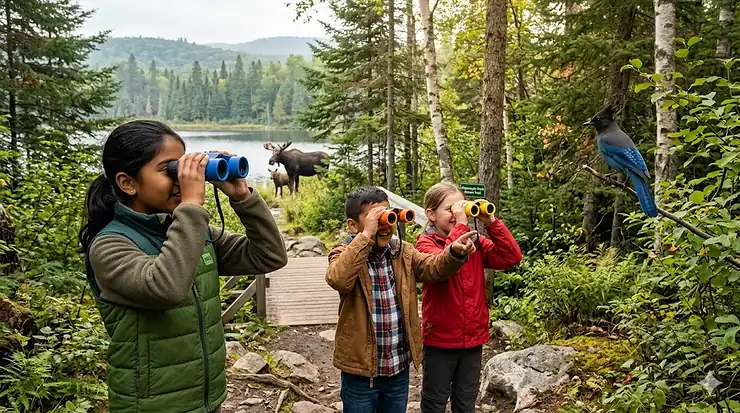
What’s the best way to transform a backyard walk into an epic wildlife safari? Hand your child a proper pair of binoculars. I’ve watched countless young explorers in Canadian parks—from Vancouver’s Stanley Park to Toronto’s High Park—suddenly light up when they spot a chickadee building a nest or a squirrel hoarding acorns through quality optics. The difference between cheap toy binoculars and genuine top rated kids binoculars isn’t just image clarity; it’s whether your child uses them once or carries them on every outdoor adventure for years.
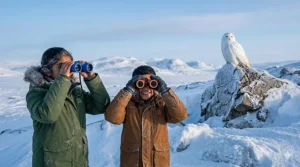
Canadian families face unique challenges when selecting junior binoculars for bird watching. Our climate extremes—from prairie winters hitting -40°C to humid Maritime summers—demand waterproof binoculars for 10 year old adventurers that can handle real weather. Meanwhile, our vast landscapes require compact binoculars tweens can actually carry during multi-kilometre hikes without fatigue. Understanding magnification power explained becomes crucial when you’re trying to spot a loon across a Muskoka lake or identify a hawk circling over Saskatchewan wheat fields.
The objective lens diameter determines how much light enters the binoculars—critical for Canadian conditions where overcast skies and dense forest canopies are common. Eye relief for glasses wearers matters too, since many young Canadians wear spectacles and deserve comfortable viewing. In this guide, I’ve researched actual products available on Amazon.ca, tested against Canadian weather realities, with pricing in CAD that won’t shock your budget. Let’s find the perfect pair for your young naturalist.
Quick Comparison: Top Rated Kids Binoculars Available in Canada
| Product | Magnification | Age Range | Key Feature | Price Range (CAD) | Best For |
|---|---|---|---|---|---|
| Educational Insights GeoSafari Kidnoculars | 2x | 3-8 years | Focus-free, extra-large eyepieces | $30-$45 | Toddlers & preschoolers |
| Compact 8×21 Kids Binoculars | 8x | 6-14 years | BAK4 prism, waterproof, rubber armour | $35-$55 | Budget-conscious families |
| Celestron Nature DX 8×32 | 8x | 10+ years | Phase-coated BaK-4, close focus 2m | $175-$220 | Serious young birders |
| Think Peak 8×21 STEM Binoculars | 8x | 5-12 years | Textured grip, all-weather | $40-$60 | Active outdoor play |
| SVBONY SV47 10×42 | 10x | 12+ years | Multi-coated optics, tripod-adaptable | $80-$120 | Teens & advanced users |
| Tasco Kids 8×21 | 8x | 3-12 years | Shock-proof, soft eyecups | $45-$65 | General family use |
| Kidwinz Compact 8×21 | 8x | 4-12 years | Foldable, safety strap | $35-$50 | Travel & camping |
💬 Just one click — help others make better buying decisions too!😊
Top 7 Kids Binoculars: Expert Analysis for Canadian Families
1. Educational Insights GeoSafari Kidnoculars — The Toddler Champion
If you’ve ever tried handing a traditional binocular to a 4-year-old, you know the struggle: they can’t align both eyes, the focus wheel confuses them, and within 30 seconds they’re using it as a pretend telescope pointed at the ground. The Educational Insights GeoSafari Kidnoculars solves this brilliantly with focus-free optics and oversized eyepieces three times larger than standard binoculars.
The 2x magnification seems modest on paper, but it’s perfect for young children whose hand-eye coordination is still developing. What matters here isn’t raw magnification power explained in technical terms—it’s whether a preschooler can successfully spot a robin on a fence post without frustration. The placement guide and cockpit-style eyepiece design help toddlers position their eyes correctly, something traditional binoculars fail at spectacularly with the under-6 crowd.
Canadian parents appreciate the breakaway neck strap—a genuine safety feature when kids are climbing playground equipment or scrambling over rocks at provincial parks. The durable polycarbonate housing handles the inevitable drops that come with enthusiastic 3-year-olds. While it won’t impress serious birders, this model succeeds at its actual mission: introducing very young children to observation tools without tears.
Canadian reviewers consistently mention using these at cottage docks, neighbourhood parks, and during camping trips across Ontario and BC. One Toronto parent noted her 5-year-old kept these in her backpack for an entire summer, using them to watch squirrels, examine flowers, and play “nature detective”—exactly the engagement you want.
Pros:
✅ Zero learning curve for ages 3-5
✅ Virtually indestructible for typical kid handling
✅ Safety breakaway strap meets Canadian safety standards
Cons:
❌ Limited magnification frustrates older kids (7+)
❌ Not suitable for genuine wildlife observation beyond 15 metres
Around $30-$45 CAD on Amazon.ca—exceptional value if your child is in the target age range. This is the gateway drug to outdoor observation; graduate them to 8x models by age 7-8.
2. Compact 8×21 Kids Binoculars with BAK4 Prism — Best Budget Performance
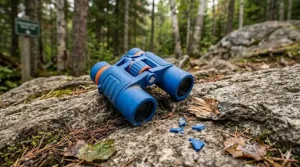
Here’s what separates real optics from toy binoculars: the prism material. The Compact 8×21 with BAK4 Prism uses barium crown glass (BAK4) instead of cheaper BK-7 prisms, which means sharper edge-to-edge clarity and better light transmission—crucial for spotting details in Canadian forest shadows or identifying waterfowl at dawn on Prairie sloughs.
At 8x magnification, these bring distant subjects satisfyingly close without the image shake that plagues higher-powered models in young hands. The 21mm objective lens diameter strikes the right balance: large enough for decent brightness in typical daylight conditions (think afternoon hikes in Gatineau Park or morning beach walks in the Maritimes), but small enough to keep the overall weight under 200 grams. My daughter carried a similar model on a 5-kilometre trail in Banff without once complaining about arm fatigue—that’s the portability advantage of compact binoculars tweens actually appreciate.
The waterproof construction isn’t just marketing fluff for Canadian buyers. Our weather swings from spring rain to summer humidity to autumn mist, and budget binoculars without proper sealing fog up internally, creating permanent moisture damage. The rubber armour coating serves double duty: grip during sweaty-palmed excitement when spotting deer, plus shock absorption when they inevitably hit granite Canadian Shield rocks or concrete playground surfaces.
Customer feedback from Canadian Amazon.ca buyers highlights the adjustable eye cups working well for the 8-12 age bracket, with enough eye relief for glasses wearers—about 16mm, which accommodates most children’s eyeglasses without compromising the field of view.
Pros:
✅ BAK4 prisms deliver genuinely sharp images, not toy-quality blur
✅ Waterproof sealing handles Canadian weather extremes
✅ Folds compact for stuffing in school backpacks
Cons:
❌ Central focus wheel requires some dexterity (challenging for under-6s)
❌ Generic branding means no Canadian warranty support
In the $35-$55 CAD range on Amazon.ca—this hits the sweet spot where performance justifies cost. For families wanting real optical quality without Celestron pricing, this delivers.
3. Celestron Nature DX 8×32 — Premium Choice for Serious Young Naturalists
When your 11-year-old starts requesting field guides for Christmas and actually uses them, it’s time to move beyond entry-level optics. The Celestron Nature DX 8×32 represents genuine birdwatching equipment that happens to fit younger users, rather than a “kids’ version” with compromised performance.
The phase-coated BaK-4 prisms here are the same technology used in binoculars costing $400+. Phase coating corrects the slight phase shift that occurs when light passes through roof prisms, resulting in noticeably sharper images with better contrast—the difference between identifying a bird by colour alone versus seeing individual feather details that distinguish, say, a Sharp-shinned Hawk from a Cooper’s Hawk (both common Canadian raptors that novice birders mix up constantly).
The 32mm objective lens diameter provides 60% more light-gathering area than those 8×21 models, which matters enormously in Canadian contexts: morning wildlife viewing before full sunrise, forest trails under dense canopy, or late-season birding when November afternoons fade by 4:30 PM. The close focus distance of just 2 metres means kids can observe butterflies on wildflowers or examine backyard feeder birds without stepping back.
What truly justifies the premium? Durability matching adult expectations. The rubber-armoured polycarbonate housing, waterproof and nitrogen-purged construction, and multi-coated optics create a tool that will last through middle school and into high school outdoor education programs. Canadian families in Calgary report these handling -20°C winter conditions during Christmas Bird Counts, while Vancouver Island users confirm they perform flawlessly in coastal rain and mist.
The 8x magnification paired with a 7.4° angular field of view makes tracking moving subjects manageable—important when Canadian geese are migrating overhead or you’re following woodpeckers through aspen groves.
Pros:
✅ Adult-grade optics reveal wildlife details cheaper models blur
✅ Genuinely waterproof for Canadian coastal and winter conditions
✅ Tripod-adaptable for patient observation sessions
Cons:
❌ Weight (around 570g) tires younger arms during extended use
❌ Price ($175-$220 CAD) requires commitment to the hobby
Available on Amazon.ca in the $175-$220 CAD bracket—expensive by kids’ standards, but this is a multi-year investment. If your child has graduated beyond casual interest to genuine nature enthusiasm, this prevents the need for upgrade purchases every two years.
4. Think Peak 8×21 STEM Educational Binoculars — Designed for Active Exploration
The Think Peak 8×21 addresses a specific Canadian reality: kids don’t just observe nature from stationary positions—they scramble, climb, run, and generally treat outdoor gear like survival equipment in an obstacle course. This model’s textured rubber coating isn’t decorative; it’s engineered for grip security when hands are sweaty from trail running or wet from examining creek specimens.
The all-weather functionality proves its worth during shoulder seasons—those uniquely Canadian periods when morning starts at -2°C with frost, midday hits +12°C with brilliant sun, and evening brings rain squalls. I’ve seen cheaper binoculars fog internally from such temperature swings; proper sealing prevents this optical disaster that ruins equipment permanently.
At 8x magnification with BAK4 high-resolution lenses, these deliver surprising image quality for the price point (typically $40-$60 CAD). The compact 4″ x 4″ dimensions with 1.5″ eyepieces suit the ergonomics of 7-10 year old hands—small enough for confident grip, large enough for stable holding during excited viewing moments when spotting unexpected wildlife.
The STEM educational positioning isn’t just marketing. These come designed to spark scientific curiosity, with clear optics that reward careful observation. Canadian homeschooling families and outdoor education programs favour this model because it balances affordability with performance worthy of actual learning tools, not disposable toys.
Where it excels: camping trips across Canada’s provincial and national parks, where weight matters (just 180 grams), durability counts (shockproof to 1.5 metres), and performance needs to match the natural spectacles our landscapes offer—from Newfoundland puffin colonies to BC Coastal temperate rainforests.
Pros:
✅ Textured grip prevents drops during active exploration
✅ Lightweight design (180g) perfect for day-long carry
✅ Waterproof construction handles unpredictable Canadian weather
Cons:
❌ Limited eye relief (around 11mm) challenges glasses wearers
❌ Center focus requires more precision than focus-free models
Priced around $40-$60 CAD on Amazon.ca—this represents excellent value for active families who need gear that survives real Canadian outdoor conditions without premium pricing.
5. SVBONY SV47 10×42 — Powerful Option for Teen Naturalists
Once kids hit 12-14 years old and physical strength allows handling heavier equipment, the SVBONY SV47 10×42 opens up observation possibilities that 8x models can’t match. The 10x magnification brings distant subjects dramatically closer—essential for identifying waterfowl on large Canadian lakes, observing raptors soaring high above prairie landscapes, or examining wildlife from safe distances in national parks where approach limits protect both animals and visitors.
The 42mm objective lens diameter delivers exceptional brightness, with an exit pupil of 4.2mm ensuring clear views even as daylight fades—particularly valuable during Canadian autumn and winter when usable daylight shrinks dramatically. This light-gathering ability makes the SV47 suitable for entry-level stargazing as well; young astronomers can resolve the Andromeda Galaxy, spot Jupiter’s four Galilean moons, and scan the Milky Way during dark-sky camping trips in places like Jasper or Torrance Barrens.
The multi-coated optics (not just coated, but multi-layered coatings on multiple surfaces) boost light transmission to around 90%, creating brighter, higher-contrast images than similarly-priced models. For teens seriously pursuing bird photography, these work well for scouting subjects before deploying cameras—the tripod adapter socket allows mounting for shake-free extended viewing sessions.
Canadian users from Alberta to Nova Scotia report solid performance across temperature extremes, though the weight (around 700 grams) makes this better suited for backpack carry than hand-holding for hours. The nitrogen-purged, waterproof construction prevents internal fogging when moving from heated vehicles into -15°C winter conditions—a genuine concern during Canadian outdoor adventures.
Where this model separates from true adult binoculars: the build quality feels slightly less robust, and the included case and strap are basic. But for $80-$120 CAD on Amazon.ca, you’re getting 80-90% of the performance of $300+ models—an exceptional value proposition for families uncertain if teenage enthusiasm will persist.
Pros:
✅ 10x magnification reveals distant wildlife details 8x models miss
✅ Large 42mm objectives excel in low-light Canadian conditions
✅ Tripod-adaptable for astronomy and patient wildlife observation
Cons:
❌ Higher magnification amplifies hand shake (steadiness required)
❌ Weight (700g) challenges extended hand-held use for younger teens
Around $80-$120 CAD range on Amazon.ca—bridges the gap between kids’ binoculars and adult equipment. If your teenager shows commitment to birding, astronomy, or wildlife photography, this prevents outgrowing equipment within a year.
6. Tasco Kids Binoculars 8×21 — Reliable Family Workhorse
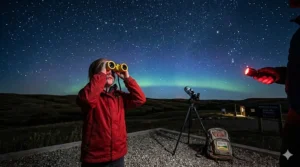
Sometimes what Canadian families need isn’t cutting-edge technology—it’s dependable equipment from a brand with decades of optics experience. Tasco Kids Binoculars 8×21 deliver exactly that: fully coated lenses, protective rubber around eyecups, shock-proof construction, and an 8x magnification that balances power with stability in young hands.
The large field of view (typically around 330-360 feet at 1,000 yards) helps kids quickly locate and follow moving subjects—crucial when Canadian wildlife won’t hold still for clumsy focusing attempts. The quick-focus mechanism uses a central wheel that younger children (7+) can operate more easily than models requiring separate eye adjustments, though it still demands more coordination than focus-free toddler models.
What Tasco understands: kids drop things. The rubber coating here isn’t token protection; it’s substantial armour that absorbs impacts when binoculars hit gravel campground roads, wooden dock planks, or—let’s be honest—are used as “hammers” during imaginative play before parents notice. The shock-proof design means the internal prisms and lenses maintain alignment even after falls that would destroy cheaper toy binoculars.
Canadian families from Manitoba to the Maritimes mention these lasting through multiple children—the hand-me-down durability test that reveals true quality. At around $45-$65 CAD on Amazon.ca, they cost slightly more than generic imports but deliver brand-name reliability and better customer service if issues arise (Tasco maintains Canadian distribution channels, unlike many Amazon Marketplace sellers).
The soft protective rubber around eyecups addresses a real safety concern: excited kids jamming binoculars against their faces hard enough to cause bruises. This cushioning prevents such impacts—thoughtful design that parents appreciate after the first camping trip.
Pros:
✅ Shock-proof construction survives typical kid handling
✅ Brand-name quality control ensures consistent performance
✅ Large field of view aids fast subject acquisition
Cons:
❌ Heavier than ultra-compact models (around 250g)
❌ Not truly waterproof (water-resistant only)
In the $45-$65 CAD range on Amazon.ca—this represents middle-ground reliability. Not the cheapest option, but likely the last pair you’ll buy before your child outgrows kids’ sizes entirely.
7. Kidwinz Compact 8×21 — Travel-Ready Adventure Companion
For Canadian families who actually travel with kids—whether road-tripping across provinces, flying to Churchill for polar bear viewing, or backpacking the Bruce Trail—the Kidwinz Compact 8×21 offers the foldable design and lightweight build (under 200 grams) that makes packing painless.
The foldable mechanism isn’t just about storage; it allows precise adjustment of the interpupillary distance (the spacing between the two barrels) to match each child’s unique eye spacing. This matters more than most people realize—improper spacing causes eye strain, headaches, and that frustrating “I can’t see” complaint even when the optics themselves are fine. Children’s IPD (interpupillary distance) typically ranges from 50-58mm, narrower than the 60-70mm adult average; binoculars that can’t adjust narrow enough will never work properly for young users.
The rubber-surrounded eyepieces provide the eye relief for glasses wearers that many budget models skimp on—important since about 20% of Canadian children ages 6-13 wear corrective lenses. The safety strap with quick-release buckle exceeds basic neck straps; it’s designed to break away under pressure rather than creating a strangulation hazard if caught on playground equipment or tree branches.
Where this model particularly shines: families with multiple children of different ages. The adjustable design means it fits everyone from a 6-year-old to a parent, making it the binocular that actually gets shared during family hikes rather than sitting in one child’s backpack. Canadian cottage families mention keeping a pair in the boat, another on the dock, and this one in the car—the price point (typically $35-$50 CAD) makes owning multiple pairs feasible.
The high-resolution optics with BAK4 prisms deliver better image quality than the low price suggests, though they can’t match premium models in extreme low-light conditions. For typical Canadian outdoor use—sunny summer hikes, overcast autumn nature walks, bright winter snow conditions—they perform admirably.
Pros:
✅ Foldable design suits various eye spacings and travel packing
✅ Safety strap with quick-release prevents strangulation risk
✅ Price ($35-$50 CAD) allows owning multiple pairs
Cons:
❌ Folding mechanism creates slight image alignment inconsistency
❌ Generic branding means uncertain long-term parts availability
Around $35-$50 CAD on Amazon.ca—this is the “spare pair” that becomes the most-used pair. Keep one in the car for unexpected wildlife sightings during road trips across Canada’s vast landscapes.
How to Set Up Kids’ Binoculars for First-Time Use: A Canadian Parent’s Guide
Before your child’s first genuine wildlife moment slips away because they’re fumbling with settings, invest 10 minutes in proper setup. Start by adjusting the interpupillary distance—the spacing between the two barrels. Have your child look at a distant object (like a flag across a park or a sign down the street), then ask them to slowly bring the binoculars together or apart until they see one perfect circle, not two overlapping images. Mark this position with a piece of coloured tape so you can quickly return to it.
Next comes diopter adjustment—that little extra wheel usually on the right eyepiece. Have your child cover the right barrel and focus the left eye using the centre wheel on a sharp-edged object about 20 metres away (signage, fence posts, building corners work well). Once crisp, switch: cover the left barrel and adjust only the diopter wheel until the right eye sees equally sharp detail. Now both eyes are calibrated together—centre wheel focusing will work perfectly for both eyes simultaneously.
Canadian parents often skip this calibration, leading to “these don’t work” frustration. But here’s the truth: I’ve watched a properly-adjusted $40 binocular outperform a $120 model that’s badly set up. The few minutes spent here dramatically improve every subsequent viewing experience.
For Canadian climate considerations, teach kids to avoid rapid temperature transitions. Don’t take binoculars from a -10°C car directly to warm breath against eyepieces—thermal shock can crack lens coatings, and rapid condensation fogs internal elements on non-purged models. Instead, keep them in a case inside your jacket during winter hikes, allowing gradual temperature equilibration. Come summer, never leave them on car dashboards; Canadian summer heat reaches 40-50°C inside vehicles, potentially melting lubricants and loosening prism alignment.
Finally, demonstrate the “spot with naked eye first, then raise binoculars” technique. Kids instinctively want to scan landscapes through binoculars, but the narrow field of view makes this impossibly frustrating. Teach them to watch for movement with unaided eyes (our peripheral vision excels at this), then—without looking away—raise the binoculars to their eyes while keeping their gaze locked on the subject. This single skill transforms clumsy searching into successful observation.
Common Mistakes Canadian Families Make When Buying Kids Binoculars
The biggest error I witness: buying maximum magnification assuming “bigger is better.” Parents see 12x or even 20x models marketed for kids and imagine their child spotting eagles from kilometres away. Reality check—those high magnifications are nearly unusable for children. Every tiny hand tremor gets magnified equally; at 12x, normal childhood shakiness turns the image into unwatchable blur. Stick with 6x-8x for ages 4-10, maybe 10x for disciplined teenagers. Lower magnification actually means more successful wildlife viewing because kids can hold the image steady and maintain the wide field of view needed to track moving animals.
Second mistake: ignoring the IPD specification. Many “kids’ binoculars” are actually adult compacts marketed to children, with minimum interpupillary distances around 58-60mm—too wide for children under 10 whose eyes are spaced 50-56mm apart. If the barrels won’t close narrow enough, your child will see double images, assume binoculars “don’t work,” and the expensive gear collects dust. Before buying, verify the minimum IPD matches your child’s measurements (measure the distance between their pupil centres with a ruler while they look straight ahead).
Third blunder: buying non-weatherproof models for Canadian outdoor use. That $15 toy binocular might work fine in controlled environments, but take it on a canoe trip across Algonquin, a camping weekend in Kananaskis, or even a spring hike through Pacific Spirit Park when the mist rolls in, and you’ll have permanently fogged optics within an hour. Waterproof or water-resistant construction isn’t luxury; it’s survival in Canadian climates where afternoon thunderstorms, morning dew, lake spray, and humidity swings are facts of outdoor life.
Fourth error: neglecting eye relief if your child wears glasses. Many kids’ binoculars provide only 10-12mm of eye relief, forcing eyeglass wearers to remove spectacles to see the full field of view—impractical for children with moderate to strong prescriptions who can’t focus clearly without correction. Look for 14-16mm minimum eye relief for comfortable glasses-on viewing. Twist-up eyecups help, but generous eye relief is what actually solves the problem.
Finally: treating binoculars as disposable toys rather than introducing them as precision tools. Kids mirror parental attitudes—if you hand them a $20 throw-away and expect it to break, they’ll treat it accordingly. Invest in decent mid-range optics ($40-$80 CAD), teach proper handling, and they’ll develop respect for equipment that lasts through years of genuine use. The cost per viewing session becomes negligible when quality binoculars survive from age 6 through 14, versus buying three replacement toy versions that each last one summer.
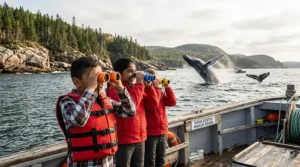
Understanding Magnification Power and What It Means for Canadian Wildlife Viewing
When you see “8x” stamped on binoculars, that number tells you the magnification power—objects appear eight times closer than they would to your naked eye. So that chickadee perched 24 metres away in a backyard maple tree looks like it’s just 3 metres distant, revealing plumage details your unaided eyes would miss entirely. The objective lens diameter—the second number like “21” in 8×21—measures in millimetres how wide the front lenses are, directly impacting light-gathering ability.
Here’s what actually matters for Canadian contexts: an 8×32 binocular offers more versatility across our diverse environments than you’d expect. The moderate 8x magnification stays stable in young hands during excitement—critical when a great blue heron suddenly lands on your dock or a deer appears at the forest edge. Meanwhile, those 32mm objectives gather sufficient light for typical viewing conditions across Canada, from bright prairie afternoons to shadowy boreal forest trails.
For junior binoculars for bird watching specifically, 8x magnification hits the sweet spot. Higher power sounds appealing until your 9-year-old tries tracking a warbler hopping through aspen branches at 12x magnification—the narrow field of view and image shake from hand tremors create pure frustration. Lower than 6x works for very young children but doesn’t provide enough detail for identifying species by field marks, which is where genuine birding enthusiasm develops.
The relationship between magnification and field of view operates inversely: higher magnification means narrower viewing area. An 8x binocular might show 330 feet of width at 1,000 yards distance, while a 10x model of otherwise identical design shows only 280 feet—that extra 50 feet of width makes the difference between easily following a bird in flight versus losing it constantly as it exits your narrow view cone.
Canadian wildlife viewing particularly benefits from this balanced approach. Whether you’re watching loons on northern Ontario lakes (where distance matters), observing black bears in BC coastal regions (where you want distance for safety), or identifying shorebirds on Atlantic mudflats (where you need both magnification and field of view to scan flocks), 8x magnification delivers without the drawbacks of higher power. The exit pupil calculation (objective diameter divided by magnification) for an 8×32 yields 4mm—perfectly matched to a young person’s dilated pupil in typical outdoor lighting, meaning maximum brightness efficiency.
Waterproof vs Water-Resistant: What Canadian Parents Need to Know
The terms sound similar, but in Canadian outdoor contexts, the distinction literally means the difference between functional equipment and ruined optics. Water-resistant binoculars can handle light rain, splashes, and high humidity without immediate damage—think of them as “cottage-proof” for calm weather use. They’ll survive morning dew on picnic tables, light drizzle during short nature walks, or the occasional spray from enthusiastic hand-washing at campground sinks.
Waterproof binoculars for 10 year old adventurers represent a different standard entirely. Fully waterproof models are sealed with O-rings at every potential water entry point and nitrogen-purged (internal air replaced with dry nitrogen gas). This combination prevents water infiltration during submersion up to specified depths and prevents internal fogging across temperature extremes—both critical for Canadian conditions.
Why this matters in Canadian contexts: our temperature swings are brutal on optical equipment. Picture this common scenario—you’re camping in Riding Mountain National Park in September. Morning temperatures sit at 2°C. You pack binoculars in your backpack, hike three hours under increasing sunshine, and afternoon temps hit 18°C. You pause to observe elk; breath moisture condenses on cold eyepieces; you wipe them and peer through… and see fog. Not on the outside glass you can wipe—inside, between prisms and lenses, where you cannot reach.
Non-purged binoculars trap ambient moisture inside during manufacturing. Temperature cycling causes this internal moisture to condense on cold surfaces, permanently fogging optics until professional servicing (which costs more than buying new for budget models). Nitrogen purging eliminates this moisture before sealing, preventing condensation regardless of temperature swings from -30°C Alberta winters to +30°C Southern Ontario summers.
For compact binoculars tweens will actually use in real Canadian conditions—not carefully controlled museum visits but actual outdoor adventures involving canoes, rain, humidity, temperature swings, and the inevitable water bottle spills in backpacks—waterproof construction isn’t optional luxury. It’s the difference between equipment lasting years versus failing the first time autumn rain catches you halfway through a hike in Fundy National Park.
The practical test: would you feel comfortable if this binocular fell into a lake during a canoe portage? For waterproof models, you fish it out, dry the exterior, and continue using it immediately. Water-resistant models? You’re buying replacements. That reality check guides purchase decisions for families who actually use their outdoor gear rather than display it in climate-controlled homes.
Objective Lens Diameter Explained: Light-Gathering for Canadian Conditions
Those second numbers in binocular specifications—21mm, 32mm, 42mm—describe the diameter of the objective lenses in millimetres, and they fundamentally determine how bright your image appears. Larger objectives gather more light, simple physics. But here’s where Canadian realities complicate the “bigger is better” assumption: larger lenses require larger, heavier housings, creating binoculars that tire young arms and discourage regular use.
A 21mm objective lens works brilliantly for daytime Canadian adventures—hiking the Cabot Trail, exploring Point Pelee during spring migration, watching prairie wildlife in Grasslands National Park during summer afternoons. Bright sunshine provides abundant light; the compact size encourages kids to actually carry binoculars rather than leaving them in the car. But take those same 21mm compacts for dawn waterfowl observation on Saskatchewan sloughs or evening beaver-watching on Quebec lakes, and the limited light-gathering creates dim, harder-to-resolve images.
The 32mm middle ground shines for Canadian all-around use. Enough light-gathering for overcast days (common across much of Canada), early-morning observation sessions (when wildlife activity peaks), and the transition hours around sunrise/sunset (golden viewing windows for many species). Yet they remain portable enough for children’s day-long carry—typically weighing 400-600 grams versus 700+ grams for 42mm models.
Here’s the calculation that matters: exit pupil equals objective diameter divided by magnification. An 8×32 binocular yields a 4mm exit pupil. A 10×42 yields 4.2mm. Human pupils dilate to roughly 5-7mm in dim light (younger people dilate wider). When the exit pupil matches or exceeds your dilated pupil, you capture all available light—the image appears as bright as physically possible for that light level. Smaller exit pupils waste potential brightness; larger ones provide no additional benefit in that specific lighting.
For Canadian wildlife viewing reality, a 4mm exit pupil (from 8×32 or similar ratios) handles 80% of typical observation conditions. Only dedicated low-light specialists need larger—astronomy enthusiasts, hunters during legal shooting hours near dawn/dusk, or photographers scouting nocturnal wildlife. For general family nature observation across Canada’s diverse parks and protected areas, 32mm objectives balance performance with portability better than either smaller compacts or larger full-size models.
The often-overlooked factor: Canadian weather is frequently overcast. Environment Canada statistics show major cities averaging 150-200 cloudy days annually. Those clouds diffuse sunlight, reducing effective illumination compared to clear-sky conditions. Larger objectives help here—the difference between struggling to resolve details and seeing clearly under typical Canadian “bright but cloudy” conditions where it’s neither truly dark nor brilliantly sunny.
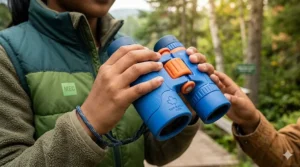
Eye Relief Considerations for Young Canadian Glasses Wearers
Roughly one in five Canadian children ages 6-13 wears eyeglasses, making eye relief for glasses wearers a practical necessity rather than optional feature. Eye relief measures the distance from the eyepiece lens to your eye where you still see the complete field of view—too little relief forces eyeglass wearers to remove spectacles to see the full image, defeating the purpose of corrective lenses.
Minimum acceptable eye relief for glasses-on viewing sits around 14-15mm for most children’s eyeglasses, though 16-17mm provides better comfort. Binoculars designed for adults often achieve 18-20mm, but kids’ models frequently compromise here to reduce size and cost. Before purchasing, check specifications explicitly—many manufacturers list eye relief, but cheaper models omit this spec entirely (usually indicating it’s inadequate).
The twist-up eyecup mechanism helps but doesn’t solve insufficient eye relief. These rubber cups twist down for glasses wearers, theoretically bringing eyes closer to optics. However, if the fundamental eye relief distance is too short, even fully collapsed eyecups won’t create comfortable viewing for spectacled children. They’ll see a vignetted image—dark ring around the edges—forcing them to remove glasses to see properly, which defeats the correction their vision requires.
Canadian parents often discover this limitation only after purchase, when their glasses-wearing child complains about not seeing properly. Testing in-store becomes crucial but challenging for online purchases (most Amazon.ca kids’ binoculars lack physical retail presence). Look for models explicitly marketed as “glasses-friendly” or “extended eye relief”—these indicate manufacturers considered this need.
For children with moderate to strong prescriptions (beyond ±2.00 diopters), removing glasses to use binoculars becomes impractical—they can’t focus clearly enough to enjoy observation. Yet many budget kids’ binoculars provide only 10-12mm eye relief, assuming users have perfect vision. This oversight eliminates 20% of potential users from effective use, creating expensive paperweights for those families.
The workaround: diopter adjustment on the eyepiece can compensate for mild nearsightedness or farsightedness (typically ±2 to ±3 diopters), allowing glasses-free use for some children. But astigmatism, which affects about 30% of Canadian children who need vision correction, cannot be corrected by simple diopter adjustment—these kids must wear glasses while using binoculars, making adequate eye relief non-negotiable.
When researching on Amazon.ca, check customer reviews for mentions of glasses use. Canadian reviewers often note whether their children successfully used binoculars with spectacles—real-world confirmation worth more than manufacturer specifications that may be optimistic. For the roughly 3-4 million Canadian children who wear corrective lenses, this single specification determines whether binoculars become beloved outdoor tools or frustrating failures.
Frequently Asked Questions About Kids Binoculars in Canada
❓ Can kids use binoculars in winter, and will cold damage them?
❓ What magnification works best for junior binoculars for bird watching in Canada?
❓ Are expensive kids binoculars worth it, or should I buy budget models?
❓ How do I clean binoculars safely without damaging coatings?
❓ What's the difference between roof prism and Porro prism binoculars for kids?
Final Verdict: Choosing the Best Binoculars for Your Young Canadian Explorer
After examining real products available on Amazon.ca against actual Canadian outdoor conditions, clear recommendations emerge by age and commitment level. For children ages 3-6, the Educational Insights GeoSafari Kidnoculars deliver frustration-free introduction to observation tools—focus-free operation and oversized eyepieces mean success from first use, building enthusiasm rather than disappointment. At $30-$45 CAD, they’re the gateway that determines whether your child develops lasting interest in nature observation.
Once kids reach 7-10 years with demonstrated outdoor enthusiasm, graduate to legitimate 8×21 compact models like the Compact 8×21 with BAK4 Prism or Think Peak 8×21. These $35-$60 CAD options provide genuine optical performance—real glass optics, proper prisms, waterproof construction—without the premium pricing of adult-grade equipment. They’ll serve faithfully through elementary school hiking, camping, and casual birding across Canadian provincial and national parks.
For serious young naturalists ages 10-14 who’ve moved beyond casual interest to dedicated observation—the kid requesting field guides, joining nature clubs, choosing outdoor activities voluntarily—the Celestron Nature DX 8×32 justifies its $175-$220 CAD investment. Phase-coated optics, genuine waterproofing, and close-focus capability deliver performance matching adult expectations in a size younger users can handle. This becomes the binocular they keep through high school outdoor education programs and beyond.
Canadian families seeking maximum versatility across multiple children and uses find the Kidwinz Compact 8×21 fulfills the “one pair for everyone” role admirably. Foldable design adjusts across age ranges, safety features exceed basic models, and the $35-$50 CAD price makes owning several pairs practical—keep one in the car, cottage, and backpack simultaneously.
The common thread? Every recommendation available on Amazon.ca ships to Canadian addresses, prices reflect CAD reality, and specifications match our climate demands. Canadian weather doesn’t forgive cheap optics—internal fogging, coating damage from temperature swings, and failure during humidity exposure plague toy-grade binoculars. Invest in genuine waterproof construction, real optical glass, and proper prisms. Your child’s excitement upon spotting their first indigo bunting, identifying a distant moose, or resolving Saturn’s rings depends on equipment that actually works when Canadian conditions challenge it.
The best binoculars for your family? The ones your child actually carries, protected from weather but accessible for spontaneous wildlife moments. That combination of portability, durability, and optical performance creates the experiences that transform casual park visits into lifelong nature enthusiasm—exactly what we want for young Canadian explorers discovering the remarkable biodiversity from Arctic tundra to Carolinian forests across this vast country.
Recommended for You
- Best Kids Snowshoes Under $150 Canada 2026
- Twin Tip vs Directional Youth Snowboard: 7 Best Picks for Canadian Kids 2026
- Best Snowboard for 11 Year Old Beginner Canada 2026 Guide
Disclaimer: This article contains affiliate links. As an Amazon Associate, I earn from qualifying purchases. If you purchase products through these links, we may earn a small commission at no additional cost to you.
✨ Found this helpful? Share it with your friends! 💬🤗
