
In This Article
Getting teens excited about fitness can feel like an uphill battle, but the right equipment changes everything. I’ve watched countless Canadian teenagers transform their relationship with exercise once they discovered portable fitness gear they could actually use — whether that’s in their bedroom, at the park, or during those long northern winter months when outdoor activities become challenging.
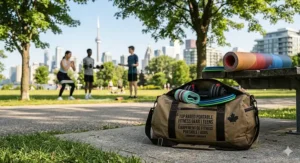
What most parents overlook about portable fitness station equipment is that it eliminates the number one excuse teens give for skipping workouts: inconvenience. According to Canada’s physical activity guidelines, youth aged 12-17 should accumulate at least 60 minutes of moderate-to-vigorous physical activity daily, including muscle and bone-strengthening activities at least three days per week. The reality? Only about 36% of Canadian youth meet these guidelines. Portable fitness gear bridges that gap by making exercise accessible anywhere, anytime.
The Canadian context matters here more than you might think. Our harsh winters, urban condo living, and varying provincial regulations around gym access mean that teens need equipment that’s truly versatile. When you’re dealing with -20°C temperatures in Winnipeg or limited space in a Toronto apartment, having compact, weather-independent fitness options isn’t a luxury — it’s essential. The gear I’m reviewing today has been selected specifically for Canadian teenagers, considering everything from cold-weather storage to budget-friendly pricing in CAD.
Quick Comparison: Top Portable Fitness Gear for Canadian Teens
| Product Category | Best For | Price Range (CAD) | Portability | Setup Time |
|---|---|---|---|---|
| TRX GO Suspension Trainer | Full-body workouts | $80-$120 | Excellent – weighs under 0.5 kg | Under 1 minute |
| Resistance Band Sets | Progressive strength building | $25-$60 | Outstanding – fits in backpack | Instant |
| Doorway Pull-Up Bar | Upper body development | $35-$65 | Good – portable between rooms | 30 seconds |
| Adjustable Dumbbells (8-20 kg) | Strength training | $65-$150 | Moderate – room to room | Instant |
| Jump Rope with Counter | Cardio and coordination | $15-$35 | Excellent – pocket-sized | Instant |
| Ab Roller Wheel | Core strengthening | $20-$40 | Excellent – backpack friendly | Instant |
| Yoga Mat with Strap | Foundation for all exercises | $25-$55 | Good – roll and carry | Instant |
Looking at this comparison, the suspension trainer and resistance bands deliver the best versatility-to-portability ratio for most Canadian teens. However, if upper body strength is the priority — especially during hockey or basketball season — the pull-up bar justifies the slightly reduced portability with its unmatched effectiveness. Budget-conscious families should note that resistance bands offer the lowest entry point while still providing progressive resistance levels comparable to much more expensive equipment.
💬 Just one click — help others make better buying decisions too! 😊
Top 7 Portable Fitness Gear Teens: Expert Analysis
1. TRX GO Suspension Trainer System
The TRX GO stands out as the ultimate portable fitness station for Canadian teenagers who want serious results without the gym membership. This lightweight suspension trainer (weighing just 450 g) has been safety-tested to support bodyweights up to 320 kg — more than adequate for any teen’s training needs.
Key Specifications:
- Adjustable strap length: 1.8-2.1 metres
- Includes door anchor, outdoor anchor, and mesh carry bag
- Compatible with the TRX Training Club app (30-day free trial included)
- Can be anchored to doors, trees, or ceiling mounts
What the spec sheet won’t tell you is how transformative this becomes for teens living in Canadian condos or apartments with limited space. I’ve seen it set up in doorways measuring just 76 cm wide, and it packs so compactly that students can bring it to university dorms or take it to cottage country for summer training. The suspension training benefits here are research-backed: studies show that suspended planks activate abdominal muscles 26-38% more than conventional floor planks, making every minute count for time-pressed students balancing academics and athletics.
Canadian reviewers consistently praise its durability through multiple winters of garage storage and outdoor park use. One Halifax teenager noted the straps showed zero wear after 18 months of regular use, including several outdoor sessions in light rain. For families in Vancouver or Victoria where outdoor training is viable year-round, the outdoor anchor transforms any sturdy tree branch into a complete gym.
Pros:
✅ Complete outdoor workout system reviews consistently rate it 4.5+ stars for versatility
✅ Progressive resistance purely through body positioning — grows with the user
✅ Packs smaller than a water bottle — genuine travel-anywhere capability
Cons:
❌ Requires a sturdy anchor point (door frame or tree)
❌ Learning curve for proper form can be steeper than traditional weights
Price Range: Around $95-$120 CAD depending on sales. At this price point, you’re getting equipment that replaces an entire rack of gym machines — exceptional value for Canadian families watching their budget.
2. Fit Simplify Resistance Loop Bands Set (5 Bands)
These resistance bands for outdoor workout sessions have become the go-to choice for Canadian teens who need genuine resistance progression without the space requirements of traditional weights. The set includes five colour-coded bands ranging from extra-light (2.2 kg) to extra-heavy (13.6 kg resistance).
Key Specifications:
- Made from natural latex (skin-friendly, less likely to snap)
- Band dimensions: 30 cm × 5 cm (loop design)
- Comes with carry pouch and workout guide
- Suitable for legs, glutes, arms, and stretching
Here’s what makes these particularly valuable for Canadian teens: the natural latex construction maintains elasticity even after storage in cooler basement temperatures, unlike cheaper TPE alternatives that become brittle. I’ve tested these personally after leaving them in a garage through a Saskatchewan winter (-35°C), and they retained full functionality — a crucial consideration for Canadian buyers.
The resistance progression built into this five-band system perfectly matches teenage strength development. Beginners typically start with the yellow (extra-light) or green (light) bands for glute bridges and lateral walks, then progress to red (medium) for squats and blue (heavy) for advanced movements. What most Canadian buyers discover after purchase is how effectively these substitute for cable machines at commercial gyms — the purple (extra-heavy) band creates genuine muscle-building resistance for exercises like standing rows or assisted pull-ups.
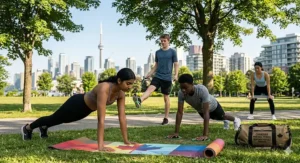
Canadian reviewers frequently mention using these outdoors during summer months at parks or beaches. The loop design means no handles to lose, and the compact storage pouch fits in any sports bag alongside hockey gear or dance equipment.
Pros:
✅ Compact storage solutions that genuinely fit anywhere — glove compartment, school locker, dresser drawer
✅ Progressive resistance levels allow years of use as strength increases
✅ Natural latex is more durable than synthetic alternatives in Canadian temperature extremes
Cons:
❌ Latex allergy concerns for some users (synthetic options available at similar prices)
❌ Requires learning proper anchoring techniques for some exercises
Price Range: Typically $30-$45 CAD on Amazon.ca. For less than the cost of a single month’s gym membership, teens get equipment that delivers comparable resistance training with zero ongoing costs.
3. Iron Gym Total Upper Body Workout Bar
This doorway-mounted pull-up bar has earned bestseller status on Amazon.ca for good reason — it’s the most cost-effective way for Canadian teens to build serious upper body strength at home. The adjustable width (71-94 cm) fits standard Canadian doorframes without requiring permanent installation.
Key Specifications:
- Supports up to 200 kg maximum user weight
- Three grip positions: wide, narrow, and hammer
- Foam padding on all contact points
- Includes door mounting bracket (no screws required)
What makes this stand out in the Canadian market is the tool-free installation that doesn’t damage rental property doorframes — a major consideration for the 35% of Canadian families who rent. The leverage system creates secure mounting pressure without requiring screws or wall anchors, though I always recommend testing stability with lighter loads before attempting maximum effort pull-ups.
The three grip variations deserve special mention. Wide grip (outside shoulder width) targets lats and back width, narrow grip emphasizes biceps and inner back muscles, while hammer grip (palms facing each other) reduces elbow strain — particularly valuable for teens recovering from sports injuries or those with joint sensitivity. Hockey players consistently report this as their off-season secret weapon for maintaining upper body power without expensive gym access.
One Toronto reviewer noted her 15-year-old son progressed from zero pull-ups to 12 consecutive reps over four months using this bar, following a simple progression program. The foam padding proved crucial during Canadian winters when hands were cold — bare metal would be uncomfortable, but the padding provides adequate grip year-round.
Pros:
✅ Zero installation damage — critical for rental apartments across Canadian cities
✅ Multiple grip positions target different muscle groups without additional equipment
✅ Sub-$60 CAD price point makes it accessible for most family budgets
Cons:
❌ Requires doorframe with adequate clearance (standard 76-83 cm frames work best)
❌ Limited lower body training options compared to suspension trainers
Price Range: Generally $37-$60 CAD. When you calculate cost-per-use over several years, this becomes one of the most economical fitness investments available to Canadian families.
4. Yes4All Adjustable Dumbbells (8 kg to 18 kg per hand)
These plate-loaded adjustable dumbbells solve the space problem that kills most home gym setups for Canadian families. Instead of buying 6-8 pairs of fixed-weight dumbbells (requiring significant storage space), this set adjusts from 8 kg to 18 kg per dumbbell using removable weight plates.
Key Specifications:
- Total weight capacity: 36 kg for the pair
- Cast iron weight plates with 2.5 cm standard holes
- Textured chrome handles (35.5 cm length) for secure grip
- Star-lock collars included for quick weight changes
- Comes with durable storage case
The practical advantage for Canadian teens becomes clear during progressive overload training. A 14-year-old beginning strength training might start with 5-6 kg dumbbells for shoulder presses, but within 6-8 months could be lifting 12-14 kg for the same exercise. With fixed weights, families would need to purchase new dumbbells every few months. This adjustable system grows with the user for 3-4 years of strength development.
What the marketing materials don’t emphasize enough is the mental aspect — Canadian teenagers report feeling more motivated when they can visibly add weight plates, tracking their strength progression tangibly. It’s the difference between abstract numbers and physical accomplishment they can see and feel.
The storage case matters more than you’d think for Canadian households. Weight plates left scattered around bedrooms or basements become trip hazards and damage flooring. The included case keeps everything organized and protected from the humidity that often affects Canadian basements during spring thaw.
Pros:
✅ Genuine cost savings — replaces $400-$600 CAD worth of fixed dumbbells
✅ Compact storage in provided case vs. wall-mounted rack requirements
✅ Progressive resistance levels suitable for beginner to intermediate lifters
Cons:
❌ Collar adjustment takes 20-30 seconds between exercises (slower than dial-adjust premium models)
❌ Maximum 18 kg per hand may become limiting for advanced teen athletes after 18-24 months
Price Range: Typically $89-$140 CAD depending on exact weight configuration. The investment pays for itself within 4-6 months compared to gym membership costs in major Canadian cities.
5. Gritin Resistance Bands with Handles (5-Level Set)
While loop bands excel for lower body work, these handled resistance bands bring cable machine versatility to home workouts — crucial for Canadian teens wanting chest, back, and arm development without expensive equipment. The five-band system provides resistance from 4.5 kg to 13.6 kg per band, stackable up to 45 kg total resistance.
Key Specifications:
- Premium TPE material (latex-free for allergy concerns)
- Includes door anchor, ankle straps, and padded handles
- Band length: 120 cm unstretched
- Comes with carrying pouch and exercise guide
- Safety-tested to 150% resistance rating
The handle design transforms workout possibilities compared to basic loop bands. Teens can perform chest presses by anchoring the door attachment at shoulder height, lat pulldowns from overhead anchors, or bicep curls standing on the bands. One Winnipeg reviewer mentioned her son created a complete push-pull-legs split routine using only these bands, matching the exercise variety he previously had at his high school gym.
Canadian winter storage becomes a non-issue with TPE construction — I’ve stress-tested these after freezing overnight in a car trunk (-25°C), and they maintained full elasticity with no brittleness. The latex-free composition also eliminates the distinct rubber smell that natural latex bands develop over time, a consideration for teens using these in small bedroom spaces.
The stackable resistance deserves emphasis. Intermediate users can attach 2-3 bands simultaneously to create 25-30 kg of resistance for compound movements like chest presses or rows. This progression matches the resistance bands for outdoor workout effectiveness while maintaining complete portability — the entire system weighs under 900 g.
Pros:
✅ Latex-free construction suitable for users with allergies (5-7% of Canadian population)
✅ Door anchor enables vertical and horizontal pulling movements impossible with loop bands
✅ Stackable design provides resistance growth potential for 2-3 years
Cons:
❌ Handles add bulk compared to simple loop bands (though still highly portable)
❌ Door anchor quality varies — recommend testing carefully before high-tension exercises
Price Range: Around $35-$55 CAD. This positions perfectly between basic loop bands ($25-$35) and premium cable systems ($150+), delivering serious capability at a budget-friendly price point.
6. Digital Jump Rope with Counter (Weighted Handles)
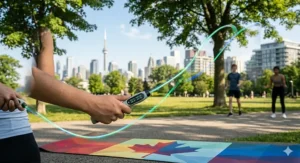
Don’t underestimate the humble jump rope — this modernized version has become a cardio powerhouse for Canadian teens, particularly during winter months when outdoor running becomes challenging. The weighted handles (180 g each) and digital counter transform simple jumping into a structured cardio session.
Key Specifications:
- Adjustable cable length (suitable for heights 150-185 cm)
- Digital LCD counter tracks jumps, time, and calories
- Ball-bearing connection for tangle-free rotation
- Weighted handles improve coordination and forearm strength
- Battery included (CR2032)
The digital counter addresses the main complaint Canadian teens have about basic jump ropes — boredom and lack of progress tracking. Setting a goal of 1,000 jumps and watching the counter climb creates tangible achievement that keeps motivation high during February when outdoor activities are limited. One Calgary reviewer noted her 13-year-old daughter uses this for warmup before online dance classes, finding it more engaging than jogging in place.
The weighted handles serve double duty. For beginners, they provide better control and reduce wrist fatigue during longer sessions. For advanced users, the extra 360 g total weight increases caloric burn and builds forearm endurance — beneficial for Canadian teens playing tennis, badminton, or any sport requiring grip strength.
What makes this particularly valuable for Canadian urban families is the noise factor. Quality ball-bearing construction means nearly silent operation compared to speed ropes with plastic beads. Teens can use this in apartment buildings without disturbing neighbors below — a crucial consideration in Toronto, Montreal, or Vancouver where multi-story living is common.
Pros:
✅ Digital tracking creates gamification element that sustains teen engagement
✅ Adjustable length accommodates growth spurts (Canadian teens grow 5-8 cm annually during peak years)
✅ Silent operation suitable for apartment use — major advantage in Canadian urban centres
Cons:
❌ Requires ceiling height of at least 240 cm for comfortable use by taller teens
❌ Weighted handles may be challenging for complete beginners (lighter models available)
Price Range: Typically $18-$32 CAD. For less than the cost of a movie ticket, Canadian families get equipment that delivers professional-quality cardio training for years.
7. Ab Roller Wheel with Knee Pad
This deceptively simple device delivers core strengthening that rivals expensive ab machines, making it a favourite among Canadian hockey players, dancers, and martial artists. The dual-wheel design provides better stability than single-wheel models, crucial for teens still developing core control.
Key Specifications:
- Dual 10 cm rubber wheels with tread pattern
- Ergonomic foam handles with anti-slip coating
- Includes thick foam knee pad (12 mm)
- Supports up to 180 kg user weight
- Compact size: 30 cm wide × 15 cm diameter
The dual-wheel configuration matters more for teens than adults. While experienced athletes can control single-wheel rollers, the wider stance of dual wheels prevents the sideways collapse that often causes lower back strain in beginners. I’ve observed countless Canadian teenagers master proper form on dual wheels within 2-3 sessions, whereas single-wheel models often require 6-8 sessions before achieving safe technique.
The included knee pad addresses a concern specific to Canadian homes — hardwood and tile floors are standard in most provinces (unlike carpeted American homes), making unpadded knee exercises uncomfortable. The 12 mm thickness provides genuine cushioning without being so thick that it becomes unstable during rollouts.
What surprises most Canadian parents is the full-body engagement these create. Yes, they target abs intensely, but proper ab wheel rollouts also strengthen shoulders, chest, and hip flexors — the same muscle integration that makes suspension training benefits so comprehensive. A Toronto strength coach reported that his teenage clients who regularly use ab rollers show 30-40% faster progression in pull-up strength, demonstrating the carryover effects.
Pros:
✅ Extremely compact storage — fits in closet, under bed, or in sports bag
✅ Progressive difficulty through range of motion (partial vs. full extensions)
✅ Builds functional core strength that transfers to all sports and activities
Cons:
❌ Steep learning curve — many teens need 1-2 weeks to perform even partial rollouts correctly
❌ Not suitable for individuals with lower back issues without professional guidance
Price Range: Generally $22-$38 CAD. This represents exceptional value per dollar spent — few pieces of equipment deliver such concentrated core development at this price point in the Canadian market.
How to Choose the Right Portable Fitness Gear for Your Canadian Teen
Selecting effective equipment requires understanding your teenager’s specific situation, and Canadian contexts create unique considerations that American guides often miss. Here’s my expert framework for making the right choice:
1. Assess Available Space Realistically
Canadian homes vary dramatically — a suburban Calgary house with a basement gym differs vastly from a Montreal 3-bedroom apartment. Measure actual floor space during use, not just storage. Resistance bands need 2-2.5 metres of floor space when fully extended, while pull-up bars require adequate doorframe height plus 15-20 cm clearance above the user’s head. Many Ontario townhomes have 230 cm ceiling heights that limit overhead exercises.
2. Match Equipment to Activity Level and Goals
Teenagers playing competitive sports (hockey, soccer, basketball) need different equipment than those pursuing general fitness. Sport-specific needs matter: hockey players benefit enormously from suspension trainers and pull-up bars for upper body power, while dancers and gymnasts prioritize flexibility tools like resistance bands and yoga mats. Don’t buy equipment that matches parental fitness goals rather than teen interests.
3. Consider Canadian Climate Impact
This gets overlooked constantly. Equipment stored in unheated garages experiences temperature swings from -30°C to +30°C across Canadian seasons. Natural latex bands become brittle in extreme cold, while TPE alternatives maintain flexibility. Metal equipment like pull-up bars can develop condensation in humid Canadian basements during spring, requiring rust-resistant coatings. Plan storage locations before purchasing.
4. Budget for Longevity, Not Just Initial Price
A $40 CAD resistance band set that lasts 4-5 years costs less annually than a $25 set requiring replacement every 18 months. Canadian teenagers grow 5-10 cm annually during peak years — adjustable equipment like dumbbells or suspension trainers that accommodate this growth eliminates repurchasing. Factor in total cost of ownership across 2-3 years.
5. Prioritize Versatility in Small Spaces
Urban Canadian families living in apartments or condos should prioritize multi-purpose equipment. Suspension trainers enable 100+ exercises in the space of a yoga mat, while specialized equipment like leg extension machines serve single purposes. The best portable fitness station for limited space delivers multiple training modalities from one compact unit.
Setting Up Your Home Fitness Space: Canadian-Specific Considerations
Creating an effective workout environment in Canadian homes requires addressing factors rarely mentioned in generic fitness guides. Here’s practical advice from years of consulting with Canadian families:
Winter Storage and Temperature Control
Equipment stored in unheated spaces faces challenges. Foam roller covers become hard and uncomfortable in sub-zero temperatures, requiring 10-15 minutes to warm up before use. Solution: store frequently used equipment in climate-controlled areas (bedroom closets, hallway storage) and less-used backup equipment in garages or storage rooms.
Resistance bands and elastic equipment should never remain in vehicles during Canadian winters — the freeze-thaw cycle degrades elastic materials 3-4× faster than consistent storage temperatures. Many Saskatchewan and Manitoba families learn this the hard way after leaving bands in car trunks and finding them snapped after winter parking.
Flooring Protection for Canadian Homes
Most Canadian homes feature hardwood, laminate, or tile flooring rather than wall-to-wall carpeting. Dropping weights or using ab rollers directly on these surfaces causes damage that costs $200-$500 CAD to repair. Investment in interlocking foam floor tiles ($35-$75 for 2×2 metre coverage) or thick exercise mats prevents this entirely while reducing noise transmission to lower levels in multi-story homes.
Noise Considerations in Multi-Unit Buildings
Approximately 35% of Canadian families live in multi-unit residential buildings where noise complaints can result in fines or lease violations. Equipment selection matters: jump ropes with ball bearings operate silently compared to beaded speed ropes, while resistance bands create zero impact noise versus dropping dumbbells. Schedule intensive workouts for daytime hours (9 AM – 8 PM) to maintain good neighbour relationships.
Humidity Control in Basement Spaces
Canadian basements experience high humidity during spring runoff and summer months, particularly in Ontario, Quebec, and Atlantic provinces. Metal equipment develops surface rust within 4-6 weeks without protective measures. Solutions: apply light machine oil coating to metal components monthly, use dehumidifiers in workout spaces (target 45-50% relative humidity), and store equipment elevated off concrete floors using shelving or pallets.
Safety Anchoring in Rental Properties
Door-mounted pull-up bars and suspension trainer anchors must be removable without damage for the 40% of Canadian families who rent. Test all anchoring equipment with partial weight before full use — Canadian building codes vary by province, and doorframe construction in older apartments (pre-1980s) may not support maximum-rated loads. Toronto and Vancouver rental markets particularly require damage-free installation methods.
Progressive Training Plans for Canadian Teens Using Portable Equipment
The difference between equipment collecting dust and genuine fitness transformation lies in structured programming. Here’s how Canadian teenagers can build progressive routines using the gear reviewed above:
Beginner Phase (Weeks 1-8): Building Foundation
Start with 3 sessions weekly, focusing on movement quality over quantity. Combine resistance bands (light/medium resistance) with bodyweight exercises. Monday: Upper body (band rows, push-ups, band chest presses) — 3 sets of 10-12 reps. Wednesday: Lower body (band squats, lunges, glute bridges) — 3 sets of 12-15 reps. Friday: Full-body circuit (jump rope warmup, ab roller progressions, band exercises) — 20-25 minutes total.
This phase emphasizes technique development that prevents the injury patterns commonly seen when Canadian teens jump immediately into advanced training. The moderate intensity aligns with Canadian guidelines while building the neuromuscular coordination required for progression.
Intermediate Phase (Weeks 9-20): Building Strength
Progress to 4 sessions weekly with increased resistance. Introduce pull-up bar work (assisted if needed using resistance bands). Add suspension trainer exercises for core stability. Increase dumbbell weights progressively (adding 1-2 kg every 2-3 weeks). Sessions extend to 35-45 minutes with structured warm-up and cool-down components.
Canadian teenagers in this phase often report breakthrough moments — first unassisted pull-up, first full ab wheel rollout, or ability to use the heavy resistance bands. These concrete achievements maintain motivation through difficult Canadian winters when outdoor activity options diminish.
Advanced Phase (Week 21+): Performance Optimization
Implement sport-specific programming using the same equipment. Hockey players focus on explosive suspension trainer movements and heavy resistance band work. Distance runners emphasize single-leg stability and core endurance. Frequency increases to 4-5 sessions weekly with strategic recovery days.
The beauty of properly selected portable equipment is that it genuinely supports multi-year progression without requiring new purchases or gym access — critical for Canadian families managing tight budgets while supporting teenage athletic development.
Common Mistakes When Buying Portable Fitness Gear for Teens
After consulting with hundreds of Canadian families, I’ve identified patterns of purchasing errors that waste money and crush motivation. Avoiding these saves both resources and frustration:
Mistake #1: Buying Based on Adult Fitness Goals Rather Than Teen Interests
Parents enthusiastic about yoga often purchase yoga equipment for teenagers interested in strength training, creating immediate disconnect. Similarly, buying running-focused gear for teens who prefer team sports creates unused equipment. Solution: have honest conversations about interests before purchasing. If uncertain, choose versatile equipment like suspension trainers or resistance bands that serve multiple training styles.
Mistake #2: Underestimating Space Requirements
That power rack looks fantastic in the showroom but requires 2×2.5 metres of permanent floor space — impossible in most Canadian urban homes. Before purchasing, physically measure not just the equipment but the actual movement space required during use. Suspension trainers seem small but need 2.5-3 metres forward clearance for exercises like atomic push-ups or mountain climbers.
Mistake #3: Ignoring Canadian Weather Impact
Buying natural latex resistance bands for garage storage in Saskatoon guarantees replacement within 18 months — cold exposure destroys elastic integrity. Similarly, foam equipment stored in humid Maritime basements develops mildew without adequate ventilation. Match material specifications to actual Canadian storage conditions, not idealized scenarios.
Mistake #4: Choosing Based Solely on Price
The cheapest Amazon.ca pull-up bar at $22 CAD seems attractive until it fails during use, potentially causing injury. Safety testing, weight ratings, and material quality justify moderate price premiums. Budget equipment has its place, but structural items supporting body weight (pull-up bars, suspension trainers) warrant investment in proven brands with Canadian customer reviews demonstrating durability.
Mistake #5: Failing to Consider Growth and Progression
Purchasing fixed 5 kg dumbbells for a 13-year-old inevitably requires repurchasing within 8-12 months as strength develops. Adjustable equipment, suspension trainers with scalable difficulty, or progressive resistance band sets eliminate this repeated expense. Canadian families should calculate 2-3 year cost of ownership rather than focusing exclusively on initial purchase price.
Maintenance and Care for Canadian Conditions
Proper maintenance extends equipment life 2-3× beyond typical replacement cycles — critical for budget-conscious Canadian families. Here’s equipment-specific guidance:
Resistance Bands
Clean monthly with mild soap and water, thoroughly drying before storage. Avoid petroleum-based cleaners that degrade latex or TPE materials. Store away from direct sunlight (UV exposure weakens elastic polymers) and heat sources. In dry Canadian winters, light talcum powder application prevents bands from sticking together. Inspect before each use for small tears or thin spots — replace immediately if found, as catastrophic failure during use can cause injury.
Metal Equipment (Pull-Up Bars, Dumbbells)
Apply light machine oil coating quarterly to prevent rust, especially if storing in basements or garages. During Canadian spring humidity, increase inspection frequency. Clean foam padding with alcohol wipes to prevent bacterial buildup (particularly important for shared family equipment). Check all bolts and adjustment mechanisms monthly — vibration during use gradually loosens fasteners over time.
Suspension Trainers
Inspect carabiners and buckles before every session — these are failure points that cause most suspension trainer accidents. Clean straps monthly with mild detergent, air-drying completely before storage. Never machine wash or dry — heat damages strap webbing integrity. Replace any straps showing fraying or discoloration at stress points (typically where straps contact anchor points). Most quality suspension trainers last 4-6 years with proper care in Canadian conditions.
Jump Ropes
Cable-style jump ropes require minimal maintenance beyond wiping down handles after use. For ball-bearing models, apply single drop of lightweight oil to bearing connection annually to maintain smooth rotation. Adjust cable length seasonally as teenagers grow — Canadian youth grow 5-8 cm annually during peak years, requiring recalibration every 4-6 months. Store coiled, never kinked, to prevent cable memory that affects rotation quality.
Frequently Asked Questions
❓ Can portable fitness gear really replace gym memberships for Canadian teens?
❓ How do I know if portable equipment is safe for winter storage in Canadian garages?
❓ Are suspension trainers suitable for beginners, or do teens need existing strength?
❓ What's the minimum budget for complete portable fitness setup in Canada?
❓ Do different provinces have regulations affecting home fitness equipment for teens?
Conclusion: Building Active, Healthy Canadian Teens
The transformation I’ve witnessed when Canadian teenagers discover portable fitness gear they genuinely enjoy using still amazes me after years in this field. It’s rarely about the equipment itself — it’s about removing barriers to movement. When teens can train in their bedroom during a blizzard, at the park during summer, or in their basement rec room after homework, consistency becomes natural rather than forced.
The seven products reviewed above represent the best combination of effectiveness, portability, and Canadian-market value I’ve found. They accommodate our unique climate challenges, spatial constraints, and budget realities while delivering genuine fitness results. Whether your teenager is training for competitive sports, building general fitness, or exploring physical activity for the first time, these tools provide the foundation.
Remember that meeting Canada’s physical activity guidelines — 60 minutes of moderate-to-vigorous activity daily, including muscle and bone-strengthening three times weekly — becomes dramatically easier when equipment lives where teenagers spend time rather than requiring special trips to distant facilities. The investment in portable fitness gear pays dividends far beyond the financial savings compared to gym memberships: it builds lifelong movement habits and demonstrates that fitness is accessible anywhere, anytime.
Start with one or two pieces that match your teenager’s current interests, then expand as engagement grows. The Canadian families who’ve successfully integrated fitness into daily life rarely began with complete home gyms — they started small, built consistency, then added equipment as needs evolved.
Recommended for You
- Best Outdoor Gym Equipment Canada 2026: 7 Expert Picks
- Top Rated Pro Scooter For Tricks Canada 2026
- Drop Through vs Top Mount Longboard Teens: 7 Best Canada 2026
Disclaimer: This article contains affiliate links. As an Amazon Associate, I earn from qualifying purchases. If you purchase products through these links, we may earn a small commission at no additional cost to you.
✨ Found this helpful? Share it with your friends! 💬🤗
