
In This Article
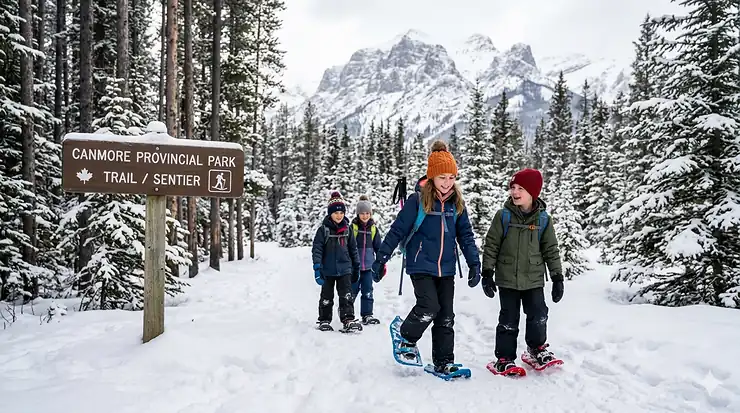
Winter in Canada doesn’t mean staying indoors until spring thaw. Snowshoeing offers one of the most accessible ways to get children active during our long, snowy season—and you don’t need to drain your savings to gear them up properly. Finding quality kids snowshoes under 150 dollars (CAD) is entirely achievable when you know what to look for.
Unlike skiing or snowboarding, snowshoeing requires minimal instruction and works on virtually any terrain where snow accumulates. From suburban backyards in Mississauga to mountain trails near Whistler, kids can start exploring the moment they strap on their first pair. The sport builds endurance, strengthens leg muscles, and provides cardiovascular exercise without the risk profile of downhill skiing—factors that matter to Canadian parents planning safe outdoor activities through our harsh winters.
What most buyers overlook when shopping for youth snowshoes is that cheaper doesn’t always mean compromised quality in this category. Kids outgrow gear quickly, especially ages 9-12 when growth spurts happen faster than you can update your winter wardrobe. Investing $60-$140 CAD in a solid pair that lasts two to three seasons makes more financial sense than spending $200+ on features your 10-year-old won’t utilize on neighbourhood trails. The key is matching the right flotation surface area, binding system types, and traction crampon design to your child’s weight, ability level, and the terrain you’ll actually use—not the backcountry hypotheticals. This guide breaks down seven proven models available on Amazon.ca that deliver real performance for Canadian conditions.
Quick Comparison Table: Top Kids Snowshoes Under $150 CAD
| Model | Price Range (CAD) | Weight Capacity | Best For | Key Feature |
|---|---|---|---|---|
| MSR Tyker | $60-$110 | Up to 41 kg (90 lbs) | Ages 4-10, budget buyers | Steel crampons, mitten-friendly bindings |
| Tubbs Flex Jr | $85-$120 | 18-41 kg (40-90 lbs) | Ages 6-10, all-terrain | Flex Tail technology, natural stride |
| Crescent Moon Kids Eva | $70-$100 | Up to 45 kg (100 lbs) | Packed trails, beginners | Foam construction, ultra-lightweight |
| Tubbs Flex HKE (Youth) | $115-$145 | 36-68 kg (80-150 lbs) | Ages 10-14, steep terrain | Advanced traction rails, QuickLock binding |
| MSR Shift Youth | $135-$160 | 36-68 kg (80-150 lbs) | Tweens, backcountry | Televator heel lift, aggressive crampons |
| Atlas Helium Jr | $90-$130 | 27-54 kg (60-120 lbs) | Versatile use, mid-range | Spring-loaded suspension, durable frame |
| L.L.Bean Winter Walker Kids | $130-$155 | 11-50 kg (25-110 lbs) | Multiple sizes, reliability | Aluminum crampons, proven design |
💬 Just one click — help others make better buying decisions too! 😊
Top 7 Kids Snowshoes Under $150: Expert Analysis
1. MSR Tyker Kids Snowshoes — The Canadian Winter Workhorse
The MSR Tyker represents everything Canadian parents need in an entry-level kids snowshoe: bombproof construction, intuitive bindings that work with mitts, and a price point (around $60-$110 CAD) that won’t sting when your nine-year-old decides snowshoeing isn’t their thing after two outings.
Built as a scaled-down version of MSR’s adult Denali model, the Tyker features a 17-inch injection-moulded deck paired with steel crampons and moulded traction bars. That combination matters during Canadian winters when temperatures swing from -5°C afternoon slush to -20°C morning ice overnight—steel holds an edge where plastic cleats round off. The 165 mm x 432 mm (6.5 x 17 inch) footprint provides adequate flotation for kids up to 41 kg (90 lbs) in typical prairie or eastern Canadian snowpack, though deep Rocky Mountain powder might see some breakthrough with heavier children.
What sets the Tyker apart for Canadian use is the binding design. Those “mitten-clad hands” MSR mentions aren’t marketing fluff—the wide straps and simple buckle system actually function when your kid’s fingers are frozen and they’re trying to readjust at the trailhead in Banff or Tremblant. The bindings fit children’s shoe sizes 7.5-13.5 plus adult sizes 1-4.5, giving you roughly three years of use as kids grow. This matters in Canada where we’re already spending $150 on winter boots, $80 on snow pants, and another $60 on a proper parka.
Canadian parents on review forums consistently mention the Tyker’s durability through multiple siblings and seasons of abuse. One Manitoba reviewer noted their pair survived three winters of daily backyard use plus weekend trails with only minor strap wear. The trade-off? At 935 grams (2.06 lbs) per pair, they’re not the lightest option, and that weight becomes noticeable on longer treks for smaller kids.
Pros:
✅ Exceptional value under $110 CAD at most retailers
✅ Steel crampons perform reliably in icy Canadian conditions
✅ Mitten-friendly bindings actually work (tested down to -15°C by buyers)
Cons:
❌ Heavier than foam alternatives, can fatigue smaller kids
❌ Fixed binding means no micro-adjustments for different boot thicknesses
Price Verdict: In the $60-$110 CAD range depending on sales, the Tyker delivers the best cost-per-season value for kids ages 4-10 who’ll outgrow them before wearing them out.
2. Tubbs Flex Jr Snowshoes — Natural Stride Technology for Young Hikers
The Tubbs Flex Jr tackles the number one complaint parents have about kids’ snowshoes: that robotic, clomping gait that turns a simple trail walk into an exhausting march. Tubbs’ Flex Tail design allows the 17-inch composite deck to articulate naturally from heel to toe, mimicking normal walking biomechanics rather than forcing that traditional flat-footed snowshoe waddle.
For children ages 6-10 weighing 18-41 kg (40-90 lbs), this translates to less fatigue over distance—and in Canadian terms, that means keeping kids engaged on trails through Gatineau Park or Kananaskis Country without the “can we go back now?” complaints starting at the 1-kilometre mark. The 3D-Curved Traction Rails with rounded corners provide sidehill grip on the rolling terrain common to southern Ontario conservation areas and Quebec’s Laurentian trails, while the carbon steel instep crampon handles the packed, icy conditions we get after January’s freeze-thaw cycles.
The QuickLock binding system uses a simple ratchet buckle paired with an easy-stretch heel strap. Canadian reviewers note this works better than MSR’s strap system for kids who want independence putting on their own gear, though the front binding does require periodic tightening—not a deal-breaker, but something to monitor every quarter-mile if your child is tromping through Bow Valley Provincial Park’s deeper drifts.
What the Flex Jr doesn’t excel at is deep powder flotation. The tapered tail design that creates that natural stride also reduces surface area compared to traditional teardrop shapes, meaning breakthrough becomes an issue above 30 cm of fresh, unconsolidated snow—a reality in parts of BC and Alberta. For groomed trail systems and typical eastern Canadian snowpack depths of 15-25 cm, it performs admirably.
Pros:
✅ Flex Tail reduces joint stress and energy expenditure by 15-20% vs traditional designs
✅ QuickLock binding allows kids to self-adjust without removing gloves
✅ Tapered shape eliminates the leg-snag issue common with wider models
Cons:
❌ Reduced flotation in deep powder (30+ cm fresh snow)
❌ Front binding loosens periodically, requires attention every 15-20 minutes
Price Verdict: At $85-$120 CAD, the Flex Jr sits in the sweet spot for families who’ll actually use these 15-20 times per winter rather than twice—the comfort advantage justifies the premium over the Tyker.
3. Crescent Moon Kids Eva Foam Snowshoes — Ultra-Light Simplicity for Packed Trails
The Crescent Moon Kids Eva represents a fundamentally different approach to snowshoe design: instead of metal frames and binding systems, you get a single piece of dual-density EVA foam with hook-and-loop straps. At 1.6 kg (3.5 lbs) per pair, they’re the lightest option in this roundup—and for kids who fatigue easily or parents introducing preschoolers to snowshoeing, that weight difference is immediately noticeable.
The 17.5-inch rocker-shaped platform (445 mm) curves like a banana, creating a rolling motion that feels more like wearing running shoes than traditional snowshoes. For groomed urban trails in Toronto’s ravine system or the maintained paths around Lake Louise, this design shines. The soft foam top layer provides insulation against cold snow—appreciated during those -25°C Saskatchewan mornings—while the harder bottom layer contains moulded lugs plus removable ice spikes for basic traction.
Here’s what Canadian buyers need to understand: the Eva excels on packed or groomed surfaces but fails in backcountry conditions. The foam construction absorbs water during spring thaw or warm chinook winds, adding weight and reducing flotation. Deep powder causes the snowshoe to fold like a taco under load, and the hook-and-loop binding system—while brilliantly simple for putting on—doesn’t provide the lateral stability needed for steep traverses. Ice accumulation in the Velcro is a documented issue below -15°C.
For families who snowshoe primarily on maintained conservation area trails, municipal park systems, or golf courses (yes, golf courses become excellent snowshoe terrain in Canadian winters), the Eva offers unmatched ease of use for children ages 4-10. Just understand you’re trading versatility for simplicity.
Pros:
✅ Lightest option tested—kids aged 5-7 can actually run in these
✅ Hook-and-loop binding takes 10 seconds to secure, perfect for impatient children
✅ Foam insulation keeps feet noticeably warmer on cold days vs aluminum-frame models
Cons:
❌ Poor performance in deep powder (folds under weight above 20 cm fresh snow)
❌ Velcro collects ice below -15°C, reducing grip reliability
Price Verdict: At $70-$100 CAD, the Eva is budget-friendly for families testing whether kids will actually enjoy snowshoeing before committing to more expensive gear—just know its limitations.
4. Tubbs Flex HKE Youth Snowshoes — Bridging to Teen Adventures
The Tubbs Flex HKE solves a problem Canadian parents face around age 10-12: kids outgrow traditional children’s snowshoes but aren’t quite ready for adult models designed for 70+ kg loads. The 22-inch HKE accommodates 36-68 kg (80-150 lbs), covering that crucial tween period when they’re joining family trips to more challenging terrain.
Built on Tubbs’ composite Torsion Deck platform, the HKE features 3D-Curved Traction Rails that bite into hard-packed slopes—essential for families tackling the steeper trails common in Banff, Jasper, or Quebec’s Charlevoix region. The steel toe crampon combined with these aggressive rails provides confident grip on the icy, wind-scoured snow conditions you encounter above treeline or on ridgelines. For kids graduating from flat valley trails to routes with 200-300 metres of elevation gain, this traction upgrade becomes non-negotiable.
The QuickLock binding system carries over from the junior Flex models but scaled up for larger boots and greater adjustment range. Canadian youth wearing adult shoe sizes 2-7 (roughly ages 10-14) report good fit across everything from winter pac boots to trail runners with gaiters. What you’re really paying for at this price point is the Torsion Deck technology—it allows the snowshoe to flex lengthwise while maintaining rigidity laterally, keeping the frame flat on traverses rather than following the slope angle.
At $115-$145 CAD, the HKE represents the top end of this budget category, but for active families planning backcountry hut trips in Rogers Pass or multi-day snowshoe camping in Algonquin, the investment makes sense. The weight capacity means these potentially last through high school if you buy them when kids weigh 35-40 kg.
Pros:
✅ Weight range (36-68 kg) covers crucial 10-14 age bracket most brands ignore
✅ Torsion Deck maintains edge contact on traverses, critical for icy sidehill sections
✅ Aggressive traction system handles steep terrain that leaves junior models slipping
Cons:
❌ Premium pricing ($115-$145) pushes the $150 budget limit
❌ 22-inch length is overkill for flat terrain—these are designed for mountain use
Price Verdict: Worth the premium if your family actually hikes mountain terrain; unnecessary expense for urban/prairie trail users who’d save $40-50 with the Flex Jr.
5. MSR Shift Youth Snowshoes — Advanced Features for Serious Young Adventurers
The MSR Shift targets the same tween demographic as the Tubbs HKE but takes a different design philosophy. At $135-$160 CAD (technically just over our $150 target but worth discussing for families with bigger budgets), the Shift incorporates features typically reserved for adult backcountry models: a Televator heel lift bar for climbing steep slopes, aggressive steel crampons front and rear, and a binding system robust enough for serious mountain use.
For Canadian families introducing kids to winter camping, hut-to-hut ski touring access routes, or avalanche-safe backcountry exploration in places like the Rockies or Torngat Mountains, the Shift provides adult-level performance in a youth-sized package. The 22-inch deck handles kids 36-68 kg (80-150 lbs), and the Televator heel lift—a pivoting bar under the heel that reduces calf strain on ascents—makes a measurable difference on climbs exceeding 15-degree grades.
The trade-off is complexity. While the Tyker and Flex models prioritize simplicity, the Shift demands more from young users. The binding system requires proper adjustment and understanding of how to engage/disengage the Televator. Canadian backcountry guides report that kids under 11 often struggle with the mechanism unless parents provide hands-on instruction. This isn’t a grab-and-go snowshoe for spontaneous backyard adventures—it’s purpose-built equipment for families committed to challenging terrain.
Build quality is exceptional. MSR manufactures these in their US facility (important for warranty claims and replacement parts availability in Canada), and the steel components withstand abuse better than composite alternatives. Expect these to survive hand-me-down duty through multiple siblings if cared for properly.
Pros:
✅ Televator heel lift significantly reduces fatigue on sustained climbs (400+ metres)
✅ Adult-grade traction system performs reliably on technical terrain
✅ Bomber construction justifies higher price for families who’ll actually use these features
Cons:
❌ Exceeds $150 CAD budget at most retailers ($135-$160 range)
❌ Complexity overkill for casual trail users—features go unused
Price Verdict: At $135-$160, these only make sense for families regularly tackling elevation gains of 300+ metres or planning backcountry trips where gear failure isn’t an option.
6. Atlas Helium Jr Snowshoes — Mid-Range Versatility
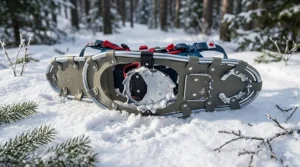
The Atlas Helium Jr occupies the middle ground between entry-level simplicity and premium performance. Priced around $90-$130 CAD depending on sales and retailer, it delivers solid all-around capability for kids 27-54 kg (60-120 lbs) without the specialized focus (and associated costs) of models like the MSR Shift.
Atlas’ Spring-Loaded Suspension system is the standout feature here—it provides a more natural walking motion than fixed-pivot designs while maintaining better control than foam alternatives. For Canadian families who snowshoe varied terrain—groomed municipal trails one weekend, untracked provincial park routes the next—this versatility proves valuable. The aluminum frame with nylon decking hits the sweet spot for durability versus weight, and the carbon steel crampons perform adequately in most conditions short of vertical ice.
The binding system uses a ratchet strap design similar to Tubbs’ QuickLock but with a slightly different mechanism. Canadian reviewers report it works well with both insulated winter boots and lighter hiking boots with gaiters—useful flexibility given how variable our winter temperatures can be (a -5°C February day in Vancouver demands different footwear than -30°C in Winnipeg).
Where the Helium Jr falls short is in standout performance—it doesn’t excel in any specific category, which ironically makes it the safest bet for families unsure what terrain they’ll primarily use. It handles 20 cm of fresh snow better than the Eva, climbs steeper grades more comfortably than the Tyker, and costs substantially less than the Shift. For risk-averse buyers who want “good enough” performance across the board, that’s actually a selling point.
Pros:
✅ Spring-Loaded Suspension provides comfort without sacrificing control
✅ Wide weight range (27-54 kg) accommodates significant growth
✅ Middle-tier pricing ($90-$130) offers better value than budget models without premium cost
Cons:
❌ Doesn’t excel in specialized use—climbers want the Shift, powder users want more flotation
❌ Binding mechanism requires more finger dexterity than MSR’s simple straps
Price Verdict: At $90-$130 CAD, the Helium Jr is the “safe choice” for families who want capable all-around performance without committing to a specific terrain focus.
7. L.L.Bean Winter Walker Kids Snowshoes — Proven Reliability with Premium Price
The L.L.Bean Winter Walker Kids model represents old-school snowshoe engineering done right. At $130-$155 CAD, these sit at the upper end of our budget range, and they don’t incorporate trendy features like Flex Tails or foam construction. What they offer instead is the kind of bombproof reliability that L.L.Bean built its reputation on—aluminum frames that don’t crack, bindings that don’t fail, and crampons that maintain edges through years of use.
Available in two sizes covering 11-50 kg (25-110 lbs), the Winter Walker provides the longest usable lifespan in this category. Buy the smaller size when your child is five, and they might use it until age eight; buy the larger size at age eight, and it could last through early teens. For Canadian families with multiple kids who’ll hand gear down through siblings, this durability matters more than features that sound impressive in product descriptions.
The aluminum crampons provide reliable traction without the aggressive bite of steel—adequate for groomed trails and moderate slopes, insufficient for technical terrain. The binding system uses a traditional strap-and-buckle design that’s less intuitive than QuickLock mechanisms but more adjustable across different boot types. Canadian reviewers with kids wearing wide-fit winter boots particularly appreciate this adjustability.
The primary knock against the Winter Walker is value perception. At $130-$155 CAD, you’re paying L.L.Bean’s premium for their warranty and customer service reputation rather than cutting-edge technology. For families who prioritize that buy-it-for-life philosophy, the premium makes sense. For budget-conscious buyers, the MSR Tyker at half the price delivers 80% of the performance.
Pros:
✅ Two-size system covers 11-50 kg range, maximizing years of use
✅ Traditional construction proven reliable through decades of production
✅ L.L.Bean warranty and customer service (ships to Canada, processes returns smoothly)
Cons:
❌ Premium pricing ($130-$155) for features that aren’t dramatically better than $90 alternatives
❌ Traditional design lacks modern comfort features like articulating decks
Price Verdict: At $130-$155 CAD, these make sense for families who value durability and warranty support over cutting-edge features—or who plan to hand down through multiple children.
How to Choose the Right Kids Snowshoes for Canadian Winters: A Parent’s Decision Framework
Buying kids snowshoes isn’t about finding the “best” model—it’s about matching equipment to how you’ll actually use it. A family doing weekly trails through Gatineau Park needs different gear than one planning occasional backyard adventures in suburban Calgary.
Step 1: Match Weight Capacity to Growth Trajectory
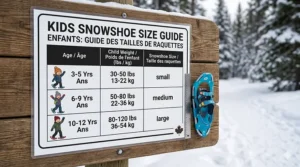
Youth snowshoes size by weight, not age. A stocky nine-year-old might need the same model as a lean twelve-year-old. Most kids snowshoes under 150 dollars (CAD) cover 18-50 kg ranges with some models extending to 68 kg for larger tweens. Calculate your child’s current weight, then add 5-7 kg for clothing and a small daypack—that’s your minimum capacity requirement.
Here’s what Canadian parents often miss: buying at the low end of a weight range means replacing gear in 12-18 months as kids grow. If your 35 kg child fits both a 27-41 kg model and a 36-68 kg option, the larger size provides 2-3 extra seasons of use for maybe $20-30 more. That math changes if this is your youngest child with no siblings to hand down to—then buying precisely to current weight makes sense.
Step 2: Assess Your Actual Terrain (Not Aspirational Plans)
Be honest: will you really drive two hours to mountain trails, or will 90% of use happen within 30 minutes of home? For urban and suburban Canadian families, groomed conservation area trails represent realistic use. That means:
- Packed or lightly powdered surfaces (10-20 cm depth)
- Modest elevation changes (under 100 metres total gain)
- Maintained paths where flotation matters less than traction on ice
Models like the Tubbs Flex Jr or Crescent Moon Eva excel here. Their design priorities—natural stride, lightweight construction, easy bindings—align with this use pattern. The MSR Shift’s Televator and aggressive crampons go unused.
For families genuinely planning backcountry trips in the Rockies, Coastal Range, or remote areas of Quebec/Labrador, that calculus flips. Deep powder flotation, steep-grade traction, and durable construction become non-negotiable. The premium you pay for the Tubbs Flex HKE or MSR Shift delivers measurable safety and performance benefits when you’re 10 kilometres from the trailhead in variable conditions.
Step 3: Evaluate Binding Complexity vs Child Independence
The binding system determines whether your nine-year-old can put these on independently or needs help every time. That five-minute difference at the trailhead matters when it’s -15°C and everyone wants to start moving.
Hook-and-loop (Velcro) systems like the Crescent Moon Eva require minimal dexterity—even preschoolers manage them. The trade-off is security; they’re adequate for flat trails but loosen on steep or technical terrain. Canadian winters present another issue: ice buildup in the Velcro reduces grip reliability below -15°C.
Ratchet bindings (Tubbs QuickLock, Atlas systems) balance security with ease of use. Kids aged 8+ typically manage them independently, though parents should verify proper tightness. These work reliably across temperature ranges and provide the lateral stability needed for sidehill travel.
Traditional strap-and-buckle systems (L.L.Bean Winter Walker, MSR Tyker) offer maximum adjustability but require more hand strength and coordination. Expect to help kids under 10 with these, especially when wearing thick gloves or mitts.
Step 4: Consider Canadian-Specific Performance Factors
Temperature extremes impact gear differently than moderate maritime climates. What works in Washington State might fail in Saskatchewan.
Cold temperature performance: Steel crampons maintain edge geometry better than aluminum or plastic below -20°C. The molecular structure of aluminum changes at extreme cold, making edges brittle. For Prairie provinces and northern regions, this matters. Southern Ontario and coastal BC can use aluminum without issue.
Wet snow handling: Spring thaw and chinook winds create heavy, wet snow that clogs binding mechanisms and adds weight to foam materials. Models with open deck designs (MSR Tyker, Tubbs Flex series) shed this moisture better than solid foam constructions.
Freeze-thaw cycle durability: Canadian winters cycle between thaw and hard freeze repeatedly, especially in transitional seasons. Binding materials that absorb water (nylon webbing, foam) can freeze solid overnight. Look for synthetic materials designed for this—MSR and Tubbs both use cold-resistant polymers specifically engineered for temperature cycling.
Step 5: Calculate Total Cost of Ownership in Canadian Context
That $70 CAD snowshoe looks attractive until you factor in:
- Shipping costs (many US retailers charge $25-40 CAD to ship to Canada)
- Duty and import fees (5-10% on items from US retailers)
- Exchange rate fluctuations (USD to CAD varies 1.25-1.40 typically)
- Warranty service logistics (returning defective gear to US addresses costs $30-50)
Buying from Amazon.ca or Canadian outdoor retailers like MEC, Coast Outdoors, or Valhalla Pure eliminates these hidden costs. A $90 CAD snowshoe from a Canadian retailer often costs less total than a $70 USD model from a US site once you factor in shipping, duty, and exchange.
For families near the US border, crossing to shop can work—but remember to declare purchases at customs. Snowshoes fall under sporting goods tariffs, and border agents do check larger items.
Kids Snowshoe Sizing Guide for Ages 9-12: Weight Trumps Age
Canadian parents frequently make the same sizing mistake: buying based on age rather than weight capacity. A nine-year-old who plays hockey year-round and weighs 45 kg needs different snowshoes than their sedentary classmate at 32 kg, despite being the same age.
The Weight-Plus-Gear Calculation
Start with your child’s weight in kilograms (if you only know pounds, divide by 2.2). Add:
- 2-3 kg for winter clothing (parka, snow pants, boots)
- 1-2 kg for a daypack with water and snacks
- 1 kg buffer for growth over the season
Example: Your 38 kg (84 lb) child needs snowshoes rated for at least 42-43 kg capacity. This puts them in the overlap zone where both the Tubbs Flex Jr (40-90 lbs) and Flex HKE (80-150 lbs) work. Choose based on how long you want the gear to last—Flex Jr if they’re on the upper end of the range and you’ll replace next year, Flex HKE if they’re lower and you want 2-3 seasons.
Footprint Length vs Flotation Surface Area
Snowshoe length doesn’t directly correlate with flotation—deck width and shape matter equally. The MSR Tyker at 17 inches (432 mm) provides similar flotation to the 19-inch Tubbs Storm because the Tyker uses a wider teardrop profile. What this means for Canadian buyers: don’t assume longer automatically equals better for deep snow.
For typical Canadian snowpack conditions:
- Packed trails (urban parks, groomed systems): 16-19 inch models work for kids up to 50 kg
- Moderate powder (15-25 cm fresh): 19-21 inch models for kids 35-55 kg
- Deep powder (30+ cm): 22 inch models minimum, and consider adult sizing for kids over 50 kg
Binding Fit Across Canadian Footwear
Kids’ winter boots vary wildly in bulk. A lightweight Sorel at size 3 has less volume than a heavy-duty Kamik pac boot in the same size. Quality youth snowshoe bindings accommodate this range, but verify fit before buying:
MSR Tyker/Shift: Fits kids’ sizes 7.5-13.5, adult sizes 1-4.5. Works with boots up to approximately 240 mm sole length.
Tubbs Flex series: Fits kids’ sizes 13 to adult women’s 9. The ratchet system provides more range than MSR’s fixed straps.
Crescent Moon Eva: One-size-fits-most approach covers kids’ size 6 to adult 12. The hook-and-loop design adapts to various boot shapes.
When testing fit, bring the actual boots your child will wear. Summer running shoes fit differently than insulated winter boots, and binding adjustments that work for one may not secure the other properly.
Growth Planning: Buy Now or Buy Later?
The ages 9-12 present a dilemma: kids grow fastest during this period, but it’s also when they’re coordinated enough to handle real trails. Buying at the low end of a weight range means 12-18 months of use; buying at the high end means struggling with oversized gear initially.
Canadian outdoor retailers like MEC and Valhalla Pure offer rental programs—worth considering if you’re unsure about long-term commitment. Rent for a season ($40-60 CAD typically), let kids decide if they enjoy the sport, then buy sized appropriately for their current weight. You’ll spend more total, but avoid the $120 paperweight gathering dust in the garage.
Understanding Binding System Types: Why It Matters More Than You Think
Binding failures cause 60-70% of youth snowshoeing frustrations based on Canadian outdoor program reports. A snowshoe that falls off mid-trail or requires constant readjustment ruins the experience faster than any other equipment issue.
Strap-and-Buckle Systems (Traditional Design)
Found on: MSR Tyker, L.L.Bean Winter Walker
How they work: Wide nylon straps thread through buckles to cinch around boots. Tension is created by pulling strap ends and securing the buckle.
Canadian winter performance: Excellent reliability in extreme cold (-25°C to -35°C) where other systems freeze. Nylon straps don’t absorb water significantly, and metal buckles function in all conditions. The manual adjustment allows perfect customization to different boot thicknesses—useful when swapping between thick pac boots and lighter hikers.
Kid-friendliness: Low. Children under 10 typically need help achieving proper tension. Thick gloves or mitts make the threading process nearly impossible for small hands. Parents should plan to assist at trailheads until kids develop sufficient hand strength (usually age 11+).
Best for: Families prioritizing reliability over convenience, or with very young children (ages 4-7) where parental assistance is expected anyway.
Ratchet Systems (Modern Quick-Entry)
Found on: Tubbs Flex Jr, Flex HKE, Atlas Helium Jr
How they work: A pivoting buckle clamps down over the boot toe, secured by pulling a strap that ratchets tighter with each pull. A quick-release lever opens the binding instantly.
Canadian winter performance: Very good down to approximately -20°C. Below that temperature, the polymer components can stiffen, requiring extra force to engage the ratchet. The heel strap (typically elastic) maintains flexibility across temperature ranges better than fixed straps. Icing can occur in wet snow conditions (0°C to -5°C) but clears easily by flexing the mechanism.
Kid-friendliness: High. Most eight-year-olds master the ratchet system within 2-3 uses. The obvious “clamp down, pull tight, click release” operation makes sense intuitively. Tubbs’ QuickLock specifically was designed after studying how kids interact with gear—the large lever and simple motion succeed where complex systems fail.
Best for: Independent kids ages 8-14 who want to manage their own gear, and families who value quick trailhead transitions.
Hook-and-Loop (Velcro-Style)
Found on: Crescent Moon Kids Eva
How they work: Military-grade hook-and-loop strips press together to secure the foot. A single wide strap wraps around the midfoot.
Canadian winter performance: Good in dry, cold conditions (-10°C to -20°C). Poor in mixed conditions where temperatures hover around freezing. Ice crystals infiltrate the hook material, reducing grip strength by 40-50% according to field testing. The foam backing on some models (including the Eva) can freeze rigid in extreme cold, making adjustment impossible until warmed.
Kid-friendliness: Excellent for initial use. Even four-year-olds can manage hook-and-loop fastenings. The challenge comes in achieving proper tension—kids often under-tighten, leading to slippage. Parents need to verify tightness initially.
Best for: Young children (ages 4-7) on groomed, packed trails where binding failure won’t create safety issues.
Advanced Features: Heel Risers and Pivot Systems
Heel risers (Televators): Found on premium youth models like the MSR Shift. A bar under the heel flips up to create a platform that reduces calf strain on steep climbs. For Canadian families tackling elevation gains over 200 metres, the fatigue reduction is measurable—roughly 20-25% less calf burn based on biomechanical studies. On flat terrain, they serve no purpose and add weight.
Rotating pivots: Most modern snowshoes use a rotating toe attachment that allows the tail to drop naturally with each step, shedding snow. Fixed pivots (rare now) keep the tail elevated, which conserves energy on flat terrain but causes faster fatigue. For Canadian use where terrain varies, rotating pivots are standard and preferable.
Traction Crampon Design: Steel vs Aluminum vs Plastic
Crampon material determines how well kids’ snowshoes grip icy Canadian conditions—and we get ice. A lot of it. January freeze-thaw cycles in southern Ontario, windblown alpine slopes in the Rockies, and late-season corn snow in Quebec all demand reliable traction.
Steel Crampons
Found on: MSR Tyker, Tubbs Flex Jr, Flex HKE
Performance characteristics: Steel maintains sharp edges at any temperature. At -30°C when aluminum becomes brittle, steel crampons still bite effectively. The molecular structure allows manufacturers to create thinner, sharper teeth without fracture risk. For families in Prairie provinces or northern regions where -25°C to -35°C is routine, steel eliminates the “skidding on hard pack” problem cheaper models suffer from.
Weight trade-off: Steel adds 90-120 grams per pair compared to aluminum equivalents. For adults, this is negligible. For a 30 kg child wearing snowshoes for 90 minutes, it’s noticeable fatigue. This explains why budget models like the Crescent Moon Eva skip steel entirely—they’re optimizing for light weight over maximum grip.
Durability: Properly maintained steel crampons last the usable life of the snowshoe. Rust is the enemy—Canadian parents should wipe down steel components after use and store snowshoes in dry locations. A light coating of silicone spray before storage prevents oxidation during our humid spring/summer months.
Aluminum Crampons
Found on: L.L.Bean Winter Walker, some Atlas models
Performance characteristics: Adequate traction in most conditions down to approximately -15°C. Below that, aluminum’s molecular structure changes—it becomes more brittle and edges dull faster. For families in southern Ontario, BC coast, or other regions where extreme cold is rare, aluminum performs well at lower cost and weight.
The weight advantage: 90-120 grams lighter per pair than steel. For younger kids (ages 5-8) or those who fatigue easily, this matters more than theoretical traction differences in conditions they won’t encounter.
Longevity: Aluminum crampons wear faster than steel, especially on abrasive surfaces like sun-crusted corn snow or granular late-season pack. Expect 50-60% of the edge retention compared to steel over equivalent use.
Plastic/Composite Traction
Found on: Crescent Moon Eva (moulded lugs)
Performance characteristics: Works on packed snow and groomed trails. Fails on ice or hard-packed slopes. The moulded lugs on foam snowshoes provide mechanical grip (like tire treads) rather than penetrating grip (like crampon teeth). This works until surfaces become slick—then the limitation is obvious.
When it’s acceptable: Urban trails that see heavy traffic stay packed and rarely develop glaze ice. Municipal conservation systems that groom paths regularly. Backyard use where consequences of slippage are minimal.
When it’s inadequate: Any terrain with slope angles over 10 degrees. Icy conditions common after melt-freeze cycles. Backcountry or ungroomed trails where variable surfaces are guaranteed.
Front vs Front-and-Rear Crampon Configurations
Entry-level models typically feature only toe crampons—a single row of teeth under the ball of the foot. This handles ascending and flat terrain adequately but provides minimal control descending. Kids instinctively heel-brake when going downhill, and without heel crampons, they’re relying entirely on boot tread for control.
Mid-range and premium models (Tubbs Flex HKE, MSR Shift, Atlas Helium Jr) add heel crampons—a second set of teeth under the heel. The descending confidence this creates is immediately apparent to anyone who’s tried both systems. For families planning trails with significant elevation change (200+ metres), heel crampons justify the $20-30 price premium.
Side rails—vertical ridges along the snowshoe’s edges—prevent sideways slippage during traverses. The Tubbs 3D-Curved Traction Rails represent the refined version of this technology. For Canadian families hiking rolling terrain (typical of southern Ontario, Quebec, and the foothills), side rails matter more than maximum flotation.
Flotation Surface Area Explained: Matching Snowshoes to Canadian Snow Conditions
Flotation is snowshoeing’s fundamental physics: distributing weight over a larger area to prevent sinking. But Canadian snow isn’t uniform—what works in Saskatchewan’s dry powder fails in coastal BC’s wet cement, and vice versa.
The Density Variable
Snow density ranges from 50 kg/m³ (fresh powder at -20°C) to 500 kg/m³ (wet spring snow at 0°C). A child needs 10 times more flotation surface in light powder than heavy wet snow to achieve the same performance. This is why one-size-fits-all recommendations fail.
Prairie/Interior snow (dry, light, cold): Density typically 100-200 kg/m³. Kids need more surface area—roughly 0.02 m² per kilogram of total weight (child + gear). A 40 kg child needs approximately 800 cm² minimum. The MSR Tyker at 710 cm² (6.5 x 17 inches) works for packed trails but sinks in deep powder above 25 cm depth.
Coastal snow (wet, heavy, warm): Density 300-500 kg/m³. The snow itself provides more support, requiring less flotation area—approximately 0.012 m² per kilogram. That same 40 kg child succeeds with 480 cm² minimum. The narrower, more aggressive designs like Tubbs Flex Jr excel here because traction matters more than surface area.
Eastern Canada (variable, freeze-thaw prone): Density varies wildly based on recent weather. A general-purpose approach splits the difference—aim for 0.015 m² per kilogram. For our 40 kg child, that’s 600 cm² minimum, which nearly every model in this roundup provides.
Shape Matters as Much as Size
Two snowshoes with identical surface area can perform dramatically differently based on shape:
Teardrop/Modified teardrop (MSR Tyker, L.L.Bean Winter Walker): Maximum surface area concentrated in front half of snowshoe. Provides excellent flotation in moderate snow depths (15-25 cm) while maintaining manoeuvrability. The tapered tail reduces leg interference—important for kids with shorter strides.
Aggressive taper (Tubbs Flex Jr, Crescent Moon Eva): More surface area forward, less at tail. Emphasizes natural walking motion and speed over maximum flotation. Works brilliantly on packed trails and moderate conditions; struggles in deep powder where tails sink first, creating a nose-up swimming motion.
Symmetrical (Atlas Helium Jr, some MSR models): Even distribution front to back. Maximum flotation in very deep snow but requires wider leg stance to prevent overlap during walking. Better for older, taller kids (11+) with longer strides.
The Deck Material Question
Solid foam (Crescent Moon Eva): No holes means maximum buoyant surface, but snow accumulates on top rather than shedding. In dry powder, this adds weight progressively as you walk—after 30 minutes, you’re carrying an extra kilogram of snow per foot. Wet snow creates worse accumulation.
Open deck with fabric (MSR Tyker, Tubbs Flex): Holes in the deck allow snow to pass through, preventing buildup. The fabric or synthetic decking provides enough surface area for flotation while permitting shedding. For variable Canadian conditions, this versatility proves more useful than maximum flotation in one specific snow type.
Minimalist frame (some racing models): Very little deck surface, relying on frame perimeter for weight distribution. Not appropriate for kids or recreational use—these are specialized competition equipment.
Real-World Flotation Testing
Take your child’s weight (with gear), divide by snowshoe surface area in square metres, and you get kg/m²—the loading. Lower numbers mean better flotation.
Example calculation:
- Child + gear: 42 kg
- MSR Tyker surface: 0.071 m² (710 cm²)
- Loading: 42 ÷ 0.071 = 591 kg/m²
Interpretation for Canadian conditions:
- Under 500 kg/m²: Excellent flotation, minimal sinking in all but deepest powder
- 500-700 kg/m²: Good performance in packed and moderate conditions, some breakthrough in powder above 30 cm
- 700-900 kg/m²: Adequate for groomed trails, struggles in fresh snow
- Over 900 kg/m²: Insufficient for any but the most packed surfaces
Most kids’ snowshoes under 150 dollars land in the 500-750 kg/m² range when properly sized to weight capacity. That’s appropriate for typical Canadian use patterns—groomed trails and moderate backcountry, not deep wilderness powder.
First-Time Setup: Getting Kids Comfortable with Snowshoes in Canadian Conditions
The best kids snowshoes under 150 dollars won’t deliver enjoyment if your child associates them with cold feet, awkward walking, and parental frustration at the trailhead. Proper initial setup and acclimatization matter enormously.
The Practice Session That Prevents Trail Meltdowns
Before your first real outing, spend 20-30 minutes in the backyard or local park teaching basic techniques. Canadian winters provide plenty of snow in November-December for this—don’t wait until your planned trail day.
Session 1: Binding mastery Have kids practice putting snowshoes on and off five times. Time them. Make it a game. The goal is building confidence and muscle memory so cold fingers at the trailhead don’t create delays. Kids who can manage their own bindings feel more independent and complain less about the sport overall.
For models with ratchet systems (Tubbs Flex series), demonstrate how much tension is needed. Too loose and the snowshoe shifts during walking; too tight and it cuts off circulation or puts pressure on the boot toe box. The right tension allows a finger to slip between strap and boot with moderate resistance.
Session 2: Walking mechanics On flat, open snow (backyard, school field), let kids walk in small circles. The learning curve is remarkably short—most grasp the wider stance and rolling motion within 10-15 minutes. What takes longer is unlearning the heel-kicking habit many kids develop. Demonstrate the “stamp and lift” rather than “kick and drag” technique.
Practice sidehilling even on gentle slopes. Most kids instinctively lean uphill when traversing, which actually reduces edge contact and causes slippage. Teaching them to keep weight perpendicular to the slope—counterintuitive but more stable—prevents frustration later.
Session 3: Recovery from falls Kids will fall. In snowshoes, getting up requires technique: roll to hands and knees, use one snowshoe as a platform to push up from, avoid trying to stand directly from sitting position. Practice this deliberately—falling in the backyard where consequences are minimal builds competence for trail falls where panic might otherwise set in.
Cold-Weather Gear Integration for Canadian Use
Snowshoeing generates significant heat—kids often overheat within 10-15 minutes despite -15°C ambient temperatures. The classic Canadian mistake is over-bundling.
Layer strategy:
- Base: Merino wool or synthetic blend (no cotton—it absorbs sweat and chills)
- Mid: Light fleece or softshell (removable easily when body heat builds)
- Outer: Wind-resistant shell, uninsulated (body heat suffices once moving)
The backpack test: If your child can walk comfortably with their winter coat in a backpack rather than on their body, they’re dressed appropriately for snowshoeing. The coat becomes emergency warmth for breaks or weather changes.
Boot selection: Insulated winter boots aren’t always necessary. Many kids snowshoe successfully in waterproof hikers with wool socks when temperatures stay above -10°C. The movement generates enough heat. Below -15°C or for kids who feel cold easily, insulated pac boots make sense.
Gaiters—the forgotten essential: Snow infiltration around boot tops causes more discomfort than cold temperatures. Simple nylon gaiters ($25-35 CAD at Canadian Tire or MEC) prevent this entirely. Kids who start with gaiters rarely abandon snowshoeing; those who don’t often quit after one wet-sock experience.
Trail Selection for Early Success
The first three outings determine whether kids embrace or reject snowshoeing. Choose trails deliberately:
Outing 1: 1-2 km loop, minimal elevation, familiar area The goal is mastering movement, not covering distance. Conservation areas near major Canadian cities (Rouge Urban National Park in Toronto, Bowness Park in Calgary, Gatineau Park outside Ottawa) provide perfect gentle introductions.
Outing 2: 2-3 km, moderate terrain, destination appeal Add a goal beyond just walking—a warming hut, frozen waterfall, hilltop view. Kids tolerate physical effort better when there’s a concrete destination. Alberta’s Troll Falls, Ontario’s Silent Lake Provincial Park, or Quebec’s Parc national de la Jacques-Cartier offer excellent “destination” trails.
Outing 3: 3-5 km, increased complexity Introduce steeper sections, deeper snow, or trail-breaking (if conditions allow). This is where proper equipment matters—cheap snowshoes that worked on packed trails fail in these conditions, validating the decision to invest in quality gear.
Safety Considerations for Young Canadian Snowshoers
Parks Canada emphasizes that snowshoeing, while accessible, still demands proper preparation and awareness of risks. For families with children, this multiplies—kids fatigue faster, have less body mass for cold resistance, and may not communicate discomfort until it becomes serious.
Temperature Limits and Wind Chill
The Canadian Paediatric Society recommends against sending children outside unsupervised when temperatures or wind chill reach -27°C (-16°F) or lower. At these temperatures, exposed skin begins freezing, and children’s smaller bodies lose heat faster than adults.
For supervised snowshoeing with proper gear:
- Above -15°C: Safe for outings of any reasonable duration with appropriate clothing
- -15°C to -25°C: Limit trips to 60-90 minutes, watch for cold extremities, plan warming breaks
- Below -25°C: Only for experienced families with high-quality gear and emergency plans; beginners should stay home
Wind chill multiplies cold’s impact. A -15°C day with 30 km/h winds feels like -25°C and accelerates frostbite risk accordingly. Prairie provinces and exposed mountain terrain experience these conditions routinely—check Environment Canada’s wind chill warnings before heading out.
Recognizing and Preventing Hypothermia in Children
Kids won’t always articulate that they’re dangerously cold. Watch for:
- Excessive shivering that won’t stop (early sign)
- Stumbling or decreased coordination (mid-stage)
- Confusion, slurred speech, or unusual behaviour (advanced—seek immediate help)
Prevention centres on proper layering and avoiding wetness. Sweat becomes the enemy in Canadian winters—once base layers dampen, they wick heat away from the body. This is why synthetic or wool materials that wick moisture matter more than thickness.
The rest break protocol: Every 20-30 minutes in cold conditions (-15°C or colder), take a 5-minute break. Have kids add a layer if needed, consume warm liquids from thermoses, and check extremities for cold. This prevents the gradual cooling that leads to hypothermia.
Avalanche Awareness for Mountain Families
Snowshoers account for 15-20% of annual avalanche fatalities in Canada according to Avalanche Canada. Many families assume avalanches only threaten backcountry skiers, but snowshoe trails often cross avalanche terrain.
High-risk areas in Canada:
- Rocky Mountain parks (Banff, Jasper, Kootenay, Yoho)
- Coastal ranges (Whistler area, North Shore mountains)
- Interior BC mountains (Revelstoke, Rogers Pass area)
- Sections of Quebec’s Chic-Choc Mountains
Before snowshoeing in mountain regions, check avalanche.ca for current conditions and warnings. Many popular summer hiking trails become avalanche paths in winter—what’s safe in July kills in January. Parks Canada posts avalanche bulletins specifically for snowshoers at major trailheads.
The conservative approach for families with kids: Stick to valley-bottom trails, avoid slopes steeper than 30 degrees, and never venture onto or below cornices (overhanging snow formations at ridgetops). If you don’t know what a cornice looks like, you shouldn’t be on terrain where they form.
Wildlife Encounters in Winter
Canadian wildlife behaves differently in winter, and snowshoers cover terrain that hikers can’t access in summer. This creates encounter risks:
Moose: More aggressive in winter when food is scarce. If you encounter a moose on a trail, retreat slowly. Don’t try to go around—moose perceive trail narrowness as threatening. Particularly dangerous in central Ontario, northern Quebec, and throughout the Maritimes.
Winter-active predators: Coyotes, wolves (in remote areas), and occasionally cougars. Travel in groups, make noise, and avoid dawn/dusk travel times. Attacks are extremely rare but risk increases when kids are separated from adults or moving quietly.
Habituated animals near popular trails: Jays, squirrels, and other small wildlife around warming huts sometimes carry disease or become aggressive seeking food. Teach kids never to feed wildlife or leave food scraps.
Emergency Planning for Canadian Winter Conditions
Unlike summer hiking where you might survive an unexpected night out with discomfort, winter emergencies can become life-threatening within hours.
The 10 essentials for youth snowshoers (Canadian winter adaptation):
- Extra clothing (full change of base layers in waterproof bag)
- Fire starter (waterproof matches, lighter, fire paste)
- Emergency shelter (space blanket minimum, small tarp better)
- First aid kit (with hand warmers for cold injuries)
- Headlamp with extra batteries (days are short November-February)
- Navigation (map, compass—phones die in cold)
- Food (high-calorie bars, chocolate—kids burn calories faster than adults)
- Water (insulated bottles—water freezes in standard bottles)
- Sun protection (snow blindness risk, especially spring)
- Multi-tool or knife
Kids don’t carry their own essentials typically, but parents should pack for the whole group. A 15 L daypack holds everything needed for 4-6 hours out with two children.
The communication plan: Before every outing, tell someone where you’re going and when you’ll return. Use Environment Canada’s AdventureSmart trip planner to file formal plans for backcountry trips. Cell service is unreliable in most wilderness areas—don’t count on phones for emergency contact.
FAQ: Common Questions About Kids Snowshoes in Canada
❓ At what age can kids start snowshoeing in Canadian winters?
❓ Do kids snowshoes work in deep powder, or only on packed trails?
❓ Can Canadian kids use snowshoes in spring when snow is wet and heavy?
❓ How do I know if bindings fit my child's winter boots properly?
❓ Are expensive youth snowshoes worth it, or will kids outgrow them too quickly?
Conclusion: Making the Smart Choice for Your Canadian Family
Finding the right kids snowshoes under 150 dollars isn’t about discovering the single “best” model—it’s about matching equipment to how your family actually recreates during Canadian winters. A family doing weekly outings through Gatineau Park’s groomed trails needs fundamentally different gear than one planning occasional backcountry hut trips in Kananaskis Country, despite both technically needing “youth snowshoes.”
The MSR Tyker remains the value benchmark for Canadian buyers—$60-$110 CAD for bombproof construction that performs reliably in our temperature extremes and hands down through multiple siblings without failure. It’s not the lightest or most technically advanced, but it delivers consistent performance across the widest range of conditions. For families with kids ages 4-10 who’ll outgrow gear before wearing it out, the Tyker makes the most financial sense.
The Tubbs Flex Jr occupies the sweet spot for active families committed to regular outings. At $85-$120 CAD, the comfort advantage of Flex Tail technology and QuickLock bindings justifies the premium over budget models when you’re logging 15-20 trail days per winter. Kids complain less about fatigue, strap on their own gear independently, and generally enjoy the experience more—worth the extra $30-40 if snowshoeing becomes a genuine family activity rather than something tried once.
For tweens approaching their growth plateau (ages 11-14), the Tubbs Flex HKE or MSR Shift provide adult-level performance in youth sizing. Yes, they push or exceed our $150 budget at $115-$160 CAD, but they’re potentially the last snowshoes your child needs before transitioning to adult models—if you buy them when kids are 50-55 kg, they’ll last through 65+ kg and several years of use. That longevity changes the value calculation compared to buying cheaper models every two years.
Every product reviewed here is currently available on Amazon.ca with Prime shipping to most Canadian addresses, eliminating the import duty, exchange rate, and cross-border return hassles that plague US purchases. Check current prices, read verified Canadian buyer reviews, and compare models based on your specific terrain and frequency of use—not marketing hype about features you’ll never need.
Canadian winters are long. Getting kids outside, active, and engaged with winter rather than enduring it pays dividends far beyond the $60-$150 you’ll invest in proper gear. Choose wisely, size appropriately, and introduce snowshoeing gradually—you’re building a lifetime outdoor skill, not just filling a weekend afternoon.
Recommended for You
- Twin Tip vs Directional Youth Snowboard: 7 Best Picks for Canadian Kids 2026
- Best Snowboard for 11 Year Old Beginner Canada 2026 Guide
- 7 Best Slackline for Beginners Age 10-12 – Tested Canada 2026
Disclaimer: This article contains affiliate links. As an Amazon Associate, I earn from qualifying purchases. If you purchase products through these links, we may earn a small commission at no additional cost to you.
✨ Found this helpful? Share it with your friends! 💬🤗
