
In This Article
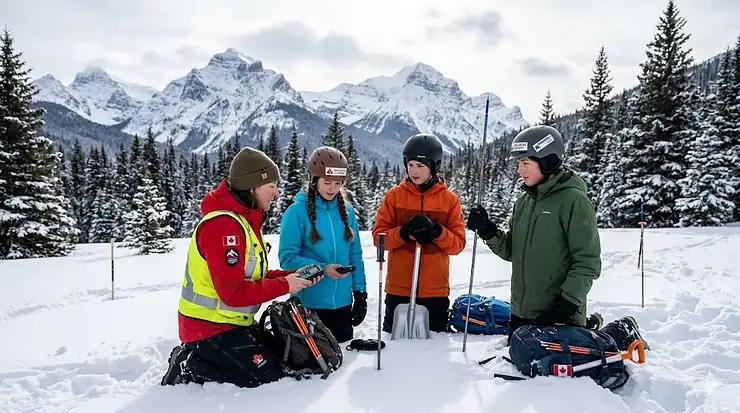
Imagine your 15-year-old has just discovered splitboarding. They’re hooked. They’re talented. And they desperately want to follow you — or their crew — into Canadian backcountry terrain this winter. The pride you feel is real. So is the anxiety.
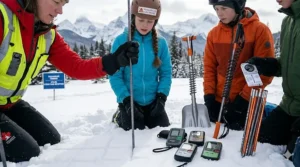
Here’s the thing most gear guides miss: avalanche safety gear for youth isn’t simply “adult gear, but smaller.” A beacon that works brilliantly in the gloves of a seasoned guide can be a fumbling nightmare for a teenager operating under stress in -20°C conditions near Revelstoke or Rogers Pass. Weight matters, interface simplicity matters, and harness fit matters — because gear that sits awkwardly rarely gets worn correctly, and gear worn incorrectly is gear that fails when it counts.
Canada’s backcountry is spectacular and unforgiving in equal measure. Avalanche Canada reports that most avalanche fatalities in Canada involve recreationists — many of them young, many of them equipped but undertrained, and some simply equipped with the wrong tools for their size and skill level. The good news? The right avalanche safety gear for youth exists, it’s available in Canada, and choosing wisely makes an enormous difference.
In this guide, I’ve researched seven real products available through Amazon.ca and Canadian retailers, covering beacons, probe-shovel kits, splitboards, and complete rescue bundles suited to teen and youth backcountry riders. I’ll walk you through what actually matters — transceiver signal range, probe assembly speed, rescue equipment certification, and the youth avalanche training context that ties it all together.
Whether your kid is a beginner splitboarder in the Kootenays or an aspiring ski mountaineer in the Coast Range, this guide is your starting point.
Quick Comparison Table: Top 7 Avalanche Safety Gear for Youth (Canada, 2026)
| Product | Type | Best For | Price Range (CAD) | Amazon.ca Available |
|---|---|---|---|---|
| BCA Tracker S Beacon | Transceiver | Entry-level teens | $280–$340 | ✅ Yes |
| BCA T4 Turbo Rescue Kit | Beacon + Probe + Shovel Bundle | Budget-conscious families | $550–$650 | ✅ Yes |
| Mammut Barryvox Transceiver | Digital beacon | Teens advancing to AST 2 | $380–$430 | ✅ Yes |
| Black Diamond Recon X Beacon | Digital transceiver | Tech-forward youth | $320–$380 | ✅ Yes |
| BCA Stealth 270 Avalanche Probe | Probe | Lightweight all-ages kit | $65–$85 | ✅ Yes |
| BCA Dozer 1T Shovel | Rescue shovel | Youth or compact adult | $65–$85 | ✅ Yes |
| Jones Youth Solution Splitboard | Youth splitboard | Backcountry teens 130–165 cm | $900–$1,100 | ✅ Ships to Canada |
Analysis: The BCA Tracker S is clearly the strongest entry point for youth just starting out — it has the fastest single-burial search interface in its class without overwhelming a stressed teenager with complex menus. If budget is a priority, the T4 Turbo bundle offers the best complete-kit value under $650 CAD. The Jones Youth Solution Splitboard stands alone as the only purpose-built youth splitboard in this guide, and it earns that place with serious backcountry credibility rather than just being a shrunken adult shape.
💬 Just one click — help others make better buying decisions too! 😊
✨ Don’t Miss These Exclusive Deals!
🔍 Take your avalanche safety gear to the next level with these carefully selected products. Click on any highlighted item to check current pricing and availability on Amazon.ca. These tools will help your young backcountry rider explore safely — every single run.
Top 7 Avalanche Safety Gear for Youth: Expert Analysis
1. BCA Backcountry Access Tracker S Avalanche Beacon
The BCA Tracker S is the gold standard entry-level beacon in Canada, and if I had to pick one transceiver for a youth rider heading into the backcountry for the first time, this would be it — full stop.
Key specs with real-world meaning: The Tracker S operates on the universal 457 kHz frequency (the international standard for all avalanche transceivers), has a three-antenna digital system, and weighs just 156 g (5.5 oz) without batteries — which matters enormously when you’re sizing a harness on a slim 14-year-old. The transceiver signal range reaches approximately 50 metres (164 ft) in search mode, which is competitive for an entry-level unit. It runs on three AAA alkaline batteries with a 200-hour transmit life, meaning one fresh set at the start of a Canadian ski season should easily last through multiple backcountry days without a mid-season swap.
Why this works for youth: The Tracker S strips out the advanced multiple-burial management features that confuse beginners, and instead focuses entirely on what a first responder in a panic actually needs: a simple directional display and a distance readout. During youth avalanche training drills, simpler interfaces consistently produce faster search times because users aren’t hunting for menus. The harness is adjustable and holds close to the chest — critical for keeping the beacon from swinging during a burial scenario.
Canadian context: Cold temperatures (-15°C to -25°C) during a typical Whistler or Banff backcountry day can stiffen the beacon’s harness straps. The Tracker S’s slim profile lets it fit snugly under a jacket without the bulk that looser-fitting models develop in the cold.
Customer feedback: Canadian buyers consistently highlight how quickly teens can become proficient with this unit after just one or two practice sessions. The “simplicity is speed” design philosophy translates directly into faster rescue times in drills.
Pros:
✅ Fastest single-burial fine search in its class
✅ Extremely intuitive interface for youth users
✅ Slim, lightweight design (156 g)
Cons:
❌ No motion-sensing or firmware upgrades (this is intentional — it’s a feature, not a bug, for youth)
❌ Multiple-burial capabilities are basic
Price range: around $280–$340 CAD — check current price on Amazon.ca. For what you get, it’s the strongest value in youth avalanche gear Canada has to offer at this price point.
2. BCA T4 Turbo Avalanche Beacon Kit — Tracker 4 + Probe + Shovel Bundle
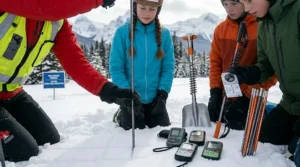
The BCA T4 Turbo package is what I’d recommend to Canadian families who want a complete, ready-to-go rescue kit without the research fatigue of assembling compatible pieces individually.
Key specs with real-world meaning: The Tracker 4 beacon at the heart of this kit is a step up from the Tracker S — it adds motion-sensing (which automatically switches to transmit mode if you stop moving, a potential life-saver if a youth rider is knocked unconscious in a secondary slide), a 300 cm (9.8 ft) probe, and a shovel with a saw attachment. The 300 cm probe length is meaningful: average burial depths in Canadian avalanche incidents frequently exceed 150 cm, and a longer probe gives you more reach without repositioning. The Dozer shovel included is UIAA-certified for avalanche rescue, which matters if you’re purchasing equipment for a school or club setting that may require documentation.
Why this works for youth: Bundles eliminate the “I forgot the probe” problem that plagues new backcountry families. Everything is pre-matched and fits together in one pack pocket. The Tracker 4’s motion-sensing feature adds a layer of passive protection that a distracted teenager can’t accidentally leave behind.
Canadian context: UIAA certification on the shovel aligns with the rescue equipment certification standards referenced by the Canadian Ski Patrol and Avalanche Canada AST course providers across BC and Alberta. When youth are heading to AST 1 courses at places like Revelstoke Mountain Resort (which accepts students as young as 15), having certified equipment is sometimes a prerequisite.
Customer feedback: Parents praise the bundled value and the fact that the kit arrives ready to use. A few reviewers note the harness is slightly bulky for smaller teens, recommending adjusting it carefully before the first outing.
Pros:
✅ Complete kit — no hunting for compatible probe or shovel
✅ Motion-sensing auto-revert on Tracker 4
✅ UIAA-certified shovel
Cons:
❌ Slightly heavier than buying minimalist individual pieces
❌ Shovel blade is functional but not the fastest in deep Canadian snow
Price range: $550–$650 CAD for the full kit — check current pricing on Amazon.ca. Compared to buying pieces separately, this bundle typically saves Canadian buyers $80–$120 CAD while also ensuring full compatibility.
3. Mammut Barryvox Avalanche Transceiver
When a Canadian youth rider progresses past their first season of backcountry touring and starts heading into more complex terrain — think tree lines in the Monashees or open bowls in Garibaldi — it’s time to upgrade to a beacon that matches their ambition. The Mammut Barryvox is that beacon.
Key specs with real-world meaning: The Barryvox uses Mammut’s proprietary digital three-antenna system with a 50-metre (164 ft) search strip width and refined multiple-burial handling. What makes this relevant to an advancing youth rider is the “analogue mode option” — when primary digital search gets cluttered by multiple signals, switching to analogue lets a trained searcher fine-tune their position with audio cues, which Avalanche Canada’s AST 2 curriculum specifically teaches. This beacon’s processing speed has been significantly improved in recent years, and outdoorgearlab.com’s 2026 lab tests rated it nearly on par with the Pieps-powered Black Diamond units in search accuracy.
Why this works for advancing youth: Once a teen has completed their AST 1 (available to youth 15+ across Canada) and is practising companion rescue regularly, the Barryvox’s slightly more capable feature set becomes an asset rather than a liability. The interface is still clear enough that it’s not intimidating, but the added multiple-burial capability prepares them for the reality that group ski touring incidents frequently involve more than one burial.
Canadian context: The Barryvox is one of the most trusted beacons among Canadian backcountry guides and ski patrol members — when a youth rider carries the same unit as their guide or instructor, it simplifies paired-practice drills because both devices behave consistently.
Customer feedback: Reviewers praise the reliability and consistent search performance. Some note the Barryvox requires more practice than the BCA Tracker S to master, which is exactly why this is recommended for second-season-and-beyond youth riders rather than first-timers.
Pros:
✅ Highly accurate multiple-burial search
✅ Trusted by Canadian backcountry guides
✅ Analogue fallback mode for advanced rescue
Cons:
❌ Steeper learning curve for first-time users
❌ Higher price point than BCA options
Price range: $380–$430 CAD — check current pricing on Amazon.ca. Worth every cent for a youth rider who is serious about progressing into genuine backcountry terrain.
4. Black Diamond Recon X Avalanche Beacon
The Black Diamond Recon X is built on the highly regarded Pieps digital processor — which, as OutdoorGearLab’s 2026 testing confirmed, delivers some of the most accurate directional guidance in its class. For a tech-forward teenager who takes their gear research as seriously as their riding, this beacon is genuinely exciting.
Key specs with real-world meaning: The Recon X features a 50-metre (164 ft) search range, Bluetooth connectivity for firmware updates, and a clean digital interface with reliable multiple-victim detection. The Bluetooth update capability is particularly important: beacon firmware improvements over time can meaningfully change search behaviour, and being able to update via a smartphone app rather than mailing the unit to a service centre is a genuine Canadian advantage — especially for riders in remote communities where gear service centres are hours away.
Why this works for youth: The Recon X hits a sweet spot between simplicity and capability. It’s slightly more capable than the Tracker S but doesn’t require the seasoned experience that the Mammut Barryvox demands to use effectively. For a youth rider who has completed their AST 1 and is doing regular beacon practice, this is the natural step up.
Important note for Canadian buyers: Black Diamond has issued recalls on certain models (including the Recon LT) in recent seasons. As of the research date for this article, the Recon X itself has not been subject to an active Canadian recall, but always verify with the retailer and register your product immediately after purchase. Perform a function check at every trailhead — no exceptions.
Customer feedback: Users appreciate the clean interface and the accuracy of the directional arrow during fine search. Bluetooth updates are praised by tech-oriented buyers.
Pros:
✅ Pieps processor — some of the most accurate fine search available
✅ Bluetooth firmware updates — important for long-term reliability
✅ Clean, youth-friendly display
Cons:
❌ Parent company’s beacon recall history warrants careful product registration and trailhead checks
❌ Slightly pricier than BCA equivalents
Price range: $320–$380 CAD — check current pricing on Amazon.ca. A strong mid-range option with premium accuracy.
5. BCA Stealth 270 Avalanche Probe
The probe is the piece of avalanche safety gear that most beginners underestimate — until they’re on their knees in a debris field trying to locate someone 1.5 metres under packed snow. The BCA Stealth 270 is the probe I recommend for youth kits because it gets the fundamentals exactly right without adding unnecessary weight.
Key specs with real-world meaning: The Stealth 270 extends to 270 cm (8.9 ft) — a practical length for Canadian burial scenarios — and deploys using BCA’s signature Speed Link system, which allows a one-pull assembly in under three seconds. Probe assembly speed is a life-or-death variable: the survival probability of an avalanche victim drops sharply after 15 minutes, so shaving three seconds off probe assembly time across multiple searches in a debris field matters. The probe is constructed from aluminium, striking a durable balance between the stiffness of steel and the lightness of carbon fibre at a youth-appropriate price point.
Why this works for youth: The Speed Link mechanism is simple enough that a 13-year-old can deploy it reliably after three practice runs. In contrast, probes with twist-lock or cable-tension systems require more hand strength and coordination — both of which can be compromised in cold weather or under adrenaline. The 270 cm length covers the depth range that Avalanche Canada’s statistics suggest is most common in Canadian recreational avalanche burials.
Canadian context: When youth attend Avalanche Canada companion rescue training sessions or AST 1 courses, instructors universally emphasize that probe speed matters more than probe length within a reasonable range. The Stealth 270’s deployment speed consistently earns instructor praise.
Customer feedback: Customers call it “idiot-proof to set up” and note it handles cold weather deployment reliably at temperatures where other probes stiffen.
Pros:
✅ One-pull Speed Link deployment — under 3 seconds
✅ 270 cm length covers most Canadian burial depths
✅ Durable aluminium construction
Cons:
❌ Slightly heavier than carbon alternatives (carbon costs 2–3× more)
❌ Not the longest option for very deep BC powder burials
Price range: $65–$85 CAD — check current pricing on Amazon.ca. One of the best value-for-performance purchases in any youth avalanche kit Canada-wide.
6. BCA Dozer 1T Avalanche Shovel
If the probe finds the victim, the shovel is what saves them. A bad shovel — too small, too flexible, or too awkward to swing — can add five to eight minutes to an extraction. The BCA Dozer 1T is the workhorse choice for youth riders and their families.
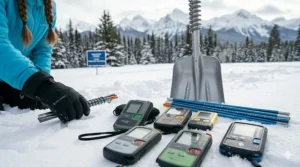
Key specs with real-world meaning: The Dozer 1T features a D-grip handle, a telescoping shaft that collapses to pack-friendly dimensions, and an aluminium blade meeting UIAA avalanche rescue shovel standards. The blade area is sized for one-handed “conveyor belt” shovelling technique — the method that Avalanche Canada instructors teach as standard — while still being manageable for a teenager with smaller hands and less upper-body mass than an adult. Weight comes in around 545 g (1.2 lbs), which is light enough that a youth rider won’t hesitate to carry it on every backcountry outing.
Why this works for youth: The UIAA certification and the D-grip handle combination make the Dozer 1T specifically compatible with the “V conveyor” shovelling drill that most Canadian AST 1 courses teach during practical field sessions. When a youth’s shovel matches the technique their instructor is teaching, muscle memory develops faster. The telescoping shaft also adapts to different user heights — relevant when outfitting youth across a range of ages and body sizes.
Canadian context: Canadian snow is notoriously variable — Whistler’s wet coast snow, the interior BC champagne powder, and Alberta’s wind-packed slab are genuinely different materials to shovel. The Dozer 1T’s aluminium blade handles this range without flexing, bending, or cracking in the -25°C cold snaps that Banff and Jasper backcountry riders regularly face.
Customer feedback: Parents buying for teens note the manageable weight and how quickly young riders adapt to using it in drills. A few wish the blade were slightly larger for deep excavation, but at this price point the trade-offs are well understood.
Pros:
✅ UIAA-certified — meets standard required at many Canadian courses
✅ Telescoping shaft fits youth and adult body sizes
✅ Lightweight (545 g) — no excuse not to carry it
Cons:
❌ Smaller blade can slow deep extraction compared to larger adult shovels
❌ D-grip may feel slightly large for very small hands (under size 14 gloves)
Price range: $65–$85 CAD — check current pricing on Amazon.ca. Pair this with the BCA Stealth 270 probe and any beacon in this guide for a complete, Canadian-ready kit.
7. Jones Youth Solution Splitboard
There is exactly one purpose-built youth splitboard that serious Canadian backcountry families should consider, and it’s this one. The Jones Youth Solution is not a marketing afterthought — it’s a genuinely high-performance board shaped for smaller riders who refuse to be left behind on the skin track.
Key specs with real-world meaning: Available in sizes suited to riders approximately 130–165 cm tall, the Youth Solution uses a premium dual-density Paulownia and Poplar wood core at a 2:1 ratio — this is the same core philosophy Jones uses in its adult backcountry shapes, meaning a lighter, more responsive feel that translates into energy savings on long uphill tours. The mid-soft torsional flex and directional rocker profile make it forgiving in the variable snow conditions Canadian youth riders encounter — wet spring corn in the Kootenays, wind crust in Alberta, or bottomless January powder in the Monashees. Jones’s 3D Contour Base technology adds a subtle spoon-shaped nose curve borrowed from surfboard design that actively improves uphill skin grip and downhill float.
Why this works for youth: Most youth backcountry riders get handed a cut-down adult splitboard or a stiff beginner board that neither tours nor descends satisfactorily. The Youth Solution actually splits the way a real touring board should — the splitboard clips and skin attachment points are correctly positioned for the shorter board lengths, not just scaled from an adult template. This matters enormously on long BC skin tracks where a poorly fitting split can cause blistering and fatigue that a youth rider interprets as “I’m not good enough” rather than “this board is wrong.”
Canadian context: Canadian backcountry terrain demands a board that can handle significant vertical — typical youth-accessible touring objectives in Whistler Backcountry, Banff, or the Selkirks involve 600–1,200 vertical metres of skinning. A board that tours efficiently isn’t a luxury; it’s what keeps young riders enthusiastic rather than exhausted.
Customer feedback: Parents report that their teens who switched from hacked-down adult boards to the Youth Solution experienced a “night and day” improvement in both touring efficiency and descent confidence. Available through Canadian retailers with shipping to most provinces.
Pros:
✅ Only purpose-designed youth splitboard on the market
✅ Real performance backcountry shape — not a toy
✅ Lightweight Paulownia core reduces fatigue on long tours
Cons:
❌ Higher investment — this is not a beginner “try it once” purchase
❌ Limited size run (suits riders up to approximately 165 cm)
Price range: $900–$1,100 CAD — check current pricing via Amazon.ca and Canadian snowboard retailers. For a committed young splitboarder, the value is clear: this board will last multiple seasons and won’t hold their progression back.
Comparison Table: Beacon Signal Range & Key Specs
| Beacon | Signal Range | Antenna Count | Multiple Burial | Firmware Updates | Best For |
|---|---|---|---|---|---|
| BCA Tracker S | ~50 m | 3-antenna | Basic indicator | No | First-timers, youth |
| BCA Tracker 4 (T4 Kit) | ~50 m | 3-antenna | Yes | Yes | Youth bundle buyers |
| Mammut Barryvox | ~50 m | 3-antenna | Advanced | Yes (USB) | Advancing youth |
| Black Diamond Recon X | ~50 m | 3-antenna | Yes | Yes (Bluetooth) | Tech-forward youth |
Analysis: All four beacons in this guide operate at the mandatory 457 kHz frequency and use three-antenna digital systems, which have been the backcountry standard for over a decade. The key differentiators are multiple-burial management sophistication and update capability — factors that matter more as a youth rider advances beyond their first season. The Tracker S wins for pure simplicity; the Mammut Barryvox and Black Diamond Recon X win for long-term capability growth. For youth just starting out, simple is fast, and fast is what saves lives.
How to Choose Avalanche Safety Gear for Youth in Canada: A Step-by-Step Framework
Buying avalanche safety gear for a young rider is a decision with real stakes. Here’s how to approach it systematically:
1. Start with beacon fit and interface simplicity. A beacon that doesn’t sit correctly on a youth’s body won’t be worn properly. Try the harness on your child before purchasing if possible, and prioritize models with adjustable chest straps that can tighten below adult sizing. For first-year youth riders, simplicity of interface directly correlates with faster rescue performance under stress.
2. Match beacon capability to training level. A teenager who has not completed Avalanche Canada’s AST 1 course has no business in avalanche terrain regardless of their beacon. Match the beacon complexity to their training: Tracker S for AST 1 or below, Mammut Barryvox or Recon X for AST 1 graduates who practise regularly.
3. Never compromise on probe length. In Canada, burial depths exceeding 150 cm are common in backcountry avalanche incidents. A 240 cm probe is the absolute minimum; 270 cm is better. Speed of deployment matters more than length within this range — practise deployment drills at home until it becomes automatic.
4. Choose certified shovels for course eligibility. If your youth rider will attend AST 1 at a Canadian ski resort or mountain school, check whether UIAA shovel certification is required. Many Canadian providers now request this, and it avoids showing up with the wrong equipment on day one.
5. Don’t buy a splitboard until your teen is ready. A splitboard for backcountry teens is only appropriate when they have solid on-piste snowboard skills and have completed companion rescue training. The Jones Youth Solution is excellent — but a $1,000+ board in the hands of an untrained backcountry beginner is a dangerous mismatch of equipment and skill.
6. Factor in Canadian climate. Cold weather (-20°C and below) affects battery life in all beacons — keep spare batteries in an inside pocket, never in the pack. It also stiffens harness straps and makes glove-compatible operation critical. Test all gear at home in the cold before the first backcountry day.
7. Always pair gear with certified training. Equipment without education is not safety — it’s false confidence. Avalanche Canada offers AST 1 courses available to youth 15 and over across Canada. The Canadian Avalanche Association sets the professional standards that recreational programs draw from.
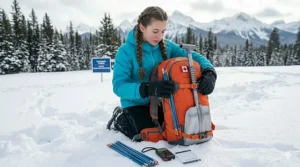
Real-World Scenarios: Which Gear Fits Your Canadian Youth Rider?
Understanding which kit is right depends entirely on who’s buying it and where they ride. Let me walk you through three Canadian youth profiles:
Profile 1: The 15-year-old BC newcomer — Whistler / Pemberton area Jake is 15, a confident resort rider who’s just convinced his parents to let him start touring with their Saturday backcountry crew. He’s enrolled in an AST 1 course at Whistler this January. His budget is modest — under $400 CAD for a beacon, and the family already has a shovel. The right choice: the BCA Tracker S (around $280–$340 CAD). Its simplicity will make AST 1 drills faster to learn, it fits his frame well with the adjustable harness, and there’s no wasted money on advanced features he hasn’t been trained to use yet. Pair with the BCA Stealth 270 probe to complete the rescue kit.
Profile 2: The 17-year-old Alberta splitboarder — Kananaskis / Banff region Mia is 17, has two winters of backcountry touring experience, and has completed both AST 1 and the Companion Rescue Skills refresher. She’s planning multi-day hut-to-hut tours in the Rockies and wants gear that can grow with her. The right choice: the Mammut Barryvox ($380–$430 CAD) paired with the BCA T4 bundle’s probe and shovel, or the complete T4 kit if she needs to replace everything at once. The Barryvox’s advanced multiple-burial capability will serve her well as touring partners multiply and terrain complexity grows. The Jones Youth Solution Splitboard is the correct board for her size if she’s in the 130–155 cm range.
Profile 3: The urban family — Calgary or Edmonton, occasional backcountry trips The Thompsons have two kids, 14 and 16, who join guided backcountry day tours two or three times each season. They want a complete, certified kit that they don’t have to think too hard about. The right choice: two BCA T4 Turbo complete kits. The bundle format means everything is matched and certified, the Tracker 4’s motion-sensing adds passive safety for less experienced riders, and the UIAA shovel satisfies any tour operator equipment requirements. Budget: approximately $1,100–$1,300 CAD for both kids, outfitted.
Youth Avalanche Training in Canada: The Gear Is Only Half the Story
Here is something that needs to be said plainly: no avalanche safety gear for youth — regardless of how good it is — replaces proper training. A beacon without training is a false comfort. A probe without training is a metal stick. Canadian parents often focus so intensely on gear research that training becomes an afterthought, and that is genuinely dangerous.
Avalanche Canada has built a remarkable K–12 youth education program that delivers grade-specific avalanche safety curriculum to schools and outdoor clubs across the country. Their youth instructors travel to classrooms in BC, Alberta, and beyond to introduce concepts from basic winter safety all the way through companion rescue practice. For teens ready for formal backcountry certification, Avalanche Canada’s AST 1 (Avalanche Skills Training Level 1) is available to anyone 15 and over and covers 16 hours of combined classroom theory and practical field exercises. AST 1 certificates do not expire, though Avalanche Canada recommends refreshing skills every two to three years.
The Canadian Avalanche Association (CAA), based in Revelstoke, BC, sets the professional standards that recreational training programs draw from. The CAA’s Industry Training Program runs alongside the recreational programming to ensure a consistent national standard — relevant if your youth rider is eventually considering guiding or snow safety work.
For Quebec families, note that Avalanche Québec offers French-language training including the AvSAR 1 companion rescue course, now a mandatory prerequisite for professional-level avalanche operations training in the province. Bilingual product labelling is also legally required in Canada — relevant when purchasing gear online from international retailers, as products lacking French labelling may be harder to return or service within Quebec.
What “Rescue Equipment Certification” Actually Means for Canadian Youth
Parents frequently ask whether their child’s beacon needs to be “certified.” The practical answer: all 457 kHz digital beacons manufactured after 2000 meet the international frequency standard, and there is no Canadian government-mandated certification for recreational avalanche beacons beyond this. However, shovels used in formal course settings or by organized tour groups may need to meet UIAA avalanche rescue standards — the BCA Dozer 1T and several other products in this guide meet that standard. When registering your child for an AST 1 or similar course, always confirm the gear requirements with the provider in advance.
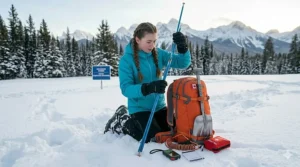
Common Mistakes When Buying Avalanche Safety Gear for Youth in Canada
Even well-intentioned Canadian parents and young riders make these errors. Here’s how to avoid them:
Mistake 1: Buying adult-sized gear and assuming it will “grow into.” An adult beacon harness sitting loose on a 13-year-old’s chest will migrate during a burial — sometimes far enough that the signal direction is meaningless. Youth-appropriate fit is not a marketing niche; it’s a functional safety requirement.
Mistake 2: Skipping the probe or buying one that’s too short. A 240 cm (8 ft) probe is the bare minimum for Canadian backcountry. Anything shorter is genuinely inadequate for BC powder or Alberta slab scenarios where burial depths regularly exceed 150 cm. Some budget “starter kits” online include 180 cm probes — avoid them entirely.
Mistake 3: Purchasing only on Amazon.ca without checking cross-border warranty coverage. Some avalanche gear brands sold through third-party Amazon.ca listings carry US-only warranty coverage. Always verify that the manufacturer’s warranty extends to Canada, and where possible, buy from a Canadian authorized dealer. Brands like BCA, Mammut, and Ortovox all have Canadian dealer networks with full warranty support.
Mistake 4: Not testing cold-weather battery performance before the season. Alkaline batteries lose 20–30% of their effective capacity at -20°C. Beacon manufacturers account for this in their battery life specs, but it’s still worth putting fresh batteries in every beacon at the start of each season and carrying a spare set in an inside jacket pocket rather than a pack pocket.
Mistake 5: Treating beacon practice as a one-time event. Canadian parents who buy their teen a beacon and do two drills before the first backcountry trip are significantly underestimating what beacon proficiency requires. Avalanche Canada recommends annual — ideally more frequent — practice to maintain search speed and multiple-burial management skills. Make it a fun family ritual before each backcountry season.
Mistake 6: Ignoring bilingual labelling on purchased gear. Under Canadian law, product packaging and labelling must be in both English and French. Products purchased from US retailers and shipped cross-border may not include French labelling and can be difficult to service or return through Canadian channels. Purchasing through Amazon.ca or Canadian-based retailers avoids this complication.
Avalanche Safety Gear for Youth vs. Adult Gear: Does the Difference Actually Matter?
Short answer: yes, for beacons and splitboards, the difference is meaningful. For probes and shovels, less so — with caveats.
Beacons: The core technology (457 kHz three-antenna digital) is identical between youth-appropriate and adult beacons. The meaningful differences are interface complexity (adults can handle more feature depth) and physical fit of the harness. Youth riders benefit most from beacon interfaces that can be operated reliably in thick gloves, under stress, at sub-zero temperatures. The BCA Tracker S, designed for recreational simplicity across all ages, is genuinely the best interface for a youth rider — not because it’s a youth product, but because its design philosophy prioritizes intuitive operation above feature density.
Splitboards: Here the difference is enormous. An adult splitboard cut down in size is not the same as a purpose-designed youth board. Skin attachment points, edge angles relative to the shorter length, and flex profiles all interact differently on a smaller board. The Jones Youth Solution is the rare exception that gets all of this right — most other small-format splitboards are compromised adult shapes that penalise smaller riders on both the ascent and descent.
Probes: A correctly-sized probe (270 cm or 300 cm) works identically regardless of whether the person deploying it is 16 or 36. The BCA Stealth 270’s Speed Link deployment is as easy for a youth rider to execute as for an adult, so there’s no meaningful youth-specific consideration here beyond ensuring the probe isn’t so heavy that a teen leaves it behind.
Shovels: Blade size and shaft length matter for youth users. A full-adult shovel with a 70 cm blade can be exhausting for a slight teenager to use efficiently during a prolonged excavation. The BCA Dozer 1T’s UIAA-standard but compact blade hits the right balance for youth-to-adult crossover use.
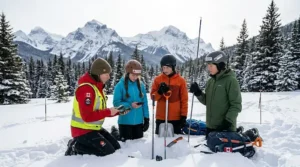
FAQ: Avalanche Safety Gear for Youth in Canada
❓
What age can youth start using avalanche safety gear in Canada?
❓ Is there a minimum transceiver signal range for youth beacons in Canada?
❓ Can I buy avalanche gear on Amazon.ca and use it in Canadian backcountry courses?
❓ How does cold weather affect youth avalanche safety gear in Canadian winters?
❓ Does my child need a splitboard to go backcountry touring in Canada?
Conclusion: Equip Young Riders Right — Then Send Them Outside
The Canadian backcountry is one of the most extraordinary environments on earth. The Coast Mountains, the Rockies, the Selkirks, the Chic-Chocs — your kids can experience all of it, and they should. The role of avalanche safety gear for youth is not to create anxiety around that ambition; it’s to provide the technical foundation that makes the adventure possible.
The seven products reviewed in this guide represent the best combination of youth-appropriate fit, rescue effectiveness, Canadian availability, and real-world value. The BCA Tracker S is the beacon that gets most young Canadians started right. The BCA T4 Turbo Kit is the complete solution for families who want everything handled in one purchase. The Mammut Barryvox grows with an advancing rider. And the Jones Youth Solution Splitboard opens genuine backcountry splitboarding to a generation of smaller Canadian riders who’ve been waiting for a board that actually fits them.
Gear is only half of the equation. Pair every purchase in this guide with a visit to avalanche.ca/training to find an AST 1 or youth companion rescue session near you. The gear will be ready. Make sure the rider is too.
✨ Don’t Miss These Exclusive Deals!
🔍 Ready to kit out your young backcountry rider? Click on any highlighted product to check current pricing and availability on Amazon.ca. Start with the beacon, add the probe and shovel, and you’ve built a complete safety kit that could save a life this winter.
Recommended for You
- Top 7 Youth Ski Packages for Canadian Kids in 2026
- 7 Best Intermediate Snowboard Setups in Canada 2026
- Best 7 Agility Ladder and Cones Training Sets Canada 2026: Transform Your Athletic Performance
Disclaimer: This article contains affiliate links. As an Amazon Associate, I earn from qualifying purchases. If you purchase products through these links, we may earn a small commission at no additional cost to you.
✨ Found this helpful? Share it with your friends! 💬🤗
