
In This Article
There’s a moment every parent of an outdoor-loving teenager knows well: your kid announces they want to do an overnight backpacking trip, and suddenly you’re staring down a gear list that reads like it was written by a gear-obsessed mountain guide with a generous expense account. The good news? You don’t need to break the bank to outfit a teen properly — but you do need to get the right stuff.
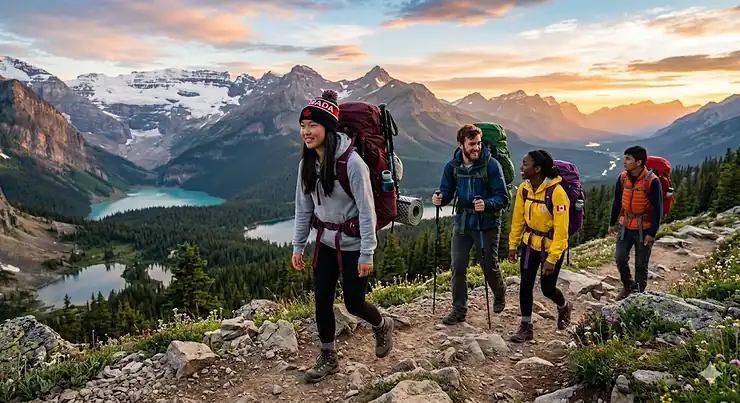
Backpacking gear teens choose can make or break their first wilderness experience. A too-heavy pack turns an exciting overnight into a miserable slog. A leaky tent on a rainy night in Algonquin will cure even the most enthusiastic young hiker of wanting to go back. And Canada’s trails demand a level of preparedness that, frankly, the American gear-review crowd doesn’t always account for — our mosquitoes are bigger, our weather shifts faster, and that beautiful June campsite in Jasper can drop to near freezing overnight.
For teens between 13 and 17, backpacking gear needs to be lightweight enough that they’re not crushed under a 25 kg (55 lb) load, durable enough to survive the “zero-care” approach most teenagers have toward equipment, and affordable enough that parents don’t develop a nervous tic when checking the credit card statement.
This guide covers a complete hiking setup for teenagers — from ultralight tents and sleeping bags to stoves, packs, and the critical permits you need before heading into Canada’s national and provincial parks. Whether your teen is eyeing a thru-hiking equipment list for the first time or planning a solo overnight in a BC provincial park, this is everything they need to know, with real products available right now on Amazon.ca (all prices in CAD).
What exactly is backpacking gear for teens? It’s a curated selection of lightweight, durable outdoor equipment — typically a pack, shelter, sleep system, cooking gear, and navigation tools — sized and priced for young hikers tackling 1-5 day backcountry trips on Canadian trails.
Quick Comparison: Best Backpacking Gear Teens Can Buy on Amazon.ca
| Product | Type | Weight | Best For | Price Range (CAD) |
|---|---|---|---|---|
| Naturehike Cloud Up 2 (Upgraded) | 2-person tent | ~1.5 kg (3.3 lbs) | Budget-conscious duos | $100–$150 range |
| TETON Sports Scout 3400 | 55L backpack | 2 kg (4.4 lbs) | First-time teen backpackers | $100–$140 range |
| TETON Sports LEEF Sleeping Bag | Mummy bag | ~1.1 kg (2.5 lbs) | 3-season Canadian camping | $50–$80 range |
| MSR PocketRocket 2 | Canister stove | 74 g (2.6 oz) | Ultralight cooks | $60–$80 range |
| Kelty Cosmic 20° Synthetic | Sleeping bag | ~1.3 kg (2.9 lbs) | Cold-weather performance | $100–$130 range |
| SWTMERRY 3-Season Sleeping Bag | Synthetic bag | ~1.2 kg (2.6 lbs) | Budget-first starters | $40–$65 range |
| Rainleaf Microfiber Towel | Camp towel | ~150 g | Ultralight hygiene essential | $20–$35 range |
Analysis: Looking at the comparison above, the TETON Sports Scout 3400 delivers unbeatable value for a teen’s first overnight pack — the adjustable torso sizing alone saves a repeat purchase as they grow. For shelter, the Naturehike Cloud Up 2 punches far above its price point in terms of waterproofing and weight, making it the best entry point for teens sharing a tent. If cold nights are on the agenda (and in Canada, they usually are), the Kelty Cosmic 20° justifies its higher price over the SWTMERRY for its rated warmth — a trade-off that matters enormously when September temperatures plunge in the Shield or Rockies.
💬 Just one click — help others make better buying decisions too! 😊
✨ Don’t Miss These Exclusive Deals!
🔍 Take your teen’s trail experience to the next level with these carefully selected products. Click on any highlighted item to check current pricing and availability on Amazon.ca. These tools will help your young hiker build authentic backcountry skills they’ll carry for life!
Top 7 Backpacking Gear Teens Can Order on Amazon.ca — Expert Analysis
1. Naturehike Cloud Up 2 Upgraded — Best Ultralight Tent Under 3 lbs for Teenagers
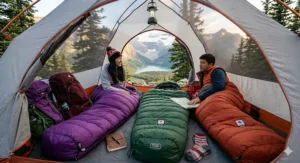
If you’ve ever tried to justify a $600 tent to a teenager who loses things, this one will be your sanity-saving solution. The Naturehike Cloud Up 2 Upgraded is a freestanding double-wall 2-person tent that weighs roughly 1.5 kg (about 3.3 lbs), features a PU3000mm waterproof polyester fly, a full-coverage mesh inner tent for ventilation, and includes a footprint — something most tents charge extra for. The 7001 aluminum alloy poles set up in under two minutes without any prior experience, which matters a lot when you’re dealing with teenagers who skimmed the instructions.
What most Canadian buyers overlook is that the double-wall design specifically addresses condensation — a serious issue in humid Shield mornings and cooler Highland nights. Single-wall tents at this price are notorious for soaking sleeping bags when temperatures drop overnight; the Cloud Up 2’s separated layers prevent this.
This tent is perfect for two teens sharing gear weight on a summer overnight in Banff or a fall trip in Gatineau Park. It’s not a four-season mountaineering shelter, so avoid it for winter camping — but for three-season Canadian use from late May through September, it performs remarkably well. Canadian reviewers consistently note it handles BC rain without complaint.
✅ Freestanding — works on hard, rocky ground common in Canadian Shield
✅ Footprint included — saves ~$30–$40 CAD on a separate purchase
✅ Double-wall condensation control
❌ Vestibule is small — tight for storing two teens’ packs
❌ Not rated for shoulder season cold snaps below -5°C
Price range: $100–$150 CAD. One of the best-value ultralight tent under 3 lbs Canada options currently on Amazon.ca.
2. TETON Sports Scout 3400 Internal Frame Backpack — Best First Pack for Teen Hikers
The TETON Sports Scout 3400 is the gold standard in budget-first backpacking packs for teenagers, and it’s earned that status with over 8,000 reviews and consistent top-seller status on Amazon.ca. At 55 litres (3,400 cubic inches), it’s the sweet spot for 2–4 day trips — enough for a complete overnight trip essentials list without tempting teens to overpack.
What separates this pack from its cheaper competitors is the multi-position torso adjustment. Teens grow fast, and the Scout’s 15–19.5 inch adjustable torso length means this pack can actually fit correctly as they develop — improperly fitted packs cause back and hip pain that ends trips early. The open-cell foam lumbar pad with moulded channels keeps airflow between pack and back, which matters enormously during sweaty summer climbs in Ontario’s Haliburton Highlands or the long ascents of BC’s Garibaldi backcountry.
The integrated rainfly is a specifically brilliant touch for Canadian conditions — it stays tucked away until needed, then deploys in seconds to protect gear during the unpredictable afternoon thunderstorms common from June through August across the Prairies and Shield.
✅ Torso-adjustable for growing teens aged 13–17
✅ Built-in rainfly — no separate pack cover needed
✅ Separate sleeping bag compartment for organised packing
❌ At 2 kg (4.4 lbs) it adds weight before you pack a thing — not ultralight
❌ Hipbelt padding could be firmer for loads over 15 kg
Price range: $100–$140 CAD. Outstanding value for a first complete hiking setup for teenagers.
3. Kelty Cosmic 20° Synthetic Sleeping Bag — Best Cold-Weather Sleeping Bag for Canadian Teens
The Kelty Cosmic 20° (-7°C) synthetic sleeping bag is the one I’d recommend to any Canadian teen camping from late spring through early fall, and here’s why: synthetic insulation doesn’t lose its warmth when wet. Down bags are lighter and more compressible, but if your teenager’s pack gets soaked crossing a creek in Algonquin — which will happen — a wet down bag becomes dangerously useless. The Cosmic’s CirroLoft ECO insulation made from fully recycled materials retains warmth even damp, and Canadian conditions routinely test this.
At a rated -7°C, this bag handles the cold September nights that catch first-time hikers off guard when temperatures plunge 15–20°C after sunset in the Rockies or Laurentians. The roomy foot box is a thoughtful design detail — teens with larger feet won’t be fighting a compressed cold spot all night. It comes with a compression sack, packs reasonably small for synthetic fill, and the recycled construction aligns with the Leave No Trace values Parks Canada encourages in all its backcountry materials.
✅ -7°C rating handles Canadian cold shoulder seasons
✅ Recycled fill — retains warmth when damp
✅ Compression sack included
❌ Heavier and bulkier than down equivalents at this rating
❌ Canadian pricing runs slightly higher than US equivalents — but you avoid cross-border shipping, customs delays, and warranty headaches
Price range: $100–$130 CAD. Best value in the three-season sleeping bag category for Canadian teen backpackers.
4. TETON Sports LEEF Lightweight Mummy Sleeping Bag — Best Budget Sleeping Bag for Teen Overnights
For teens who are just starting out and aren’t sure if they’ll love backpacking yet, the TETON Sports LEEF mummy sleeping bag is the smartest budget entry point available on Amazon.ca. It’s lightweight, compresses into a stuff sack, and does exactly what it promises for warm-weather Canadian camping.
The spec sheet won’t tell you this, but the LEEF’s mummy cut is genuinely key for beginner warmth retention — rectangular bags bleed body heat at the foot end, and teenagers who toss and turn end up cold at 3 AM even on mild nights. The mummy shape holds heat efficiently, which is why it’s the go-to design for overnight trip essentials in the backcountry. It’s rated for three seasons, though I’d call it a “summer and early fall” bag for most Canadian climates — think July and August trips to Quetico or Cape Breton Highlands.
Canadian customers note it performs well for its price point and that TETON Sports’ customer service is responsive — valuable for first-time buyers navigating gear purchases.
✅ Mummy cut — efficient heat retention for beginners
✅ Comes with compression stuff sack
✅ Budget-friendly for uncertain first-timers
❌ Not rated for shoulder-season cold below about 5°C
❌ Less compressible than the Kelty Cosmic — takes more pack space
Price range: $50–$80 CAD. Best entry-level choice for teens trying their first backpacking trip without heavy investment.
5. MSR PocketRocket 2 — Best Ultralight Backpacking Stove for Teen Thru-Hikers
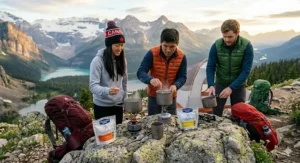
At just 74 grams (2.6 oz), the MSR PocketRocket 2 canister stove is the ultralight choice for teens building toward a thru-hiking equipment list. It screws onto any standard isobutane canister, boils 1 litre of water in about 3.5 minutes, and packs down to the size of a large thumbscrew. The compact size means it disappears into a pocket without touching pack volume — critical when teens are trying to keep their overnight trip essentials under a manageable weight.
What matters for Canadian backpackers is that the PocketRocket 2 has solid wind performance for a standard canister stove, though you’ll still want to shield it on exposed alpine ridges in Jasper or Kootenay where gusts are relentless. GearJunkie’s 2026 stove testing notes that ultra-minimalist stoves can lack stability for heavier cook sets — for teens using standard 750mL titanium pots, the PocketRocket 2’s folding pot supports handle that weight comfortably.
Isobutane canisters are widely available at MEC, Canadian Tire, and Atmosphere stores across Canada, so resupply on longer routes is realistic.
✅ 74 g — virtually no weight penalty
✅ Universal canister compatibility
✅ Folds to pocket size
❌ Canister fuel less efficient in sub-zero temperatures — not ideal for spring or fall
❌ Requires separate windscreen in exposed Canadian alpine terrain
Price range: $60–$80 CAD. The go-to stove for ultralight-conscious teen hikers and anyone building a thru-hiking equipment list.
6. SWTMERRY 3-Season Sleeping Bag — Best All-Family Budget Bag for Teen Beginners
The SWTMERRY 3-Season Sleeping Bag specifically markets itself as built for kids, teens, and adults — and it’s honest about that positioning. It’s waterproof, lightweight at around 1.2 kg (2.6 lbs), and available on Amazon.ca with solid reviews from Canadian families using it for everything from Algonquin car camping to weekend trail overnights.
The practical value here is versatility. Canadian families who camp with multiple teenagers can buy several of these without the budget implications of individual Kelty-grade bags. The SWTMERRY performs well for summer nights and mild early-fall temperatures (roughly 10°C and above), and the waterproof outer shell handles the inevitable morning dew that soaks everything in humid Shield environments.
What it lacks is the temperature rating confidence of the Kelty Cosmic — for trips where overnight temperatures might dip near freezing, teens should layer with fleece pants and a hat inside the bag. That said, for July and August trips — which represent the majority of Canadian teen backcountry adventures — it does the job at a price that makes parents genuinely happy.
✅ Specifically designed for teens and youth sizing
✅ Waterproof outer shell
✅ Budget-friendly for multi-teen families
❌ Not rated for below 10°C without supplemental clothing layers
❌ Less compressible than higher-end bags
Price range: $40–$65 CAD. Best choice for families outfitting multiple teens on a reasonable budget.
7. Rainleaf Microfiber Towel — The Overlooked Overnight Trip Essential
I know what you’re thinking — a towel made the top 7 list? Yes. Here’s why: the Rainleaf Microfiber Towel is consistently the item that experienced teen backpackers say they wished they’d had from trip one, and it’s something parents routinely forget until their kid comes home smelling like a wet tent after a week in the bush.
The Rainleaf Microfiber Towel is ultra-compact (rolls to about the size of a water bottle), super-absorbent, and quick-drying — it’ll dry completely in 20–30 minutes even in a Canadian summer breeze, unlike a cotton towel that stays damp for two days and grows mildew. Available in multiple sizes on Amazon.ca with Prime eligibility, it’s the sub-$35 CAD purchase that completes an overnight trip essentials kit and saves enormous pack space.
For Canadian teens camping in humid environments — Algonquin’s lake region, New Brunswick’s river valleys, BC’s wet coastal routes — fast-drying personal gear is genuinely important for hygiene and comfort on multi-day trips.
✅ Dries in under 30 minutes
✅ Rolls to water bottle size
✅ Under $35 CAD — easy budget addition
❌ Doesn’t feel as soft as cotton — takes some getting used to
❌ Smaller sizes may feel inadequate for older, larger teens
Price range: $20–$35 CAD. The most overlooked but appreciated item on any complete hiking setup for teenagers.
How to Pack a Teen’s Backpack Without Destroying Their Back — A Practical Guide for Canadian Trails
One of the biggest mistakes Canadian parents and teens make is packing everything correctly and then loading the pack wrong. A perfectly chosen kit can still ruin a trip if the weight distribution is off — especially on the uneven terrain of the Canadian Shield or Rocky Mountain switchbacks.
The 20% Rule: A teen’s pack should weigh no more than 20% of their body weight. For a 60 kg (132 lb) teen, that’s 12 kg (26.5 lbs) maximum. Most complete overnight setups — tent, sleeping bag, pad, food, stove, water, clothing — land around 9–12 kg when gear is chosen thoughtfully. If you’re over that, start removing items.
Weight Placement: Heavy items (food, water filter, stove, bear canister) go closest to the spine in the middle of the pack. Medium items wrap around them. Light, bulky items (sleeping bag, extra clothing) go at the bottom. Frequently accessed items (rain jacket, snacks, headlamp) go in the top lid and hip belt pockets. This distribution keeps the load over the hips rather than pulling backward on shoulders — the cause of most teen complaints mid-trail.
Cold-Weather Packing Tips for Canada: Canadian overnight trips have a nasty habit of being warm during the day and near freezing overnight, even in July in the Rockies. Always pack your sleeping bag in a dry bag inside the pack — not in the external sleeping bag compartment of the TETON Scout, which is convenient but less protected from rain seeping in during extended downpours. Keep tomorrow’s base layers inside the sleeping bag at night so they’re warm when you need them in the morning.
Moisture Management: In BC’s coastal environments and Ontario’s lake country, everything gets damp. Use a pack liner (a large garbage bag works) inside the main compartment, and put electronics, sleeping bag, and down layers (if any) in individual dry bags.
The Leave No Trace rule from Parks Canada applies to your impact, but it starts with how you pack: if you pack it in, pack it out. Teens should have a dedicated trash stuff sack clipped to a hip belt loop.
Real Canadian Teen Backpackers: Who Should Buy What
Understanding which gear matches which teen helps avoid expensive mistakes. Here are three Canadian user profiles that represent the most common first-time backpacking scenarios.
Profile 1: Maya, 15, First Overnight in Algonquin Provincial Park, Ontario Maya’s never slept in the backcountry. Her parents are supportive but not outdoorsy themselves. Budget is tight — they want to spend under $350 CAD total for her gear. The right build: SWTMERRY sleeping bag ($50 CAD range), TETON Sports Scout 3400 ($120 CAD range), Naturehike Cloud Up 2 Upgraded shared with a friend ($125 CAD split between two), MSR PocketRocket 2 borrowed or bought used, Rainleaf Microfiber Towel ($25 CAD). Total lands under $320 CAD. Ontario Parks permits for Algonquin backcountry are booked at reservations.ontarioparks.ca with a 5-month advance booking window — Maya should book for July by mid-February.
Profile 2: Liam, 17, Planning a 4-Day Solo Route in BC’s Garibaldi Backcountry Liam has done overnight trips before and wants to go alone for the first time on a more technical route. He needs reliability over pure budget savings. Right build: Kelty Cosmic 20° ($115 CAD range) for confident cold-weather performance, TETON Scout 3400 ($120 CAD), Naturehike Cloud Up 2 Upgraded ($130 CAD), MSR PocketRocket 2 ($70 CAD). BC Parks requires advance backcountry permit registration at camping.bcparks.ca — starting in 2026, non-BC residents pay an additional $20 fee.
Profile 3: Twins Emma and Jake, 14, Banff National Park Family Trip The family is heading to Banff together. The twins want their own shelter separate from parents. They split the Naturehike Cloud Up 2 Upgraded ($130 CAD) and each carry a SWTMERRY sleeping bag ($55 CAD each). At Banff, a Parks Canada Backcountry Permit runs $15 per night — and from June 19 to September 7, 2026, the Canada Strong Pass replaces the Discovery Pass entirely for free national park access.
How to Choose Backpacking Gear Teens Will Actually Use in Canada
1. Prioritise Weight First — Then Features
Every gram matters for teenagers whose skeletal structures are still developing. Start with the Big Three — shelter, sleep system, and pack — and aim for a combined weight under 5 kg (11 lbs). Everything else (food, water, clothing) fills the rest of the 20% body weight allowance.
2. Freestanding Tents Beat Non-Freestanding for Beginners
Non-freestanding trekking pole tents (like the Zpacks Duplex) are lighter and impressive — but they demand flat, stakeable soil and require practice to pitch correctly. Canadian backcountry routinely features rocky ground, especially in the Shield and alpine zones. For teens, a freestanding tent like the Naturehike Cloud Up 2 that holds its shape without perfect staking is far more practical.
3. Choose Synthetic Insulation for Wet Canadian Environments
Outdoor Gear Lab’s 2026 sleeping bag review confirms what experienced Canadian campers already know: down bags are spectacular in dry conditions but dangerously underperform when wet. For humid environments — Ontario lake country, BC coastal trails, New Brunswick river routes — synthetic fill’s retained warmth when damp is a genuine safety advantage.
4. Verify Amazon.ca Availability Before Buying
Products available on Amazon.com don’t always ship to Canada or carry inflated cross-border pricing. All products in this guide are verified available on Amazon.ca. Check Prime eligibility — Amazon.ca requires $35+ for free shipping, but Prime members get free shipping on eligible orders with no threshold.
5. Buy Adjustable Everything
Teenagers grow. The TETON Sports Scout’s multi-position torso adjustment is genuinely useful when a 15-year-old becomes a 17-year-old with a longer torso. Sleeping bags with generous foot boxes and adjustable hoods accommodate teens who are still hitting growth spurts. Buy gear that can grow with them rather than optimised for a single season of use.
6. Check Canadian Regulations Before Heading Out
Parks Canada’s backcountry permit ($15/night) and provincial park permits have different rules by province. Ontario Parks opens reservations 5 months in advance at 7:00 AM ET. BC Parks has moved to 3-month advance booking for frontcountry and requires permit registration for most backcountry routes. Always check Parks Canada’s reservation portal and your provincial parks site before planning any overnight wilderness camping permits trip.
7. Consider the Canada Strong Pass for Summer 2026
This summer is exceptional for teen backpackers: Parks Canada has announced the Canada Strong Pass replaces the Discovery Pass for free national park access from June 19 to September 7, 2026. Camping and overnight fees are also discounted 25% during this window. Banff, Jasper, Algonquin (national section), and all other national parks are effectively free to enter this summer — a rare opportunity worth planning around.
Common Mistakes When Buying Backpacking Gear for Teens
Buying Adult Sizes Without Checking Fit
A 65L pack on a 14-year-old with a short torso is a misery machine. Adult packs — even with adjustable harnesses — often have too long a torso length and too wide a hip belt to transfer load correctly to teenage hips. Always check the torso length range and hip belt sizing before purchasing. The TETON Scout’s 15–19.5 inch adjustable torso spans most teenage body sizes effectively.
Ignoring Temperature Ratings Honestly
Sleeping bag temperature ratings are survival minimums, not comfort ratings. A bag rated to 0°C will keep a teen alive at 0°C — but not warm. For a comfortable night’s sleep, add 10°C to whatever the minimum temperature is on your trip and buy a bag rated to that actual number. For a June trip where overnight lows hit 8°C, that means buying a bag rated to at least -2°C.
Skipping the Footprint
Ground moisture wicks through tent floors over a 6-hour sleep even in dry conditions. Pebbles puncture floors that seem invincibly tough in the gear shop. The Naturehike Cloud Up 2’s included footprint is a genuine value — for tents that don’t include one, budget $20–$40 CAD for a separate footprint or a tyvek sheet cut to size.
Forgetting a First Aid Kit
Not a gear product, but a Canadian requirement worth emphasizing: Health Canada recommends all backcountry travellers carry a basic wilderness first aid kit. Teens heading out without one are not following Leave No Trace and safety principles that Parks Canada actively promotes. A basic kit in the $25–$45 CAD range on Amazon.ca adds negligible weight and significant peace of mind.
Ignoring Wildlife Safety in Canada
Unlike American backcountry guides, we can’t skip this. Parks Canada’s bear safety resources are mandatory reading for any teen heading into Banff, Jasper, Kootenay, or BC backcountry. A bear canister or certified bear hang is required in many backcountry zones and should be considered essential overnight trip essentials gear. Budget $50–$120 CAD for a bear canister if heading into grizzly habitat.
Wilderness Camping Permits: What Canadian Teen Backpackers Need to Know in 2026
This is the section most American-centric gear guides skip, and it gets Canadian teens in trouble. Here’s the practical reality for 2026.
National Parks (Parks Canada): A backcountry use permit runs $15 CAD per night and is required for all overnight wilderness camping in Canadian national parks. Reservations are made through parks.canada.ca/voyage-travel/reserve, with launch dates varying by location — most 2026 reservations opened in January. Critical 2026 update: From June 19 to September 7, 2026, the Canada Strong Pass replaces the Discovery Pass for free park access, and backcountry camping is discounted 25% during this window. Youth aged 17 and under receive reduced or free rates.
BC Provincial Parks: BC Parks requires backcountry permit registration at camping.bcparks.ca. Starting in 2026, non-BC residents pay an additional $20 CAD non-resident fee. Anyone 16 and older can register for a backcountry permit — meaning older teens can book their own. Popular routes like Garibaldi, Joffre Lakes, and the Berg Lake Trail are 100% reservable and sell out early; book as far in advance as the system allows.
Ontario Provincial Parks: Backcountry interior camping permits are booked at reservations.ontarioparks.ca with a 5-month advance window. Daily reservations open at 7:00 AM Eastern Time. Algonquin and Killarney are extremely competitive in summer — set a calendar reminder and book the moment your window opens.
Crown Land Camping: In Ontario and other provinces, Crown land camping is free and requires no permit, but comes with zero infrastructure — no outhouses, no fire rings. It’s excellent for experienced teen backpackers comfortable with Leave No Trace principles, but not recommended for beginners without adult guidance. Check provincial Crown land maps and fire restriction orders before heading out.
What to Expect: Real-World Performance of Backpacking Gear in Canadian Conditions
Rain: Canada’s backcountry gets genuinely wet. The Pacific Coast and BC interior receive heavy precipitation; Ontario and Quebec see intense summer thunderstorms; the Maritimes are consistently damp. A PU3000mm rated tent like the Naturehike Cloud Up 2 handles standard rain well, but extended downpours over 6+ hours can test cheaper seam sealing. Always seam-seal a new tent before its first major trip, regardless of manufacturer claims.
Cold: Canadian summer nights at altitude or latitude are colder than most teens expect. Jasper at 1,100 metres (3,600 ft) elevation regularly hits 3–5°C in July after sunset. The Kelty Cosmic 20° (-7°C) handles this comfortably; the SWTMERRY’s 10°C effective limit does not. Match your sleeping bag choice to the actual overnight lows of your specific destination — check the Environment Canada climate normals for the nearest weather station before every trip.
Bugs: The Canadian blackfly season peaks from mid-May to late June across most of Ontario, Quebec, and the Maritimes. Mosquitoes follow through July. A tent with properly sealed mesh inner tent panels — like the Naturehike Cloud Up 2’s B3 mesh design — is not optional; it’s essential. Murphy’s Outdoors Mosquito & Tick Bug Repellent with Oil of Lemon Eucalyptus (available on Amazon.ca) is Health Canada-approved and effective without DEET for teens.
Wildlife: Every gear selection matters less than wildlife safety practices. Canada’s backcountry has black bears in virtually every province and grizzly bears in BC and Alberta. Proper food storage (bear canisters or approved hangs) and noise awareness are mandatory, not optional.
FAQ: Backpacking Gear for Canadian Teens
❓ What age can teens go backpacking alone in Canada?
❓ Can I get a lightweight backpacking tent 1-2 person under 3 lbs on Amazon.ca?
❓ Do I need a wilderness camping permit for backcountry camping in Canada?
❓ What's the best sleeping bag for cold Canadian summer nights?
❓ Does Amazon.ca offer free shipping on backpacking gear for teens?
Build the Kit, Earn the Trail — Your Teen’s First Backcountry Trip Starts Here
Getting a teenager into Canada’s backcountry is one of the best things you can do for their confidence, resilience, and relationship with this country’s genuinely extraordinary wilderness. The good news in 2026 is that high-quality backpacking gear teens can actually use is more accessible and affordable than ever, and the Canada Strong Pass this summer makes national park access entirely free from June through early September.
Start with the Big Three — a solid pack, a weather-appropriate sleeping bag, and a reliable tent. The TETON Sports Scout 3400 handles the pack category for most teen budgets; the Kelty Cosmic 20° or SWTMERRY handles sleep depending on your budget and climate; and the Naturehike Cloud Up 2 Upgraded is the smartest tent value on Amazon.ca for teens sharing a shelter. Add the MSR PocketRocket 2 for cooking, a Rainleaf Microfiber Towel for hygiene, and you have a complete hiking setup for teenagers ready for anything Canadian trails throw at them.
Don’t forget to book your wilderness camping permits well in advance — Algonquin, Banff, and Garibaldi fill months ahead during peak season. Check the official Parks Canada portal, your provincial parks system, and download the Leave No Trace Canada principles before heading out.
The trail is waiting. Go get it. 🇨🇦
✨ Don’t Miss These Exclusive Deals!
🔍 Take your teen’s wilderness adventure to the next level with these carefully selected Amazon.ca products. Click on any highlighted item to check current pricing and availability. These tools will help your young hiker build authentic backcountry skills your whole family will be proud of!
Recommended for You
- Best Avalanche Safety Gear for Youth in Canada 2026 — 7 Top Picks
- Top 7 Youth Ski Packages for Canadian Kids in 2026
- 7 Best Intermediate Snowboard Setups in Canada 2026
Disclaimer: This article contains affiliate links. As an Amazon Associate, I earn from qualifying purchases. If you purchase products through these links, we may earn a small commission at no additional cost to you.
✨ Found this helpful? Share it with your friends! 💬🤗
