
In This Article
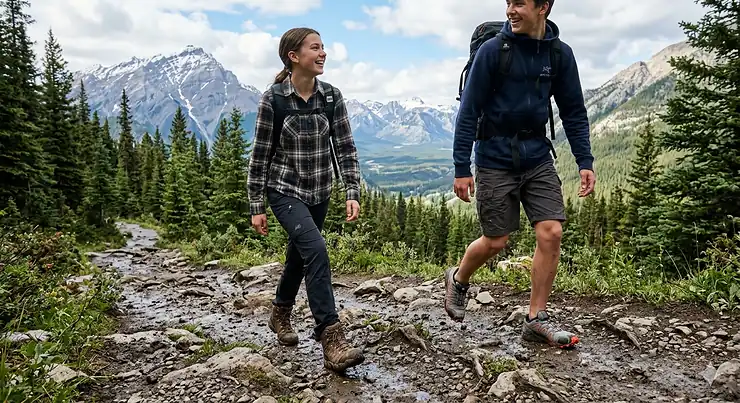
Picture this: your teenager is halfway up a rain-slicked trail in Algonquin Provincial Park, mud splashing up their calves, and their footwear — whatever you bought them last spring — is making or breaking the entire trip. The debate around waterproof hiking boots vs trail runners teens is one of the most common questions Canadian parents and teen hikers ask before every hiking season, and it’s a genuinely complex one. There’s no single right answer. The choice depends on terrain type, trail conditions, your teen’s foot shape and last width, and how much they’re willing to deal with a longer break-in time vs. something they can lace up and go.
In Canada, the footwear question gets even more interesting. Our trails range from the rain-soaked rainforest paths of British Columbia’s North Shore to the rocky limestone ridges of the Bruce Trail in Ontario, the boggy muskegs of northern Alberta, and the short but intense summer hiking season in Quebec’s Laurentians. What works brilliantly for a July day hike in Banff may be miserable in the wet shoulder season on Cape Breton’s Cabot Trail.
The short version: waterproof hiking boots offer better ankle support vs lightweight trail runners, provide superior protection in muddy and wet terrain, and tend to have stiffer soles for rocky scrambles. Trail runners offer breathability, low weight, and near-zero break-in time — huge advantages on well-groomed summer trails or fast-moving day hikes where teens need freedom of movement, not a tank on each foot. For the waterproof vs trail runner debate specifically, the Gore-Tex vs eVent membrane question also matters — and we’ll break that down in detail.
This guide reviews 7 real products available on Amazon.ca, all verified for Canadian availability in 2026. Prices are listed in CAD. Let’s dig in. 🇨🇦
Quick Comparison: Waterproof Hiking Boots vs Trail Runners for Teens
| Feature | Waterproof Hiking Boots | Trail Runners |
|---|---|---|
| Ankle support | High — mid or high cut | Low to medium — usually low cut |
| Weight | Heavier (400–700g per boot) | Lighter (200–400g per shoe) |
| Break-in time | 10–30 hours recommended | Minimal — often none |
| Waterproofing | Gore-Tex or eVent membrane standard | Varies; not always waterproof |
| Breathability | Lower — membrane traps heat | Higher — mesh upper dries faster |
| Best terrain | Mud, roots, rocks, shoulder season | Groomed trails, summer, long distances |
| Vibram sole traction | Common on premium models | Available but less standard |
| Foot shape / last width | Often wider — check brand lasts | Tends to run narrower |
| Price range (CAD) | $55–$200+ | $50–$160+ |
| Best For | Technical, wet, rugged Canadian trails | Fast day hikes, warm-weather adventures |
Looking at this table, the right call really comes down to where and when your teen is hiking. If your family is exploring the coastal trails of Vancouver Island in October, a waterproof hiking boot wins easily — those trails are relentlessly wet, rooty, and cold. But if your teen is logging kilometres on the groomed trails of Ontario’s provincial parks in July, a breathable trail runner with good Vibram sole traction will make the day far more enjoyable and blister-free. The ankle support vs lightweight trade-off is real: teens with previous ankle injuries or those tackling uneven terrain genuinely benefit from the added structure of a mid-cut waterproof boot.
💬 Just one click — help others make better buying decisions too! 😊
Top 7 Waterproof Hiking Boots vs Trail Runners for Teens: Expert Analysis for Canadian Buyers
1. Merrell Kids’ Moab Speed 2 Mid A/C Waterproof — Best Overall for Canadian Teen Hikers
The Merrell Moab Speed 2 Mid A/C Waterproof is essentially the boot Merrell designed when they realized teens don’t want a traditional clunky hiking boot but still need real waterproofing and support. It sits in a fascinating middle ground between waterproof hiking boots vs trail runners teens — it’s a “hiker-sneaker hybrid” that walks (pun intended) both worlds.
Key specs worth understanding: the seam-sealed waterproof construction, rather than a full Gore-Tex membrane, keeps the price accessible while still handling Canadian rain and puddles confidently. The FLOATPRO FOAM™ midsole delivers notable cushioning and energy return — meaning it doesn’t just absorb shock, it pushes back a little, reducing fatigue on longer days. The mid-cut ankle height with hook-and-loop or lace-up closure provides real ankle support without locking a teen’s foot in place, which matters a lot for active teenagers who resist anything that slows them down.
For Canadian families, this boot excels on the typical Ontario and Quebec provincial park trail — wooded, moderately rooty, with unpredictable weather. It handles spring thaw mud reasonably well, though deep bog crossings will eventually breach the ankle cuff. The break-in time footwear factor is minimal here — most reviews note comfort from the first few kilometres.
Canadian buyer reviews consistently praise the durability; parents note that unlike cheaper alternatives, the toe cap reinforcement actually holds up against rocks and roots for a full season rather than delaminating by midsummer. The anti-stink lining is a genuinely appreciated feature when hiking with teenagers.
✅ Fast break-in, wearable from day one
✅ FLOATPRO FOAM™ cushioning handles long days well
✅ Seam-sealed construction reliable for most Canadian wet conditions
❌ Not a full Gore-Tex membrane — extreme soaking will eventually penetrate
❌ Hook-and-loop closure option may feel “younger” to older teens
Available on Amazon.ca (Prime-eligible for most sizes). Price range: $70–$110 CAD. Solid value for a mid-range waterproof boot that bridges the gap between boots and trail runners.
2. KEEN Kids’ Targhee Mid Waterproof Boot — Best for Wide Feet and Rocky Terrain
KEEN has built its reputation on one thing most other brands ignore: foot shape and last width. If your teen has wider-than-average feet — very common during growth spurts — the KEEN Targhee Mid Waterproof is the boot that won’t punish them for it. KEEN’s signature wider toe box allows natural toe splay, which dramatically reduces hot spots and blisters on long days.
The KEEN.DRY waterproof membrane is a proprietary system that performs comparably to Gore-Tex entry-level for most conditions — it’s breathable from the inside out while blocking water ingress. The non-marking rubber outsole with heel-capture system provides solid traction on the mixed terrain typical of Canadian hiking destinations like Gatineau Park in Quebec or the Fundy Trail in New Brunswick. The heel-capture concept is specifically worth noting: it locks the heel in place to reduce slipping and the micro-adjustments that lead to blisters on uneven ground.
Where the Targhee Mid stands apart in Canada is its durability. The leather and mesh upper hybrid construction handles abrasion from granite and limestone (common on Shield terrain in Ontario and Quebec) better than purely synthetic options. For teens doing more technical day hikes or multi-day camping trips in Algonquin or Kootenay National Park, the extra protection is worth the slight weight penalty.
Canadian reviewers consistently highlight the out-of-the-box comfort — minimal break-in time footwear issues — and the reliable waterproofing through muddy creek crossings.
✅ Wide toe box ideal for teens with wider feet or those mid-growth spurt
✅ KEEN.DRY membrane: breathable and waterproof for most Canadian conditions
✅ Durable heel-capture design reduces blisters on uneven terrain
❌ Heavier than trail runners — not ideal for fast-paced long-distance hikes
❌ Runs slightly narrow in the heel for some foot shapes
Available on Amazon.ca with strong availability in youth sizes. Price range: $60–$100 CAD. One of the best value waterproof mid boots for Canadian teens.
3. KEEN Unisex-Child Skua Mid Waterproof Hiking Boot — Best for Shoulder Season and Spring Trails
The KEEN Skua Mid is a newer entry in KEEN’s youth lineup and one that deserves more attention than it gets. Where the Targhee focuses on all-around durability, the Skua Mid is built specifically with lighter synthetic construction and a more aggressive outsole pattern — making it an excellent match for shoulder-season Canadian hiking, when trails are wet, leaf-littered, and slippery.
The waterproof membrane construction keeps feet dry in the wet-weather conditions that define early May and late September across most Canadian provinces. The multi-directional lug pattern on the outsole provides noticeably better grip on wet roots and slick rock than many entry-level youth hiking boots — important on trails like those in BC’s Garibaldi Provincial Park or Newfoundland’s Gros Morne, where wet rock faces are the norm rather than the exception.
From a fit perspective, the Skua sits in a more standard-width last compared to the Targhee, making it a better fit for teens with medium-width feet. The easy-on/easy-off design is something Canadian outdoor educators love: on school trips or family camping weekends, anything that reduces the ten-minute boot-lacing routine is a win.
The ankle support vs lightweight consideration here is moderate — more ankle structure than a trail runner, less than a traditional stiff hiking boot. This makes the Skua a strong entry point for teens new to technical hiking.
✅ Aggressive outsole grips wet roots and slick rock confidently
✅ Lighter synthetic construction — less fatiguing for teen hikers
✅ Great shoulder-season performer for wet Canadian trails
❌ Less durability than leather-hybrid options over a full multi-season lifespan
❌ Not the best choice for very technical, heavily loaded backpacking trips
Amazon.ca availability: strong, Prime-eligible. Price range: $70–$95 CAD. Excellent for families who do most hiking in spring and fall across eastern and central Canada.
4. KEEN Unisex-Child Wanduro Mid Waterproof Sneaker Boot — Best Crossover: Between Boot and Trail Runner
The Wanduro Mid is KEEN’s answer to a question teens ask all the time: “Can I get something that doesn’t look like a hiking boot but still works on the trail?” If the waterproof hiking boots vs trail runners teens debate had a visual compromise, the Wanduro is it. Styled like a high-top sneaker with a waterproof membrane and trail-ready outsole, it hits a sweet spot that makes teenagers actually want to wear it.
The sneaker-inspired silhouette comes with KEEN.DRY waterproofing, a reinforced toe cap for rock and root protection, and an EVA midsole for cushioning. What the spec sheet doesn’t tell you is how this translates on trail: the flexible midsole makes the Wanduro feel much more like a trail runner underfoot than a traditional hiking boot, with less of the rigid “foot in a cast” sensation that some stiff boots can create. For teens who resist traditional hiking footwear, this is often the gateway shoe that gets them to actually participate enthusiastically on family hikes.
The low break-in time footwear requirement here is a genuine advantage. Unlike stiffer waterproof hiking boots that can require 15–30 hours of wear before they stop rubbing heel blisters, the Wanduro is typically comfortable within the first outing — a meaningful quality for a teen who might only hike a few times per season.
In Canada, the Wanduro shines on well-maintained provincial park trails and car-camping weekend adventures. It handles moderate rain and puddle-hopping effectively, though it’s not the best choice for sustained technical terrain.
✅ Sneaker aesthetic that teens actually want to wear
✅ Flexible EVA midsole — trail runner feel with waterproof protection
✅ Minimal break-in time required
❌ Less ankle rigidity than traditional mid-cut hiking boots
❌ Not ideal for very rocky, technical terrain or multi-day loads
Amazon.ca: available, multiple colour options. Price range: $57–$95 CAD. Best bang-for-buck for teens who need waterproofing but resist traditional hiking boot aesthetics.
5. Salomon Kids’ Speedcross Junior — Best Lightweight Trail Runner for Active Teen Hikers
Here’s the trail runner side of the waterproof hiking boots vs trail runners teens debate represented at its best. The Salomon Speedcross Junior is the kids’ version of one of the most celebrated adult trail running shoes ever made, and it earns every bit of its reputation. If your teen wants to move fast on trails — and teenagers generally do — this is the shoe.
The hallmark feature is the signature Speedcross lug pattern: aggressive, closely-spaced chevron lugs that bite into mud, soft dirt, and wet grass with impressive confidence. The Vibram sole traction comparison doesn’t directly apply here — Salomon uses their own proprietary Contagrip rubber — but in real-world trail performance, Contagrip on the Speedcross is genuinely excellent, especially on soft, muddy terrain like you’d find on Ontario Shield trails after rain. The quick-lace Sensifit system is a standout feature: it allows teens to dial in a precise, wrap-around fit in seconds, eliminating the floppy, ill-fitting feel that plagues many youth hiking shoes.
The critical trade-off to understand: the standard Salomon Speedcross Junior is not fully waterproof unless you specifically purchase the GTX version (Gore-Tex). Without waterproofing, it dries exceptionally fast when wet — often within 30–60 minutes of stream crossings — which has its own appeal on hot summer days on dry trails. For Canadian buyers in wetter provinces like BC, Nova Scotia, or during shoulder seasons, the GTX version is worth the price premium.
Ankle support is low — this is a low-cut trail runner. Teens with ankle instability history should consider the waterproof hiking boot options above.
✅ Aggressive Contagrip lug pattern: outstanding on muddy and soft terrain
✅ Sensifit quick-lace: secure, teen-friendly closure
✅ Extremely lightweight — reduces fatigue on long-distance days
❌ Low cut — minimal ankle support vs lightweight waterproof boot options
❌ Standard version not waterproof — verify you’re buying the GTX version on Amazon.ca for wet conditions
Amazon.ca: available in youth/big kid sizing. Price range: $65–$120 CAD (GTX version higher). The clear choice for active teens who prioritize speed and agility on trail.
6. Mountain Warehouse Drift Junior Waterproof Hiking Boots — Best Budget Pick for Casual Canadian Teen Hikers
Not every family is equipping a future Appalachian Trail thru-hiker. For parents whose teenagers hike two or three times per season on well-maintained provincial park trails, spending $150+ CAD on footwear that outgrows in eight months is genuinely hard to justify. Enter the Mountain Warehouse Drift Junior, the budget waterproof hiking boot that over 1,000 Amazon.ca reviews back up with consistent praise.
The Drift Junior features a waterproof construction (proprietary membrane, not Gore-Tex) and a sturdy rubber outsole with adequate lug depth for groomed trails. The support level is mid-range — more than a sneaker, less than a technical hiking boot — which makes it appropriate for Ontario Conservation Areas, Quebec day-use trails, and the kinds of moderate hikes most Canadian families actually do. The wider fit is noted in multiple Canadian reviews, making it suitable for teens with medium-to-wide foot shapes.
What most buyers overlook about this model is how well it handles the value-per-season calculation. At its price point in the $50–$70 CAD range, a family can replace it as the teen grows without financial pain. The waterproofing performs adequately through puddles and light rain — it’s not a four-season technical boot, but for summer and early fall hikes, it delivers what it promises.
A candid note for Canadian buyers: Mountain Warehouse is a British brand with strong presence in Canada, but their Canadian pricing occasionally runs slightly higher than the UK retail equivalent. Check for Amazon Prime eligibility on your specific size to avoid additional shipping fees.
✅ Budget-friendly price point — excellent for fast-growing teens
✅ Wide fit accommodates medium-to-wide foot shapes
✅ Decent waterproofing for light-to-moderate Canadian trail conditions
❌ Proprietary waterproofing doesn’t match Gore-Tex performance in sustained rain
❌ Less durable construction — expect 1–2 seasons of heavy use before sole separation
Amazon.ca: widely available, often Prime-eligible. Price range: $50–$70 CAD. The practical choice for families prioritising value without sacrificing basic trail protection.
7. Adidas Terrex AX4R Mid (Youth/Big Kid) — Best for Style-Conscious Teens Who Won’t Compromise Performance
Here’s the reality of buying footwear for teenagers: if the shoe doesn’t look good, it doesn’t matter how technically excellent it is — they won’t wear it. The Adidas Terrex AX4R Mid threads this needle better than almost anything else on Amazon.ca for the youth market.
The Terrex AX4R Mid brings Adidas’ trail heritage with a modern silhouette that doesn’t scream “my parents made me wear hiking boots.” The TRAXION outsole provides multi-directional traction on both wet and dry surfaces, with lug placement designed for Canadian Shield-style rocky terrain and rooted forest floors alike. The mid-cut provides moderate ankle support and the reinforced toe cap handles the casual abuse teenagers inflict on trail footwear with impressive resilience.
An important note for Canadian buyers: the AX4R Mid is available in a non-waterproof mesh version and an AX4R Mid RAIN.RDY version with Adidas’ proprietary waterproofing. For spring hikes across most of Canada — where morning dew, unpredictable showers, and stream crossings are routine — the RAIN.RDY version is the one to select on Amazon.ca. The waterproof version adds modest weight but keeps the modern athletic silhouette intact.
The foot shape and last width on Adidas trail footwear tends to run medium-to-narrow. Teens with wider feet should size up half a size or consider the KEEN options reviewed above.
Canadian reviews on Amazon.ca specifically highlight how well the AX4R holds up across a full school year — many teens wear these as everyday shoes as well as hiking footwear, which stretches the per-use cost significantly.
✅ Modern aesthetic — teens will actually choose to wear these
✅ TRAXION outsole grips confidently on rock, root, and muddy terrain
✅ Reinforced toe cap survives both trail use and everyday wear
❌ Runs narrow — not ideal for wider foot shapes
❌ Waterproof version must be specifically selected on Amazon.ca
Amazon.ca: available in youth sizing. Price range: $75–$130 CAD. The performance boot that doubles as everyday footwear — outstanding cost-per-wear value.
✨ Don’t Miss These Exclusive Deals!
🔍 Take your teen’s hiking game to the next level with these carefully selected picks. Click on any highlighted product above to check current pricing and availability on Amazon.ca. The right footwear will keep your teenager exploring Canadian trails comfortably and safely all season long!
How to Choose Between Waterproof Hiking Boots vs Trail Runners for Your Teen in Canada
Making the right call on waterproof hiking boots vs trail runners teens doesn’t have to be complicated. Here are seven numbered criteria with the expert reasoning behind each:
1. Assess the terrain you’ll actually hike. Groomed provincial park trails in summer? Trail runners win on comfort and breathability. Rocky Shield terrain, coastal BC trails in any season, or Quebec shoulder-season mud? A waterproof mid boot is the responsible choice. Most Canadian families underestimate how wet and variable our trails get from September through May.
2. Consider ankle support vs lightweight priorities. If your teen has any history of ankle rolling or sprained ankles, the structure of a waterproof mid-cut boot is meaningful protection. If they have strong ankles and prioritize agility, the lightweight trail runner is liberating. Don’t let marketing make this choice — let your teen’s actual physiology guide it.
3. Factor in the break-in time footwear reality. Traditional waterproof hiking boots — especially stiffer leather-upper models — can require 10–30 hours of wear before they stop generating hot spots. Trail runners typically have zero break-in period. For teens who hike infrequently, a high break-in boot is a recipe for blisters on every outing.
4. Understand Gore-Tex vs eVent membrane differences. Gore-Tex is the industry standard — excellent waterproofing with decent breathability. eVent is technically more breathable because it uses a direct-venting structure rather than Gore-Tex’s polyurethane layer — but it’s less common in youth footwear and generally more expensive. For most Canadian teen hikers, Gore-Tex or a quality proprietary membrane (KEEN.DRY, seam-sealed) is entirely sufficient. eVent is worth seeking out for teens doing high-output activities like trail running or fast-packing where internal moisture (sweat) management matters as much as external waterproofing.
5. Check foot shape and last width carefully. Teen feet, especially those mid-growth spurt, are notoriously variable in width. KEEN consistently offers the widest toe box across their youth lineup. Merrell runs medium-standard. Salomon and Adidas tend to run narrow. Ordering the wrong width is the top cause of returns — check brand-specific sizing guides before purchasing on Amazon.ca.
6. Evaluate Vibram sole traction vs proprietary outsoles. Vibram is the most respected outsole brand in the industry — their Megagrip compound, found on premium adult boots like the HOKA Kaha 3 GTX, provides exceptional wet rock traction. Most youth models use proprietary rubber compounds to keep costs accessible. Salomon’s Contagrip and KEEN’s All Terrain rubber are both strong performers that don’t sacrifice much against Vibram in real-world youth hiking conditions.
7. Think about Canadian seasonal use. Canada’s shoulder seasons (April–May and September–October) are when waterproofing earns its keep. If your teen only hikes in July and August in central/eastern Canada, a non-waterproof trail runner may genuinely serve them better — the breathability advantage on hot days is substantial, and most summer trails in those months are dry.
Real-World Canadian Teen Hiker Profiles: Matching Footwear to Your Family
Understanding which shoe works best often comes down to recognizing which type of Canadian teen hiker your teenager actually is. Here are three specific profiles that cover the most common scenarios:
Profile 1: The Reluctant Participant — Suburban Ontario family, moderate trails, 4–6 hikes per year. This is the teenager who’d rather be on their phone but genuinely enjoys the outdoors once they’re out there. The priority is comfort and style — if the shoes hurt or look embarrassing, the hike becomes a negotiation every time. For this teen, the KEEN Wanduro Mid Waterproof or Adidas Terrex AX4R Mid are the clear recommendations. Both offer adequate waterproofing for Ontario’s mixed-condition trails, modern aesthetics, and minimal break-in time footwear requirements. Budget range in CAD: $75–$130.
Profile 2: The Enthusiastic Trail Runner — BC or Alberta teen, hiking multiple times per month, varied terrain. This teen does 10+ hikes per season, moves fast, and is comfortable on technical terrain. They know their ankle stability is good and they hate heavy footwear. The Salomon Kids’ Speedcross Junior GTX is the obvious fit here — aggressive Contagrip traction, featherlight construction, and Gore-Tex protection for BC’s perpetually wet trail conditions. If they’re transitioning to backpacking with a loaded pack, step up to the Merrell Moab Speed 2 Mid for added support. Budget range: $90–$130 CAD.
Profile 3: The Wide-Foot Shoulder-Season Hiker — Atlantic Canada or Northern Ontario family, variable weather, technical terrain. Atlantic Canada trails are notoriously root-heavy, wet, and unpredictable. Add a teen with wider-than-average feet and the footwear choice becomes even more critical. The KEEN Targhee Mid Waterproof is built for exactly this combination: KEEN’s wide toe box prevents the pinching that leads to blisters on uneven terrain, the KEEN.DRY membrane handles sustained New Brunswick or Nova Scotia rain, and the heel-capture system reduces slipping on rooted, wet downhills. Budget range: $60–$100 CAD.
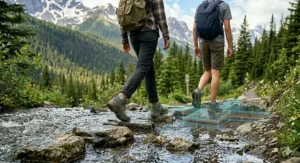
Gore-Tex vs eVent Membrane: What Every Canadian Teen Hiker’s Parent Should Know
This is one of those topics where marketing often overwhelms useful information, so let’s cut through it clearly.
Gore-Tex is the most widely used waterproof-breathable membrane in the industry, produced by W.L. Gore & Associates. It works by bonding a microporous ePTFE (expanded polytetrafluoroethylene) membrane to the fabric of the shoe. Water molecules (as liquid) are too large to pass through the membrane’s pores — they’re blocked. Water vapour molecules (sweat) are small enough to pass through — they escape. The result is a shoe that keeps external water out while allowing internal moisture to vent. In practice, Gore-Tex performs excellently in most Canadian conditions: rain, puddle crossings, dewy morning grass, and light snow.
eVent takes a different approach. Instead of Gore-Tex’s laminated ePTFE with a polyurethane coating, eVent uses a direct-bonded ePTFE structure without the PU layer. The result is measurably higher breathability — eVent allows water vapour to escape more efficiently, reducing internal sweat build-up during high-output activities. For a teen who’s moving fast uphill and generating significant body heat, eVent’s superior breathability reduces the clammy, wet-from-the-inside feeling that even the best Gore-Tex shoes can produce during intense effort.
What this means for Canadian teen hikers: For most families doing 1–3 hikes per month at moderate pace, Gore-Tex is perfect — and it’s available in almost every youth hiking boot on Amazon.ca. If your teen is a serious trail runner or does fast-packing adventures in national parks, eVent’s breathability advantage becomes meaningful, and it’s worth seeking out adult sizing in smaller versions. The Altra Lone Peak ALL-WTHR Mid (adult sizing starting from US size 5) uses an eVent membrane and is available through specialty outdoor retailers in Canada — worth considering for older teens transitioning to adult sizing.
The practical Canadian guidance: for shoulder-season and general waterproofing, any quality membrane (Gore-Tex, KEEN.DRY, seam-sealed) will serve your teen well. Obsessing over membrane spec differences matters far less than ensuring proper fit and appropriate cut height for the terrain.
Ankle Support vs Lightweight: The Trade-Off Every Canadian Teen Hiker Faces
This is the core tension at the heart of the waterproof hiking boots vs trail runners teens debate, and it deserves its own honest examination.
The case for ankle support: Mid-cut hiking boots physically limit the range of ankle inversion — the sideways rolling motion that causes sprains. Research from the Canadian Physiotherapy Association and sports medicine consensus supports the use of higher-cut footwear for patients with prior ankle injuries or proprioceptive deficits. For teenagers on technical terrain carrying a loaded pack, the boot’s cuff provides a physical reminder and partial mechanical barrier against rolling. On loose scree above tree line in the Rockies, or on wet granite in Killarney Provincial Park, that extra structure can prevent a trip-ending ankle sprain.
The case for lightweight trail runners: The counterargument is equally evidence-based. Trail runners allow the foot and ankle to move naturally, which over time strengthens the proprioceptive (balance and position awareness) muscles in the lower leg. Studies suggest that hikers who consistently use rigid ankle support may actually develop weaker intrinsic ankle stability over time. Additionally, reduced shoe weight directly reduces fatigue: a 200g reduction per shoe translates to roughly 300 fewer kilograms lifted per 10 kilometres — a statistic that compounds hard on long Canadian trails. For teens who are athletic, have no injury history, and are hiking well-maintained trails, the lightweight trail runner genuinely produces better outcomes.
The honest Canadian synthesis: For most teen hikers, the terrain type matters more than any single boot feature. Use waterproof mid boots on technical, uneven, heavily loaded, or consistently wet Canadian terrain. Use lightweight trail runners on groomed, dry, shorter distance trails. And if your teen does both? The two-shoe approach — a waterproof hiking boot for shoulder season and technical terrain, a trail runner for summer day hikes — is how experienced Canadian hikers manage their kit.
✨ Looking for the right fit for your teen’s next Canadian adventure? Browse all highlighted products above and check current pricing on Amazon.ca. The right footwear makes every km more enjoyable!
What to Expect: Real-World Performance of Teen Hiking Footwear in Canadian Conditions
Canada’s trail conditions are genuinely punishing on youth footwear. Here’s what the spec sheets won’t prepare you for:
Spring thaw (April–May across most provinces): This is the season that separates decent waterproof boots from great ones. Meltwater, mud, saturated soil, and stream crossings happen simultaneously. A seam-sealed waterproof boot like the Merrell Moab Speed 2 Mid handles most of this well, but even Gore-Tex will eventually allow water infiltration if your teen is ankle-deep in a Quebec bog for extended periods. The rule: waterproofing keeps you dry through incidental wet contact; sustained submersion will beat most youth boots within 20–30 minutes.
Summer heat (July–August in interior Canada): Waterproof membranes become a liability in 28°C+ heat. On dry summer trails in Ontario or BC’s dry interior, a breathable trail runner like the Salomon Speedcross Junior will leave your teen’s feet measurably cooler and blister-free compared to a full waterproof boot. The membrane traps heat; on hot days, even the best Gore-Tex is no substitute for mesh-upper ventilation.
Shoulder season wet-cold (September–October): The ideal conditions for waterproof hiking boots. Temperatures in the 5–15°C range with regular rain mean wet feet in trail runners become a cold, miserable experience within an hour. A properly waterproofed mid boot keeps feet dry and warm long enough to complete full-day hikes comfortably. This is when the investment in a quality waterproof boot really pays off.
Winter (November–March in most provinces): Beyond the scope of most trail hiking, but worth noting: standard waterproof hiking boots without insulation are not sufficient for sustained cold below -5°C. If your teen hikes in winter, look for models with Thinsulate or equivalent insulation — none of the seven products above are designed as primary winter boots.
Common Mistakes When Buying Hiking Boots or Trail Runners for Canadian Teens
1. Buying adult sizing too early. Growth spurts make parents want to buy ahead, but a boot that’s 1–1.5 sizes too large creates heel lift that causes serious blisters. Fit for current foot size with a standard 10–12mm of growth room (about half a size), not a full size ahead.
2. Ignoring foot shape and last width. Most parents pick the brand they know or the design their teen likes without checking last width. KEEN runs wide; Salomon runs narrow; Merrell runs medium-standard. A narrow last on a wide-footed teen will produce blisters within the first hour on trail.
3. Assuming “waterproof” means waterproof at all heights. Waterproofing in teen hiking boots works up to the boot’s collar height. If the trail has puddles or stream crossings deeper than the boot’s ankle height, water goes in over the top and stays trapped inside — often making things worse than a non-waterproof shoe that dries faster.
4. Skipping break-in time footwear protocol. Parents buy new boots on a Friday and expect them to perform perfectly on Saturday’s full-day hike. Stiffer waterproof boots need walking in around the house, on short walks, and on easy terrain before tackling a 20 km day hike. Skipping this step is the leading cause of preventable blisters.
5. Buying non-waterproof trail runners for BC or Atlantic Canada shoulder seasons. Trail runners are excellent in the right conditions, but “the right conditions” in coastal or Atlantic Canada doesn’t include most of spring and fall. A non-waterproof trail runner in a Nova Scotia October rain shower will have your teen in cold, soaked socks within 30 minutes. Match waterproofing level to regional climate honestly.
6. Ignoring Amazon.ca availability differences. Some popular adult hiking boot models reviewed on American outdoor sites are not available on Amazon.ca or are significantly more expensive due to import duty and exchange rate factors. Always verify Amazon.ca availability — all seven products in this guide were specifically selected for confirmed Canadian availability.
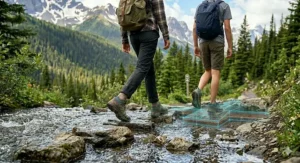
FAQ: Waterproof Hiking Boots vs Trail Runners for Teens in Canada
❓ Are waterproof hiking boots worth it for teens who hike in Canada?
❓ What is the best trail runner for teen hikers on Amazon.ca Canada?
❓ Does Gore-Tex make a real difference in teen hiking boots?
❓ How long does it take to break in waterproof hiking boots for teens?
❓ Do teen hiking boots in Canada need to be CSA certified?
Conclusion: Making the Right Call for Your Canadian Teen Hiker
The waterproof hiking boots vs trail runners teens debate doesn’t have a universal winner — and that’s exactly the point. Canadian terrain is too varied, Canadian weather too unpredictable, and teenagers’ preferences too strong for a one-size-fits-all answer.
What the evidence strongly supports: invest in waterproof protection for shoulder-season Canadian hiking, choose KEEN if foot shape and last width is a concern (their wide toe box is genuinely different), pay attention to break-in time footwear requirements before your teen’s first big hike, and don’t underestimate the ankle support vs lightweight trade-off if your teen has any ankle instability history.
For most Canadian families, the Merrell Moab Speed 2 Mid A/C Waterproof is the most practical all-season pick — it bridges the waterproof boot and trail runner divide better than anything else in the youth market at an accessible price point on Amazon.ca. For trail-running, fast-moving teens, the Salomon Speedcross Junior GTX is the clear choice. And for families where the budget is the main constraint, the Mountain Warehouse Drift Junior delivers honest waterproof performance for casual Canadian trail use without breaking the bank.
Remember: the best hiking boot is the one your teen actually wears enthusiastically. A technically superior boot sitting in the mudroom defeats the purpose entirely.
✨ Found these recommendations helpful? Click on any highlighted product to check current pricing and availability on Amazon.ca. These picks will help your teenager tackle Canadian trails with confidence — from BC’s rainforest paths to Ontario’s rocky Shield and everything in between!
Recommended for You
- 7 Best Backpacking Gear Teens in Canada 2026
- Best Avalanche Safety Gear for Youth in Canada 2026 — 7 Top Picks
- Top 7 Youth Ski Packages for Canadian Kids in 2026
Disclaimer: This article contains affiliate links. As an Amazon Associate, I earn from qualifying purchases. If you purchase products through these links, we may earn a small commission at no additional cost to you.
✨ Found this helpful? Share it with your friends! 💬🤗
