
In This Article
There’s a particular magic to watching a child link their first confident turns down a groomed blue run. But that moment only happens when the gear is right — and for most Canadian families, that means finding the ideal top youth ski package without overspending or getting overwhelmed by technical jargon.
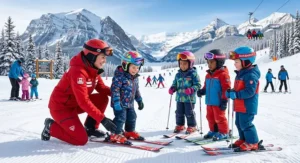
A top youth ski package is a bundled ski setup designed specifically for young skiers, typically combining age-appropriate skis with pre-mounted bindings, and sometimes boots and poles — all calibrated to a child’s weight, height, and skill level. Done right, a good package removes the guesswork of buying components separately while ensuring proper safety standards are met right out of the box.
Here in Canada, choosing youth ski gear comes with unique considerations. Our winters are demanding — from the icy hardpack of Québec resorts to the deep, heavy coastal snow of BC — and the gear needs to hold up across all of it. Add in the reality that kids grow 5–10 cm in a single season, and the calculus gets even more interesting.
I’ve spent years helping Canadian families navigate this decision, and in this guide, I’m covering everything: the best packages currently available on Amazon.ca (in CAD, always), how to nail your DIN setting calculator inputs so bindings release correctly when your kid takes a tumble, the intermediate ski length guide logic that actually makes sense, and the cross country ski vs downhill for fitness debate that every active family eventually has.
Whether you’re outfitting a first-timer in Banff or upgrading a competitive intermediate skier in the Laurentians, this guide has you covered.
Quick Comparison: Top Youth Ski Packages at a Glance
| Package | Best For | Ski Type | Approx. CAD Price Range | Binding Type | Amazon.ca Available |
|---|---|---|---|---|---|
| Rossignol Experience Pro Jr + Kid-X | Intermediate progression | All-mountain | $350–$450 | Look Kid-X | ✅ Yes |
| Atomic Redster J2 + C5 GW | Junior racers / advanced | Carving | $400–$500 | Atomic C5 GW | ✅ Yes |
| K2 Indy Jr + FDT 4.5 | Beginners, playful skiers | All-mountain | $280–$370 | FDT 4.5 | ✅ Yes |
| Head Monster Easy Jr + JRS 4.5 | True first-timers | Beginner | $250–$320 | JRS 4.5 GW | ✅ Yes |
| Salomon QST Jr XS + C5 GW | Versatile all-rounder | All-mountain | $280–$360 | Atomic C5 | ✅ Yes |
| Blizzard Rustler Twin Jr + 7.0 FDT WB | Park/freestyle-curious | Twin-tip | $340–$430 | FDT WB | ✅ Yes |
| Nordica Team G Jr + FDT 4.5 | Budget-conscious families | All-mountain | $220–$300 | FDT 4.5 | ✅ Yes |
The table above shows a clear split between entry-level packages (under $350 CAD) and the mid-range and performance tier ($400–$500 CAD). For most Canadian families where the child is in their second or third season on skis, the $320–$430 range is the sweet spot — enough quality to last 2 full seasons while remaining flexible enough to cover the variety of terrain you’ll encounter from Whistler to Mont-Tremblant.
💬 Just one click — help others make better buying decisions too! 😊
Top 7 Youth Ski Packages: Expert Analysis (2026 Edition)
1. Rossignol Experience Pro Jr + Look Kid-X Bindings — Best for Advancing Intermediates
The Rossignol Experience Pro Jr is what I’d call the “quiet achiever” of the youth ski world. It doesn’t shout about itself, but once a young skier is progressing from greens to blues and starting to build real technique, this ski delivers a noticeably more responsive feel than entry-level alternatives.
The parabolic construction gives it a predictable flex pattern — roughly soft in the tip, stiffer underfoot — which means it initiates turns with minimal effort but doesn’t wash out when the kid gets a bit aggressive. The 63–65 mm underfoot width (depending on length) puts it firmly in the all-mountain-groomer category: it’ll handle groomed blues and mild off-piste at Ontario ski hills without drama, but it’s not trying to be a powder board. Paired with the Look Kid-X binding, you get a system designed specifically around junior boot soles, with DIN settings typically ranging from 2.5 to 7 — just right for skiers weighing 20–55 kg.
In my experience, this is the package I’d put under the Christmas tree for a 9–12 year old who skied 10+ days last season and is clearly hooked. Canadian parents should know the Look Kid-X has a narrower AFD (Anti-Friction Device) track than adult Rossi bindings, which is deliberate — it’s calibrated for shorter boot soles. Don’t try to retrofit an adult boot onto this system.
Canadian reviewers on Amazon.ca frequently highlight durability through multiple seasons and the ease of boot entry as standout positives. The main criticism tends to be colour options, not performance.
✅ Responsive enough for real learning
✅ Kid-X binding specifically designed for junior boots
✅ Holds up across two to three seasons
❌ Not suited for deep powder days in the Kootenays
❌ Colour/graphics may not excite style-conscious tweens
Price range: $350–$450 CAD. Strong value for a second-stage ski that grows with technique, not just height.
2. Atomic Redster J2 Skis + C5 GW Bindings — Best for Junior Racers and Serious Intermediates
If your kid watches ski racing on TV and wants to go fast, the Atomic Redster J2 is the answer. This ski is Atomic’s junior carving and race-development platform, drawing directly from their adult Redster lineage. That’s not marketing copy — you can feel it the moment the ski engages an edge on hardpack.
The Redster J2 uses a lightweight sandwich construction with a partial wood core, which gives it a snappy rebound that pure cap-constructed beginner skis simply don’t have. The waist width sits around 60–62 mm depending on length, and the turn radius is tight (typically 9–11 m on a 120 cm ski), which means quick, precise turns on groomed corduroy — ideal for Canadian resort groomers at places like Lake Louise or Massif de Charlevoix. The C5 GW binding adds GripWalk compatibility, which matters if your junior skier is using newer boots with the rounded sole profile — a growing standard in 2026 junior boot design.
What most buyers overlook is that the Redster J2 is a specialist ski. It excels on hardpack and groomed runs, but take it into variable snow or heavy wet spring snow and it becomes demanding to ski. I wouldn’t recommend it for a child with fewer than 20 days on snow — the feedback is too immediate. But for the right kid, this ski accelerates technique development faster than almost anything else at the price.
Canadian buyers should note that hardpack performance is exactly what you want for Eastern Canadian resorts (Ontario, Québec), where icy conditions are common from January through February.
✅ Race-pedigree construction that teaches proper edging
✅ GripWalk (GW) compatible binding
✅ Fastest technique-builder on this list
❌ Demanding on variable or off-piste snow
❌ Not suitable for true beginners
Price range: $400–$500 CAD. Worth every dollar if the young skier is committed.
3. K2 Indy Jr Skis + FDT 4.5 Bindings — Best All-Around Package for Beginners and Early Intermediates
K2 has been building junior skis in North America for decades, and the Indy Jr reflects that experience. The standout feature here is the “Freedom” design approach: the ski is intentionally softer and more forgiving than the performance-oriented options above, which translates to easier turn initiation and a lot less frustration for kids who are still figuring out the whole “pizza vs. parallel” thing.
The cap construction keeps weight low (important — heavy skis exhaust young legs faster), and the all-mountain rocker profile gives the tips a slight early-rise so the ski doesn’t catch in variable snow. For skiers 90–140 cm tall, this means better float when the groomer gets scraped out mid-afternoon. The FDT 4.5 binding has a DIN range of roughly 2–4.5, appropriate for lighter or younger children typically in the 15–30 kg range.
For Canadian families in suburban Alberta or Ontario skiing at resorts like Rabbit Hill, Mt. Norquay, or Blue Mountain, the K2 Indy is a wonderful package: uncomplicated, durable, available in sizes from about 76 cm up to 130 cm, and forgiving enough that the first 20 ski days don’t become a battle of wills. Amazon.ca generally carries it reliably, and it qualifies for Prime shipping in most provinces.
One piece of advice I always give: if your child is at the upper end of the weight range for the FDT 4.5 binding, step up to the FDT 7 binding version instead. The difference is a wider DIN range that gives you room to adjust as the child progresses.
✅ Extremely forgiving flex — confidence-building
✅ Light construction reduces fatigue on young legs
✅ Wide size range from very young beginners upward
❌ Kids will outgrow the performance ceiling fairly quickly
❌ FDT 4.5 binding has a limited DIN range
Price range: $280–$370 CAD. Excellent entry-level investment.
4. Head Monster Easy Jr + JRS 4.5 GW Bindings — Best for True First-Timers (Ages 4–8)
The Head Monster Easy Jr is pure beginner-ski philosophy executed extremely well. The ski is short, light, and has an aggressive early rise in both tip and tail (Head calls this “Easy Rocker”) that serves one purpose: making it nearly impossible for a small child to catch an edge and fall forward. For a 4-year-old on their first day at the bunny hill, that’s not a minor comfort — it’s the difference between a joyful experience and a tearful one.
The ski comes as a package with the JRS 4.5 GW binding, which has a GripWalk compatible toe piece — future-proofing your investment as boot technology evolves. The DIN range sits at about 1.5–4.5, which is appropriate for very small skiers under 25 kg. Available in lengths typically starting at 67 cm and going up to about 107 cm.
In practice, what this means for a Canadian family is that your 5-year-old at Mont-Sainte-Anne or Sunshine Village gets a ski that’s genuinely hard to mess up on. The rocker profile forgives crossed tips, bad weight distribution, and general first-season chaos. Head’s build quality is excellent, and Canadian reviewers consistently praise the colourful Paw Patrol and Disney-licensed graphics that make reluctant kids suddenly very enthusiastic about their gear.
One honest downside: this ski has a short performance life. Once your child can consistently parallel ski green runs, they’ll be ready for something with more edge feedback. Treat it as a one-to-two season starter ski and budget accordingly.
✅ Easy Rocker makes first turns genuinely forgiving
✅ GripWalk binding is future-compatible
✅ Fun graphics that appeal to young children
❌ Performance ceiling is low — expect to upgrade within 2 seasons
❌ Not suitable for heavier or more advanced junior skiers
Price range: $250–$320 CAD. The right investment for the very youngest skiers.
5. Salomon QST Jr XS Skis + Atomic C5 GW Bindings — Best Versatile All-Rounder
Salomon’s QST line has earned a strong reputation in the adult market for balanced, easy-to-ski performance, and the QST Jr XS brings that DNA down to youth sizes. The “XS” designation signals that this is the shorter, lighter, entry-to-intermediate version — the sibling to the slightly more demanding QST Jr Team — and it strikes a compelling balance between forgiveness and progression.
What sets the QST Jr XS apart from pure beginner skis is its Woodcore construction. Even in the junior sizes, Salomon uses a lightweight wood core rather than the foam blocks common in budget-tier skis. Wood cores transmit more feedback from the snow to the skier’s feet — which sounds bad for beginners but is actually crucial for intermediate development. A child on a wood-core ski learns why their turns feel different on different snow conditions, which accelerates improvement.
The Atomic C5 GW binding paired here has a DIN range of roughly 2–7, covering a wide range of skier weights and abilities, and includes GripWalk compatibility. For a skier weighing 25–50 kg who skis across different terrain types — some resort groomer days, occasional off-piste adventures on family trips to the Rockies — this is an exceptionally versatile choice.
Available on Amazon.ca in lengths from 100 cm to 140 cm. Canadian parents should check availability early in the season (September–October); popular sizes sell out quickly.
✅ Woodcore provides better feedback than foam-core alternatives
✅ C5 GW binding covers wide DIN range
✅ Versatile across mixed terrain
❌ Slightly more demanding than pure beginner options
❌ Popular sizes can sell out on Amazon.ca — buy early
Price range: $280–$360 CAD. Exceptional value for a skill-building progression ski.
6. Blizzard Rustler Twin Jr Skis + FDT WB 7.0 Bindings — Best for Park and Freestyle-Curious Young Skiers
If your child is less interested in racing gates and more interested in hitting small jumps and jibs in the terrain park, the Blizzard Rustler Twin Jr is the clear recommendation. A twin-tip design means the tail is shaped the same as the tip — allowing the ski to be ridden forwards and backwards (switch) without catching — which is essential for any park skiing.
The Rustler Twin Jr uses Blizzard’s lightweight sandwich construction with a wood core and a medium-soft flex. That flex is deliberate: park skiing involves landing from jumps, and a stiff ski would transmit every hard landing directly to young knees. The soft-to-medium flex absorbs impact while still being responsive enough for committed turns between features. The waist width of around 85–88 mm also makes it usable on groomed runs — this isn’t a pure park specialist that’s miserable on a regular blue run.
The FDT WB 7.0 binding offers a DIN range of approximately 3–10, which covers larger or more aggressive junior skiers. The “WB” (Wide Base) platform increases binding stability on this wider ski — an important engineering consideration that many buyers overlook.
For Canadian families, it’s worth noting that most major Canadian resorts now have dedicated youth terrain parks with small features appropriate for kids 7–14 — Whistler, Tremblant, Nakiska, and Big White all have well-designed junior park areas. This ski is the right tool for those environments.
✅ Twin-tip design enables switch skiing and park progression
✅ Soft-medium flex absorbs jump landings
✅ Wide enough to use comfortably on groomed runs
❌ Not optimal for carving-focused or racing-oriented young skiers
❌ Park skiing has a higher falls-per-hour rate — consider this in safety planning
Price range: $340–$430 CAD. Best choice if your child is drawn to the park side of the mountain.
7. Nordica Team G Jr + FDT 4.5 Bindings — Best Budget-Conscious Pick for Canadian Families
Not every family needs to spend $400+ CAD to get their child well-equipped for the season. The Nordica Team G Jr delivers genuine quality at a price point that won’t create anxiety every time you check your bank account. Nordica is an Italian brand with a long history in junior ski development, and the Team G reflects careful engineering rather than corner-cutting.
The ski features a lightweight full cap construction, appropriate for the weight and strength of younger or beginner skiers. The sidecut is moderate — not as aggressive as a race ski, not as extreme as a park ski — which means it initiates turns reliably on groomed terrain without requiring precise technique. For a beginner or first-year intermediate on green and easy blue runs, this is genuinely all the ski they need.
The FDT 4.5 binding covers DIN settings from about 2–4.5, appropriate for lighter skiers. The “G” in Team G stands for girls — it comes in graphics and flex tuning thoughtfully designed for female junior skiers, though the underlying performance is equally valid for any child in the weight range.
On Amazon.ca, the Nordica Team G is frequently the most budget-accessible complete ski package from a major brand. For a family where skiing is a new activity and you’re not yet certain how committed the child will be, this is the prudent choice. If they fall in love with the sport, you can upgrade in season two with full confidence.
✅ Best price-to-quality ratio on this list
✅ Reliable Nordica construction won’t fail mid-season
✅ Good choice for first-year commitment without overinvesting
❌ Performance ceiling lower than mid-range options
❌ Limited size range — not available for older/taller youth
Price range: $220–$300 CAD. The smart starting point when you’re new to youth ski gear.
✨ Don’t Miss These Exclusive Deals!
🔍 Take your young skier’s mountain experience to the next level with these carefully selected packages. Click on any highlighted item to check current pricing and availability on Amazon.ca. These packages will help your family create authentic mountain memories for seasons to come!
Intermediate Ski Length Guide: How to Size Youth Skis Properly
This is where most Canadian families make their first expensive mistake — buying skis that are either too long (resulting in a frustrated, struggling child) or too short (something a fast-progressing kid outgrows before the season is half over). Let me break down the intermediate ski length guide logic clearly.
The Basic Rule: Chin to Nose
The universally accepted starting point for youth ski sizing is that the ski should reach somewhere between the child’s chin and nose when stood upright on the floor. Beginners should lean toward the shorter end of that range (chin height), while confident intermediates can size up toward nose height. Advanced young skiers riding aggressively may even go up to forehead height.
In metric terms — which is the correct unit to use when shopping on Amazon.ca — here’s a practical youth ski length reference chart:
| Child Height (cm) | Beginner Length (cm) | Intermediate Length (cm) |
|---|---|---|
| 90 cm | 70–80 | 80–90 |
| 100 cm | 80–90 | 90–100 |
| 110 cm | 90–100 | 100–110 |
| 120 cm | 100–110 | 110–120 |
| 130 cm | 110–120 | 120–130 |
| 140 cm | 120–130 | 130–140 |
| 150 cm | 130–140 | 140–150 |
| 160 cm | 140–155 | 150–160 |
As a general rule, youth skis are suitable up to a height of approximately 160 cm and weight of around 55 kg, at which point transitioning to adult models becomes appropriate. Athletic, aggressive young skiers often make this transition earlier.
Weight Matters Too
Height alone doesn’t tell the full story. If your child is heavier than average for their height, size up within the range. Lighter children should lean shorter. This is especially relevant for Canadian kids in bulkier winter layers — don’t measure height in a parka.
The Intermediate Nuance: Terrain and Snow Type
An intermediate skier at Whistler in BC (heavier wet snow, variable conditions) will do better on a slightly longer ski than a same-sized child skiing the groomed hardpack of Mont-Tremblant in Québec. Longer skis provide more surface area for stability in variable snow; shorter skis are more nimble on hardpack groomers. When in doubt, a certified ski technician at a Canadian ski shop (many of which also appear on Amazon.ca’s third-party seller listings) can provide a fitting based on your specific resort environment.
Understanding DIN Setting Calculator: Safety Isn’t Optional
The DIN setting is the single most important safety variable in your child’s ski setup, and it’s one that parents routinely overlook, misread, or simply leave at whatever the rental shop set last year. Let me correct that.
What DIN Actually Means
DIN stands for Deutsches Institut für Normung — the German Institute for Standardization — and refers to the release force setting on ski bindings as governed by the international ISO 11088 standard. The DIN number determines how much force is required to release your child’s boot from the binding during a fall. A setting that’s too high means the binding won’t release when it should, dramatically increasing the risk of knee ligament injuries (ACL, MCL) and tibial fractures. Too low, and the binding releases during normal skiing, causing unexpected falls.
How the DIN Setting Calculator Works
A proper DIN setting calculator requires five inputs:
- Skier weight (kg) — primary factor
- Skier height (cm) — used to derive a body-mass index code
- Boot sole length (mm) — found printed on the heel of the ski boot
- Age — children under 9 and adults over 50 require lower settings due to bone fragility
- Skier type — Type I (cautious, prefers slow speeds), Type II (average), Type III (aggressive, fast)
The ISO 11088 standard then maps these inputs to a recommended DIN value. For most Canadian junior skiers aged 6–14 weighing 20–45 kg, DIN settings typically fall between 1.5 and 5.0.
An excellent free DIN setting calculator based on the ISO 11088 standard is available at dincalculator.com, which provides instant results without registration.
A Critical Warning
Never set your own child’s bindings based solely on an online calculator without subsequent verification from a certified ski technician. The calculator gives you a target number; a qualified technician uses a torque wrench and forward pressure gauge to actually set and verify the binding. Most Canadian ski shops offer this service for under $30 CAD per pair. Given that improper DIN settings are a leading cause of preventable ski injuries in children, this is not a cost to skip.
Cross Country Ski vs Downhill for Fitness: Which Discipline Builds Better Athletes?
This is a question I get from Canadian parents every season, especially families in regions like the Ottawa Valley, the Prairies, or suburban BC where cross-country trails are as accessible as alpine hills. The answer is nuanced, and it matters for how you think about your young athlete’s winter training.
The Calorie and Cardiovascular Case for Cross-Country
Cross-country skiing is arguably the most demanding cardiovascular sport in existence. A 70 kg skier burns approximately 625 calories per hour at moderate effort cross-country, versus around 463 calories per hour in moderate downhill skiing. At vigorous intensity, cross-country can burn upward of 900 calories per hour. The reason is simple: cross-country requires continuous propulsion using both arms and legs simultaneously, engaging the quadriceps, hamstrings, glutes, core, lats, and triceps in a coordinated rhythmic pattern that never fully rests.
Elite cross-country skiers consistently post some of the highest VO2 max scores ever recorded in sport — higher than elite cyclists and marathon runners. The cardiovascular benefits of regular cross-country skiing include improved insulin sensitivity, lower resting heart rate, better blood lipid profiles, and improved lung capacity. For a young Canadian athlete who wants to build aerobic fitness across winter months, cross-country skiing is nearly unmatched.
The Case for Downhill: Power, Proprioception, and Fun
Downhill (alpine) skiing, however, offers something cross-country doesn’t: intense proprioceptive challenge, explosive muscle engagement, and — critically for youth athletes — the psychological thrill that keeps kids wanting to do it again. Downhill skiing is interval training in nature; intense runs are followed by gondola recovery periods. Research published in the Journal of Sports Science and Medicine found that all forms of skiing (including alpine) improve cardio-metabolic markers, including insulin resistance and glucose metabolism.
For youth-specific athletic development, downhill skiing builds exceptional lower-body strength, balance, and spatial awareness. The quick edge-to-edge transitions of carved turns develop hip strength and rotational stability that translates to almost every other sport a child might play.
The Practical Verdict for Canadian Families
If your goal is maximum fitness return for a youth athlete, cross-country skiing wins outright. If your goal is technique development, mountain access, and keeping your kids enthusiastic about winter, downhill delivers in ways cross-country cannot replicate. Many Canadian families — particularly those in mountain provinces — choose both: cross-country training on school-day evenings and downhill on weekends. This combination is genuinely excellent for young athlete development.
Carving Ski Characteristics: What Canadian Youth Skiers Actually Need to Know
Once a junior skier starts to move beyond parallel turns on green runs and begins exploring blues and reds, the question of carving ski characteristics becomes relevant. Understanding this will help you choose the right ski from the list above and know when to make the jump from an all-mountain beginner ski to a more performance-oriented setup.
What Makes a Ski a “Carving Ski”
A carving ski is defined primarily by three design features: a narrow waist width (typically under 75 mm), a pronounced sidecut (the hourglass shape visible from above), and a short turn radius (under 17 metres). When tilted onto an edge on hardpack snow, the ski’s sidecut causes it to bend into a curved arc — and it follows that arc through the turn with minimal skidding. This is a carved turn, and it’s the foundation of efficient alpine technique.
The relationship between these dimensions is straightforward: a ski with a narrow waist (say, 62 mm) and wide tips and tail (say, 115–120 mm) has a deep sidecut, which creates a short turn radius. Short turn radius = quick, snappy turns. A turn radius of 9–12 metres means the ski will want to make tight slalom-style turns. A radius of 15–17 metres makes longer, more GS-style arcs.
Why This Matters for Youth Skiers in Canada
For Canadian intermediates skiing the groomed hardpack typical of Ontario ski areas like Snow Valley or Horseshoe Resort, a carving ski in the 11–14 m turn radius range is ideal. The icy, firm surface rewards proper edge engagement, and a carving ski teaches that engagement naturally. The Atomic Redster J2 described above is a prime example: its tight sidecut on hardpack makes it almost self-teaching — put it on edge, and the ski carves. Resist that edge, and it punishes you immediately with a washed-out turn.
For western Canadian conditions — heavier snow, more variable grooming, more off-piste opportunities — a slightly wider, less aggressive ski like the QST Jr XS serves intermediate youth skiers better. The slightly longer effective turn radius gives more stability in variable conditions while still providing a proper carving feel on groomers.
The takeaway: don’t buy a dedicated carving ski for a child who skis more than 20% of their time on unprepared terrain. The narrow waist will sink in powder and chatter in variable snow. Save the carving ski for committed resort skiers who spend most of their time on groomed blue and black runs.
Ski Pole Length Formula for Youth Skiers: Get This Right from the Start
Poles are the most commonly misfitted component in a youth ski package. Too long and they force poor upper body posture; too short and they provide no useful rhythm or timing cues. Many instructors recommend skiing without poles for the first one to two seasons — and that’s reasonable advice for true beginners — but once a child starts developing parallel technique, properly fitted poles are genuinely useful.
The Formula
The standard ski pole length formula for children is:
Pole length (cm) = Child’s height (cm) × 0.70
For example: a child who is 130 cm tall needs poles of approximately 91 cm (130 × 0.70 = 91). Since poles are sold in 5 cm increments, you’d select 90 cm.
A practical physical check: stand the child upright, have them hold the pole upright with the tip on the ground (or flip the pole and grip just below the basket). The elbow should form approximately a 90-degree angle. If the elbow is higher than 90 degrees, the pole is too short. If lower, it’s too long.
Adjustments for Discipline
This 0.70 formula is for standard alpine/downhill skiing. Cross-country poles are longer — classic cross-country uses approximately height × 0.84, while skate technique poles use height × 0.89. Don’t accidentally buy cross-country poles for an alpine package.
For park and freestyle skiing, poles can be slightly shorter than the formula suggests — around height × 0.65 — since they need to stay out of the way during tricks and jumps.
A Note on Adjustable Poles
Telescopic poles are a smart investment for growing children. A quality adjustable pole set from Amazon.ca in the $35–$60 CAD range can typically cover a child across two to three centimetres of height growth, saving you from buying new poles every season. Look for a clamp-style adjustment mechanism rather than twist-lock, as clamp locks are more reliable in cold Canadian temperatures when gloves make fine motor manipulation difficult.
How to Choose a Youth Ski Package in Canada: A Step-by-Step Framework
Choosing the right top youth ski package involves more than reading a comparison table. Here is a structured decision framework tailored to Canadian conditions.
Step 1: Establish the current skill level honestly. Beginner = has never or has skied fewer than 5 days; learning to stop, no parallel turns yet. Intermediate = parallel turns on green/easy blue runs, 10+ days on snow. Advanced = confident on blues and blacks, starting groomed steeps. Overestimating skill is the most common mistake, and it leads to a ski that frustrates rather than develops.
Step 2: Measure height and weight in metric. Height determines ski length range. Weight determines whether you size to the lower or upper end of that range, and it’s essential for the DIN setting calculation.
Step 3: Determine your resort environment. Eastern Canadian resorts (Québec, Ontario, Maritimes) = predominantly hardpack/icy — lean toward narrower, more carving-oriented skis. Western Canadian (BC, Alberta, Rockies) = more variable conditions — lean toward slightly wider all-mountain profiles.
Step 4: Use a DIN setting calculator with a professional verification. Use the online calculator at dincalculator.com as a reference, then take skis and boots to a certified ski technician for proper mechanical setting.
Step 5: Verify Amazon.ca availability and Prime eligibility. For most Canadian provinces, Amazon Prime provides free, fast shipping on ski packages over $35 CAD. Remote northern communities may experience longer delivery windows — plan accordingly and order in September or October to avoid the November rush.
Step 6: Budget for boots if not included. Many packages on Amazon.ca include only skis and bindings. Performance ski boots youth models from brands like Rossignol Comp J3, Atomic Hawx Kids 2, and Dalbello Green Gaia are available on Amazon.ca separately, typically in the $120–$250 CAD range depending on flex index and GripWalk compatibility.
Performance Ski Boots Youth: What Parents Overlook
The most technically critical component in any youth ski setup is often the one that gets the least attention: the ski boot. A misfit boot — whether too large, too stiff, or too loose around the heel — will sabotage even the best ski package on this list.
Flex Index and Age
Youth ski boots are rated by a flex index, typically ranging from 30 to 90 in junior models. The flex index describes how easily the cuff of the boot can be pushed forward. A lower flex (30–50) is soft and forgiving — appropriate for beginners and younger children. A higher flex (60–90) provides more power transmission and is suited for intermediate to advanced junior skiers.
The practical recommendation: match the flex to skill level, not age. A technically skilled 10-year-old who skis 30+ days per year may be perfectly suited to a flex 70 boot that would overwhelm an athletic but less experienced 13-year-old.
The GripWalk Question
GripWalk (GW) is a newer boot-sole standard featuring a slightly rounded sole for easier walking in ski boots. Several of the bindings on this list — the C5 GW, JRS 4.5 GW, and Look Kid-X — are specifically designed for GripWalk compatible boots. Standard (ISO 5355) alpine soles also work in GripWalk bindings, but GripWalk soles should not be used in non-GW bindings without a professional verification. When buying a package on Amazon.ca, confirm the boot sole standard matches the binding.
Sizing Tips
Junior ski boots should fit snug but not painful, with the toes just barely brushing the end when standing upright. When the child flexes forward as in a ski stance, the toes should pull back slightly from the end. Canadian families buying online should check the size conversion chart carefully — Mondopoint sizing (the international standard in mm) is more reliable than European or US junior sizes, which can vary between brands.
Common Mistakes When Buying Youth Ski Gear in Canada
Even well-researched parents make these errors. Avoid them.
1. Buying skis “to grow into.” This is the most damaging mistake in youth ski purchasing. A ski that’s too long for a child forces them to use excessive upper body rotation to initiate turns, reinforcing bad habits that take years to unlearn. Always size for current ability and height, not anticipated growth.
2. Ignoring DIN settings after buying online. Amazon.ca ski packages typically ship with bindings in their minimum DIN position or factory default. They are NOT pre-set to your child’s specifications. Always have a certified technician set and verify the binding before the first ski day.
3. Skipping boot fit for the sake of convenience. Ordering boots online is risky for children, whose foot shapes vary enormously. If possible, get a professional boot fitting at a Canadian ski shop and then purchase the correct model on Amazon.ca. The few dollars saved by skipping a fitting can cost hundreds in poor technique reinforcement.
4. Not checking CSA and ISO certification markings. Reputable ski bindings sold in Canada are ISO 11088 certified. This certification should be visible in the product listing. Cheap unbranded bindings from unknown sellers may not meet Canadian safety standards — this is a product category where brand reputation genuinely matters.
5. Buying the wrong cross-country or downhill package by accident. Amazon.ca listings occasionally mix terminology. Confirm that a “complete ski package” includes alpine/downhill skis with metal-edge bindings, not cross-country skis, which have no metal edges and use a different binding standard entirely. The products in this guide are all alpine/downhill packages.
✨ Don’t Miss These Exclusive Deals!
🔍 The packages in this guide represent the best value for Canadian families in 2026. Click on any highlighted product name to check current pricing and availability on Amazon.ca. Stock moves quickly once ski season approaches — secure your young skier’s setup now!
FAQ: Top Youth Ski Package Questions for Canadian Buyers
❓ What is the best top youth ski package for a beginner in Canada?
❓ How do I know what DIN setting to use for my child's ski bindings?
❓ Does Amazon.ca ship complete ski packages to all Canadian provinces including remote areas?
❓ Is cross country skiing better than downhill for a child's fitness development?
❓ What performance ski boots youth models work best with the packages listed above?
Conclusion: Invest in the Right Start
Skiing in Canada is more than a sport — it’s part of how many of us understand winter, connect as families, and build resilience in our children. Getting the right top youth ski package is the foundation of that experience.
The seven packages in this guide represent a carefully researched selection of real products available on Amazon.ca, verified for Canadian use, and assessed against the technical factors that actually determine whether a young skier progresses joyfully or struggles frustratedly. From the budget-friendly Nordica Team G Jr for the curious first-timer to the performance-oriented Atomic Redster J2 for the young racer in the making, there’s a right answer at every level.
Take the time to get the DIN settings professionally verified, use the ski pole length formula so your child’s posture develops correctly, and use this intermediate ski length guide honestly rather than buying for growth. The investment in proper equipment pays dividends not just in performance, but in safety — and on a Canadian ski hill in January, both matter enormously.
For more guidance on ski safety standards, the Government of Canada’s physical activity resources offer useful context on youth sport safety. Ski Canada Magazine and the Canadian Ski Council are also excellent Canadian-specific resources for families new to the sport.
✨ Don’t Miss These Exclusive Deals!
🔍 Ready to gear up your young skier for the 2026–27 season? Click any highlighted product in this guide to check the latest pricing and availability on Amazon.ca. Grab your package before sizes sell out — Canadian winters wait for no one! 🇨🇦⛷️
Recommended for You
- 7 Best Intermediate Snowboard Setups in Canada 2026
- Best 7 Agility Ladder and Cones Training Sets Canada 2026: Transform Your Athletic Performance
- Top 7 Portable Fitness Gear Teens Love in Canada 2026
Disclaimer: This article contains affiliate links. As an Amazon Associate, I earn from qualifying purchases. If you purchase products through these links, we may earn a small commission at no additional cost to you.
✨ Found this helpful? Share it with your friends! 💬🤗
