
In This Article
Picture this: your 11-year-old confidently balancing on a bouncy webbing stretched between two backyard maples, arms outstretched, grinning from ear to ear. That’s the magic of finding the perfect slackline for beginners age 10-12. As a parent who’s watched countless neighbourhood kids transform from wobbly first-timers to mini-acrobats over Canadian summers, I can tell you that slacklining isn’t just another backyard trend—it’s a full-body workout disguised as pure fun.
The best slackline for beginners age 10-12 strikes that sweet spot between stability and challenge. Research from the International Journal of Environmental Research and Public Health shows that slackline training significantly improves static postural control and motor skills in children, making it more than just entertainment. Whether you’re in chilly Calgary or humid Halifax, a quality slackline kit transforms any outdoor space into an adventure zone that keeps kids off screens and building real-world balance, coordination, and confidence.
This comprehensive guide cuts through the noise to reveal which slackline kits actually deliver for preteens. We’ve analyzed customer reviews from Canadian buyers, compared specifications across dozens of models available on Amazon.ca, and considered factors unique to our climate—from winter storage to tree-friendly designs that won’t damage your precious sugar maples. You’ll discover budget picks starting around $40 CAD, premium obstacle course setups, and everything in between, all with honest pros and cons to help you make the smartest choice for your family.
Quick Comparison Table: Top Slacklines at a Glance
| Product Name | Length | Width | Key Feature | Price (CAD) | Best For |
|---|---|---|---|---|---|
| Get Out! Beginner Kit | 50 ft | 2 inches | Training line with ratchet | $55-$75 | First-timers |
| flybold Complete Kit | 57 ft | 2 inches | Arm trainer included | $60-$80 | Balanced learners |
| Trailblaze Slackline | 60 ft | 2 inches | Tree protectors & carry bag | $50-$70 | Backyard use |
| ZenMonkey Training Kit | 60 ft | 2 inches | Overhead line system | $70-$90 | Structured learning |
| Dripex Ninja Warrior | 50 ft x 2 | 2 inches | 10+ obstacles | $120-$160 | Active kids |
| Slackers Classic Kit | 50 ft | 2 inches | Teaching line support | $65-$85 | Canadian families |
| Gibbon Classic Line XL | 82 ft | 2 inches | Low-stretch design | $90-$120 | Long-term growth |
💬 Just one click – help others make better buying decisions too! 😊
Top 7 Slackline for Beginners Age 10-12: Expert Analysis
1. Get Out! Slackline Beginner Kit – Best Overall Value
The Get Out! Slackline Beginner Kit has earned its reputation as Canada’s go-to starter line for good reason. This 50-foot system features proper 2-inch webbing that provides the stability young slackliners desperately need during those wobbly first attempts. What sets it apart from cheaper alternatives is the training line equipped with an actual ratchet mechanism—not those flimsy D-rings that lose tension after five minutes.
Key Specifications:
- 50-foot x 2-inch polyester webbing
- Ergonomic ratchet system with safety lock
- Training line with independent ratchet
- Includes tree protectors and carry bag
Canadian buyers consistently praise its durability through multiple seasons. One Vancouver parent noted their kit survived two rainy West Coast winters with zero fraying. The tree protectors measure significantly longer than budget competitors (perfect for our chunky Canadian maples), and they include threading loops that keep everything positioned properly even when kids crank the tension up.
Pricing: Typically $55-$75 CAD on Amazon.ca with free shipping
✅ Pros:
- Training line ratchet maintains consistent tension
- Heavy-duty construction supports 300+ lbs
- Detailed setup instructions in English and French
- Compact carry bag for park trips
❌ Cons:
- Slightly heavier than ultra-light models
- Training line requires separate anchor points
Canadian customer feedback shows kids age 10-12 typically master basic walking within 2-3 weeks when using the overhead support line regularly. The ratchet system makes solo setup possible for responsible preteens, encouraging independent outdoor play.
2. flybold Slackline Kit with Training Line – Most Complete Package
For families wanting every possible learning tool in one box, the flybold Slackline Kit delivers. This 57-foot setup includes not just the standard training line but also an arm trainer attachment that transforms the kit into a mini ninja course. The arm trainer is genuinely useful—it helps kids develop the upper body strength needed for more advanced slackline tricks while providing an alternative activity when balance gets frustrating.
Key Specifications:
- 57-foot main line, 2-inch width
- Dual tree protectors (extra-wide design)
- Ratchet protector cover (weather resistance)
- Arm trainer + training line combo
This kit shines for Canadian families because the ratchet protector actually matters in our climate. It prevents ice buildup during surprise spring snowfalls and keeps moisture out during humid Ontario summers. The webbing uses reinforced stitching at stress points—flybold claims 5,000+ tensioning cycles before any wear shows, and Amazon.ca reviews from long-term users back this up.
Pricing: $60-$80 CAD, often with promotional discounts
✅ Pros:
- Arm trainer adds versatility
- Weather-resistant ratchet cover
- Instruction booklet with progression guide
- Suitable for multiple skill levels
❌ Cons:
- Training line lacks ratchet (uses basic tightening)
- Slightly more complex initial setup
Kids age 10-12 particularly love the arm trainer for building competitive challenges with friends. The progression guide breaks skills into achievable milestones, which helps maintain motivation during those inevitable plateaus.
3. Trailblaze Slackline Kit – Best Budget Choice
Don’t let the lower price fool you—the Trailblaze Slackline Kit delivers solid performance for families testing the slacklining waters. This 60-foot system focuses on essentials: quality webbing, reliable ratchet, proper tree protection. It skips extras like arm trainers or fancy carrying cases, which is exactly why it hits that sweet $50-$70 CAD price point on Amazon.ca.
Key Specifications:
- 60-foot x 2-inch high-grade polyester
- Double slackline configuration option
- Tree protectors with reinforced edges
- Basic but effective ratchet system
The double slackline feature deserves explanation—you can rig it as a standard single line OR set up parallel lines for unique tricks and games. Manitoba buyers particularly appreciate this versatility for long Canadian winters; when backyard use pauses, the system works brilliantly in basement or garage ceiling joists (with proper adult supervision and structural checking).
Pricing: $50-$70 CAD with consistent Amazon.ca availability
✅ Pros:
- Excellent value for money
- Dual setup configurations
- Supports over 300 lbs
- Minimal learning curve for setup
❌ Cons:
- No training line included
- Basic carry bag quality
- Limited colour options
Customer reviews from Canadian families show this kit works best when paired with a separately purchased training line ($15-$25 CAD). The cost savings still leave you ahead versus premium kits if your child doesn’t need extensive support accessories.
4. ZenMonkey Slackline Kit – Best Training Line System
The ZenMonkey Slackline Kit takes beginner support seriously with arguably the market’s best overhead training line setup. While competitors include flimsy support lines as afterthoughts, ZenMonkey engineered their system specifically for kids age 10-12 who need consistent overhead support. The training line uses proper webbing (not cheap rope) and maintains height even when kids put significant weight on it.
Key Specifications:
- 60-foot main slackline
- Dual ratchet system (main + training)
- Professional-grade tree protectors
- Premium cloth carry bag
What Canadian parents love is the durability factor. Tree protectors use 15cm width compared to the standard 10cm found on budget kits—crucial for protecting mature backyard trees that define many Canadian properties. The cloth carry bag withstands actual abuse; after two years of being stuffed in garage corners and tossed in minivan trunks, Alberta reviewers report zero tears or zipper failures.
Pricing: $70-$90 CAD depending on seasonal sales
✅ Pros:
- Superior training line stability
- Wide tree protectors (tree-friendly)
- Both ratchets have safety locks
- Detailed setup video tutorials
❌ Cons:
- Higher price point
- Heavier total weight
- Requires more storage space
Kids transitioning from training line to independent walking typically progress faster with this setup. The overhead support doesn’t sag or bounce excessively, building proper form from day one.
5. Dripex Ninja Warrior Obstacle Course – Best for Active Kids
Transform your backyard into a Canadian Ninja Warrior training ground with the Dripex Ninja Warrior system. This isn’t your standard slackline—it’s a complete obstacle course featuring two 50-foot slacklines and over 10 accessories including monkey bars, rope ladder, climbing net, gymnastics rings, and swing. Perfect for energetic 10-12 year olds who get bored with basic balance training.
Key Specifications:
- Dual 50-foot slacklines (100 feet total)
- 10+ weatherproof obstacles
- Heavy-duty webbing (400 lb capacity)
- 17 hooks and buckles for customization
The genius lies in adjustability—obstacles slide anywhere along the lines, letting you create easier or harder courses as skills develop. British Columbia families particularly love this for rainy-season entertainment; the weatherproof materials handle West Coast moisture without mildewing. The climbing net and rope ladder build the upper body strength that complements slackline balance work beautifully.
Pricing: $120-$160 CAD (premium pricing for complete setup)
✅ Pros:
- Endless configuration possibilities
- Multiple kids can use simultaneously
- Full-body workout variety
- Grows with skill development
❌ Cons:
- Requires significant tree spacing (15-20 feet minimum)
- Complex initial setup
- Higher investment
Canadian customer reviews emphasize this kit’s value for families with multiple children or for hosting neighbourhood kids. The variety prevents boredom, and the obstacle course format naturally creates friendly competition.
6. Slackers Slackline Kit – Best for Canadian Families
Designed specifically with North American families in mind, the Slackers Slackline Kit brings thoughtful touches that matter for Canadian use. The 50-foot system includes a teaching line that actually helps kids progress rather than just providing false security. Saskatchewan parents particularly appreciate the clear, illustrated setup guide showing proper tree selection (crucial in areas with varying tree species).
Key Specifications:
- 50-foot professional-grade webbing
- Teaching line with support rails
- Reinforced tree protectors
- All-weather construction
The teaching line uses a two-rail design that kids hold with both hands while learning weight distribution. Unlike single overhead lines that kids just grab reflexively, this system encourages proper posture and arm positioning from the start. Once balance improves, the teaching line removes easily, leaving a clean slackline setup.
Pricing: $65-$85 CAD at specialty retailers and Amazon.ca
✅ Pros:
- Teaching line promotes proper form
- Bilingual instructions (English/French)
- Wide availability across Canada
- Suitable for ages 5-adult
❌ Cons:
- Mid-range pricing without premium features
- Teaching line setup requires patience
- Limited colour selection
The kit works beautifully for multi-generational use. Grandparents visiting during Canadian summer vacations can safely try slacklining with the same teaching line that helped the grandkids master basics.
7. Gibbon Classic Line XL – Best Long-Term Investment
For families committed to slacklining as a long-term activity, the Gibbon Classic Line XL represents professional-grade equipment at consumer-friendly prices. Gibbon literally invented modern slacklining in Europe, and their 82-foot system brings competition-tested engineering to Canadian backyards. The extra length (compared to standard 50-60 foot kits) matters because it allows for longer spans between trees, opening up more setup locations.
Key Specifications:
- 82-foot x 2-inch low-stretch webbing
- German TÜV safety certified
- Premium ratchet with 5-ton capacity
- Professional tree protectors
The low-stretch webbing is what separates Gibbon from budget competitors. While stretchy lines work fine for basic walking, they make advanced tricks frustratingly difficult. Gibbon’s engineering provides just enough dynamic feel for fun while maintaining the stability needed for progression. Ontario reviewers who’ve used both budget and premium lines consistently note the difference—kids develop better technique on Gibbon equipment.
Pricing: $90-$120 CAD (premium tier)
✅ Pros:
- Professional-grade construction
- Low-stretch design aids skill development
- Exceptional durability (5+ year lifespan)
- Strong resale value
❌ Cons:
- Highest price point
- Overkill for casual use
- Heavier total weight
This kit makes sense for families with serious athletic kids or those planning to use slacklining for years. The investment pays off through longevity—Canadian buyers report Gibbon kits outlasting two or three budget replacements.
Understanding Slackline Basics: What Parents Need to Know
Slacklining emerged from Yosemite National Park’s climbing culture in the early 1980s when climbers began using their webbing for balance training on rest days. According to Wikipedia, slacklining differs fundamentally from tightrope walking because the line stretches and bounces dynamically, creating a more challenging balance environment. This dynamic quality is precisely what makes slacklining such effective training for kids age 10-12.
The sport exploded in popularity around 2006 when simple kit systems became available, transforming slacklining from a niche climbing activity into accessible family fun. Today, research published in the International Journal of Environmental Research and Public Health demonstrates that regular slackline training improves children’s static postural control, motor skills, and jump performance. A six-week study found kids perceived slackline sessions as “very light” effort (7.6 on a 20-point scale) while gaining measurable physical benefits.
For Canadian parents, this means you’re not just buying outdoor entertainment—you’re investing in genuine physical development. The balance challenges engage core stabilizers, leg muscles, and proprioceptive systems (your body’s awareness of position in space) in ways that traditional sports often miss. Plus, slacklining’s individual nature means kids can practice at their own pace without team pressure or competitive stress.
Ratchet vs Primitive Slackline: Which is Right for Beginners?
The tensioning system defines your slackline experience more than any other factor. Here’s the straight truth: for beginners age 10-12, ratchet systems win overwhelmingly. Primitive setups (using carabiners and webbing loops without mechanical advantage) require significant strength, technical knowledge, and practice to achieve proper tension. They’re the domain of experienced slackliners, not kids learning basics.
Ratchet Slackline Benefits:
- Kids can set up and adjust independently
- Consistent tension across sessions
- Safety locks prevent accidental release
- No complex knot-tying required
- Achieves proper tightness easily
Primitive Slackline Characteristics:
- Requires adult setup assistance
- Lightweight and portable
- Lower equipment cost
- Preferred by advanced users for “pure” feel
- Environmentally friendly (less hardware)
Canadian Amazon.ca reviews consistently show that families trying to save money with primitive setups eventually upgrade to ratchet systems anyway. The $20-$30 saved initially gets wasted when kids lose interest because they can’t achieve proper line tension on their own.
One exception exists: if you have an experienced slackliner in the family who can teach proper primitive rigging, those systems work beautifully for advanced progression. But for your average 10-12 year old starting from zero? Ratchet systems eliminate frustration and accelerate learning.
Webbing Width for Stability: Why 2 Inches Matters
Walk into any slackline discussion and you’ll hear debates about 1-inch versus 2-inch webbing. Here’s what actually matters for beginners age 10-12: wider is genuinely easier. The Balance Community’s technical research confirms that 2-inch (50mm) webbing provides the optimal platform for learning basic slackline skills.
How Width Affects Performance:
2-Inch Webbing (Recommended for Beginners):
- Larger landing surface for feet
- Easier to maintain balance
- Builds confidence faster
- Standard for trick-lines
- Slight disadvantage for super-long spans
1-Inch Webbing (Advanced Users):
- More comfortable against bare feet
- Better for distances over 100 feet
- Preferred by experienced slackliners
- Requires developed technique
- Standard width for highlining
Think of it like learning to ride a bike—you wouldn’t start your 10-year-old on a narrow racing bike when a stable mountain bike exists. The wider platform of 2-inch webbing lets kids focus on balance fundamentals rather than fighting to keep their feet positioned correctly. As a blogger named “A Slacker’s Blog” notes, although primitive 1-inch lines might seem more authentic, beginners figure out staying upright faster on 2-inch lines.
Every single product in our top seven recommendations uses 2-inch webbing for exactly this reason. Once your child masters 30-foot walks with turns and basic tricks, they can explore narrower lines if interested. But rushing into 1-inch webbing typically just adds unnecessary difficulty during the crucial early learning phase.
Training Line vs Trick Line: Understanding the Difference
Here’s where terminology gets confusing for new buyers. A “training line” refers to the overhead support line that beginners hold while learning balance. A “trick line” describes the main slackline’s characteristics—specifically, a stretchy, bouncy line designed for jumping and performing tricks.
Training Line (Overhead Support):
- Rigged above head height
- Provides hand support during learning
- Should use webbing (not rope) for durability
- Ideally includes its own ratchet for stable tension
- Removes easily once skills develop
Trick Line (Main Line Type):
- Higher stretch than standard lines
- Enables jumping and bouncing
- Requires good basic skills first
- More challenging to walk calmly
- Popular with advanced kids
For beginners age 10-12, prioritize getting a quality training line over trick line features. Research from Frontiers in Psychology shows that acute slackline exercise improves executive function in college students, suggesting the cognitive benefits apply across age groups when proper learning support exists. A solid training line accelerates this learning curve.
The ideal progression: Start with a standard 2-inch line (low stretch) plus training line support. Master walking, turning, and basic balance for 2-3 months. Then either adjust tension lower for bounciness or consider a dedicated trick line if your child shows serious interest in aerial maneuvers. Rushing into trick line features before solid fundamentals usually results in frustrated kids who abandon slacklining altogether.
Canadian winter offers a natural break point—master basics during summer, then upgrade to trick line features the following spring if interest continues. This pacing prevents expensive purchases of advanced equipment that sits unused when kids discover slacklining isn’t their passion.
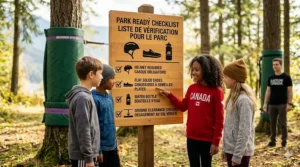
Tree Friendly Slackline Canada: Protecting Our Forests
Canadian trees face enough stress from our dramatic seasonal temperature swings, invasive pests, and ice storms. The last thing your backyard maples need is damage from improperly rigged slacklines. Tree-friendly slacklining isn’t just environmental consciousness—in many Canadian municipalities, it’s legally required. Calgary, Alberta, for instance, prohibits slackline attachment to trees in public parks, directing users to designated areas with specialized anchors.
What Makes Slacklines Tree-Friendly:
Essential Tree Protectors:
- Minimum 15cm width (wider = better force distribution)
- Soft felt or padded material
- Long enough to wrap completely around trunk
- No exposed edges or hard buckles against bark
Proper Tree Selection:
- Diameter minimum: 30cm (12 inches)
- Healthy bark with no visible damage
- Strong species (oak, maple, ash work well)
- Avoid: birch, aspen, any diseased trees
Setup Best Practices:
- Never rig on wet bark (more vulnerable to damage)
- Position protectors before adding any tension
- Check trees weekly for bark compression
- Rotate setup locations every few weeks
- Remove completely during winter months
The flybold and ZenMonkey kits in our recommendations include particularly good tree protectors—wider than standard and long enough for mature Canadian trees. Get Out! and Trailblaze offer adequate protection but might need supplemental felt pads for very old or delicate trees.
According to the International Slackline Association, proper tree protection should distribute line tension over the maximum possible surface area. Their research suggests that tree damage occurs primarily at pressure points where webbing contacts bark directly. This is why those cheap kits with 10cm protectors aren’t just inadequate—they’re actively harmful to your trees.
For families without suitable trees, consider these Canadian-friendly alternatives: fence posts (with owner permission), specialized slackline stands (like the Gibbon SlackRack), or designated slackline areas in local parks. Many Canadian communities are adding slackline zones to public spaces, recognizing the activity’s health and community benefits.
How to Choose Slackline for Beginners Age 10-12 in Canada
Buying your first slackline kit involves more than picking the cheapest option on Amazon.ca. Here’s a systematic approach that accounts for Canadian-specific factors:
1. Assess Your Available Space
Measure the distance between your best tree pair. Most beginner kits work optimally at 20-30 feet of span. Longer distances require more tension and become significantly harder to walk. If your only option is 40+ feet, look specifically for kits rated for extended spans like the Gibbon Classic Line XL.
2. Consider Your Child’s Athletic Background
Kids active in gymnastics, martial arts, or climbing typically progress faster on slacklines. They can handle slightly more challenging setups. Conversely, children new to balance activities benefit enormously from comprehensive training line systems like the ZenMonkey kit.
3. Evaluate Long-Term Use Plans
If you have multiple kids or anticipate years of use, invest in premium durability (Gibbon). For testing whether your preteen actually enjoys slacklining before committing serious money, start with solid budget options (Trailblaze, Get Out!).
4. Factor in Canadian Climate Concerns
Our temperature extremes require weatherproof materials. Look for:
- UV-resistant webbing (critical for prairie sun)
- Weather-sealed ratchets (prevents winter ice damage)
- Quick-dry tree protectors (handles spring moisture)
- Storage bags that breathe (prevents summer mildew)
5. Account for Setup Independence
Can your 10-12 year old set this up alone? Ratchet systems with clear instructions enable independent outdoor play. Complex primitive setups or obstacle courses might require adult assistance every time.
6. Match Your Budget Realistically
- Budget: $40-$60 CAD – Basic functional kits, minimal extras
- Mid-Range: $60-$90 CAD – Training lines, better construction, carry bags
- Premium: $90-$120 CAD – Professional-grade, extended warranties
- Obstacle Courses: $120-$160+ CAD – Multi-child entertainment systems
Canadian pricing on Amazon.ca includes GST/HST but watch shipping costs from US sellers. Prime-eligible products ship free, saving $15-$25 on these larger items. Factor in that premium kits often include free replacement parts versus budget options where a broken ratchet means buying entirely new equipment.
Setting Up Your First Slackline: A Canadian Parent’s Guide
You’ve unboxed your new slackline kit, and your excited 10-year-old is bouncing around the backyard. Here’s how to achieve first-session success:
Pre-Setup Checklist:
- Identify two healthy trees, 20-30 feet apart
- Clear the ground below of rocks, sticks, dangerous debris
- Have tree protectors ready
- Read instructions fully before starting
- Ensure adult supervision for first setup
Step-by-Step Setup Process:
Step 1: Wrap tree protectors around each trunk at knee height (30-60 cm from ground). Starting low reduces fall impact during learning.
Step 2: Thread the slackline webbing through the tree protector loops. Ensure the webbing sits flat against the protector—twisted webbing causes uneven tension.
Step 3: Attach the ratchet end to one tree, keeping it chest-height for easy access. The fixed end goes on the opposite tree.
Step 4: Walk the free webbing end to the second tree, maintaining slight tension to prevent tangling. Loop through that tree’s protector.
Step 5: Return to the ratchet, feed webbing through according to your specific model’s instructions. This varies by manufacturer but generally involves threading under the spindle.
Step 6: Begin ratcheting slowly. Pause every 10-15 clicks to walk the line and check tension. Beginners need surprising little tightness—over-tensioning makes learning harder.
Step 7: Set up training line (if included) at comfortable arm height. This typically requires separate anchors above the main line.
Step 8: Test stability by having an adult walk the line first. Listen for creaking trees or shifting anchors. Adjust as needed.
Common Canadian Setup Mistakes:
❌ Over-tensioning the line (creates an overly stiff, difficult surface)
❌ Using trees too close together (line sags excessively)
❌ Forgetting tree protectors (damages bark, your conscience, and equipment lifespan)
❌ Setting up during rain or on wet bark
❌ Leaving equipment rigged during winter freeze/thaw cycles
Your first setup might take 20-30 minutes. By the third session, most families complete setup in under 10 minutes. Take photos of your successful configuration—it helps remember webbing threading patterns when you haven’t set up in a while.
Safety First: Essential Rules for Kids Age 10-12
Slacklining carries inherent risks, but proper precautions make it safer than many popular sports. Here’s what Canadian parents need to enforce from day one:
Mandatory Safety Rules:
1. Low Line Height for Learning Start the line 30-60 cm off ground. Kids naturally try tricks beyond their skill level—low height prevents injury from inevitable falls.
2. Clear Landing Zone Remove every rock, stick, and hard object from underneath and 2 feet to each side. Even soft grass hides hazards. Quebec parents particularly emphasize this after their rocky soil caused several preventable scrapes.
3. Adult Supervision Initially First 10-15 sessions need adult eyes nearby. Kids age 10-12 have developing judgment about risk assessment. They don’t yet recognize when fatigue makes falls more likely.
4. No Jumping Until Walking is Mastered Attempting tricks before solid walking skills leads to bad habits and increased injury risk. The progression should be: walking confidently 20+ steps → turning → bouncing lightly → tricks.
5. Weather Awareness Slacklines become slippery when wet, stretchy in heat, brittle in cold. Manitoba families learn quickly that lines need different tension in July versus September.
6. Proper Footwear (or Barefoot) Running shoes or bare feet work best. Sandals catch on the line. Thick boots reduce sensory feedback needed for balance.
7. One Person on the Line Multiple people simultaneously creates unpredictable bouncing and tangles. Even experienced pairs practice extensively before attempting partner tricks.
8. Regular Equipment Inspection Check webbing for fraying monthly. Inspect ratchets for rust or damage. Replace tree protectors showing wear. Canadian temperature swings accelerate material aging.
Research from the University of Konstanz found zero serious injuries in their supervised slackline training studies with children. The key factor? Consistent adult supervision during the learning phase and low line height. Once kids demonstrate solid judgment and skills, they can practice independently, but those first weeks set crucial safety habits.
Benefits Beyond Balance: Why Slacklining Transforms Kids
The physical benefits are obvious—improved balance, stronger cores, better posture. But research reveals slacklining develops skills that transfer far beyond the backyard. A study in PMC’s International Journal of Environmental Research and Public Health found that slackline training enhanced children’s motor skills while being perceived as “non-fatiguing,” meaning kids view it as play rather than exercise.
Physical Development:
- Core strength through constant micro-adjustments
- Ankle and knee stabilization (crucial for winter sports like hockey and skiing)
- Proprioceptive awareness (body position sensing)
- Coordination between upper and lower body
- Cardiovascular conditioning (surprisingly intense)
Cognitive Benefits:
- Enhanced focus and concentration
- Problem-solving as kids figure out balance adjustments
- Spatial awareness improvement
- Goal-setting and achievement tracking
- Resilience building through repeated attempts
Social-Emotional Growth:
- Confidence from mastering challenging skills
- Patience development (balance takes time)
- Healthy risk assessment
- Community building with other slacklining families
- Screen-free outdoor engagement
Canadian parents on Amazon.ca frequently mention unexpected benefits in their reviews. One Toronto mother noted her ADHD son found slacklining incredibly focusing—the immediate feedback loop kept his attention better than team sports. A Saskatchewan dad discovered slacklining became the bridge connecting his athletic daughter and bookish son in shared outdoor time.
The mental health implications matter particularly in our Canadian context, where long winters can limit outdoor activity. Having a slackline kit ready for those precious spring days when temperatures hit 10°C gets kids outside immediately, capitalizing on every moment of decent weather. The portability means family camping trips, park visits, and cottage weekends all become slacklining opportunities.
Ninja Warrior Slackline Obstacle Course: Worth the Investment?
The explosion of American Ninja Warrior popularity has created a market for backyard obstacle courses combining slacklines with hanging accessories. For Canadian families with active kids age 10-12, these systems offer compelling advantages over basic slacklines—but they’re not right for everyone.
What You Get:
- Dual slacklines (often 50 feet each = 100 feet total)
- 8-14 obstacles including monkey bars, rope ladders, climbing nets, rings
- Adjustable placement (obstacles slide along the line)
- Weather-resistant materials rated for outdoor use
- Significantly higher weight capacity (usually 400+ lbs)
Ideal Candidates for Obstacle Courses:
- Families with multiple children
- Kids already into climbing, gymnastics, or parkour
- Properties with good tree spacing (15-20 feet minimum)
- Parents comfortable with more complex setups
- Budgets allowing $120-$160 CAD investment
Skip Obstacle Courses If:
- You have only one child who prefers solitary play
- Limited backyard space
- Uncertain whether kids will maintain interest
- Tight budget (better to master basic slacklining first)
The Dripex Ninja Warrior kit featured in our recommendations represents the sweet spot of value and quality for Canadian buyers. With 10 obstacles and proper weatherproofing, it transforms any suitable backyard into a legitimate training ground. Alberta families particularly appreciate these systems during those brief but glorious prairie summers when kids need maximum outdoor entertainment options.
However, honest talk: these courses require real setup effort. Initial installation with proper obstacle spacing and safety checks takes 60-90 minutes. If you’re looking for quick, spontaneous outdoor play, a basic slackline wins. But for families treating backyard fitness as a serious summer project, obstacle courses deliver incredible engagement.
Pro tip from experienced Canadian users: Set up the obstacle course in May, leave it rigged through summer, take down before September. This schedule maximizes use while avoiding Canadian winter weather damage. Store obstacles indoors in labelled containers so next spring’s setup goes faster.
Highest Rated Slackline for Kids Reviews: What Canadian Parents Say
Scouring through hundreds of Amazon.ca reviews reveals patterns worth noting. Canadian buyers have unique perspectives shaped by our climate, outdoor culture, and available spaces. Here’s the unfiltered consensus:
Most Praised Features:
- “Actually stays tight unlike cheaper kits” (ratchet quality)
- “Survived BC rain and Alberta hail” (durability)
- “My 11-year-old sets it up herself” (independence)
- “Tree protectors saved our old maple” (environmental consciousness)
- “Still using it three years later” (longevity)
Common Complaints:
- Training lines that won’t hold tension (cheap D-ring systems)
- Instructions unclear or missing French translation
- Tree protectors too short for mature Canadian trees
- Ratchets that freeze in winter storage
- Webbing that degrades after one season
Regional Differences in Reviews:
West Coast (BC): Emphasis on moisture resistance, mildew prevention, quick-dry materials. Frequent mentions of year-round use potential.
Prairies (AB, SK, MB): Focus on UV resistance, wind stability, easy storage for long winters. Appreciation for carry bags that fit in limited garage space.
Ontario/Quebec: Value bilingual instructions, mention proximity to parks with slackline zones, discuss indoor winter setup options.
East Coast (Maritimes): Durability through humidity and temperature swings, rust-resistant hardware, emphasis on family-friendly features for multi-generational cottages.
The Get Out! Beginner Kit earns consistent 4.5-star ratings across all regions, making it genuinely the most universally recommended option. Gibbon products score highest for longevity, with multiple reviews mentioning 5+ years of active use. Budget options like Trailblaze work well but typically need replacement or upgrading within 18-24 months.
One fascinating pattern: Canadian buyers overwhelmingly prefer kits with carry bags. Our culture of parks, cottages, and camping makes portability far more important than for sedentary backyard-only users. If your family does any mobile outdoor activities, prioritize kits with quality storage solutions.
Frequently Asked Questions
❓ How much does a good slackline for beginners age 10-12 cost in Canada?
❓ What's the best slackline width for a 12-year-old beginner in Canada?
❓ Do you need a training line for slackline beginners age 10-12?
❓ How long should a beginner slackline be for kids in Canada?
❓ Are ninja warrior obstacle course slacklines worth it for Canadian families?
Conclusion: Finding Your Perfect Balance
Choosing the best slackline for beginners age 10-12 ultimately comes down to matching equipment with your child’s personality, your family’s outdoor habits, and yes, your budget. But here’s the beautiful thing about slacklining: even a mid-range kit from our recommendations will deliver years of growth, fun, and development if your child catches the bug.
The Get Out! Beginner Kit remains my top recommendation for most Canadian families—it hits that sweet spot of quality, features, and affordability at $55-$75 CAD. The training line actually works, the construction survives our climate extremes, and kids can achieve independence with setup. For families with extra budget, the ZenMonkey kit’s superior training line system or Gibbon’s long-term durability make compelling cases. And if you’re testing the waters before committing serious money, the Trailblaze provides solid fundamentals without breaking the bank.
What matters most isn’t having the fanciest gear—it’s getting your kids outside, challenging themselves, building confidence through achievement, and experiencing the pure joy of mastering a genuinely difficult skill. Whether they’re balancing between backyard maples in Medicine Hat or setting up at a Nova Scotia beach, that first successful walk across the line creates a memory that transcends the equipment itself.
So make your choice, rig that line, and prepare to be amazed at what those wobbly first steps transform into over a Canadian summer. The slackline for beginners age 10-12 you choose today might just spark a lifetime passion for outdoor adventure, physical challenges, and the satisfaction of conquering something that seemed impossible just weeks before. And honestly? That’s worth every penny.
Recommended for You
- 7 Best Backyard Zip Line Kit for Kids Canada 2026
- 7 Best Outdoor Badminton Set Windy Conditions Canada 2026
- 7 Best Pool Toys for Kids Canada Summer 2026 – Safety Guide
Disclaimer: This article contains affiliate links to Amazon.ca. If you purchase products through these links, we may earn a small commission at no additional cost to you.
✨ Found this helpful? Share it with your friends! 💬🤗
