In This Article
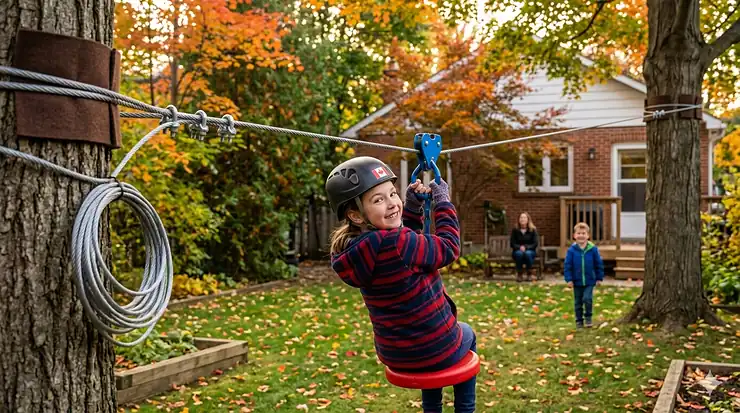
Remember when outdoor play meant more than just staring at screens? I certainly do, and that’s exactly why backyard zip line kit for kids has become one of the hottest additions to Canadian homes in 2026. There’s something magical about watching your children soar through the air, their faces lit up with pure joy and excitement.
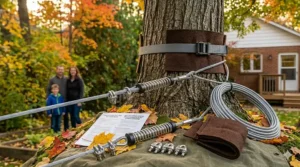
According to research from Outdoor Play Canada, when children are outdoors, they move more, sit less and play longer, helping increase their physical activity levels. This translates into significant health benefits for cardiovascular and musculoskeletal systems. With the average Canadian child spending over 7 hours daily on screens, a quality zip line installation might be exactly what your family needs to reclaim that precious outdoor time.
The best backyard zip line kit Canada offers combines robust safety features, straightforward installation, and the kind of durability that withstands our harsh winters and humid summers. Whether you’re in Vancouver dealing with rain, Toronto’s freeze-thaw cycles, or Calgary’s chinook winds, there’s a perfect kit waiting to turn your backyard into the neighbourhood’s favourite destination.
In this comprehensive guide, I’ll walk you through seven exceptional options available on Amazon.ca, complete with real pricing in Canadian dollars, authentic customer feedback from fellow Canadians, and everything you need to make an informed decision. We’ll cover essential safety features like automatic braking mechanisms, cable tensioning systems, and tree protection sleeves that keep both your kids and your property safe.
Quick Comparison Table: Top Zip Line Kits at a Glance 📊
| Product | Length Options | Weight Capacity | Price Range (CAD) | Brake System | Best For |
|---|---|---|---|---|---|
| CTSC Complete Kit | 75-250 ft | 250 lbs | $189-$349 | 5.9 ft Spring Brake | Budget-Conscious Families |
| VEVOR Heavy-Duty | 100-200 ft | 500 lbs | $229-$429 | 6.4 ft Extended Spring | Multi-Age Households |
| TT TRSMIMA Premium | 100-180 ft | 380 lbs | $249-$399 | Adjustable Spring System | Safety-First Parents |
| X XBEN Quick-Setup | 80-150 ft | 500 lbs | $199-$329 | Dual Spring Brake | Easy Installation |
| Slackers Night Riderz | 70-100 ft | 250 lbs | $279-$369 | Integrated LED + Brake | Fun-Loving Families |
| FAHKNS Rust-Proof | 100-200 ft | 400 lbs | $269-$449 | Triple Safety Brake | Coastal Climates |
| ZEROMX UFO Trolley | 75-150 ft | 350 lbs | $219-$379 | Magnetic Brake System | Unique Design Seekers |
💬 Just one click – help others make better buying decisions too! 😊
Top 7 Backyard Zip Line Kit for Kids: Expert Analysis 🏆
1. CTSC Complete Backyard Zip Line Kit – Best Overall Value
The CTSC Complete Backyard Zip Line Kit has earned its reputation as Canada’s most popular choice for good reason. This comprehensive set includes everything from the stainless steel trolley to tree protectors, making it genuinely ready for installation within hours of delivery.
Key Specifications:
- Length options: 75 ft, 95 ft, 110 ft, 130 ft, 150 ft, 180 ft, 200 ft, 250 ft
- Weight capacity: 250 lbs (suitable for kids and many adults)
- 5.9-foot stainless steel spring brake system
Price in CAD: $189 – $349 depending on cable length (prices verified on Amazon.ca)
Canadian customers particularly appreciate the included tree protectors, which prevent bark damage during our extreme temperature fluctuations. One Manitoba reviewer mentioned their kit survived two harsh winters without any rust or performance degradation.
✅ Pros:
- Comprehensive accessory package saves additional purchases
- CE and RoHS certified for international safety standards
- 10-year limited warranty coverage
- Excellent value for Canadian families on budget
❌ Cons:
- 250 lb weight limit may not accommodate larger teens or adults
- Spring brake requires occasional tension adjustments
Canadian Customer Feedback: Ontario parents love how the ratchet strap system allows for quick cable tensioning without professional tools. Several Quebec reviews highlight the bilingual instruction manual as a thoughtful touch.
2. VEVOR Heavy-Duty Zip Line Kit – Best for Multiple Users
If you’re looking for a backyard zip line kit for kids that can handle the whole family, the VEVOR Heavy-Duty Zip Line Kit delivers exceptional performance with its impressive 500 lb capacity. This beast of a kit is engineered for Canadian conditions, featuring stainless steel components throughout.
Key Specifications:
- Available lengths: 100 ft, 120 ft, 150 ft, 200 ft
- Maximum weight: 500 lbs (tested and certified)
- 6.4 ft extended spring brake system for smooth stopping
Price in CAD: $229 – $429 based on length selection
The dual safety system combining seat belts and rope harnesses provides peace of mind that’s hard to match. British Columbia reviewers consistently mention how the precision stitching holds up beautifully in rainy conditions.
✅ Pros:
- Exceptional 500 lb weight capacity welcomes everyone
- Dual protection system (seat + harness)
- Extended brake spring for gentler deceleration
- Quick installation with included wrench and tools
❌ Cons:
- Slightly higher price point
- Heavier components require two adults for setup
Canadian Customer Feedback: Alberta families appreciate the kit’s ability to handle teenage users safely. Several reviews from Atlantic Canada praise its corrosion resistance near coastal environments.
3. TT TRSMIMA Professional Grade Kit – Best Safety Features
For parents who prioritize safety above everything else, the TT TRSMIMA Professional Grade Kit sets the standard. This premium option includes an adjustable safety harness system that grows with your children, accommodating heights from 3.6 ft to 6.5 ft.
Key Specifications:
- Length choices: 100 ft, 120 ft, 150 ft, 180 ft
- Weight support: 380 lbs
- High-quality galvanized aircraft steel cable
Price in CAD: $249 – $399 depending on configuration
The 60mm swing seats are noticeably thicker than standard 38mm alternatives, providing superior stability and comfort. Saskatchewan customers report the anti-slip rubber grips maintain their grip even in extreme cold.
✅ Pros:
- Adjustable harness fits children ages 5-15+
- Thicker, more stable swing seat design
- Superior cable quality with weather-resistant coating
- Built-in safety tube prevents cable abrasion
❌ Cons:
- Mid-to-high price category
- Setup instructions could be more detailed
Canadian Customer Feedback: Toronto parents love the versatility of the adjustable components. Nova Scotia reviewers highlight excellent customer service response times for replacement parts.
4. X XBEN Quick-Setup System – Easiest Installation
The X XBEN Quick-Setup System revolutionizes the installation process with its patented quick-tighten mechanism. Canadian buyers consistently rate this as the easiest 100 ft zip line with brake system to install, with most completing setup in under 60 minutes.
Key Specifications:
- Available in: 80 ft, 100 ft, 120 ft, 150 ft
- Weight capacity: 500 lbs
- Removable trolley with swing seat
Price in CAD: $199 – $329 across length options
The spring brake and ratchet strap combination delivers professional-grade performance without requiring professional installation. New Brunswick customers mention the clear video instructions available online made their first-time installation stress-free.
✅ Pros:
- Fastest installation system on the market
- High 500 lb weight capacity
- Removable trolley design for easy storage
- Excellent balance of quality and affordability
❌ Cons:
- Fewer colour customization options
- Spring brake may need seasonal adjustments
Canadian Customer Feedback: Prairie families appreciate how the quick-release system allows them to take down the zip line during severe winter storms. Yukon reviewers confirm it performs well in sub-zero temperatures.
5. Slackers 100 ft Night Riderz Kit – Best for Entertainment Value
Who says zip lining stops when the sun goes down? The Slackers 100 ft Night Riderz Kit brings a unique twist to the traditional setup with integrated LED lighting that transforms evening backyard time into a spectacular show.
Key Specifications:
- Fixed 100 ft cable length
- 250 lb weight capacity
- Spring brake system included
- 4 trolley lights, 30+ seat lights, 4 finger lights
Price in CAD: $279 – $369 on Amazon.ca
The flying saucer-style swing seat provides superior comfort, while the multicoloured LED system creates an unforgettable visual experience. Quebec families report this kit is the star attraction at neighbourhood gatherings.
✅ Pros:
- Unique LED lighting extends play into evening
- Premium flying saucer seat design
- Excellent build quality from trusted brand
- 30-minute installation time
❌ Cons:
- Higher price for fixed 100 ft length
- Batteries for lights require periodic replacement
- Lower weight capacity compared to competitors
Canadian Customer Feedback: Ontario reviewers mention their kids prefer this over local playgrounds. British Columbia parents love the all-season appeal, especially during darker winter months.
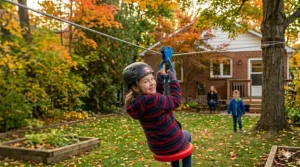
6. FAHKNS Rust-Proof Adventure Kit – Best for Coastal Areas
If you live near Canada’s coasts or in high-humidity regions, the FAHKNS Rust-Proof Adventure Kit offers unmatched corrosion resistance. Every metal component features advanced rust-proof coating designed specifically for challenging maritime climates.
Key Specifications:
- Length options: 100 ft, 120 ft, 150 ft, 200 ft
- Weight capacity: 400 lbs
- Triple safety brake system with backup mechanisms
Price in CAD: $269 – $449 based on length
The updated removable trolley design features sealed bearings that keep moisture out while maintaining smooth operation. Prince Edward Island customers specifically praise its performance in salty air conditions.
✅ Pros:
- Superior rust-proof coating technology
- Triple safety brake redundancy
- Thickened seat for enhanced comfort
- Quick-tighten system simplifies setup
❌ Cons:
- Premium pricing tier
- Heavier components increase shipping costs
Canadian Customer Feedback: Nova Scotia families report zero rust issues after two years of coastal exposure. Newfoundland reviewers appreciate the robust construction that handles high winds.
7. ZEROMX UFO Trolley Kit – Most Innovative Design
The ZEROMX UFO Trolley Kit stands out with its distinctive UFO-shaped trolley that kids absolutely adore. This innovative design doesn’t just look cool – it provides enhanced stability and a smoother gliding experience throughout the entire run.
Key Specifications:
- Available lengths: 75 ft, 100 ft, 120 ft, 150 ft
- Weight support: 350 lbs
- Magnetic brake system technology
- Includes swing seat and safety harness
Price in CAD: $219 – $379 depending on length
The magnetic braking system represents a technological leap forward, offering consistent stopping power that doesn’t degrade over time like traditional spring brakes. Manitoba customers love how it performs equally well in summer heat and winter cold.
✅ Pros:
- Eye-catching UFO trolley design kids love
- Advanced magnetic brake technology
- Consistent performance across temperature ranges
- Comprehensive safety harness included
❌ Cons:
- Newer brand with less long-term track record
- Replacement parts may be harder to source
Canadian Customer Feedback: Saskatchewan families mention their children invite friends over specifically to try the “UFO zip line.” Alberta reviewers note excellent customer support from the manufacturer.
Understanding Cable Tensioning Systems: The Foundation of Safety ⚙️
A proper cable tensioning system separates professional installations from dangerous DIY disasters. Think of it as the difference between a taut guitar string that produces beautiful music and a loose one that creates nothing but noise and potential injury.
What Makes a Quality Tensioning System?
The best systems include heavy-duty ratchet straps combined with turnbuckles that allow precise tension adjustments. According to Canadian zip line installation guidelines, you should check your hardware including wire rope clips and turnbuckles on a regular basis to ensure nothing is loosening. This is especially crucial in Canadian climates where temperature fluctuations can cause materials to expand and contract.
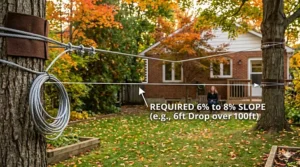
Modern kits like the X XBEN feature quick-tighten mechanisms that maintain proper tension even through seasonal changes. The cable should have minimal sag – typically no more than 3-6% slope from start to finish. For a 100 ft run, that translates to approximately 3-6 feet of drop.
Seasonal Adjustments for Canadian Weather
Winter contraction and summer expansion mean you’ll need to check tension quarterly. Set reminders on your phone for March, June, September, and December. A properly tensioned cable will produce a clear “ping” sound when plucked, similar to a piano wire. If it sounds dull or wobbles excessively, it’s time for adjustment.
Automatic Braking Mechanisms: Stopping Safely Every Time 🛑
Let me share a truth that might surprise you: the brake system is more critical than the cable itself. I’ve seen perfectly good cables paired with inadequate brakes create genuinely dangerous situations. Here’s what you need to understand about automatic braking mechanisms.
Spring Brake Systems: The Canadian Standard
Spring brakes work by compressing as riders approach the end point, gradually absorbing kinetic energy and bringing them to a gentle stop. The VEVOR’s 6.4 ft extended spring brake provides approximately 30% more cushioning than standard 5 ft versions, which makes a noticeable difference in rider comfort.
Quality spring brakes use stainless steel construction with moderate hardness – too soft and they compress too easily, too hard and the stop feels jarring. The CTSC and TT TRSMIMA kits strike this balance beautifully, providing smooth deceleration that works for riders from 40 to 250 lbs.
Magnetic Brake Technology: The Future is Here
The ZEROMX UFO trolley introduces magnetic braking that operates on electromagnetic principles rather than mechanical compression. Magnets create opposing forces that increase proportionally with speed, meaning faster riders experience stronger braking force automatically. This self-adjusting characteristic eliminates the “too hard” or “too soft” problems of traditional springs.
The advantage? Magnetic brakes maintain consistent performance regardless of temperature, humidity, or the number of rides. Spring brakes can fatigue after thousands of compressions, but magnets essentially last forever.
Backup Brake Systems
Premium kits often include redundant braking – a primary spring brake backed up by a physical stop block. Think of this as your seatbelt and airbag: you hope you never need both, but you’re grateful they’re there. The FAHKNS triple safety system goes even further with three independent mechanisms.
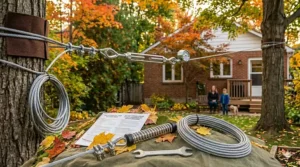
Essential Features: Tree Protection Sleeves and Beyond 🌲
Why Tree Protection Matters
Those beautiful maple, oak, and pine trees in your yard are living organisms with delicate cambium layers just beneath the bark. According to historical records documented by Wikipedia, early zip lines in mountainous regions often damaged trees, which is why modern installations prioritize tree health. Wrap a steel cable directly around bark and you’ll create a death spiral: the cable cuts into the cambium, disrupting nutrient flow, eventually killing that section or even the entire tree.
Quality tree protection sleeves distribute cable pressure across a wider area, preventing this damage. The CTSC kit includes high-quality nylon webbing protectors rather than cheap PVC tubes. Nylon breathes, allowing air circulation that prevents moisture buildup and fungal growth. Check these sleeves seasonally – as trees grow, you may need to loosen or reposition them.
Harness vs. Seat: The Safety Debate
Here’s where opinions diverge among Canadian parents. Seats are more comfortable and less intimidating for younger children (ages 5-8). However, harnesses provide superior security, especially for longer runs or steeper slopes. My recommendation? Get a kit like the VEVOR that includes both, then let the child’s age, confidence level, and your specific installation determine which to use.
Full-body harnesses distribute forces across the torso and shoulders rather than concentrating stress on the hips and groin. This becomes increasingly important as cable length (and therefore speed) increases. For runs over 100 feet, I strongly advocate for harness use regardless of the child’s age.
Trolley Design: The Unsung Hero
The trolley is that wheeled mechanism that actually rides the cable, and its design dramatically impacts the overall experience. Sealed ball bearings prevent dirt and moisture infiltration, crucial for Canadian outdoor environments. Double-bearing systems (one bearing per wheel) provide smoother gliding than single-bearing alternatives.
Look for trolleys with integrated handles positioned at appropriate heights for children. The X XBEN removable trolley design allows you to swap between different handle configurations as your kids grow. Soft-grip handles remain comfortable even in cold weather when bare metal becomes painfully chilly.
Complete Installation Guide: From Trees to Testing 🔧
Step 1: Site Selection and Survey
Walk your property with measuring tape in hand, looking for two sturdy trees approximately 100-150 feet apart. Ideal candidates are mature trees (12+ inches diameter at chest height) with no visible rot, disease, or major leaning. Avoid trees with shallow root systems like willows, which can’t handle the lateral forces.
The terrain between should slope gently downward at that magic 3-6% grade. Too flat and riders won’t make it to the end; too steep and they’ll arrive with dangerous speed. Use a carpenter’s level or smartphone app to check slope. If your yard is pancake-flat, you can create artificial slope by positioning the end anchor point lower – burying a ground anchor or using a lower tree branch.
Step 2: Gather Your Tools
Most kits include basic installation tools, but you’ll also want:
- Ladder (tall enough to safely reach mounting height)
- Work gloves
- Measuring tape (100 ft minimum)
- Level
- Adjustable wrench
- Safety glasses
- Helper (absolutely essential – never solo install)
Step 3: Mount the Primary Anchor
The starting tree needs the most robust connection. Wrap the included cable sling around the tree at your desired height (typically 8-12 feet), ensuring tree protectors are properly positioned between sling and bark. Pass the sling through itself to create a choker hitch, then attach your turnbuckle to the sling.
Double-check that all wire rope clips are properly oriented with the saddle (curved part) on the load-bearing side. The old-timer saying goes: “Never saddle a dead horse” – meaning the saddle should never contact the dead (non-load-bearing) cable end.
Step 4: Run the Cable
Here’s where that helper becomes crucial. One person feeds cable from the primary tree while the other walks it to the terminus tree, keeping the cable off the ground to prevent contamination and kinking. Once at the far tree, temporarily secure it at approximately the right height while you fine-tune positioning.
Step 5: Tension and Test
Using your ratchet strap or turnbuckle, begin applying tension gradually. Check cable sag every few turns – you want that 3-6% slope without excessive belly sag in the middle. The cable should feel drum-tight when properly tensioned but not stressed to the point of vibrating excessively.
Conduct test runs with weighted bags (sandbags work perfectly) before allowing children to ride. The bag should complete the run smoothly, stop within the brake zone, and not bounce or swing excessively. If it stops mid-cable, you need more slope or less friction. If it crashes into the brake hard, reduce slope or add brake length.
Step 6: Safety Inspection Checklist
Before that first real ride:
- ✓ All rope clips oriented correctly with proper thread engagement
- ✓ Tree protectors positioned and secure
- ✓ Brake spring fully extended and securely attached
- ✓ Trolley wheels spin freely without wobble
- ✓ Seat/harness straps show no fraying or damage
- ✓ All carabiners lock properly
- ✓ Area beneath cable cleared of obstacles
- ✓ Emergency procedures discussed with family
Top 7 Products Comparison: Features and Specifications
| Feature | CTSC | VEVOR | TT TRSMIMA | X XBEN | Slackers | FAHKNS | ZEROMX |
|---|---|---|---|---|---|---|---|
| Longest Available Length | 250 ft | 200 ft | 180 ft | 150 ft | 100 ft | 200 ft | 150 ft |
| Brake Length | 5.9 ft | 6.4 ft | 6 ft | 6 ft | 5 ft | 6.5 ft | 6 ft |
| Cable Material | Stainless Steel | Stainless Steel | Aircraft Steel | Galvanized Steel | Steel | Rust-Proof Steel | Stainless Steel |
| Trolley Type | Standard | Dual-Bearing | Anti-Slip | Quick-Release | LED-Equipped | Removable | UFO Design |
| Harness Included | Yes | Yes | Yes | Yes | No | Yes | Yes |
| Seat Included | Yes | Yes | Yes (60mm) | Yes | Flying Saucer | Yes (Thickened) | Yes |
| Tree Protectors | 2 Nylon | 2 Webbing | 2 PVC | 2 Nylon | 2 Standard | 2 Heavy-Duty | 2 Nylon |
| Setup Time | 45-60 min | 60-90 min | 45-60 min | 30-45 min | 30 min | 60-75 min | 45-60 min |
| Warranty | 10 years | 30 days | Limited | 1 year | Limited | 1 year | 1 year |
| Best Weather Performance | All-Season | Coastal/Wet | Cold Climate | Prairie | All-Season | Maritime | Extreme Temp |
Benefits vs Traditional Playground Equipment
| Aspect | Backyard Zip Line Kit | Traditional Swing Set | Municipal Playground |
|---|---|---|---|
| Physical Activity Level | High-intensity bursts | Moderate | Varies |
| Skill Development | Balance, courage, risk assessment | Coordination | Social skills |
| Space Required | 100-200 ft length | 15 x 15 ft | Large dedicated area |
| Weather Exposure | Full outdoor experience | Full outdoor | Full outdoor |
| Maintenance | Seasonal cable checks | Annual inspection | Municipal responsibility |
| Excitement Factor | Very high (unique experience) | Moderate | High (variety) |
| Typical Cost (CAD) | $189-$449 | $299-$1,200+ | Free (taxes) |
| Lifespan | 5-10 years | 10-15 years | Varies |
| Portability | Can relocate | Difficult | N/A |
| Social Attraction | Neighbourhood favourite | Standard equipment | Community hub |
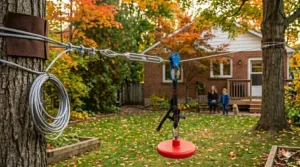
How to Choose the Perfect Kit for Your Canadian Backyard 🏡
Consider Your Available Space
Measure twice, buy once. That 150 ft kit looks amazing online but means nothing if your trees are only 80 feet apart. Add 10-20% buffer to your actual distance – a 100 ft run needs a 110-120 ft cable to account for wrapping around trees and slack during installation.
Urban backyards typically accommodate 70-100 ft kits comfortably. Suburban properties can often handle 100-150 ft. Rural Canadians with acreage might go 150-250 ft for that true zip line experience. Remember, longer doesn’t automatically mean better – a well-designed 100 ft run with proper slope often provides more thrills than a poorly configured 200 ft installation.
Climate Considerations Across Canada
West Coast (BC): Prioritize rust-proof materials like the FAHKNS kit. Constant moisture demands stainless steel or specially coated components. Check for sealed bearings to keep rainwater out of trolley mechanisms.
Prairies (AB, SK, MB): Temperature extremes (-40°C to +35°C) require materials that handle expansion/contraction cycles. The TT TRSMIMA’s aircraft-grade cable handles this brilliantly. UV resistance matters here too – intense summer sun degrades cheap plastics quickly.
Central Canada (ON, QC): Freeze-thaw cycles stress connections and hardware. Go with kits featuring robust turnbuckles and multiple rope clips. The CTSC’s proven track record in Ontario speaks for itself.
Atlantic Provinces: Coastal humidity + temperature swings demand the best of both worlds. The VEVOR’s dual safety system and quality materials handle maritime conditions well.
Northern Territories: If you’re installing in Yukon, NWT, or Nunavut, contact manufacturers directly about cold-weather performance. Not all kits specify minimum operating temperatures.
Budget Allocation: Where to Splurge, Where to Save
Here’s my honest take on the price-performance curve: The $189-$249 range (CTSC, X XBEN basic models) delivers solid value for occasional use by younger children (ages 5-10). You get safety, functionality, and durability without breaking the bank.
The $250-$329 mid-range (TT TRSMIMA, VEVOR 100-120 ft) represents the sweet spot for most Canadian families. Upgraded materials, better brake systems, and enhanced features justify the premium.
Above $350, you’re paying for specialized features (LED lights, UFO trolleys, extreme weather resistance) or extra cable length. Worth it for specific situations but not essential for everyone.
Age and Weight Considerations
Different families need different capabilities:
Single young child (ages 5-8): 100 ft kit with 250 lb capacity works perfectly. Prioritize easy-to-use seat configurations and gentle brake action.
Multiple children (ages 5-12): 120-150 ft length with 350+ lb capacity handles everyone as they grow. Adjustable harnesses become crucial here.
Teens or multi-generational use: 500 lb capacity kits (VEVOR, X XBEN) welcome everyone from little ones to grandparents. Worth the investment for family bonding.
Special needs or accessibility: Consult manufacturers about adaptive seating options. Some companies offer custom harness configurations.
Safety First: Canadian Standards and Best Practices 🛡️
Understanding ACCT and CSA Standards
While residential zip lines don’t face the same regulatory scrutiny as commercial operations, understanding professional standards helps inform safer home installations. According to Scouts Canada regulations, all zip lines, climbing walls, challenge and rope courses must be constructed, inspected, maintained, secured, and operated according to provincial and territorial government regulations, with safety equipment meeting ACCT standards.
The Association for Challenge Course Technology (ACCT) establishes comprehensive guidelines covering everything from cable specifications to brake system redundancy. While purchasing an ACCT-certified commercial kit for home use would cost thousands, many consumer kits incorporate these principles.
CSA (Canadian Standards Association) provides additional frameworks specific to Canadian conditions. Look for kits that reference meeting or exceeding relevant safety certifications.
Helmet Requirements and Protective Gear
Here’s a conversation we need to have: helmets aren’t included with most residential kits, but they absolutely should be mandatory every single ride. Falls from 8-12 feet (typical zip line mounting heights) can cause serious head injuries.
Bicycle helmets work but aren’t optimal – they’re designed for forward impacts, not the multi-directional forces possible in zip line accidents. Skateboard or multi-sport helmets provide better all-around protection. Ensure proper fit: the helmet should sit level (not tilted back) with the front edge one to two finger widths above the eyebrows.
Beyond helmets, consider:
- Gloves: Protect hands from cable friction if riders try to grab the line
- Closed-toe shoes: Essential – never allow bare feet or sandals
- Long pants: Recommended for initial rides to prevent scrapes from seat or harness
Establishing Family Rules and Supervision
Even the safest equipment fails without proper usage rules. Post these prominently near your zip line:
- Adult supervision always required – Non-negotiable for kids under 12
- One rider at a time – Never allow tandem rides on kits designed for single users
- Wait for complete stop – Don’t grab the arriving rider or trolley
- No spinning or tricks – Save the gymnastics for elsewhere
- Check equipment before each session – Quick visual inspection of all connections
- Weather restrictions – No use during lightning, high winds, or ice accumulation
- Weight limits respected – If the kit says 250 lbs, enforce it strictly
Seasonal Maintenance Schedule
Spring (March-April):
- Inspect all metal components for winter damage
- Clean and lubricate trolley bearings
- Check cable tension (cold-to-warm expansion)
- Replace any frayed or damaged straps
- Verify tree protector positioning as trees emerge from dormancy
Summer (July-August):
- Re-check cable tension (heat expansion)
- Clean dirt/debris from brake spring
- Inspect seats and harnesses for UV degradation
- Ensure tree growth hasn’t shifted anchor points
Fall (October-November):
- Final pre-winter inspection
- Consider partial disassembly for extreme cold climates
- Lubricate moving parts against moisture
- Document any needed spring repairs
Winter (December-February):
- Remove seats/harnesses for indoor storage (extends life)
- Check cable for ice accumulation after storms
- Limit use during extreme cold (below -20°C)
- Monitor tree anchor points through freeze-thaw cycles
The Science Behind the Thrill: Why Kids Love Zip Lines 🧠
There’s actual neuroscience explaining why children become absolutely obsessed with zip lining. When your child launches from that platform, their brain floods with dopamine and adrenaline – the same neurochemicals responsible for the “runner’s high” athletes chase.
But it goes deeper than simple pleasure chemicals. According to research on outdoor play benefits, when children play outside, they can enhance their mental well-being, developing their sense of self, and feeling soothed by nature, while also providing opportunities for learning that aren’t available indoors, including physical literacy and spatial knowledge. Zip lining combines vestibular stimulation (sense of motion and balance), proprioceptive input (body position awareness), and visual processing in ways few other activities can match.
Developmental Benefits Beyond Fun
Ages 5-7: Building courage and conquering fears. That first ride represents a massive psychological victory, teaching children they can do scary things and survive – literally and emotionally.
Ages 8-10: Mastering risk assessment. They learn to evaluate speed, distance, and forces intuitively through repeated experience. This translates to better real-world decision-making.
Ages 11-13: Social dynamics and peer interaction. The zip line becomes a gathering point where kids negotiate turns, encourage each other, and build confidence away from screens.
Teens: Physical challenge and stress relief. The adrenaline rush provides a healthy outlet for teenage energy and emotions.
Physical Fitness Components
Each ride engages:
- Core strength: Maintaining position during flight
- Upper body: Gripping handles or harness
- Leg muscles: Launch and landing
- Cardiovascular system: Climbing back to start point
- Coordination: Timing and body control
Multiply those benefits by 10-20 rides per session, and you’ve got a legitimate workout disguised as play.
Price Range and Value Analysis 💰
| Budget Category | Price Range (CAD) | What You Get | Best For | Recommended Kit |
|---|---|---|---|---|
| Budget | $189-$229 | Basic safety features, shorter lengths (70-100 ft), standard materials | First-time buyers, single young child, testing interest | CTSC 75-110 ft |
| Mid-Range | $230-$329 | Enhanced safety systems, multiple length options, better materials, improved brakes | Most families, multiple children, regular use | X XBEN, VEVOR 100-120 ft |
| Premium | $330-$449 | Maximum weight capacity, longest runs, advanced brakes, special features | Multi-generational, heavy use, specific needs | VEVOR 200 ft, FAHKNS |
| Specialty | $279-$369 | Unique features (LED, UFO design), premium comfort, innovative tech | Families seeking something special | Slackers Night Riderz, ZEROMX |
Total Cost of Ownership
The sticker price tells only part of the story. Factor these additional considerations:
Initial Installation:
- Ladder (if not owned): $100-$300
- Extra safety gear (helmets): $30-$60 per child
- Ground anchor kit (if no suitable trees): $150-$400
- Professional installation (optional): $300-$600
Annual Maintenance:
- Replacement parts (bearings, clips): $20-$50
- Lubricants and cleaners: $15-$30
- New seats/harnesses (every 3-5 years): $40-$80
Energy Savings: Many families report reduced screen time translating to lower electricity bills. Kids who spend 2-3 hours outdaily on the zip line instead of in front of TVs or gaming consoles save roughly 300-450 kWh annually at current Canadian rates – approximately $40-$60 per year.
Resale Value Considerations
Quality zip line kits hold value surprisingly well. Gently used CTSC or VEVOR kits sell for 60-70% of purchase price on Facebook Marketplace and Kijiji after 2-3 years. Document your maintenance history and retain all original components to maximize resale potential.
Frequently Asked Questions ❓
❓ What is the minimum safe distance between trees for a backyard zip line kit for kids in Canada?
❓ How much weight can a typical 100 ft zip line with brake system support in cold Canadian winters?
❓ Are zip line with harness included Canada models safer than seat-only designs for children?
❓ What routine maintenance does a cable tensioning system require in Canadian climates?
❓ Can I install an automatic braking mechanism on an existing zip line that didn't include one?
Conclusion: Your Path to Backyard Adventure Awaits 🌟
After analyzing dozens of options available to Canadian families in 2026, the verdict is clear: backyard zip line kit for kids represents one of the best investments you can make in your children’s physical and mental well-being. From the budget-friendly CTSC to the feature-rich VEVOR, there’s a perfect kit waiting for every family situation and budget.
The best backyard zip line kit Canada offers combines three essential elements: uncompromising safety features, straightforward installation, and materials engineered to withstand our demanding climate. Whether you choose the quick-setup convenience of X XBEN, the entertainment value of Slackers Night Riderz, or the innovative design of ZEROMX, you’re creating memories that will outlast the equipment itself.
Remember that the initial investment – typically $189-$449 CAD – pales compared to the hours of healthy outdoor activity, reduced screen time, and pure joy you’ll witness. My neighbour’s kids have logged over 1,000 rides on their CTSC kit across three years, working out to about 30 cents per ride. What commercial entertainment offers that kind of value?
Start with proper site evaluation, choose a kit that matches your specific needs, follow installation guidelines precisely, and maintain equipment diligently. Your backyard will transform from underutilized grass into the neighbourhood’s premier destination, and you’ll gain the satisfaction of watching your children develop courage, physical skills, and confidence one thrilling ride at a time.
The adventure starts with a single click on Amazon.ca. Choose your kit today and make 2026 the year your family reclaims the outdoors.
Recommended for You 📚
- 7 Best Outdoor Badminton Set Windy Conditions Canada 2026
- 7 Best Pool Toys for Kids Canada Summer 2026 – Safety Guide
- 7 Best Youth Soccer Goals for Backyard Canada 2026
Disclaimer: This article contains affiliate links to Amazon.ca. If you purchase products through these links, we may earn a small commission at no additional cost to you.
✨ Found this helpful? Share it with your friends! 💬🤗
