
In This Article
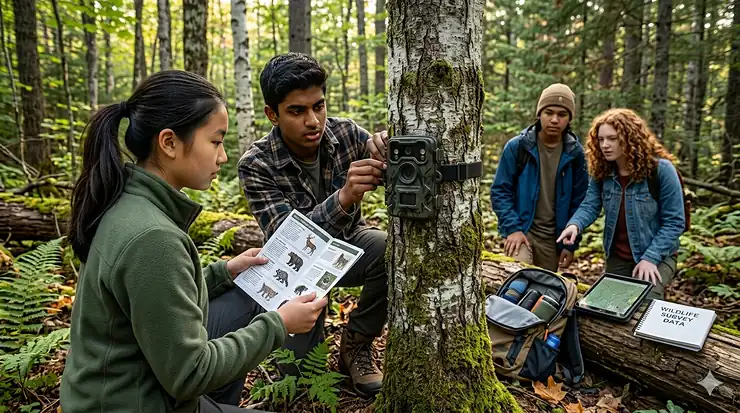
A wildlife camera for teens isn’t just a gadget — it’s the difference between a kid who gives up after one blurry photo of a chipmunk and one who’s still hooked on nature photography five years later. The good news is that you don’t need a $3,000 DSLR and a bag of lenses to get a teenager taking genuinely good shots of birds, deer, or whatever shows up at the cottage this summer.
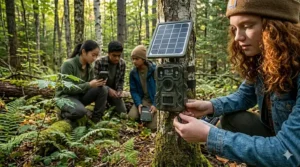
What most parents shopping for a wildlife camera for teens don’t realize is that the “trail cam” style cameras you see strapped to trees are actually the wrong tool for a teen who wants to be behind the camera, not just setting a trap and walking away. What teens generally want is a handheld superzoom (also called a bridge camera) that lets them point, zoom, and shoot the moment something interesting appears — whether that’s a heron at the cottage dock or a hawk circling above a hiking trail.
This guide compares seven real cameras currently sold in Canada, ranging from a $220 starter model to a serious $1,500 zoom monster, plus the practical stuff nobody tells you upfront: how optical zoom actually differs from digital zoom, what megapixel count really matters for a teen (hint: it’s lower than you’d think), and how Canadian winters and Parks Canada rules change how this gear actually gets used. As an Amazon Associate, I earn from qualifying purchases made through links in this article.
Quick Comparison Table
| Camera | Optical Zoom | Megapixels | Best For | Price Range (CAD) |
|---|---|---|---|---|
| Kodak PIXPRO AZ255 | 25x (24–600mm) | 16MP | First-ever camera, tightest budget | $220–$260 |
| Canon PowerShot SX740 HS | 40x (24–960mm) | 20.3MP | Pocketable, school trips | $480–$560 |
| Nikon COOLPIX B600 | 60x (24–1440mm) | 16MP | Lightweight all-rounder | $430–$520 |
| Panasonic LUMIX FZ80D | 60x (20–1200mm) | 18.1MP | Best value with RAW + 4K | $670–$760 |
| Canon PowerShot SX70 HS | 65x (21–1365mm) | 20.3MP | Teens who want manual control | $780–$900 |
| Nikon COOLPIX P950 | 83x (24–2000mm) | 16MP | Serious reach, still affordable-ish | $1,050–$1,200 |
| Nikon COOLPIX P1100 | 125x (24–3000mm) | 16MP | Dedicated young birder, long-term gear | $1,400–$1,550 |
Looking at this table, there’s a clear pattern: zoom power and price climb together almost in lockstep, but megapixels barely move. That’s not a mistake — every camera here uses a similar small sensor, so manufacturers chase reach instead of resolution, because reach is what actually gets a teen a usable photo of a bird thirty metres up a tree. The jump worth paying attention to isn’t the AZ255 to the SX740, it’s the SX70 HS to the P950: that’s where you start trading a simple point-and-shoot experience for one with RAW files, manual exposure, and a camera that can genuinely keep pace as a teen’s interest in photography grows.
💬 Just one click — help others make better buying decisions too! 😊
✨ Don’t Miss These Exclusive Deals!
🔍 Take your wildlife photography hobby to the next level with these carefully selected cameras. Click on any highlighted item to check current pricing and availability on Amazon.ca. These tools will help a young photographer capture authentic moments your whole family will love! 🇨🇦📸
Top 7 Wildlife Cameras for Teens: Expert Analysis
1. Kodak PIXPRO AZ255 — Best Ultra-Budget Starter
The Kodak PIXPRO AZ255 is the camera I’d hand a teen who isn’t sure yet whether wildlife photography is “their thing” or a two-week phase. Its 25x optical zoom (24–600mm equivalent) and 16MP sensor won’t win any awards, but the AA-battery design is what most buyers overlook: when a camera dies on a hike, a teen can grab batteries from literally any corner store in rural Ontario or downtown Toronto, no proprietary charger required. With over 866 customer reviews averaging 4.1 stars, owners consistently praise the image quality for the price point, and that consistency matters more than spec-sheet bragging rights when you’re trying to gauge whether a $250 gift will actually get used.
What it lacks — Wi-Fi, an electronic viewfinder, 4K video — won’t bother most 13- to 15-year-olds who just want to point and shoot. What it will struggle with is fast-moving subjects in low light, so set expectations for daytime, slower-moving wildlife like deer, ducks, and backyard birds rather than dusk encounters.
✅ AA batteries available anywhere in Canada
✅ Simple enough for a first-time photographer
✅ Strong reputation for the price point
❌ No 4K video or Wi-Fi
❌ Struggles in low light and with fast subjects
Price verdict: around $220–$260 CAD, making it the easiest “yes” for a parent who isn’t ready to commit serious money to an untested hobby.
2. Canon PowerShot SX740 HS — Best Pocketable Option
The Canon PowerShot SX740 HS solves a problem none of the bigger bridge cameras address: teens actually carry their gear with them. At pocket size with a 40x optical zoom (24–960mm equivalent) and 20.3MP sensor, it disappears into a backpack or jacket pocket instead of hanging around a teen’s neck like a sign that says “please make fun of me at the bus stop.” The 4K video and built-in Wi-Fi/Bluetooth mean a teen can pull footage straight to their phone without ever touching a computer, which in practice is the single biggest factor in whether a teenager keeps using a camera past week one.
The trade-off for that compact size is a smaller zoom range than the true bridge cameras further down this list, and no electronic viewfinder, so framing happens entirely on the rear screen — which gets tricky in bright Canadian summer sun on a lake. For a teen who wants something between a phone camera and a “real” camera without committing to carrying a brick everywhere, this is the practical pick.
✅ Genuinely pocket-sized
✅ 4K video and easy wireless transfer
✅ 20.3MP gives room to crop distant shots
❌ Shorter zoom reach than bridge-style cameras
❌ No viewfinder, screen-only framing
Price verdict: typically $480–$560 CAD on Amazon.ca, positioning it as a mid-budget option that prioritizes portability over reach.
3. Nikon COOLPIX B600 — Best Lightweight All-Rounder
The Nikon COOLPIX B600 earns its spot because it’s the rare camera that doesn’t punish a teen for being a beginner. The 60x optical zoom (24–1440mm equivalent) gives serious reach for a backyard feeder or a hike along a riverbank, while the simplified Auto and Scene Auto Selector modes mean a 14-year-old can get a usable shot without understanding aperture or shutter speed yet. What most buyers overlook about this model is just how light it is — noticeably lighter than the Canon SX70 HS below — which matters enormously on an all-day hike when a tired teen is the one deciding whether the camera comes out of the bag at all.
Nikon’s SnapBridge wireless transfer lets photos move to a phone automatically, which Canadian teens dealing with patchy cell coverage in provincial parks will appreciate, since it works over a low-power Bluetooth connection rather than requiring a strong Wi-Fi signal. The fixed (non-tilting) screen is the camera’s biggest practical limitation; for low-angle shots of something at ground level, a teen will need to crouch rather than angle the screen.
✅ Noticeably lighter than competing bridge cameras
✅ Genuinely beginner-friendly automatic modes
✅ SnapBridge transfer works without strong Wi-Fi
❌ Fixed screen, no tilt or flip
❌ No electronic viewfinder
Price verdict: around $430–$520 CAD, making it one of the best reach-per-dollar options on this list for a teen who isn’t ready for manual controls.
4. Panasonic LUMIX FZ80D — Best Overall Value
The Panasonic LUMIX FZ80D is the camera I’d point most families toward if budget allows even a little flexibility, because it’s the first one on this list that includes both an electronic viewfinder and RAW file support — features that matter the moment a teen starts getting serious about composing shots rather than just pointing and clicking. The 60x optical zoom is matched here by genuine 4K UHD video and a 4K Photo mode that lets a teen pull an 8-megapixel still frame out of a video clip, which is a clever workaround for capturing a bird mid-flight that a slower shutter finger would otherwise miss.
At roughly 640 grams, it stays light enough for an all-day outing, and the USB-C charging port (on the FZ80D specifically, versus the older FZ80’s micro-USB) means a teen can use the same cable as most modern phones and laptops — one less charger to lose at summer camp. The RAW support is genuinely the standout feature here: it gives a teen room to learn photo editing without the harsh quality loss of pushing a JPEG too far, which is exactly the kind of skill-building room a hobby camera should leave.
✅ EVF and RAW support at a mid-range price
✅ Genuine 4K video and 4K Photo mode
✅ USB-C charging matches modern devices
❌ Smaller sensor means more noise at high zoom in low light
❌ Heavier than the pocketable Canon SX740 HS
Price verdict: roughly $670–$760 CAD, and worth the jump from the B600 if a teen has shown real interest in the hobby for more than a season.
5. Canon PowerShot SX70 HS — Best for Learning Manual Controls
The Canon PowerShot SX70 HS is where this list shifts from “camera for a teen” to “camera a teen can grow into for years.” The 65x optical zoom (21–1365mm equivalent) is matched with full manual exposure controls, RAW capture, and a vari-angle screen that flips and rotates — genuinely useful for shooting low-to-the-ground shots of a fox or getting an overhead angle without lying in wet grass, which during a Canadian spring thaw is not a small consideration. The 20.3MP sensor combined with a 10fps burst mode gives a teen a real shot at nailing a bird taking off, something the slower cameras lower on this list will mostly miss.
What the spec sheet won’t tell you is that the electronic viewfinder makes a measurable difference in bright outdoor light; trying to frame a shot on a rear screen at noon on a sunny dock in July is genuinely difficult, and the SX70 HS’s viewfinder solves that problem outright. The honest downside is that all those manual controls can overwhelm a younger teen who just wants to point and shoot — this camera rewards someone who wants to actually learn photography, not just document a hike.
✅ Full manual controls plus RAW for serious learning
✅ Vari-angle screen for tricky angles
✅ 10fps burst captures fast wildlife action
❌ Steeper learning curve than the B600 or AZ255
❌ No weather sealing despite the outdoor use case
Price verdict: typically $780–$900 CAD, which is the price of admission for a camera that won’t need replacing as a teen’s skills improve.
6. Nikon COOLPIX P950 — Best Long-Reach Pick Under $1,300
The Nikon COOLPIX P950 exists for one reason: distance. An 83x optical zoom reaching 2000mm equivalent puts a perched hawk or a distant moose across a lake within frame-filling reach, which none of the cameras above this point on the list can match. The rotating LCD screen, RAW format support, and 4K UHD video round out a feature set built for a teen who has already decided wildlife and bird photography specifically is their thing, not just outdoor photography generally.
What most buyers overlook about a zoom this extreme is how much it punishes shaky hands; at 2000mm equivalent, even small movements blur the shot badly, so a teen using this camera will get noticeably better results with a simple tripod or monopod than they would handheld. The basic electronic viewfinder is a step down in quality from the SX70 HS, and there’s no RAW-friendly weather sealing, so a rain cover is worth budgeting for if this camera is heading out in Canadian fall drizzle.
✅ 2000mm equivalent reach for distant subjects
✅ Rotating screen for awkward shooting angles
✅ RAW support and 4K video
❌ Extreme zoom amplifies hand-shake without a tripod
❌ Basic EVF compared to the SX70 HS
Price verdict: around $1,050–$1,200 CAD — a meaningful jump, best justified when a teen has outgrown the 60x–65x cameras and specifically wants to photograph birds at real distance.
7. Nikon COOLPIX P1100 — Best Premium Pick for a Dedicated Young Birder
The Nikon COOLPIX P1100 is the camera I’d only recommend once a parent is confident this is a multi-year hobby, not a summer interest. Its 125x optical zoom reaches an almost absurd 3000mm equivalent — enough to frame a bird that would otherwise look like a speck on the horizon — backed by Dual Detect Optical VR stabilization, a dedicated bird-watching mode, improved autofocus tracking over the older P1000, a customizable control ring, and an OLED electronic viewfinder with genuinely sharp 2.36-million-dot resolution.
In practice, what the spec sheet doesn’t capture is the camera’s size and weight: this is a two-handed, set-it-on-a-tripod tool, not something a teen casually slips into a daypack alongside lunch and a water bottle. It handles perched and slow-moving birds with real confidence but can hunt for focus on erratic, fast-flying subjects at maximum zoom, and there’s no official weather sealing, so a rain cover earns its keep on overcast Canadian birding trips. This is genuinely a camera for the teen who has already shown, through a season or two with a cheaper bridge camera, that birding and wildlife photography are sticking.
✅ Unmatched 125x zoom reach for serious bird photography
✅ Dedicated bird-watching mode and improved AF tracking
✅ Sharp OLED viewfinder
❌ Large and heavy for casual, spontaneous use
❌ Can struggle to track fast, erratic flyers at full zoom
Price verdict: roughly $1,400–$1,550 CAD, which positions it as a gift for a committed young photographer rather than a first camera — and one that, realistically, an interested teen won’t outgrow for years.
Practical Usage Guide for a Teen’s First Wildlife Camera
Getting a new camera working well takes more than charging the battery and pointing it at a bird. A few habits in the first month make a measurable difference in how good — and how many — photos a teen actually keeps.
Start every outing with a full battery and a freshly formatted memory card; a camera that dies twenty minutes into a hike teaches a teen to resent the hobby fast. For any of the AA-battery models like the AZ255, keep a spare set of lithium AA batteries in a jacket pocket, since lithium AAs hold up far better than alkaline ones in cold Canadian mornings. For rechargeable models, a teen heading out on a full-day trip in spring or fall should keep the spare battery in an inside pocket close to body heat — lithium-ion batteries lose noticeable charge capacity once temperatures drop much below 0°C, and that effect compounds the longer a battery sits exposed in a bag.
Set the camera’s zoom to roughly 70–80% of maximum as a default starting point rather than maxing it out immediately; full zoom amplifies every shake and makes it genuinely hard to even find a moving bird in the frame. Teach a teen the “find it wide, then zoom in” habit: locate the subject at a shorter focal length first, then zoom in once it’s centred, rather than hunting for it at maximum zoom from the start. For cameras with a snap-back zoom button (a feature on several Nikon and Canon models here), show a teen how to use it — pressing the button to briefly zoom out, find a bird that’s drifted out of frame, then releasing to snap back to full zoom, is the single most useful trick on a long-zoom camera.
Common first-month mistakes worth heading off: shooting straight into bright sunlight (try keeping the sun behind the photographer instead), forgetting to wipe morning dew or lens fog off the lens before the first shot of the day, and leaving the camera in a hot car, which both bridge cameras and their batteries handle poorly. None of these mistakes are expensive to fix — they’re just habits worth building early.
Real Canadian Teen Photographer Scenarios
The Toronto condo teen who hikes on weekends. A 15-year-old living in a high-rise without a backyard but who takes the GO Train out to conservation areas most weekends is best matched with something pocketable and quick to deploy, like the Canon PowerShot SX740 HS. The pocket size means it’s actually in their bag, not left behind because it’s bulky, and the Wi-Fi transfer lets them post a shot from a trail before the train even gets back downtown.
The rural Manitoba teen with a backyard feeder and a farm to explore. For a teen with daily, low-pressure access to wildlife — deer at the tree line, hawks over a field — reach matters more than portability, since they’re shooting from a porch or a stationary spot rather than hiking miles. The Nikon COOLPIX P950 or even the P1100 makes sense here, especially mounted on a cheap tripod near a window, because the subject distance is consistently large and the camera doesn’t need to be carried far.
The Vancouver Island teen doing a birding club or 4-H nature program. A teen enrolled in a structured program that meets weekly and expects them to actually learn photography basics — not just take snapshots — benefits most from the Canon PowerShot SX70 HS or Panasonic LUMIX FZ80D, since both offer RAW files and manual controls a mentor or club leader can actually teach against, rather than an auto-only camera with nothing to adjust.

How to Choose a Wildlife Camera for Teens in Canada
- Match the zoom to where the teen actually shoots. A backyard feeder or a cottage dock rarely needs more than 60x; a teen specifically chasing birds at real distance benefits from 83x or 125x.
- Weigh portability against reach honestly. The camera that gets left at home because it’s heavy takes zero photos; a pocketable 40x camera that’s actually carried beats an 83x camera gathering dust in a closet.
- Decide if this is a “growing” hobby or a casual one. If a teen is likely to want manual controls within a year, buying the auto-only AZ255 now and a manual camera later costs more total than buying the SX70 HS once.
- Check battery type against how the camera will be used. AA-battery cameras are easiest for spontaneous, no-charger-needed outings; rechargeable models need a charging routine but last longer per charge.
- Confirm a tripod or monopod is in the budget at higher zoom levels. Anything past 60x optical zoom genuinely needs stabilization help to produce sharp shots consistently.
- Don’t ignore weight on all-day trips. A camera a teen complains about carrying after two hours won’t make it out of the bag on trip three.
- Budget for a memory card and a basic case separately. None of these cameras include enough internal storage or protection on their own — treat those as part of the real total cost, not an afterthought.
Optical Zoom vs Digital Zoom: What Actually Matters
This is the single most misunderstood spec on a camera box, and it’s worth getting right before buying anything. Optical zoom uses the physical glass lens elements moving inside the camera to genuinely magnify a distant subject — the light hitting the sensor is actually more detailed, not just stretched. Digital zoom, by contrast, simply crops into the image the sensor already captured and enlarges that crop, which is functionally identical to zooming in on a photo afterward in an editing app — no new detail is created, and the image gets softer and more pixelated the further it’s pushed.
Every optical zoom figure quoted in this guide (25x through 125x) refers to real optical zoom, which is the number that should drive a buying decision. Ignore any “combined zoom” or “dynamic zoom” figure on a box that’s noticeably higher than the optical number; that’s digital zoom stacked on top, and the resulting image quality at that extended range is rarely usable for anything beyond a quick social media post. For a teen specifically photographing wildlife — where the entire point is getting a clean, detailed shot of something far away — optical zoom is the number that matters, full stop.
Megapixels and Autofocus Tracking Speed Explained
Every camera on this list sits in a fairly narrow 16–20.3 megapixel range, and that’s intentional, not a limitation worth worrying about. For web sharing, printing up to roughly a 12×18-inch (30×46 cm) photo, or cropping moderately into a shot, 16 megapixels is plenty — the bottleneck for image quality on these cameras is almost always the small sensor size and the zoom lens, not the megapixel count. A teen doesn’t need 40+ megapixels; that level of resolution actually punishes the small sensors used in bridge cameras by making noise and softness more visible, not less.
Autofocus tracking speed matters far more in practice for wildlife. This is how quickly and reliably a camera locks onto and follows a moving subject — a bird taking flight, a squirrel darting across a path. The cameras higher on this list (the SX70 HS, P950, and especially the P1100 with its improved tracking) handle this noticeably better than the AZ255 or basic B600, which can visibly “hunt” for focus on fast subjects, often producing several blurry frames before locking on. For a teen mostly photographing slow or stationary wildlife — perched birds, grazing deer — this matters less; for a teen chasing action shots of birds in flight, it’s worth prioritizing over an extra 10x of zoom range.
Common Mistakes When Buying a Wildlife Camera for a Teen
The most frequent mistake is buying based on the highest zoom number on the box without considering weight or learning curve — a 125x camera that’s too heavy and complicated gets used once and then shelved. The second is skipping a memory card and case in the budget, then being surprised the camera “doesn’t work” out of the box because Canadian retailers and Amazon.ca listings rarely include enough internal storage to shoot more than a handful of photos. The third, specific to Canada, is forgetting how cold weather affects battery life; a camera that gets great battery life reviews from a US reviewer testing in July may disappoint noticeably on a December walk in Alberta, since lithium-ion batteries lose a meaningful percentage of their capacity in the cold.
A fourth mistake worth naming: assuming a “kids’ camera” marketed with cartoon graphics and a tiny fixed lens will satisfy a teen for more than a month. Teens generally want gear that looks and performs like the real thing, not a toy — which is exactly why every camera on this list is a genuine consumer camera, not a children’s toy camera.
Wildlife Photography Rules and Ethics in Canada
Before a teen heads into a national or provincial park with a new camera, it’s worth a five-minute conversation about Canada’s wildlife distance rules — not just because it’s the law in many protected areas, but because it’s also genuinely the reason a long zoom lens matters. Parks Canada recommends keeping at least three bus-lengths of space, roughly 30 metres, from deer, elk, sheep, and moose, and ten bus-lengths, around 100 metres, from bears, wolves, and cougars. A camera with real optical reach lets a teen get a frame-filling shot of a bear or a moose while staying well back at a legal, safe distance — which is precisely the case for buying more zoom rather than trying to get physically closer to wildlife for a better shot.
This rule is also a practical teaching moment: a teen with an 83x or 125x camera has zero reason to ever approach an animal for a better photo, and that’s a habit worth instilling early, both for safety and for the animal’s wellbeing. It’s also worth a quick note that some provincial parks and conservation areas have their own specific rules on top of the federal guidelines, so checking the relevant provincial wildlife act or park website before a trip is a smart five-minute habit.
Long-Term Costs and Accessories in CAD
The camera body is rarely the only expense. A reasonably fast SDXC memory card (32–64GB, UHS-I rated for smoother 4K recording on the cameras that support it) typically runs $20–$40 CAD and is non-negotiable — none of these cameras ship with enough storage to be useful. A basic padded case adds another $20–$35 CAD and meaningfully extends the life of a camera that’s getting tossed in and out of a backpack regularly. For anything 65x zoom and up, a lightweight travel tripod or monopod in the $40–$90 CAD range pays for itself the first time it turns a blurry maximum-zoom shot into a sharp one.
For the rechargeable models specifically, a spare battery ($25–$50 CAD depending on brand) is worth budgeting for a full-day outing, since none of these cameras hold a charge long enough for back-to-back days of heavy shooting in cold weather. Total realistic first-year cost, camera included, lands roughly $80–$150 CAD above the body price across most of this list — worth factoring in before deciding a $250 camera is genuinely a $250 hobby.
FAQ
❓ Is a bridge camera better than a phone for wildlife photos?
❓ Do these cameras work well in Canadian winter conditions?
❓ Are these wildlife cameras available on Amazon.ca?
❓ What's the minimum zoom worth buying for a teen photographing birds?
❓ Do I need a tripod for a wildlife camera with 80x+ zoom?
Conclusion
A wildlife camera for teens doesn’t need to be the most expensive item on this list to actually get used and loved. For a teen who’s curious but untested, the Kodak PIXPRO AZ255 or Canon PowerShot SX740 HS removes the financial risk while still producing genuinely good photos in daylight. For a teen who’s already shown real interest — joining a birding club, asking for editing software, talking about composition — the Panasonic LUMIX FZ80D or Canon PowerShot SX70 HS gives room to grow into manual photography without immediately maxing out their gear. And for the teen who’s clearly found their thing, a Nikon COOLPIX P950 or P1100 is less an indulgence than an investment in a hobby that, with the right camera, tends to stick for years.
Whichever camera ends up in the cart, pair it with a decent memory card, a basic case, and — for anything over 60x zoom — a cheap tripod, and remember Parks Canada’s distance guidelines before the first big trip. The right gear, used the right way, turns a single hike into a photo a teen will still be proud of a decade from now.
Recommended for You
- 7 Best Action Camera for Teens in Canada (2026)
- Wakeboard Size Chart by Weight Teens: Best Boards Canada 2026
- Top Rated Paddle Board Package: 7 Best Picks for Canada 2026
Disclaimer: This article contains affiliate links. As an Amazon Associate, I earn from qualifying purchases. If you purchase products through these links, we may earn a small commission at no additional cost to you. Prices listed are estimates in CAD at the time of research and are subject to change — always confirm current pricing and availability on Amazon.ca before purchasing.
✨ Found this helpful? Share it with your friends! 💬🤗
