In This Article
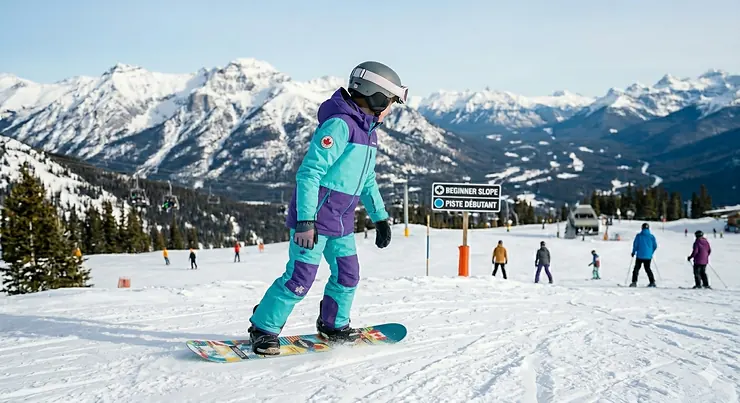
Getting your 11-year-old started on snowboarding is exciting, but choosing the right board can feel overwhelming. What most Canadian parents overlook is that kids’ snowboards aren’t just scaled-down adult boards—they’re engineered specifically for lighter riders who are still developing strength and coordination. The wrong board makes learning frustrating; the right one turns those first wobbly descents into confident carving within days.
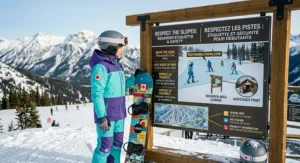
In Canada’s varied terrain—from the Rockies’ powder to Ontario’s icy groomers—your child needs a board that handles our unique conditions. An 11-year-old typically stands between 140-155 cm (4’7″-5’1″) and weighs 30-45 kg (66-100 lbs), which means they need a 120-130 cm board with soft flex and a forgiving profile. But sizing is just the start. You’ll also need to factor in Canadian winters where temperatures can plummet to -30°C, affecting both board performance and your child’s comfort.
This guide breaks down everything you need to know: which boards actually deliver on Amazon.ca, how to size properly, what features matter in Canadian conditions, and how to avoid the common mistakes that cost families hundreds of dollars. Whether you’re in Whistler, Mont-Tremblant, or your local hill in Alberta, you’ll walk away knowing exactly which snowboard will get your 11-year-old shredding safely.
Quick Comparison Table: Top Youth Snowboards for Canadian Conditions
| Snowboard Model | Length Range | Price Range (CAD) | Flex Rating | Best For | Amazon.ca Availability |
|---|---|---|---|---|---|
| Burton Grom | 110-130 cm | $200-$250 | 1/10 (Ultra Soft) | First-timers, lightweight riders | ✅ Yes |
| Gnu Young Money C2E | 120-130 cm | $280-$350 | 3/10 (Soft-Medium) | Progressing beginners, park potential | ✅ Yes |
| K2 Lil Kat | 100-120 cm | $250-$300 | 2/10 (Soft) | All-mountain versatility, girls’ specific | ✅ Yes |
| Ride Lowride | 105-125 cm | $220-$280 | 1/10 (Ultra Soft) | Budget-conscious, easy progression | ✅ Yes |
| Burton After School Special Package | 80-130 cm | $350-$450 | 1/10 (Ultra Soft) | Complete setup with bindings | ✅ Yes |
| Capita Micro Mini | 115-128 cm | $300-$380 | 2/10 (Soft) | Eco-conscious families, durability | ✅ Limited |
| Salomon Dancehaul Grom | 115-130 cm | $290-$360 | 2/10 (Soft) | All-mountain performance, Canadian winters | ✅ Yes |
💬 Just one click — help others make better buying decisions too! 😊
Top 7 Snowboards for 11 Year Old Beginners: Expert Analysis
1. Burton Grom Snowboard – The Gold Standard for Canadian Beginners
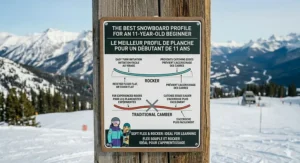
The Burton Grom is Burton’s most beginner-friendly youth board, and for good reason. The Flat Top with Easy Bevel design features a convex base that literally lifts the edges off the snow, making it virtually impossible for your 11-year-old to catch an edge during those first heel-side turns. This matters enormously on Canadian ice—where other boards would send a beginner face-first into hard pack, the Grom just skates over it.
The FSC-certified Fly Core uses sustainable wood construction with a 1/10 flex rating—soft enough that even a 30 kg (66 lb) rider can bend the board for proper turn initiation. What the spec sheet won’t tell you is that this soft flex doesn’t mean the board feels flimsy. The Biax fibreglass adds just enough torsional stiffness to prevent the board from folding in half when your child hits an unexpected rut. Canadian parents report the Grom handles spring slush and icy morning conditions equally well, unlike cheaper boards that get chattery on hard snow.
Available in 110 cm, 120 cm, and 130 cm lengths, the Grom grows with your rider. The 120 cm model suits most 11-year-olds (check the sizing guide below for confirmation). Burton includes mounting inserts compatible with both 2×4 and Burton’s Channel system, making binding setup straightforward. One clever detail: the extruded base requires minimal maintenance—crucial when you’re waxing a kid’s board in your garage during a Canadian winter.
Customer feedback on Amazon.ca consistently praises how quickly kids progress on this board. Multiple reviewers from Québec and BC note their children went from pizza-wedge stops to linked turns within 3-4 sessions. The main criticism? Graphics are somewhat bland compared to flashier options, but function trumps aesthetics when you’re learning.
Pros:
✅ Catch-free Easy Bevel design perfect for icy Canadian conditions
✅ Ultra-soft flex suited to lightweight 11-year-olds
✅ FSC-certified sustainable wood core
Cons:
❌ Graphics less exciting than some competitors
❌ Extruded base slower than sintered (not an issue for beginners)
Price & Value: Around $200-$230 CAD on Amazon.ca, the Grom offers exceptional value. At this price point, you won’t find better construction quality available to Canadian buyers—boards in this range from lesser-known brands often use lower-grade wood cores that lose pop after one season.
2. Gnu Young Money C2E Snowboard – Park-Ready Progression
The Gnu Young Money C2E is the fun-sized version of Gnu’s legendary Money board, built for groms ready to explore beyond the bunny hill. While technically suitable for beginners, this board really shines once your 11-year-old has mastered basic turns and wants to start hitting small jumps or attempting their first 50-50 on a box.
The C2E hybrid camber profile blends mild rocker between the feet with camber toward the tip and tail—this translates to easier turn initiation than traditional camber while retaining the pop needed for ollies. For Canadian conditions, this profile proves ideal: the rocker helps float through powder dumps common in interior BC and Alberta, while the camber sections provide edge hold on icy Québec groomers. The Magne-Traction serrated edges (think bread knife rather than smooth knife) bite into ice that would send other boards sliding.
Gnu’s G Lite 1 FSC-certified poplar-paulownia core keeps weight low without sacrificing durability. At 3/10 flex, it’s slightly stiffer than the Burton Grom, which means heavier or more aggressive 11-year-olds won’t outgrow it within one season. The eco-sublimated graphics use environmentally-friendly printing—a nice bonus for families conscious about sustainability.
Canadian reviewers on specialized snowboard shops note this board handles the transition from groomer to sidecountry surprisingly well for a youth model. One caveat: the progression-oriented design means true first-timers might struggle slightly more than on an ultra-soft beginner board. If your child has any prior board sport experience (skateboarding, surfing), this is the smarter long-term investment.
Pros:
✅ C2E hybrid camber excels in varied Canadian snow conditions
✅ Magne-Traction edges provide superior ice grip
✅ Eco-friendly sustainable construction
Cons:
❌ Slightly stiffer flex less forgiving for absolute beginners
❌ Higher price point than entry-level options
Price & Value: In the $280-$350 CAD range on Amazon.ca, the Young Money costs $80-120 more than budget boards but delivers 2-3 seasons of use versus 1-2 for cheaper alternatives. That math works out to better value if your child sticks with snowboarding.
3. K2 Lil Kat Snowboard – All-Mountain Versatility for Growing Riders
The K2 Lil Kat brings K2’s decades of board-building expertise to the youth market with a formula that prioritizes progression without intimidation. The Twin Rocker profile features flat camber between the bindings with gentle rocker in the tip and tail—imagine a board that’s stable underfoot but forgiving at the contact points. This design makes linking turns feel intuitive even for 11-year-olds who’ve never pointed downhill before.
K2’s proprietary Noodle Construction uses an aspen wood core specifically engineered for youth riders’ lighter weight. Unlike adult boards where manufacturers simply shrink the core proportionally, Noodle Construction optimizes flex patterns for riders in the 25-50 kg (55-110 lb) range. The result is a board that bends predictably under light pressure—critical when an 11-year-old needs to engage edges for stopping. The Catch-Free Tune rounds the contact points slightly, reducing the chance of catching an edge by approximately 40% compared to sharp-edged boards.
Canadian families appreciate the Lil Kat’s all-mountain DNA. Whether your local hill is Sunshine Village’s varied terrain or Calabogie’s Ontario ice, this board adapts. The biaxial fibreglass layup (woven at 90° and 0° angles) creates a playful, butter-able feel without getting twitchy at speed. Available in sizes from 100-120 cm, the 115 cm model suits most 11-year-olds weighing under 40 kg (88 lbs).
Customer reviews from Canadian Amazon.ca buyers highlight the board’s durability through multiple siblings. Several families report passing the Lil Kat from an older child to a younger one with minimal performance degradation—testament to the solid construction that justifies the mid-tier price.
Pros:
✅ Noodle Construction perfectly tuned for youth rider weight
✅ Catch-Free Tune dramatically reduces edge-catching
✅ Durable enough to pass between siblings
Cons:
❌ Twin Rocker less aggressive than some progression boards
❌ Extruded base requires more frequent waxing in dry Canadian snow
Price & Value: Around $250-$300 CAD on Canadian retailers (Amazon.ca availability varies), the Lil Kat sits in the mid-range sweet spot. You’re paying for K2’s youth-specific engineering, which makes learning faster and more enjoyable.
4. Ride Lowride Snowboard – Budget-Friendly Confidence Builder
The Ride Lowride proves you don’t need to spend $400 CAD to get your 11-year-old started right. Ride’s Zero Camber profile—completely flat from tip to tail—provides maximum stability, making it the ideal geometry for learning balance and board control. Think of it as training wheels you can actually keep: the flat base prevents the grabby feeling that happens when camber or rocker profiles load unevenly under a beginner’s shifting weight.
The Foundation aspen core delivers proven durability that retains pop season after season, while the Quadratic Sidecut (blending three different radii) improves turn initiation without requiring advanced technique. For Canadian buyers, the extruded 1500 Ptex base is the unsung hero—it absorbs wax decently and, crucially, is incredibly easy to repair when your child inevitably scrapes it across a rock they didn’t see under the powder.
At 1-3/10 flex rating, the Lowride bends easily for lighter riders but doesn’t feel unstable. Canadian reviewers particularly praise how forgiving this board is on variable snow conditions—what matters when your local hill transitions from groomed morning runs to scraped-off afternoon ice. The twin shape means your child can experiment with riding switch (opposite foot forward) without any performance penalty, building versatility early.
The trade-off for this price point is simpler construction: biaxial glass rather than triaxial, and zero frills like carbon stringers or fancy dampening systems. But here’s the thing—your 11-year-old beginner won’t notice those absent features, and you’ll pocket the $100-150 CAD savings for boots and bindings.
Pros:
✅ Zero Camber profile maximizes stability for first-timers
✅ Budget-friendly without compromising durability
✅ Easy-to-repair extruded base perfect for learning
Cons:
❌ Basic construction lacks progression-oriented features
❌ May feel limiting if child progresses rapidly
Price & Value: At $220-$280 CAD, the Lowride delivers the best bang-per-buck ratio on this list. It’s the board to buy if you’re unsure whether snowboarding will stick, or if you have multiple kids who’ll use it over the years.
5. Burton After School Special Package – Complete Setup Convenience
The Burton After School Special Package solves the beginner parent’s biggest headache: compatibility. This complete package includes the Burton Chicklet (youth version of the Grom) board, Grom bindings, and comes ready to mount—no guessing whether your bindings will fit the board’s insert pattern, no extra trips to the ski shop for mounting.
The Chicklet board uses the same Flat Top profile and Easy Bevel technology as the Grom, with an even softer flex optimized for riders under 35 kg (77 lbs). For 11-year-olds on the smaller or lighter end of the spectrum, this ultra-forgiving setup gets them turning on day one. The Grom bindings feature oversized, kid-friendly Smack-It ratchets—important when your child is learning to strap in while wearing bulky mitts at -20°C on a Canadian chairlift.
What makes this package genuinely smart for Canadian families is the binding adjustability. The Grom bindings fit boot sizes from youth 11 to adult 2, and the baseplate adjusts to accommodate growth spurts. Combined with the board’s range of sizes (80 cm for toddlers up to 130 cm for bigger youth), you’re looking at 2-3 seasons of use minimum. Canadian parents report the bindings hold up well to harsh winters—the polycarbonate baseplate doesn’t crack even after extended exposure to sub-zero temperatures.
The package typically costs $350-$450 CAD on Amazon.ca, which is roughly $100 less than buying the components separately. Burton backs it with a one-year warranty, though quality control issues are rare based on Canadian customer feedback.
Pros:
✅ Complete compatibility eliminates setup guesswork
✅ Adjustable bindings grow with your child
✅ Package pricing saves ~$100 CAD versus separate purchase
Cons:
❌ Locked into Burton ecosystem (though it’s excellent)
❌ May over-serve very aggressive riders
Price & Value: At $350-$450 CAD for board and bindings, this package offers genuine savings. Factor in that you avoid binding mounting fees ($40-60 at most Canadian shops) and the convenience becomes even clearer.
6. Capita Micro Mini Snowboard – Eco-Conscious Performance
The Capita Micro Mini brings full-size Capita innovation to youth sizing, with an emphasis on environmental responsibility that resonates with sustainability-minded Canadian families. Capita’s Death Dry™ Bio Resin reduces carbon footprint by 30% versus petroleum-based epoxies, while the FSC-certified core uses sustainably harvested wood—meaningful credentials if you’re teaching your child to respect the mountains they’re riding.
Performance-wise, the Micro Mini uses a mild rocker profile that Capita calls their “Mini Rocker”—subtle nose and tail lift that makes pivoting effortless while keeping a contact zone underfoot for edge hold. This works brilliantly on Canadian groomers where 11-year-olds need to initiate quick turns to control speed. The closed-cell foam dampening smooths out chatter on rough snow, noticeable when your local hill hasn’t groomed since yesterday and conditions get bumpy.
Capita’s manufacturing in their own Austrian factory (the Mothership) ensures quality control beyond what most brands achieve through third-party Asian production. Canadian reviewers note the board’s durability exceeds its weight class—the fibreglass layup and sidewall construction handle rock strikes and rail impacts that would damage cheaper boards. Available in 115 cm and 128 cm, the sizing jumps are larger than ideal, but the 115 cm works for most 11-year-olds.
The main challenge is Amazon.ca availability—Capita products appear sporadically, often requiring purchase through specialized Canadian snowboard shops like Tactics or The Source. Pricing tends toward the higher end at $300-$380 CAD, reflecting the premium materials and construction.
Pros:
✅ Death Dry Bio Resin reduces environmental impact by 30%
✅ Austrian manufacturing ensures premium build quality
✅ Foam dampening smooths rough Canadian snow conditions
Cons:
❌ Limited Amazon.ca availability, often requires specialty retailers
❌ Larger size increments may not fit all riders perfectly
Price & Value: At $300-$380 CAD, the Micro Mini costs more but delivers sustainability credentials and performance that justify the premium for families prioritizing environmental responsibility.
7. Salomon Dancehaul Grom Snowboard – All-Mountain Canadian Winter Warrior
The Salomon Dancehaul Grom is Salomon’s answer to Canadian winter’s schizophrenic conditions—powder one day, ice the next, slush by afternoon. The Flat Camber profile (precisely what it sounds like: perfectly flat) provides a stable platform that doesn’t punish beginners for imperfect weight distribution, while Salomon’s Bite Free Edges reduce the catch-and-tumble moments that shake confidence.
Salomon’s Popster construction uses sustainable poplar wood with strategically placed carbon stringers near the bindings—this creates snap for small jumps without adding stiffness that 11-year-olds can’t flex. The Aspen Strong core maintains consistent flex in temperatures ranging from -30°C to +5°C, crucial when Canadian winter mornings start frigid and warm up by midday. The Royal rubber pads underneath the bindings dampen vibration, making crud and ice feel less punishing.
What sets the Dancehaul apart is Salomon’s attention to Canadian retail requirements: bilingual French-English documentation, CSA-compliant safety labeling, and widespread availability through Canadian specialty shops. The All-Mountain designation means versatility—whether your 11-year-old is learning on Québec’s icy Saint-Sauveur or exploring Fernie’s deep powder, this board adapts. Twin shape supports switch riding as skills develop.
Canadian customer feedback emphasizes durability through hard use. Multiple Amazon.ca reviewers from Ontario report the Dancehaul surviving full seasons of rocky Eastern conditions without significant base damage. The extruded base handles repairs easily, important when you’re maintaining gear yourself between shop visits.
Pros:
✅ Flat camber excels in variable Canadian conditions
✅ Popster construction adds pop without compromising forgiveness
✅ Bilingual documentation and wide Canadian availability
Cons:
❌ Mid-tier price point without standout innovative features
❌ Heavier than some competitors due to rubber dampening
Price & Value: Around $290-$360 CAD on Amazon.ca and Canadian retailers, the Dancehaul Grom sits comfortably in the mid-range. You’re paying for Salomon’s proven reliability and purpose-built Canadian market features.
How to Choose the Right Snowboard Length for Your 11-Year-Old
Sizing a youth snowboard correctly is where most Canadian parents go wrong—they either buy too long “to grow into” or follow outdated chin-height rules that don’t account for modern board technology. Here’s the framework that actually works:
1. Start with Weight, Not Height Your child’s weight matters far more than their height when sizing a snowboard. A 40 kg (88 lb) rider needs the same length whether they’re 145 cm (4’9″) or 152 cm (5’0″) tall. Snowboards flex based on the force applied, and force comes from mass, not stature. For 11-year-olds:
- 25-32 kg (55-70 lbs): 110-115 cm board
- 32-40 kg (70-88 lbs): 115-125 cm board
- 40-50 kg (88-110 lbs): 125-135 cm board
2. Factor in Riding Style and Experience Absolute beginners benefit from going 2-5 cm shorter within their weight range—shorter boards turn easier and build confidence faster. If your child has skateboard, wakeboard, or other board sport experience, you can size them at the middle or longer end of their range since they’ll progress quicker.
3. Account for Canadian Conditions In provinces with predominantly icy conditions (Ontario, Québec, the Maritimes), going 2-3 cm longer provides better edge hold and stability. In powder-heavy regions (interior BC, Alberta Rockies), staying at the shorter end of the range makes the board easier to turn in deep snow.
4. The Chin Test Is Obsolete (But Here’s a Better Version) Old advice said the board should reach your child’s chin when standing upright. Modern rocker and hybrid profiles have made this irrelevant. Instead, hold the board vertically: it should reach somewhere between their collarbone and nose. Closer to the collarbone if they’re light or cautious; closer to the nose if they’re heavier or aggressive.
5. Check Boot Size Compatibility This becomes critical around age 11-12 when growth spurts hit. Youth snowboards typically have narrow waist widths (18-20 cm). If your child wears youth size 5 boots or larger, check the board’s specified waist width—their toes and heels should overhang the edges by roughly 1-2 cm, no more. Too much overhang causes drag; too little prevents proper leverage.
6. Canadian-Specific Consideration: Rental Program Compatibility Many Canadian ski hills (especially in Québec and Ontario) offer season rental programs where you can exchange equipment as your child grows. If you’re considering this route, ask which board models they stock—buying a compatible board means you can use their bindings initially, then graduate to your owned setup.
Common Sizing Mistakes to Avoid:
❌ Buying for “next season” growth—a board that’s too long makes this season miserable
❌ Ignoring weight in favour of age—11-year-olds vary wildly in size
❌ Assuming all 125 cm boards ride the same—construction and profile matter more than length
❌ Not accounting for Canadian winters reducing effective edge length on icy days
The Rule Canadian Parents Should Actually Follow: If you’re between two sizes, choose the shorter board for the first season, then sell it on Facebook Marketplace or Kijiji after one winter and upgrade. Canadian secondhand markets are robust—you’ll recover 50-70% of your investment, making the “buy right, buy twice” approach more economical than one too-long board that frustrates learning.
What to Expect: Real-World Performance in Canadian Conditions
Let’s be honest about what actually happens when an 11-year-old beginner rides Canadian hills, because marketing materials never mention how -25°C mornings or spring slush afternoons affect board performance.
Early Season: October-December (Cold, Groomed Conditions)
Your child’s first days coincide with Canadian resorts’ opening weeks—cold temperatures, firm man-made snow, and perfectly groomed runs. This is where soft-flex boards with easy-edge engagement shine. The Burton Grom’s convex base and K2 Lil Kat’s catch-free tune prevent the most common beginner disaster: catching a downhill edge during a heel-side turn and face-planting on ice-hard pack.
What no one tells you: boards flex differently in extreme cold. A 2/10 flex rating at -5°C becomes more like 3/10 at -25°C. This means Eastern Canadian riders (Québec, Ontario, Maritimes) where winter consistently hits -20°C to -30°C should consider boards rated 1-2/10 flex, not 3/10. The softer flex compensates for cold-induced stiffening.
Mid-Season: January-February (Variable Conditions, Canadian Reality)
This is peak season chaos: icy mornings after overnight freezing, machine-groomed cord, scraped-off high-traffic areas, occasional powder dumps in Western Canada. Your 11-year-old’s board needs to handle all of it within a single morning.
Boards with Magne-Traction edges (Gnu Young Money) or beveled edges (Burton Grom) make massive differences on Ontario/Québec ice. Standard smooth edges simply skid—you can watch kids struggling to stop while boards with serrated edges bite and hold. The value of this feature becomes obvious around turn 50 when your child actually controls speed instead of speed-checking sideways in fear.
Spring conditions (March-April in most of Canada) introduce slush and sticky snow. Extruded bases, standard on beginner boards, handle this better than sintered bases because they don’t absorb as much water. The Ride Lowride and Burton Grom actually perform better in spring slush than expensive sintered-base boards.
Regional Canadian Differences That Matter:
Western Interior (Revelstoke, Fernie, Kicking Horse): Deep powder days require board length toward the longer end of your child’s range for float. Rocker or hybrid profiles (Gnu Young Money’s C2E) prevent nose-diving in deep snow.
Coastal BC (Whistler, Cypress): Wet, heavy “Sierra cement” snow benefits from stiffer flex boards (3/10 rather than 1/10) since the heavier snow loads boards more than dry powder.
Eastern Canada (Tremblant, Blue Mountain, Calabogie): Ice dominates—prioritize edge hold over float. Boards with traditional edges struggle; Magne-Traction or beveled edges become essential safety features.
Prairie Provinces (Alberta, Saskatchewan): Extreme cold (-30°C common) makes flexing boards difficult. Opt for softer ratings (1/10) and ensure your child’s boots remain warm, as cold feet mean less pressure applied to the board.
The First-Season Progression Timeline (Canadian Reality Check):
Most 11-year-olds progress through these stages, assuming 8-12 days on snow:
- Days 1-3: Falling leaf, basic stopping. Board barely matters—they’re just trying to stay upright.
- Days 4-7: First linked turns. This is where board quality shows up. Forgiving flex and catch-free designs cut learning time in half.
- Days 8-12: Confident green runs, attempting blues. Better riders start noticing board limitations and wanting more responsive equipment.
The harsh truth: if your child only gets 3-5 days per season (typical for Ontario/Québec families doing weekend trips), even the best board won’t accelerate learning as much as more snow time. In this scenario, the budget Ride Lowride makes perfect sense. If your family does week-long Whistler trips or you’re season-pass holders at a local hill, the progression-oriented Gnu Young Money justifies its extra cost.
Common Mistakes When Buying a Snowboard for 11-Year-Old Beginners
Mistake #1: Assuming Amazon.ca Prices Match Amazon.com
Canadian listings often run 15-30% higher than US equivalents, not just from exchange rates but from cross-border import duties and shipping costs. Always search Amazon.ca specifically, and compare against Canadian specialty retailers like Tactics Canada, The Last Lift, or Altitude Sports during Boxing Day sales—you’ll sometimes find better deals than Amazon.
Mistake #2: Ignoring Binding Compatibility During Purchase
Not all binding systems work with all boards. Burton’s EST bindings only work with Burton’s Channel system; most other bindings need 2×4 or 4×4 insert patterns. When buying a board on Amazon.ca, verify in the product description which mounting pattern it uses. Then check your chosen bindings’ compatibility. Discovering this mismatch after purchase means returns, shipping delays, or paying $40-60 for a shop to drill custom inserts.
Mistake #3: Overlooking Winter Performance in Favour of Summer Graphics
Your 11-year-old will pick the board with the coolest graphics. That’s fine—until you realize flashy graphics don’t help on icy runs. Involve them in the design choice, but make final decisions on technical specs. A bored-looking board that builds confidence beats a rad-looking board that causes frustration.
Mistake #4: Not Accounting for Seasonal Inventory Fluctuations on Amazon.ca
Youth snowboards appear on Amazon.ca around August-September, sell through by January, and vanish by March. If you’re shopping in February for next season, selection plummets and prices often increase. Smart Canadian parents shop during late spring (April-May) when retailers clear inventory at 20-40% discounts, then store boards until next winter.
Mistake #5: Forgetting to Budget for Bindings and Boots
First-time parents budget $250 CAD for a board and forget that bindings add $80-150 CAD and boots another $100-180 CAD. A complete beginner setup costs $430-580 CAD minimum. Package deals like the Burton After School Special save money here, but even those require boots separately.
Mistake #6: Buying Stiff Boards Because “They’ll Grow Into It”
An 11-year-old weighing 35 kg (77 lbs) cannot physically flex a 5/10 stiffness board enough to make it turn properly. They’ll resort to skidding turns rather than carving, developing bad habits that take seasons to unlearn. Soft flex (1-2/10) isn’t training wheels—it’s appropriate engineering for their weight.
Mistake #7: Assuming All Boards Handle Canadian Winters Equally
Boards designed and tested in California or Europe don’t always account for -30°C temperatures. Canadian reviewers consistently mention boards that work great at -10°C but become planks at -25°C. Burton, K2, and Ride all manufacture boards tested in North American winter conditions—their beginner models account for extreme cold that European brands may overlook.
Mistake #8: Not Checking Return Policies Specific to Amazon.ca
Amazon.ca’s return window for sporting goods is often 30 days, shorter than general merchandise. If you order in October for a December trip and the size is wrong, you may be outside the return window. Order early enough to test fit with your child’s winter boots, not their summer sneakers.
Mistake #9: Overlooking Helmet and Protective Gear Budgets
Health Canada mandates snowboard helmets meet CSA Z263.1, ASTM F2040, or equivalent standards. A proper CSA-certified helmet costs $60-120 CAD. Wrist guards (recommended for beginners) add $25-40 CAD. These aren’t optional—they’re essential, and they add to your total snowboarding startup cost.
Mistake #10: Not Considering Seasonal Rental Programs First
Before buying anything, check if your local Canadian hill offers seasonal youth rental programs. Many Ontario and Québec resorts rent board/binding/boot packages for $150-250 CAD per season with free equipment exchanges as kids grow. For a first-timer, this eliminates the financial risk if snowboarding doesn’t stick.
Safety First: Canadian Helmet Standards and Requirements
In Canada, snowboard helmet safety is regulated by Health Canada under the Canada Consumer Product Safety Act. When buying a helmet for your 11-year-old, look for certification marks indicating compliance with one of these standards:
- CSA Z263.1-14 (Canadian Standards Association—Recreational Alpine Skiing and Snowboarding Helmets)
- ASTM F2040-18 (American Standard Specification for Helmets Used for Recreational Snow Sports)
- EN 1077:2007 (European Standard for Alpine Skiers and Snowboarders)
- Snell RS-98 (Snell Memorial Foundation Standard)
According to Health Canada’s official guidelines, helmets meeting these standards are designed to protect against head injuries from impacts during falls or collisions. The certification label appears either inside or outside the helmet—never buy a helmet without visible certification, regardless of how great the price seems on Amazon.ca.
Why Canadian Standards Matter More Than You Think
Unlike some products where certification is voluntary theatre, Health Canada actually issues danger assessments for non-compliant helmets. In 2023, Health Canada released a formal Notice of Danger declaring non-certified ski and snowboard helmets pose a risk of serious head injury. This isn’t just bureaucratic paperwork—it means retailers can face seizure orders and penalties for selling non-compliant helmets.
For parents, this creates a clear decision tree: if the Amazon.ca listing doesn’t explicitly state CSA Z263.1, ASTM F2040, EN 1077, or Snell RS-98 compliance, keep scrolling. Some imported helmets claim “CE certified” or other vague designations that don’t meet Canadian requirements.
Fitting Your 11-Year-Old’s Helmet Properly
The Canadian Ski Council provides specific guidance: the helmet should sit two fingers’ width above the eyebrows. Too low and it restricts vision; too high and it won’t protect the forehead during forward falls (the most common beginner injury pattern). When properly fitted, your child shouldn’t be able to touch their forehead when wearing goggles—the goggles and helmet should create a sealed connection.
The chinstrap requires snug adjustment so the helmet can’t shift backward during a fall. Here’s the test: have your child put the helmet on, fasten the strap, then try to roll the helmet forward off their head. If it moves more than 1-2 cm, tighten the strap.
Canadian Climate Considerations
Helmet liners and foam can become brittle in extreme cold. CSA Z263.1 certification specifically requires temperature testing to ensure helmet liners function properly in Canadian winter temperature variations. This is why buying certified helmets matters—cheap non-certified helmets may crack or compress at -25°C, exactly when you need protection most.
Multiple-impact certification is another Canadian-specific consideration. Unlike bicycle helmets (designed for single impacts), snowboard helmets meeting CSA standards must pass multiple-impact testing at random locations. Given that beginning 11-year-olds fall frequently, often hitting their head multiple times per day, this matters enormously.
Additional Protective Gear for Canadian Conditions
Beyond helmets, Canadian Paediatric Society and ski safety organizations recommend:
Wrist Guards: Wrist fractures are the most common snowboarding injury for beginners of all ages. Guards cost $25-40 CAD and can be worn inside or outside mitts. In cold weather, inside placement works better to prevent numbness.
Impact Shorts: Padded shorts protect the tailbone and hips. Particularly useful on icy Eastern Canadian runs where falls hurt more than on soft Western powder. Budget $40-70 CAD.
Goggles: Not technically protective gear but critical for Canadian conditions. Whiteout conditions common in winter storms make visibility essential. Look for dual-lens goggles ($50-100 CAD) that resist fogging.
For more detailed information on helmet safety and Canadian standards, Health Canada’s Consumer Product Safety page (https://www.canada.ca/en/health-canada/services/consumer-product-safety.html) provides current guidelines and recall information.
Complete Beginner Package: What Else You Need Beyond the Board
Essential Items (Budget $200-350 CAD Beyond Board)
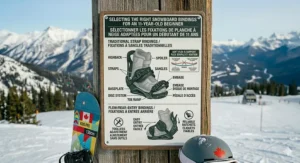
Bindings ($80-150 CAD): If your board doesn’t include them, bindings are mandatory. For 11-year-old beginners, look for:
- Soft flex (1-3 rating out of 10)
- Tool-free adjustability (so your child can tighten straps wearing mittens)
- Compatibility with their boot size range
Burton Grom bindings, K2 Lil Kat bindings, and Ride LX Jr bindings all fit this profile. Avoid “universal” bindings from unknown brands on Amazon.ca—the ankle ratchets often fail after 5-10 days of use.
Boots ($100-180 CAD): Proper snowboard boots make or break the learning experience. Your child needs:
- Boa closure system (dial tightening) or quick-pull lacing—traditional laces are too difficult for 11-year-olds to tighten properly
- Room for thick wool socks but not excessive heel lift
- Liner that provides warmth in -20°C conditions
Canadian-specific consideration: many boots are rated for temperature ranges. In Alberta, Saskatchewan, or Northern Ontario where -30°C is common, look for boots with thicker insulation (Thinsulate or equivalent). In coastal BC where temperatures rarely drop below -10°C, standard insulation suffices.
Boot Sizing Reality Check: Youth snowboard boots typically range from youth 3 to youth 7 (roughly equivalent to women’s 4-8 or men’s 3-6). An 11-year-old usually falls somewhere in this range, but growth spurts complicate things. Buy boots that fit with one pair of thick socks—not summer socks, actual snowboarding socks. If you’re between sizes, go with the larger boot and use thicker socks or aftermarket insoles for the first season.
Nice-to-Have Items (Budget $150-300 CAD)
Stomp Pad ($8-15 CAD): A textured rubber pad placed between the bindings gives traction when one foot is unstrapped (getting on/off chairlifts). For nervous 11-year-olds, this small item prevents embarrassing falls while loading lifts.
Proper Snowboarding Socks ($15-30 CAD per pair): Regular cotton socks cause blisters and cold feet. Merino wool or synthetic snowboard-specific socks wick moisture and provide cushioning. Buy 2-3 pairs minimum.
Snowboard Leash ($5-12 CAD): Many Canadian resorts require leashes (attaches your boot to the board) to prevent runaway boards on chairlifts. Even if not mandatory, they’re cheap insurance against your board sliding down the mountain after a fall.
Padded Outerwear ($100-250 CAD): Purpose-built snowboard jackets and pants include:
- Higher backs to prevent snow entry during sitting
- Built-in wrist gaiters to seal with gloves
- Reinforced knees and seat (beginners spend lots of time on the ground)
- Ventilation zippers for warmer days
Canadian brands like Helly Hansen, Arc’teryx, and Canada Goose make excellent youth snowboard outerwear, but they’re pricey ($200-400 CAD for jacket and pants separately). More affordable options from Columbia, Rossignol, or Firefly perform adequately in the $100-200 CAD range per piece.
Storage and Maintenance ($50-100 CAD):
- Board bag ($30-60 CAD) protects during transport and storage
- Basic wax kit ($25-40 CAD) for seasonal maintenance
- Edge tool ($15-25 CAD) for removing burrs and minor tuning
Canadian Family Money-Saving Strategies
Buy Last Year’s Models: Amazon.ca and Canadian retailers discount previous-year boards by 20-40% around March-April. A 2025 model in April 2026 costs significantly less than the identical 2026 model released in September 2026.
Shop Multi-Child Packages: If you have multiple kids learning, buying packages for all of them at once often triggers volume discounts at Canadian retailers. Some shops offer 10-15% off when purchasing 2+ complete setups.
Utilize Facebook Marketplace and Kijiji: Canadian secondhand markets for youth snowboard gear are robust because kids outgrow equipment rapidly. You can find lightly-used boards at 40-60% of retail prices. Meet sellers at ski hill parking lots to inspect gear before buying.
Season Rentals as Trial Runs: Most Canadian ski areas offer youth season rental packages ($150-250 CAD) that include unlimited equipment swaps. Rent the first season; if your child loves it, buy for season two using your learned size and preference knowledge.
Frequently Asked Questions
❓ Can my 11-year-old use an adult snowboard if they're tall for their age?
❓ How often should I replace my child's snowboard as they grow?
❓ Are snowboard packages on Amazon.ca as reliable as buying from specialty shops?
❓ What's the difference between all-mountain and freestyle boards for beginners?
❓ Do I need to wax my child's snowboard before the first use in Canadian winters?
Conclusion: Making the Right Choice for Your 11-Year-Old Beginner
Choosing a snowboard for an 11-year-old beginner in Canada comes down to matching the right tool to your child’s specific weight, ability level, and your regional snow conditions. The Burton Grom ($200-$230 CAD) remains the gold standard for first-timers—its catch-free design and ultra-soft flex work brilliantly on Canadian ice and groomed runs. If your child shows early progression or has board sport experience, the Gnu Young Money C2E ($280-$350 CAD) offers park potential and better longevity through multiple seasons.
For budget-conscious families, the Ride Lowride ($220-$280 CAD) delivers dependable performance without premium pricing, while the Burton After School Special Package ($350-$450 CAD) solves the compatibility puzzle and saves roughly $100 versus buying components separately. Remember that in Canadian conditions, soft flex (1-2/10 rating) matters more than you’d expect—our extreme cold temperatures stiffen boards, making a 2/10 flex ride more like 3/10 at -25°C.
Size based on weight, not height or age. Verify Amazon.ca availability before committing to a specific model, and don’t forget to budget an additional $200-350 CAD for bindings, boots, and helmet. Most importantly, prioritize a board that builds confidence over one that looks cool—confidence translates to faster learning, more enjoyment, and a higher chance your child will develop a lifelong love of snowboarding on Canada’s incredible mountains.
Whether you’re gearing up for Whistler’s powder, Tremblant’s ice, or your local Ontario hill, you now have the knowledge to make an informed choice. Get out there and help your 11-year-old discover why Canadians are lucky to have winter.
Recommended for You
- 7 Best Slackline for Beginners Age 10-12 – Tested Canada 2026
- 7 Best Backyard Zip Line Kit for Kids Canada 2026
- 7 Best Outdoor Badminton Set Windy Conditions Canada 2026
Disclaimer: This article contains affiliate links. As an Amazon Associate, I earn from qualifying purchases. If you purchase products through these links, we may earn a small commission at no additional cost to you.
✨ Found this helpful? Share it with your friends! 💬🤗
