
In This Article
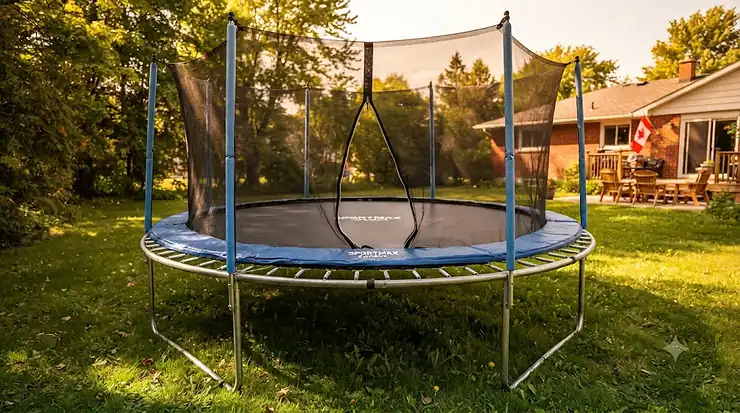
Somewhere in your backyard right now, there’s probably a trampoline mat that’s gone the color of weak tea, with a hole near the edge that started as a pinprick and is now big enough to swallow a soccer ball. A replacement trampoline mat and springs kit is exactly what it sounds like: the woven jumping surface and the tensioned coils that connect it to the frame, sold separately from a whole new trampoline so you can fix what’s actually broken instead of hauling the entire rig to the curb. It’s the cheapest, fastest way to bring a sagging or sun-shredded trampoline back to life, and in most cases it takes an afternoon, not a weekend.
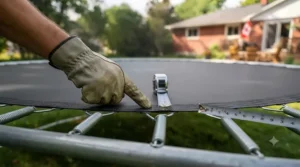
Here’s the thing nobody tells you at the hardware store: mats and springs aren’t one-size-fits-all, and guessing wrong is the single most common (and most expensive) mistake Canadian trampoline owners make. Frame diameter, spring length, and ring count all have to line up almost perfectly, or you’ll end up returning a $90 mat that looked identical to your old one but sat two inches short all the way around. Health Canada’s trampoline safety guidance also flags worn mats and exposed springs as a real injury risk, not just a cosmetic annoyance, which is one more reason to get the replacement right the first time.
This guide walks through seven real, currently available replacement mats and spring kits — budget, mid-range, and premium — plus the measuring tricks, sizing charts, and repair know-how that actually matter once you’re kneeling in the grass with a spring tool in hand. Every price below is shown as a range in Canadian dollars, since exact Amazon.ca pricing shifts too often to quote reliably; always check the current listing before you buy.
Quick Comparison Table
| Product | Best For | Price Range (CAD) |
|---|---|---|
| Trampoline Pro Universal 15ft Mat with Spring Tool | Best all-round universal fit | C$90–C$120 |
| SkyBound Premium Replacement Springs (12–48 Pack) | Most size options in one line | C$25–C$70 |
| Skywalker/JumpKing/UpperBounce/SkyBound 20-Pack Spring Kit | Best complete spring + tool bundle | C$30–C$45 |
| Trampoline Pro 14ft Replacement Mat | Best fit for the most common frame size | C$85–C$110 |
| Cliselda Universal Trampoline Mat | Best budget multi-size option | C$60–C$85 |
Look at that spread for a second: springs alone can cost as little as a large pizza, while a full 15ft mat can run past C$100 — and that gap is exactly why matching your purchase to your actual frame matters so much. The Trampoline Pro Universal 15ft Mat with Spring Tool earns the top overall slot because it ships with the pulling tool most first-timers don’t own, while the SkyBound Premium Replacement Springs line wins on sheer flexibility since it spans sizes from 3.5 to 8.5 inches. If your springs are fine and only the mat has failed, skip straight to the mat rows; if it’s the reverse, the spring-only kits are the far cheaper fix.
💬 Just one click — help others make better buying decisions too!😊
Top 7 Replacement Trampoline Mat and Springs: Expert Analysis
1. Trampoline Pro Universal 15ft Mat with Spring Tool — best all-rounder with tool included
This mat measures 159 inches across with 96 V-rings sewn in, and it’s built specifically to pair with 6.5-inch or 7-inch springs, which happens to be the most common combo on full-size backyard round trampolines. What that spec actually means for you: the 96-ring count spreads tension evenly across a big jumping surface, so you get less mat sag in the center even after a summer of daily use by kids who weigh more than they did last June. Based on the spec comparison against smaller mats in this lineup, this is the one to grab if your original trampoline came with a 15ft steel frame and you’re not changing spring length in the process.
Reviewers consistently report that the bundled spring tool is the real value-add here, since a lot of first-time buyers don’t realize they need a separate pulling tool until they’re standing in the yard with bleeding knuckles. What most buyers overlook about UV-treated polypropylene mats like this one is that the “UV & safety certified” label matters more in Canadian summers than you’d think — direct sun on an uncovered trampoline degrades cheaper mats within two seasons, while treated polypropylene tends to hold its tensile strength considerably longer.
Pros:
- ✅ Includes spring tool most competitors sell separately
- ✅ 96-ring count spreads tension evenly for less sag
- ✅ UV-treated material built for full outdoor seasons
Cons:
- ❌ Only fits 15ft frames — no flexibility for other sizes
- ❌ Springs sold separately, adding to total cost
Priced in the C$90–C$120 range, this mat represents solid value for anyone with a true 15ft frame, since buying a whole new trampoline in this size class would run well into the hundreds.
2. SkyBound Premium Replacement Springs (12–48 Pack) — widest size range for exact matches
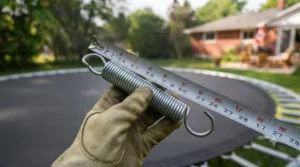
SkyBound’s spring line spans 3.5 to 8.5 inches and pack sizes from 12 up to 48, which covers nearly every consumer trampoline sold in the last fifteen years, from mini rebounders to full 15ft backyard units. The gold zinc coating isn’t just cosmetic — it’s the coating layer that resists the freeze-thaw cycle Canadian trampolines endure every winter, which is exactly when generic springs tend to seize up or snap. Here’s what to weigh: because SkyBound sells by both length and pack count separately, you can replace only the springs that failed rather than the whole set, provided the rest of your springs still measure evenly against each other.
Aggregated user feedback across retailers points to strong retained tension even after repeated stretching, with the rubber-tipped hooks reducing the hand-pinch injuries that plague bargain-bin spring sets. A recurring theme in reviews is that buyers who skip the recommended “measure three old springs and average them” step sometimes order the wrong length — not a flaw in the product, but a reminder that measuring carefully matters more than trusting your trampoline’s original size label.
Pros:
- ✅ Widest length range (3.5″–8.5″) of any kit here
- ✅ Gold zinc coating resists Canadian winter corrosion
- ✅ Rubber-tipped hooks reduce pinch injuries on install
Cons:
- ❌ Springs and mat sold separately — plan for both costs
- ❌ Larger pack sizes cost more upfront than you may need
Expect to pay roughly C$25 for a small pack up to C$70 for a full 48-pack, making this one of the most cost-effective fixes on this list when only springs, not the mat, have failed.
3. Skywalker/JumpKing/UpperBounce/SkyBound 20-Pack Spring Kit — best complete bundle for first-timers
This kit’s standout feature is right in the name — it’s engineered as a universal cross-brand fit for Skywalker, JumpKing, UpperBounce, and SkyBound frames, made from heat-treated 60Si2Mn steel that the manufacturer claims boosts force capacity by roughly 20% over cheaper spring steel. In practical terms, that translates to a livelier, more consistent bounce that doesn’t flatten out after the first month of heavy use, plus a rated lifespan north of 500,000 flex cycles — call it several years of near-daily jumping before fatigue sets in.
What most first-time buyers overlook is that the included spring tool alone is worth factoring into the price comparison, since a decent standalone tool can cost almost as much as the springs themselves. Reviewers frequently mention the galvanized coating holding up well even on trampolines left outside through wet grass and rain, which lines up with the “wet grass environment” claim in the listing. On the flip side, some buyers note the 20-pack undersells them slightly if their trampoline uses more than 20 springs, meaning a second pack purchase for larger frames.
Pros:
- ✅ Cross-brand universal fit for four major frame brands
- ✅ Heat-treated steel rated for 500,000+ flex cycles
- ✅ Spring tool included, saving a separate purchase
Cons:
- ❌ 20-pack may be short for trampolines needing more springs
- ❌ Only available in 5.5″ and 7″ lengths, not in between
At around C$30–C$45, this is the pick for anyone replacing springs on a mid-size trampoline for the very first time and wanting everything in one box.
4. Trampoline Pro 14ft Replacement Mat — best fit for the most common frame size
Sized at 147 inches wide with 72 V-rings, this mat is built for 14ft round frames using either 6.5-inch or 7-inch springs — arguably the single most common trampoline size sold across Canada over the past decade. What that spec means in the yard: 72 rings is fewer than the 15ft version’s 96, so tension per spring runs slightly higher, which reviewers say translates to a noticeably snappier, more responsive bounce rather than the softer feel of larger-ring mats.
Based on the spec comparison with its 15ft sibling, this is the better buy if your original trampoline box said “14ft” — sizing up to the 15ft mat won’t fit your frame’s bolt spacing, no matter how similar the two look folded in their packaging. Aggregated review sentiment describes the 8-row stitching along the mat’s perimeter as noticeably tougher than single-stitched budget alternatives, particularly around the ring reinforcement points where most mat failures start.
Pros:
- ✅ Matches the most widely sold trampoline frame size
- ✅ 8-row stitching resists tearing at ring points
- ✅ Snappier bounce feel from higher per-spring tension
Cons:
- ❌ Won’t fit 12ft or 15ft frames despite similar packaging
- ❌ Springs not included, so budget for those separately
Priced around C$85–C$110, it’s a near like-for-like swap for anyone whose original 14ft mat has finally given out after years of Canadian winters.
5. Cliselda Universal Trampoline Mat — best budget multi-size option
Cliselda’s mat covers 12ft, 14ft, and 15ft round frames in a single product line, with ring counts of 72, 88, or 96 depending on which variant you order, and compatibility with springs from 5.5 to 7 inches. The real advantage here isn’t just the price — it’s that Cliselda includes the spring pulling tool standard, which for budget-focused buyers removes an entire line item from the shopping cart. What most buyers overlook is that “universal” doesn’t mean “one mat fits three sizes” — you still order the specific variant matching your frame, but the manufacturing line covers all three without a premium markup.
A common theme in aggregated reviews is that buyers appreciate not needing to hunt down a separate spring tool, though a handful of reviewers note the fabric feels marginally thinner than pricier brand-name mats — a reasonable tradeoff at this price point, and one that mostly matters for households running the trampoline daily rather than a few times a week.
Pros:
- ✅ Covers 12ft, 14ft, and 15ft in one product family
- ✅ Spring tool included at a budget-friendly price
- ✅ Straightforward install with 8-row perimeter stitching
Cons:
- ❌ Fabric reported as thinner than premium alternatives
- ❌ Frame and springs still sold separately
At roughly C$60–C$85, this is the value pick for budget-conscious families who don’t need premium fabric weight but do want tool-included convenience.
6. Trampoline Pro 12ft Replacement Mat — best for compact backyard trampolines
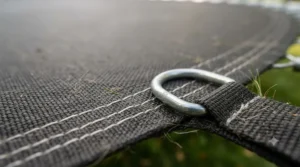
Built at 127 inches across with 72 rings and designed for 5.5-inch springs, this mat targets the smaller 12ft frame size common in townhome and smaller-yard setups. Here’s what the spec sheet won’t tell you outright: smaller mats like this one experience less overall stretch and sag simply because there’s less surface area under load, so a 12ft mat in good material condition can often outlast a 15ft mat of the same brand and vintage by a season or two.
Honest analysis for who this suits: it’s the right call for households with younger kids or limited yard space rather than teenagers doing repeated high-impact jumps, since the shorter spring length and tighter mat geometry naturally cap how much bounce height the setup can generate. Reviewers note the UV coating performs consistently with the brand’s larger mats, and the certification marking gives some peace of mind on material safety.
Pros:
- ✅ Compact 12ft size fits smaller yards and patios
- ✅ Less sag over time due to smaller surface area
- ✅ Same UV-treated, certified material as larger siblings
Cons:
- ❌ Lower bounce ceiling than 14ft or 15ft alternatives
- ❌ Springs sold separately, same as other Trampoline Pro mats
Expect a price range around C$70–C$95, making it one of the more affordable full-mat replacements on this list.
7. Trampoline Pro 11′ x 11′ Square Replacement Mat — best specialty fit for square frames
This one’s a standout simply because square and rectangular trampoline frames are far less common than round ones, and finding an exact replacement mat for them is genuinely difficult. Built with 84 rings and 90-degree corner edges rather than rounded ones, it’s specifically engineered to fit the Skywalker STSC13BC 13ft x 13ft frame — a reminder that “13ft” branding on square trampolines often refers to outer frame dimension, not the mat’s jumping surface size.
What most buyers overlook about square-frame replacements is that corner tension behaves differently than round-frame tension; the 90-degree edges concentrate stress at four points instead of distributing it evenly around a circle, which is exactly why a generic round mat can never be forced to fit a square frame no matter how close the ring count looks on paper. Based on the spec comparison with round alternatives, buyers should treat square-frame parts as frame-specific rather than universal from the outset.
Pros:
- ✅ Purpose-built for Skywalker’s square STSC13BC frame
- ✅ 90-degree corner construction matches square tension needs
- ✅ Rare specialty fit that’s hard to source elsewhere
Cons:
- ❌ Extremely frame-specific — won’t fit other square models
- ❌ Springs not included, and square springs cost more
Pricing typically lands in the C$95–C$130 range given its specialty nature, which is a fair trade-off versus buying an entirely new square trampoline.
DIY Trampoline Repair: A Practical Usage Guide
Getting a replacement trampoline mat and springs installed properly is less about strength and more about patience — most first-timers rush the last ten springs and end up with an uneven bounce. Start by removing the old mat entirely before measuring anything; trying to measure a still-attached, stretched-out mat is the number one reason people order the wrong size. Lay the new mat flat and centered on the frame, then begin attaching springs at four opposite points (like tightening lug nuts on a tire) rather than working around the circle in order — this keeps tension even and prevents the mat from pulling off-center partway through.
A basic maintenance schedule pays off here: inspect springs every spring and fall for rust pitting or stretch, and check mat stitching around the rings monthly during peak summer use. The most common first-30-day mistake is over-tightening — forcing a spring on when it clearly doesn’t reach comfortably usually means you’ve got the wrong length, not a mat that needs “breaking in.” One genuine optimization trick that doesn’t show up on any Amazon listing: lightly lubricate spring hooks with a silicone-based (not petroleum-based) spray before installation, which makes the pulling tool’s job dramatically easier and reduces hook wear over the first season.
Real-World Scenarios: Which Setup Fits Your Household
Consider a young family in suburban Ottawa with two kids under ten and a 12ft frame tucked into a modest backyard — the Trampoline Pro 12ft Replacement Mat paired with a 20-pack of 5.5-inch springs covers them completely, and the lower bounce ceiling is actually a safety feature rather than a limitation at that age. Now picture a household in rural Alberta with teenagers, a full 15ft frame, and years of hard use behind it: the Trampoline Pro Universal 15ft Mat with Spring Tool combined with the SkyBound Premium Replacement Springs in a 7-inch, 96-count configuration gives them the responsive bounce older, more athletic jumpers actually want.
Finally, think about a budget-stretched renter with a hand-me-down 14ft trampoline and springs that still test fine, but a mat that’s torn clean through — for them, the Cliselda Universal Trampoline Mat alone, without a spring purchase, solves the whole problem for well under C$100. Matching frequency of use, yard size, and jumper age to the right combination saves money twice: once by not overbuying, and again by not underbuying and needing a second repair within a year.
How to Choose Replacement Trampoline Mat and Springs
Picking the right replacement trampoline mat and springs comes down to seven checks, in this order, before you add anything to your cart.
- Measure the frame diameter first. Measure outside edge to outside edge across the metal frame, not the mat — frame size is the one number that never changes.
- Count your current springs. The replacement mat’s ring count must match your spring count exactly, or spacing won’t line up.
- Measure spring length hook-to-hook. Do this on at least three unstretched springs and average them, since years of use can stretch springs unevenly.
- Confirm mat diameter versus frame diameter. A mat is always smaller than the frame — that gap is exactly where the springs live.
- Check the material rating. UV-treated, certified polypropylene resists Canadian summer sun far longer than uncoated fabric.
- Decide if you need springs, mat, or both. Buying only what’s actually failed keeps costs down significantly.
- Factor in a spring tool. If your existing tool is lost or rusted, choose a kit that bundles one rather than buying separately.
Universal Trampoline Mat Sizes Explained
“Universal” trampoline mat sizing is a bit of a misnomer — no single mat fits every frame, but manufacturers do standardize around a handful of common diameters: 12ft, 14ft, and 15ft round frames make up the overwhelming majority of Canadian backyard trampolines, with 8ft and 10ft mini units and 13ft square frames as the main outliers. What most buyers overlook is that the mat’s listed diameter is always several inches smaller than the frame’s outer diameter, because that gap is where the springs stretch — a 15ft frame commonly pairs with a 159-inch mat, but only when 7-inch springs are used, since shorter springs mean the mat itself needs to be larger to fill the same frame.
Based on the spec comparisons across brands, matching “universal” sizing really means matching three numbers together — frame diameter, spring length, and ring count — rather than trusting a single size label on the box. This is also where a lot of returns happen: a mat that’s technically “14ft” from one manufacturer can differ by an inch or two from another’s 14ft mat, simply because spring length assumptions differ.
Spring Count by Trampoline Size
| Frame Size | Typical Spring Count | Typical Spring Length | Best For |
|---|---|---|---|
| 8ft–10ft (mini) | 40–48 springs | 4.5″–5.5″ | Trampoline Pro 12ft Replacement Mat owners sizing down |
| 12ft | 64–72 springs | 5.5″ | Trampoline Pro 12ft Replacement Mat |
| 14ft | 72–80 springs | 6.5″–7″ | Trampoline Pro 14ft Replacement Mat |
| 15ft | 88–96 springs | 6.5″–7″ | Trampoline Pro Universal 15ft Mat with Spring Tool |
| 13ft square | 80–88 springs | 6″–7″ | Trampoline Pro 11′ x 11′ Square Replacement Mat |
This table is exactly why counting your own springs beats trusting your trampoline’s advertised size — a “14ft” frame from one brand might genuinely need 72 springs while another brand’s 14ft uses 80, and ordering by size alone risks a mat with the wrong ring count. If you land in between two rows here, always defer to your actual spring count over the frame’s marketed diameter, since ring count is non-negotiable but frame labeling varies by manufacturer.
Trampoline Spring Replacement Kit: What’s Actually Inside
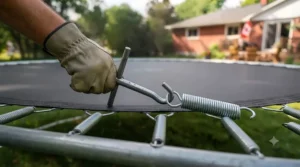
A proper trampoline spring replacement kit should include three things: the springs themselves in a matched length and quantity, a pulling tool (usually a T-hook or handled hook), and ideally rubber safety tips on the hook ends. Reviewers consistently flag the tool as the difference-maker for a first repair — attempting to stretch even a single 7-inch spring by hand is genuinely difficult and a common source of pinched fingers, which is exactly why kits like the Skywalker/JumpKing/UpperBounce/SkyBound 20-pack bundle one in by default. What most buyers overlook is that pack size matters as much as spring length; a 12-pack sounds like plenty until you realize your 15ft trampoline needs closer to 90.
Based on the spec comparison between single-length and range kits, buyers replacing springs for the first time are usually better served by a kit at their exact measured length rather than a range-spanning multi-size pack, since exact-length kits tend to have more consistent tension across the whole set.
Trampoline Frame Pad Replacement: Why It Matters
The frame pad — sometimes called a safety pad or spring cover — sits over the springs and frame edge, and it’s arguably more safety-critical than the mat itself, since Health Canada’s guidance specifically calls out exposed springs and frame as a leading cause of pinch and impact injuries. What the spec sheet won’t tell you plainly is that pad thickness and coverage width both matter: thinner pads shift and expose spring gaps within a season, while wider, thicker pads (typically rated in the 9/16-inch range) stay put and cover the full spring length even as the mat stretches slightly with use.
Honest take: if your mat and springs are being replaced anyway, it’s worth inspecting the pad at the same time, since a fresh mat installed over a cracked, sun-brittle pad undercuts a lot of the safety benefit of the repair. Reviewers frequently mention PVC-coated pads holding up better against rain than uncoated PE foam alone, which lines up with basic weather-resistance logic for anything left outdoors year-round in Canada.
Trampoline Jump Mat Material: What the Spec Sheet Means
Nearly every mat on this list uses woven polypropylene, and the reason is simple: it’s UV-stable, doesn’t stretch unevenly under repeated impact, and dries fast after rain — three properties that matter enormously for anything left outside through a Canadian spring and summer. What most buyers overlook is that stitching pattern matters as much as the base fabric; 8-row stitching around the ring reinforcements, as seen on several products above, distributes load across more thread than the 4-row stitching found on cheaper mats, which is usually where tears actually begin.
Based on the spec comparison across price tiers, thicker-gauge polypropylene with UV and safety certification tends to outlast uncertified budget fabric by a meaningful margin, particularly in high-UV regions of the country. Reviewers note that mat color can fade noticeably within a season regardless of brand, which is cosmetic rather than structural, but a genuinely thinning or brittle-feeling mat — as opposed to just faded — is the real signal it’s time to replace, not the color alone.
Common Mistakes When Buying Replacement Trampoline Mat and Springs
The single biggest mistake is measuring the old, stretched mat instead of the frame itself — stretched fabric adds inches that don’t reflect your actual frame size. A close second is guessing spring length from memory rather than measuring three unstretched springs and averaging them, since years of tension can leave springs 10–15% longer than their factory length. Buyers also frequently order mat and springs as a mismatched pair — a 96-ring mat with a 72-spring set simply won’t work, no matter how close the packaging photos look.
Another recurring pitfall, according to the Canada Safety Council, is treating the pad and net as optional extras once the mat and springs are replaced — a fresh jumping surface over exposed springs still carries real injury risk. Finally, some buyers skip checking whether their frame is round or square before ordering, which as covered above, is an incompatibility no amount of tension adjustment can fix.
Long-Term Cost & Maintenance
Replacing a mat and springs, even at the premium end of this list, typically lands somewhere between C$150 and C$250 all-in for a full-size trampoline — springs, mat, pad if needed, and a tool. Compare that against a brand-new full-size trampoline, which commonly starts well above C$400 and climbs from there, and the math heavily favours repair over replacement whenever the frame itself is still structurally sound.
| Approach | Typical Total Cost (CAD) | Lifespan Added |
|---|---|---|
| Mat + springs replacement | C$150–C$250 | 2–4 more seasons |
| New full trampoline | C$400–C$900+ | Full product lifespan |
| Springs only (mat still good) | C$30–C$70 | 1–3 more seasons |
Looking at the numbers above, replacing just the worn components makes financial sense in the overwhelming majority of cases, provided the steel frame itself hasn’t rusted through or bent. The exception is a frame that’s genuinely failing structurally — no mat or spring purchase fixes a warped or corroded frame, and at that point a new unit is the safer long-term investment.
Safety, Regulations, and Compliance Guide
Canada doesn’t currently regulate trampolines the way it does, say, car seats, but Health Canada actively monitors incidents and maintains ongoing safety guidance, including recommendations against unsupervised use by children under six. It’s also worth checking Canada’s product recall database before buying any trampoline component, since recalled parts do occasionally surface on secondary marketplaces. When it comes to the mat and springs specifically, the practical safety guidance boils down to a few points: keep pads fully covering springs and frame at all times, replace stretched or rusted springs before they snap under tension, and never mix spring lengths within a single trampoline, since uneven tension concentrates stress unpredictably across the mat.
For context on the physical design at play, the trampoline itself relies on that spring tension to store and return energy — which is precisely why worn springs don’t just bounce less, they can fail suddenly and without warning once metal fatigue sets in.
✨ Don’t Miss These Exclusive Deals!
🔍 Take your trampoline repair project to the next level with these carefully selected mats and springs. Click on any highlighted item to check current pricing and availability. These picks will help you create a safer, bouncier backyard your family will actually enjoy!
Frequently Asked Questions
❓ How do I know if I need a new mat, new springs, or both?
❓ Can I mix different spring lengths on the same trampoline?
❓ What's the standard spring count for a 14ft trampoline?
❓ How long does a replacement trampoline mat typically last?
❓ Do I need a special tool to install new springs?
Recommended for You
- Trampoline Anchor Kit for High Winds: 7 Proven Picks (2026)
- Trampoline with Safety Net: 7 Best Picks for Canadian Yards (2026)
- 7 Best Trampolines Under $200 CAD in 2026 (Tested Picks)
Conclusion
Fixing a tired trampoline doesn’t have to mean replacing the whole thing — in most cases, a properly matched mat and spring set brings back years of use for a fraction of what a new unit costs. The trick, as covered throughout this guide, is measuring your actual frame, spring length, and ring count rather than trusting the size printed on your trampoline’s original box. Whether you land on the budget-friendly Cliselda Universal Trampoline Mat, the workhorse Trampoline Pro 14ft Replacement Mat, or a specialty fit like the Trampoline Pro 11′ x 11′ Square Replacement Mat, getting those three numbers right before you buy is what separates a smooth afternoon repair from a frustrating return-and-reorder cycle.
✨ Ready to Bring Your Trampoline Back to Life?
🔍 Grab your measuring tape, count those springs, and pick the replacement mat and springs that actually match your frame. A safer, bouncier backyard is one afternoon away!
Disclaimer: This article contains affiliate links. As an Amazon Associate, I earn from qualifying purchases. If you purchase products through these links, we may earn a small commission at no additional cost to you.
✨ Found this helpful? Share it with your friends! 💬🤗
