In This Article
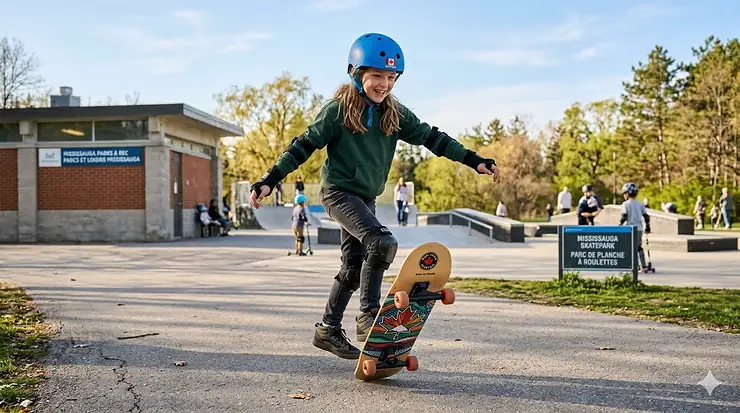
Remember that magical moment when you first stood on a skateboard? The butterflies, the wobbles, the pure joy of rolling forward for the first time? If your 10-year-old is ready to experience that rush, you’re probably wondering which skateboard for 10 year old beginner will set them up for success rather than frustration.
Here’s the thing: choosing the wrong board can turn an exciting new hobby into a box gathering dust in the garage. Too big, and your kiddo’s struggling with control. Too cheap, and they’re fighting wobbly trucks and wheels that barely spin. But get it right? You might just be fostering the next skating legend—or at least a kid who’s building confidence, balance, and a healthy love of outdoor activity.
The Canadian skateboarding scene has exploded in recent years, with skateparks popping up across provinces from Victoria to Halifax. Whether your child dreams of grinding rails at their local park or simply cruising to a friend’s house, selecting the right complete skateboard for tweens Canada matters more than you might think. After researching dozens of boards, testing specifications, and analysing hundreds of Canadian customer reviews, I’ve narrowed down the absolute best options available on Amazon.ca in 2026.
This guide cuts through the marketing fluff to give you real talk about what works for 10-year-olds specifically. We’ll explore deck sizes, bearing ratings, truck widths, and everything else that separates a solid beginner board from overpriced junk. Plus, you’ll get specific product recommendations with current CAD pricing, so you can make a confident purchase decision today.
Quick Comparison Table
Before diving deep into individual reviews, here’s how our top picks stack up against each other:
| Skateboard Model | Deck Size | Price (CAD) | Best For | Rating |
|---|---|---|---|---|
| BELEEV Complete Skateboard | 31″ x 8″ | $55-70 | All-around performance | 4.5/5 |
| WhiteFang Standard Complete | 31″ x 7.88″ | $50-65 | Trick learning | 4.3/5 |
| BELEEV Cruiser Skateboard | 27″ x 8″ | $60-75 | Smooth cruising | 4.4/5 |
| KMX Complete Skateboard | 31″ x 8″ | $45-60 | Budget-conscious families | 4.2/5 |
| ANYFUN Pro Complete | 31″ x 8″ | $55-70 | Style-focused riders | 4.3/5 |
| WhiteFang Mini Cruiser | 22″ x 6″ | $40-55 | Portable option | 4.0/5 |
| Sefulim Complete Skateboard | 31″ x 8″ | $50-65 | Value seekers | 4.1/5 |
💬 Just one click – help others make better buying decisions too! 😊
Top 7 Skateboards for 10 Year Old Beginner: Expert Analysis
1. BELEEV Complete Skateboard – The All-Around Champion
If you’re looking for the sweet spot between quality and affordability, the BELEEV Complete Skateboard delivers exactly what beginning 10-year-olds need. This board has earned its reputation through consistent performance and thoughtful design choices that actually benefit young riders.
Key Specifications:
- Deck: 31″ x 8″ seven-layer Canadian maple
- Trucks: 5″ heavy-duty aluminium alloy
- Bearings: ABEC-7 precision
- Weight capacity: 220 lbs (100 kg)
- Price: $55-70 CAD
The seven-ply Canadian maple construction means this deck can handle the inevitable learning curve tumbles without delaminating or warping. At 10mm thickness, it strikes that ideal balance between flexibility for shock absorption and stiffness for responsive control. Canadian buyers consistently praise how well this board holds up through our harsh weather transitions.
What sets BELEEV apart is the attention to details that matter for beginners. The double-kick concave design isn’t just for show—it helps young feet find their natural position on the board and makes basic maneuvers more intuitive. The waterproof grip tape maintains traction even when your kid forgets to bring the board inside during an unexpected rain shower.
✅ Pros:
- Fully assembled and ready to ride
- Superior build quality for the price range
- Comes with all-in-one T-tool for adjustments
- Smooth 55mm PU wheels handle rough Canadian sidewalks well
❌ Cons:
- Graphics might not appeal to all kids
- Initial bearing break-in period needed for optimal speed
According to reviews from Canadian parents, the BELEEV typically ships within 3-5 business days across most provinces. Many noted their kids were riding confidently within the first week, thanks to the board’s forgiving nature and stable platform.
2. WhiteFang Standard Complete – Best for Trick Learning
The WhiteFang Standard Complete skateboard has become a favourite among families whose kids want to progress beyond simple cruising. This board’s design philosophy centers on creating a platform that grows with your child’s skills.
Key Specifications:
- Deck: 31″ x 7.88″ seven-layer Canadian maple
- Trucks: 5″ aluminium alloy with 95A bushings
- Bearings: ABEC-9 precision
- Wheels: 52mm, 95A hardness
- Price: $50-65 CAD
That slightly narrower 7.88″ width makes a real difference for ten-year-olds learning their first ollies and kickflips. The board feels more responsive to subtle weight shifts, which helps kids understand how their movements translate to board control. The thermal transfer printing means those eye-catching graphics won’t fade after a few months of regular use.
WhiteFang equipped this model with ABEC-9 bearings—and while the ABEC rating debate continues among enthusiasts, these bearings do provide noticeably smoother rolling than cheaper alternatives. Canadian customers report the wheels handle both skateparks and neighbourhood streets admirably, though they’re optimized for smooth surfaces where tricks are typically practiced.
✅ Pros:
- Excellent for learning technical tricks
- Superior bearing quality provides smooth roll
- Minimalist design appeals to style-conscious kids
- Lighter weight makes tricks easier
❌ Cons:
- Harder wheels mean rougher rides on bumpy surfaces
- Narrower deck may feel less stable initially
One Toronto parent mentioned their son went from basic pushing to landing consistent ollies within three months on this board, crediting the WhiteFang’s responsive feel for accelerating the learning curve.
3. BELEEV Cruiser Skateboard – Smooth Neighbourhood Cruising
Not every 10-year-old wants to become the next Tony Hawk. Some kids just want a reliable way to roll to their friend’s house or cruise the neighbourhood. The BELEEV Cruiser Skateboard was built specifically for these young cruisers.
Key Specifications:
- Deck: 27″ x 8″ seven-layer Canadian maple
- Trucks: 5″ aluminium alloy
- Bearings: ABEC-7 steel
- Wheels: 60mm x 45mm, 78A hardness
- Price: $60-75 CAD
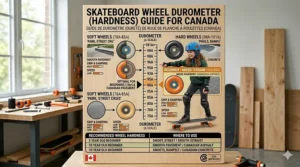
Those softer 78A wheels make a dramatic difference on real-world Canadian streets. While trick boards need harder wheels for quick response, cruising demands wheels that absorb cracks, pebbles, and imperfections. The larger 60mm diameter rolls over obstacles that would stop smaller wheels dead, creating a much more enjoyable riding experience for transportation-focused kids.
The slightly shorter 27-inch deck provides an interesting middle ground. It’s nimble enough for easy maneuvering but long enough to feel stable and planted. This size also makes it easier for kids to carry when they reach their destination. The asymmetric kicktail design allows for quick stops and directional changes without requiring advanced skills.
✅ Pros:
- Exceptionally smooth ride on rough surfaces
- Perfect size for storage and portability
- Lower centre of gravity enhances stability
- Softer wheels provide excellent shock absorption
❌ Cons:
- Not ideal for learning tricks
- Slightly heavier than standard trick boards
Canadian buyers frequently mention this board’s versatility for different seasons. The grippy wheels maintain traction even on slightly damp pavement, extending the skating season into those unpredictable spring and fall months.
4. KMX Complete Skateboard – Best Budget Option
Budget constraints shouldn’t prevent your child from discovering skateboarding. The KMX Complete Skateboard proves you don’t need to spend a fortune to get a functional, safe board for beginners.
Key Specifications:
- Deck: 31″ x 8″ seven-layer Canadian maple
- Trucks: Standard aluminium alloy
- Bearings: ABEC-7
- Wheels: 52mm standard PU
- Price: $45-60 CAD
At this price point, the KMX makes some compromises, but none that significantly impact a beginner’s experience. The trucks aren’t quite as smooth as premium options, but they’re adjustable and serve their purpose well. The bearings might need replacement after heavy use, but for a 10-year-old still figuring out if skateboarding will stick, that’s perfectly acceptable.
What impressed me most about this board is what it gets right. The deck construction uses genuine Canadian maple, ensuring structural integrity. The concave shape provides proper foot placement guidance. The grip tape offers solid traction. These fundamentals matter far more than fancy branding or premium components that beginners won’t fully appreciate yet.
✅ Pros:
- Excellent value for testing interest level
- Real maple construction, not cheap plastic
- Fully assembled and ready to use
- Decent wheel quality for the price
❌ Cons:
- Lower-grade components may need earlier replacement
- Graphics quality isn’t premium
- Trucks may require more frequent tightening
Several Canadian parents mentioned buying this as a “test board” before committing to a premium option, only to find their kids rode it happily for over a year without needing an upgrade.
5. ANYFUN Pro Complete – Style Meets Substance
The ANYFUN Pro Complete skateboard understands that at age 10, style matters almost as much as performance. This board delivers both without compromise.
Key Specifications:
- Deck: 31″ x 8″ seven-layer Canadian maple
- Trucks: 5″ heavy-duty aluminium
- Bearings: High-speed ABEC-7
- Wheels: 52mm, 95A
- Price: $55-70 CAD
The standout feature here is the graphics selection. Using thermal transfer technology, ANYFUN offers designs that actually appeal to kids—no generic flames or outdated imagery. The patterns maintain their vibrancy even after months of use, something Canadian customers specifically appreciate given our varying weather conditions.
Beyond aesthetics, the ANYFUN delivers solid performance characteristics. The seven-layer maple deck provides reliable pop for tricks while maintaining enough flex for comfortable cruising. The double-kick design supports both nose and tail tricks as skills progress. The 95A bushings offer appropriate stiffness for young riders learning to carve and turn.
✅ Pros:
- Exceptional graphic designs kids actually want
- High-quality thermal transfer printing
- Smooth-rolling ABEC-7 bearings
- Comfortable concave for extended sessions
❌ Cons:
- Premium graphics come with slightly higher price
- Limited color options compared to competitors
A Montreal parent shared that their daughter’s ANYFUN board became a conversation starter at the skatepark, helping her connect with other young skaters and build confidence in the community.
6. WhiteFang Mini Cruiser – Ultra-Portable Option
Sometimes the best skateboard for 10 year old beginner isn’t a full-size board at all. The WhiteFang Mini Cruiser offers a compelling alternative for kids who prioritize convenience and casual cruising.
Key Specifications:
- Deck: 22″ x 6″ high-strength polymer
- Trucks: 3.25″ cast aluminium
- Bearings: ABEC-9
- Wheels: 59mm, 83A softness
- Price: $40-55 CAD
This mini format excels in specific scenarios. Kids who walk or bike part of their commute can easily slip this board into a backpack. The smaller footprint makes it less intimidating for cautious beginners. The polymer deck offers surprising durability while keeping weight minimal.
The 83A wheels sit in that sweet spot of softness—enough cushioning for comfortable cruising without feeling sluggish. The larger 59mm diameter helps the small board maintain momentum and roll over typical sidewalk imperfections. Many Canadian buyers note this board performs surprisingly well on everything from smooth concrete to slightly rough asphalt.
✅ Pros:
- Extremely portable and lightweight
- Perfect for mixed-mode transportation
- Smooth ride quality
- Lower price point reduces investment risk
❌ Cons:
- Not suitable for tricks or skateparks
- Smaller platform may feel cramped for larger feet
- Limited longevity as kids grow
This board shines for kids who want skateboarding as a transportation tool rather than a technical sport. It’s the board that actually gets used daily rather than sitting in the garage.
7. Sefulim Complete Skateboard – Solid Value Choice
Rounding out our top seven, the Sefulim Complete Skateboard delivers a no-frills, reliable option that checks all the essential boxes for beginning 10-year-olds.
Key Specifications:
- Deck: 31″ x 8″ seven-layer Canadian maple
- Trucks: Aluminium alloy, standard grade
- Bearings: ABEC-7 precision
- Wheels: 52mm PU
- Price: $50-65 CAD
The Sefulim doesn’t try to revolutionize skateboard design, and that’s actually its strength. It sticks to proven specifications that work well for beginners. The standard 31″ x 8″ dimension provides that comfortable sweet spot for most 10-year-olds. The seven-layer maple offers reliable performance without unnecessary expense.
Where this board really shines is consistency. Canadian customers report receiving boards that match expectations—no surprise quality issues or misleading specifications. The double-kick concave design facilitates proper foot placement from day one. The grip tape maintains texture without being aggressively rough on young hands during falls.
✅ Pros:
- Reliable, consistent quality across units
- Standard specifications work for most beginners
- Responsive customer service from seller
- Suitable for both learning and progression
❌ Cons:
- Generic appearance lacks personality
- Middle-of-the-road components throughout
- No standout features to differentiate it
Think of the Sefulim as the reliable sedan of beginner skateboards. It won’t turn heads at the skatepark, but it will consistently get your kid from point A to point B while they develop their skills.
Understanding Skateboard Anatomy: What Parents Need to Know
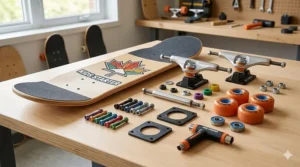
Before we dive deeper into selection criteria, let’s demystify the key components that make up a complete skateboard for tweens Canada. Understanding these elements helps you make informed decisions and troubleshoot issues down the road.
Deck Construction and Materials
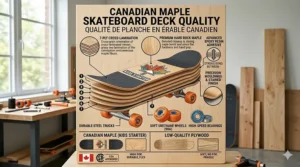
The deck forms your child’s platform, and not all wood is created equal. Seven-layer Canadian maple has become the industry standard for good reason. Each layer is glued with the grain running perpendicular to adjacent layers, creating a strong, flexible structure that can withstand impacts while maintaining enough give to absorb shocks. This construction method, pioneered decades ago, remains unmatched for street skating durability.
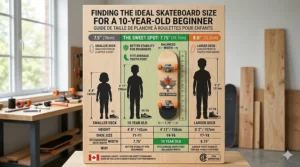
Deck width matters more than most parents realize. For 10-year-olds, the 7.75″ to 8″ range typically works best. Narrower decks respond quicker for tricks but feel less stable. Wider decks provide more foot room and stability but require more force to flip. Most of our recommended boards land in that goldilocks 8″ zone.
Concave refers to the subtle curve from rail to rail across the deck’s width. This isn’t just aesthetics—proper concave helps feet naturally find the sweet spot and provides leverage points for tricks. Beginners benefit from medium concave that guides without restricting foot movement.
ABEC Bearing Rating Explained
Walk into any skate shop and you’ll hear kids obsessing over ABEC ratings. But here’s what most people misunderstand: ABEC (Annular Bearing Engineering Committee) ratings measure precision tolerance, not speed or quality in skating contexts.
The ABEC scale is an industry accepted standard for the tolerances of a ball bearing, developed by the Annular Bearing Engineering Committee of the American Bearing Manufacturers Association. The scale includes five classes using odd numbers from 1 to 9, with higher numbers indicating tighter tolerances.
However, the ABEC rating does not specify many critical factors, such as load handling capabilities, ball precision, materials, material Rockwell hardness, degree of ball and raceway polishing, noise, vibration, and lubricant. For skateboarding specifically, factors like shielding quality and lubricant type often matter more than the ABEC number itself.
Quality ABEC-5 or ABEC-7 bearings from reputable skate brands will serve your 10-year-old perfectly well. Don’t get lured into thinking ABEC-9 bearings are worth double the price—the precision they offer becomes relevant at speeds your child won’t reach while learning basics. Focus instead on bearings that include proper shields to keep out dirt and debris, which plague Canadian skateboarders dealing with sand, salt, and seasonal grime.
Skateboard Truck Width Guide
Trucks are the metal T-shaped components that attach wheels to the deck and enable turning. Proper truck width ensures wheels align flush with or slightly inside the deck edges, optimizing stability and grind clearance.
For an 8″ deck, you want trucks measuring 7.75″ to 8.25″ axle width. Too narrow, and the board feels tippy and unstable. Too wide, and the wheels stick out awkwardly, making tricks harder. Most pre-assembled skateboard starter kit for kids reviews confirm that manufacturers generally pair appropriate truck widths with their decks, but it’s worth double-checking specifications.
Truck tightness dramatically affects ride feel. Beginners typically benefit from slightly tighter trucks that resist twitchy movements while they’re developing balance. As confidence grows, loosening trucks enables sharper turns and more responsive carving. The beauty is this adjustment takes seconds with the included T-tool—no need to buy new components.
How to Choose the Right Skateboard Size for Your 10-Year-Old
Getting the size right makes the difference between a confident first push and a frustrating struggle. Here’s how to determine the ideal board dimensions for your specific child:
Step 1: Measure Your Child’s Shoe Size
Shoe size correlates strongly with ideal deck width. For most 10-year-olds wearing youth sizes 3-6 (roughly 21-23 cm), a 7.75″ to 8″ deck works perfectly. Kids with larger feet may prefer 8″ to 8.25″ for adequate foot coverage.
Step 2: Consider Their Height and Weight
Height influences comfortable stance width. Taller kids benefit from slightly longer decks (32″ instead of 31″) that accommodate a wider stance. Most 10-year-olds fall into the 4’6″ to 5’2″ range, making standard 31″ decks ideal. Weight matters less unless your child exceeds 180 lbs, at which point you should verify the board’s weight capacity.
Step 3: Identify Their Primary Skating Goal
Transportation-focused kids can handle slightly longer cruiser boards (27″-28″) with softer wheels. Trick-oriented kids benefit from standard 31″ boards with medium concave. Kids still deciding should start with all-around 31″ x 8″ complete skateboards that handle both scenarios adequately.
Step 4: Account for Growth
Ten-year-olds grow fast. Buying a board that fits today but feels cramped in six months creates unnecessary expense. Opting for the upper end of appropriate sizing (8″ rather than 7.75″) provides extra growing room without compromising current usability.
Step 5: Test If Possible
If you have access to a local skate shop, having your child stand on different board widths reveals their comfort level. The right board should feel stable without requiring an awkward stance. Their feet should sit comfortably across the width without significant overhang.
Safety First: Essential Protective Gear for Young Skaters
No discussion about skateboard for 10 year old beginner is complete without addressing safety. While skateboarding carries inherent risks, proper protective gear dramatically reduces injury severity.
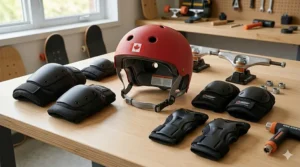
Canadian skateboarding regulations vary by municipality. Many cities require helmets for riders under 18 when skating in public spaces or skateparks. Beyond legal requirements, protective gear simply makes sense for beginners learning balance and control. Here’s what your 10-year-old needs:
Certified Helmet
This is non-negotiable. A proper skateboarding helmet differs from bike helmets—it provides more coverage around the back of the head where skaters typically hit during backward falls. Look for CPSC or ASTM certification labels. The helmet should fit snugly without wobbling, with the front edge about two finger-widths above the eyebrows. Canadian parents should budget $40-80 CAD for a quality youth helmet.
Knee Pads
Knee impacts happen constantly during the learning process. Quality knee pads feature hard plastic caps over foam padding, secured with adjustable straps. They should stay in place during movement without cutting off circulation. Expect to spend $25-40 CAD for a decent pair.
Elbow Pads
Similar to knee pads but shaped for arms. These protect against the instinctive arm-extension during falls. The hard cap should center over the elbow point with padding extending several inches up and down the arm. Budget $20-35 CAD.
Wrist Guards
Many skateboarding instructors consider wrist guards essential for beginners who haven’t yet learned proper falling techniques. The plastic splints prevent the hand from bending backward during impact, significantly reducing fracture risk. Quality guards run $20-30 CAD.
Complete safety gear sets bundling helmet, knee pads, elbow pads, and wrist guards typically cost $80-150 CAD on Amazon.ca. While this adds to the initial investment, it’s money well spent for peace of mind and injury prevention.
Breaking In Your New Board: First Week Tips
Your pre-assembled skateboard deck arrives fully assembled, but that doesn’t mean it’s immediately ride-optimized. Here’s how to set your child up for success during that crucial first week:
Day 1-2: Truck Adjustment
Out of the box, trucks are often set too tight or too loose for individual riders. Have your child stand on the board (on grass or carpet) while you observe how much the trucks compress. Ideal adjustment allows gentle leaning without the board tipping over. Use the included T-tool to tighten or loosen the kingpin nut a quarter-turn at a time. The rear truck can be slightly looser than the front for easier turning.
Day 3-4: Bearing Break-In
New bearings often feel sluggish for the first few hours of riding. This is normal—the lubricant needs to warm and distribute evenly. Encourage your child to spend time just pushing and rolling, even on flat ground. The bearings will noticeably improve after 2-3 hours of use. If they remain slow after a week, they may need cleaning and re-lubrication.
Day 5-7: Grip Tape Adjustment
New grip tape can feel almost too sticky, making it harder to adjust foot position. This sensation fades quickly as the surface wears slightly. Resist the urge to artificially wear down the tape—it provides essential traction. Instead, teach your child to confidently commit to foot placements rather than constantly shuffling.
During this break-in week, focus on basic skills: pushing, balancing while rolling, gentle turning, and safe stopping. These fundamentals build the confidence needed for more advanced maneuvers later.
Best Skateparks in Canada for Beginners
Once your child has their board dialed in, local skateparks provide safe environments to progress skills. Canada boasts some world-class facilities with dedicated beginner areas:
Western Canada:
Vancouver’s Hastings Skatepark features a well-designed beginner bowl with mellow transitions perfect for learning basics. Calgary’s Shaw Millennium Park offers indoor skating year-round, crucial for Canadian winters. The beginner street section provides flat ground with small obstacles.
Central Canada:
Toronto’s Ashbridges Bay Skatepark includes a dedicated beginner area separate from the advanced sections, reducing intimidation factor. Montreal’s Skateplaza TAZ in Papineau is renowned for its welcoming atmosphere and progressive difficulty zones.
Eastern Canada:
Halifax Regional Municipality maintains several free skateparks, with the Clayton Park location particularly beginner-friendly. Ottawa’s Lansdowne Park indoor facility extends the skating season through brutal Canadian winters.
Most municipal skateparks are free to use and welcome all skill levels. Don’t let your child’s beginner status keep them away—skatepark communities generally embrace newcomers willing to learn etiquette and safety principles.
Common Beginner Mistakes to Avoid
After observing countless 10-year-olds start their skateboarding journey, certain mistakes appear repeatedly. Avoiding these pitfalls accelerates progress:
Buying Based on Graphics Alone
Kids naturally gravitate toward cool-looking boards, but appearance shouldn’t override functionality. The flashiest graphics often mask inferior components. Prioritize proper sizing, quality construction, and appropriate specifications. Graphics matter, but they shouldn’t be the deciding factor.
Skipping Safety Gear
Many kids resist wearing pads and helmets, viewing them as uncool. Stand firm on this point. Explain that professional skaters wear protection during serious sessions. Early positive experiences without scary injuries keep kids engaged long-term. One bad fall can end their skateboarding interest permanently.
Pushing Switch Too Early
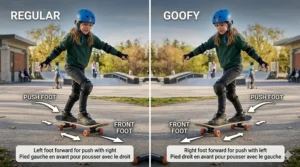
Kids often want to try riding with their opposite foot forward after one session. While eventually learning switch (opposite stance) proves valuable, beginners need to solidify their natural stance first. Encourage at least 2-3 months of consistent practice before experimenting with switch riding.
Comparing Progress to Others
Every child learns at their own pace. Some 10-year-olds land kickflips within months; others need years. Comparing your child’s progress to peers creates unnecessary pressure and discouragement. Celebrate individual milestones rather than racing against arbitrary timelines.
Neglecting Basic Maintenance
Skateboards require minimal maintenance, but ignoring it entirely leads to problems. Teach your child to tighten loose truck bolts, check for cracked deck wood, and occasionally clean bearings. Five minutes of attention monthly prevents bigger issues later.
Teaching Your Child: Learning Resources
Most parents lack skateboarding expertise themselves, which needn’t prevent them from supporting their child’s learning. These resources bridge the knowledge gap:
YouTube Channels:
Braille Skateboarding produces excellent beginner tutorials with clear step-by-step instructions. Aaron Kyro’s teaching style particularly resonates with younger audiences. VLSkate offers shorter, focused tutorials perfect for 10-year-olds’ attention spans. Both channels provide free, high-quality instruction available on any device.
Local Skate Shops:
Many Canadian skate shops offer beginner lessons or can recommend instructors. Supporting local shops also gives your child access to a community of experienced skaters who can provide tips and encouragement. Empire in Montreal and Tiki Room in Regina exemplify shops that actively support youth skating development.
Skateboarding Apps:
Several apps provide trick tutorials, progression tracking, and spot-finding features. While no substitute for actual practice, they help kids visualize techniques and set goals. Most are free or offer freemium models suitable for beginners.
Local Skate Programs:
Check with municipal recreation departments about youth skateboarding programs. Many Canadian cities offer subsidized lessons during summer months, providing structured instruction in safe environments. These programs also help kids connect with peer skaters for mutual motivation.
Maintenance and Longevity Tips
Proper care extends your board’s life significantly, important when skating in Canada’s variable weather conditions:
After Every Rainy Session:
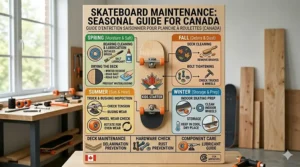
Water damages bearings and delaminates decks. After riding in wet conditions, dry the board thoroughly with a towel. Store it indoors away from moisture. Consider replacing bearings if they develop grinding sounds or resistance—water damage to bearings proves difficult to reverse.
Monthly Bearing Cleaning:
Remove bearings using the axle-nut method (detailed tutorials online). Clean with isopropyl alcohol or bearing-specific solvent. Let dry completely, then apply 1-2 drops of bearing lubricant or speed cream. This 15-minute process keeps boards rolling smoothly.
Seasonal Checks:
Before and after winter storage, inspect the entire board. Check for cracks in the deck, particularly around truck mounting holes. Verify all bolts remain tight. Replace worn grip tape if traction diminishes. Spring represents ideal timing for a thorough tune-up after months of storage.
Storage Considerations:
Store boards horizontally in moderate temperature and humidity. Avoid leaving boards in hot cars or cold garages for extended periods. Temperature extremes warp decks and degrade component integrity. A corner of a bedroom or closet provides ideal storage conditions.
Knowing When to Replace:
Decks typically need replacement after 6-12 months of regular use, sooner if cracks develop. Wheels need replacement when they develop flat spots or chunks. Trucks rarely need replacement unless bent or broken. Bearings should be replaced yearly or when cleaning no longer restores smooth rolling.
Budget Planning: Total Cost Breakdown
Understanding the complete financial commitment helps parents budget appropriately. Here’s realistic Canadian pricing for getting your 10-year-old started:
Initial Purchase:
- Complete skateboard: $45-75 CAD
- Helmet: $40-80 CAD
- Protective pads set: $40-70 CAD
- Skate shoes (optional but recommended): $50-100 CAD
- Total Initial Investment: $175-325 CAD
First-Year Maintenance:
- Bearing lubricant: $10-15 CAD
- Replacement wheels (if needed): $30-50 CAD
- Grip tape replacement: $10-20 CAD
- Miscellaneous (bolts, risers): $10-20 CAD
- Total First-Year Maintenance: $60-105 CAD
Ongoing Annual Costs:
- Deck replacement: $30-50 CAD
- Bearing replacement: $20-40 CAD
- Wheels: $30-50 CAD
- Miscellaneous maintenance: $20-30 CAD
- Total Ongoing Annual: $100-170 CAD
These figures assume moderate use (3-5 sessions weekly). Heavy use increases replacement frequency. Budget options reduce costs while premium equipment raises them. Most families find skateboarding more affordable than many organized sports once past the initial investment.
Seasonal Considerations for Canadian Skaters
Canada’s climate presents unique challenges for year-round skating. Here’s how to adapt:
Spring (March-May):
Spring brings unpredictable weather—perfect skating one day, slushy the next. This season tests equipment durability. Softer wheels (78A-87A) handle wet pavement better than harder versions. Avoid deep puddles that submerge bearings. Post-session drying becomes crucial.
Summer (June-August):
Peak skating season offers consistent conditions. However, extreme heat can soften deck glue, leading to delamination. Store boards in cool places when not in use. Summer also brings increased skatepark usage—arrive early morning to avoid crowds and heat.
Fall (September-November):
Falling leaves create slippery conditions on smooth pavement. Softer wheels again prove advantageous. Fall represents ideal time for intensive practice before winter—mild temperatures without summer heat or winter cold. Take advantage of these perfect conditions.
Winter (December-February):
Most outdoor skating halts across Canada. Indoor skateparks become essential for maintaining skills. For areas without indoor facilities, consider storing the board properly and supplementing with indoor balance/coordination activities. Some dedicated skaters brave Canadian winters with appropriate clothing, though icy conditions prove genuinely dangerous.
Building Confidence: Progression Milestones
Setting achievable goals keeps 10-year-olds motivated through the challenging learning curve. These milestones provide structure:
Week 1-2: Balance and Rolling
Successfully push and glide short distances while maintaining balance represents the critical first skill. Celebrate standing on the moving board for 10 consecutive seconds—this builds crucial confidence.
Week 3-4: Turning and Stopping
Learning to gently lean for turns and drag-stop safely demonstrates real control. Kids who master controlled stopping feel safer pushing boundaries.
Month 2-3: Riding Comfortably
Confidently navigating the neighbourhood, including gentle slopes and minor obstacles, shows genuine progression. This stage makes skateboarding truly useful as transportation.
Month 4-6: First Tricks
Landing their first manual (wheelie) or basic ollie represents a huge milestone. These foundational tricks unlock entire trick categories and dramatically boost confidence.
6 Months+: Style Development
Beyond raw technique, kids begin developing personal style and preferences. Some gravitate toward technical tricks, others toward cruising speed or bowl riding. Supporting their natural inclination keeps engagement high.
Progress isn’t linear—expect plateaus and regression. Patience during frustrating periods prevents discouragement. Every pro skater experienced identical struggles during their learning journey.
✨ Don’t Miss These Exclusive Deals!
🔍 Take your skateboarding experience to the next level with these carefully selected products available in Canada. Click on any highlighted skateboard to check current pricing and availability on Amazon.ca. These boards will help your child create authentic skateboarding memories they’ll cherish forever!
FAQ Section
❓ What size skateboard should a 10 year old beginner use in Canada?
❓ How much should I spend on a first skateboard for my child in Canada?
❓ What's the difference between ABEC-7 and ABEC-9 bearings for kids' skateboards?
❓ Are skateboard helmet laws different across Canadian provinces?
❓ How long do beginner skateboards typically last with regular use?
Conclusion: Setting Your Child Up for Success
Choosing the right skateboard for 10 year old beginner doesn’t require a PhD in materials science or decades of skating experience. Armed with the information in this guide, you can confidently select a board that balances quality, safety, affordability, and your child’s specific needs.
The seven skateboards featured here represent the best options currently available to Canadian families in 2026. Whether your child dreams of becoming the next skateboarding champion or simply wants a fun way to get around the neighbourhood, these boards provide solid foundations for their journey.
Remember that the perfect board varies by individual—the BELEEV Complete Skateboard might be ideal for one child while another thrives on the WhiteFang Mini Cruiser. Consider your child’s goals, physical characteristics, and skating environment when making the final decision.
Beyond equipment, your support and encouragement matter more than any board specification. Skateboarding builds resilience, creativity, and confidence that extend far beyond the skatepark. The falls, frustrations, and eventual successes teach valuable life lessons about persistence and growth mindset.
Take time to learn alongside your child. Understanding basic skateboarding concepts helps you provide meaningful feedback and realistic expectations. Whether that means watching tutorial videos together, visiting the skatepark, or simply listening to their skating stories, your involvement amplifies their enjoyment.
Most importantly, prioritize safety without undermining confidence. Helmets and pads protect bodies while allowing kids to push boundaries within reasonable limits. Finding that balance between safety and freedom represents the art of parenting young skaters.
The investment you’re making today—both financial and emotional—may spark a lifelong passion that keeps your child active, engaged, and connected to positive communities. Or it might be a summer hobby that fades by fall. Either outcome is perfectly fine. What matters is giving them the opportunity to discover what skateboarding offers.
So go ahead, click through to Amazon.ca, select the board that feels right, and get your 10-year-old rolling. The sidewalks, skateparks, and neighbourhood streets of Canada await. Who knows? You might just be fostering the next great Canadian skater.
Recommended for You
- Best Value Youth Mountain Bikes 2026: 7 Top Picks Canada
- 7 Best 24 Inch vs 26 Inch Bike for 12 Year Old in Canada 2026
- 7 Best Mountain Bikes for 10 Year Olds Canada 2026
Disclaimer: This article contains affiliate links to Amazon.ca. If you purchase products through these links, we may earn a small commission at no additional cost to you.
✨ Found this helpful? Share it with your friends! 💬🤗
