
In This Article
Congratulations. You’ve linked your turns, survived your first blue run, and officially graduated from the bunny hill. That’s genuinely exciting. But here’s the part most Canadian riders get wrong: they keep riding the same soft, forgiving beginner board long after they’ve outgrown it, wondering why their progress has stalled.
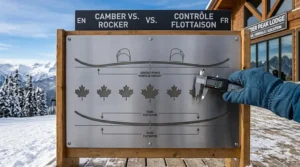
An intermediate snowboard setup isn’t just about buying a new board — it’s about matching your gear to where your riding is actually going. A proper intermediate snowboard setup balances forgiveness with responsiveness, giving you room to push harder without punishing every small mistake. Think of it as moving from training wheels to a proper road bike. The extra control unlocks everything.
In Canada, where conditions can swing from Whistler’s wet coastal powder to Banff’s dry Rockies hardpack to the icy groomers of Eastern Ontario — all in a single season — choosing the right setup matters even more. A board dialled in for one condition might fight you in another.
In this guide, I’ll walk you through seven real boards available on Amazon.ca (verified for Canadian availability), explain exactly what each setup means for your progression, and give you a practical binding angle guide you can apply today. Whether you’re a teen riding Tremblant every weekend or an adult re-discovering your edge in Kelowna, there’s a setup here for you. All prices are in CAD.
Quick Comparison: Top 7 Intermediate Snowboard Setups at a Glance
| Board | Flex | Profile | Best For | Price Range (CAD) | Amazon.ca Available? |
|---|---|---|---|---|---|
| Burton Ripcord | Soft-Medium | Flat Top | All-Mountain Progression | $400–$550 | ✅ Yes |
| Salomon Pulse | Soft | Rocker/Camber | Budget Beginners-Intermediate | $300–$420 | ✅ Yes |
| CAPiTA Defenders of Awesome | Medium | Hybrid Camber | Park & All-Mountain | $550–$700 | ✅ Yes |
| K2 Antidote | Medium | Rocker/Camber | Versatile All-Mountain | $450–$600 | ✅ Yes |
| Rossignol Evader | Soft-Medium | AmpTek Rocker | All-Mountain, Cold Conditions | $300–$430 | ✅ Yes |
| Nitro Prime | Soft | Flat/Rocker | Budget Progression | $280–$380 | ✅ Yes |
| Nidecker Play | Soft-Medium | Rocker/Flat/Rocker | Versatile Learning Tool | $380–$500 | ✅ Yes |
The comparison above tells an interesting story. Notice how the CAPiTA and K2 land squarely in the mid-range price zone while offering genuine intermediate performance — they’re the sweet spot for Canadian riders who want progression without the premium price tag. If you’re shopping on a tighter budget, the Nitro Prime and Rossignol Evader deliver surprising capability under $400. The Burton Ripcord is the safest all-rounder for Canadian resort conditions, but if park riding is your goal, the CAPiTA Defenders of Awesome is worth the extra investment.
💬 Just one click — help others make better buying decisions too! 😊
✨ Don’t Miss These Exclusive Deals!
🔍 Take your intermediate snowboard setup to the next level with these carefully selected boards and bindings. Click on any highlighted item to check current pricing and availability on Amazon.ca. These picks will help you progress faster and ride with more confidence on Canadian slopes!
Top 7 Intermediate Snowboard Setups: Expert Analysis
1. Burton Ripcord Flat Top Snowboard — The Canadian All-Rounder
The Burton Ripcord is the first board I’d put in the hands of any Canadian rider moving from beginner to intermediate, and there’s a clear reason for that. Its Flat Top™ profile — essentially flat between the bindings with early-rise tip and tail — creates a ride that’s stable and predictable without being completely lifeless. That matters a lot on Eastern Canada’s icy groomers, where a fully rockered board can feel squirrely at speed.
Key specs worth knowing: the soft-medium flex means you won’t get bucked around on rough snow, and the directional shape (longer nose, shorter tail) gives you the float and confidence you need when the hill opens up. The Easy Bevel technology subtly lifts the edges off the snow, so catching an edge mid-turn — the bane of every intermediate rider’s existence — becomes far less likely. For Canadian conditions, this is a meaningful advantage in late-season slushy spring snow.
This is my go-to recommendation for riders at Whistler Blackcomb or Tremblant who spend most of their time on blue and black groomers but occasionally venture off-piste. It’s not a board that will challenge you to grow, exactly, but it won’t get in your way while you grow — which is exactly what intermediate progression boards should do.
Canadian buyers note: the Ripcord is Prime-eligible on Amazon.ca and ships across most provinces, including remote areas in BC and Ontario, though northern territories may see extended delivery times.
✅ Compatible with almost all binding systems (non-Burton bindings included)
✅ Performs consistently in cold Canadian temperatures down to -20°C
✅ Available in multiple sizes from 148–162 cm
❌ Won’t satisfy riders who want to push into technical terrain aggressively
❌ The soft flex can feel “underpowered” once you’re consistently riding advanced runs
Price range: around $400–$550 CAD — strong value for a Burton at this performance level.
2. Salomon Pulse Snowboard — Budget-Friendly Progression in Canada
The Salomon Pulse is one of those boards that gets overlooked because of its modest price, but that’s a mistake. Salomon has been making world-class ski equipment since the 1970s, and they brought that materials knowledge directly to snowboards. The Pulse uses a Rocker/Camber/Rocker profile (sometimes called “banana rocker”) — rocker in the tip and tail for catch-free turns, camber underfoot for edge control and pop. For an intermediate rider, that balance is genuinely useful on variable Canadian snow.
The softer flex makes it accessible, but don’t mistake that for sluggishness. The poplar wood core gives it a lively, energetic feel that encourages you to experiment. Where the Pulse shines is on mid-mountain terrain — not the bunny hill, not double-blacks, but that broad middle ground of blue and low-black runs where most intermediate riders spend their season. On groomed runs at places like Big White or Mount Norquay, it rewards confident riding with genuine responsiveness.
Canadian feedback on this board consistently highlights its value-to-performance ratio. Riders note it holds up well through full Canadian winters without delamination issues — a legitimate concern with cheaper boards exposed to freeze-thaw cycles.
✅ One of the most affordable intermediate options on Amazon.ca
✅ Rocker tip and tail handles Canadian spring slush and soft snow beautifully
✅ Great for teens or adults who want to progress without a major investment
❌ Camber underfoot requires slightly more skill than a fully rockered board
❌ Limited edge grip on hard ice compared to stiffer competitors
Price range: $300–$420 CAD — the best bang-for-your-buck pick on this entire list.
3. CAPiTA Defenders of Awesome Snowboard — Park-Ready for Intermediate Canadian Riders
If you’re the kind of intermediate rider who gravitates toward the terrain park at Revelstoke or Mont-Sainte-Anne, the CAPiTA Defenders of Awesome is the board most worth your attention. This is a legitimately award-winning all-mountain/freestyle board that punches well above its price class, and it does so without requiring expert-level skills to unlock its potential.
The hybrid camber profile — camber between the bindings, flat underfoot, rocker at the tips — gives you the best of three worlds: pop for ollies and jumps, stability for landing, and forgiveness for when your takeoff isn’t perfect (which, as an intermediate rider, is often). The Defenders of Awesome uses a super-light poplar and paulownia wood core with carbon reinforcement, which translates to real-world performance: snappy ollies, solid landings at speed, and a board that doesn’t feel like dead weight on flat sections.
What most Canadian buyers overlook is how well this board performs outside the park. On morning hardpack, it carves cleanly. In afternoon slush, the rocker tips stop it from submarining. This is a genuinely versatile intermediate setup if you’re equally drawn to groomed runs and features.
✅ Award-winning freestyle performance at an intermediate price point
✅ Light weight — noticeably easier to manoeuvre than heavier all-mountain boards
✅ True twin shape means it rides switch naturally
❌ Not the best choice if you mainly ride off-piste powder
❌ Medium flex may feel slightly demanding for newer intermediates
Price range: $550–$700 CAD — premium but justified for riders serious about park progression.
4. K2 Antidote Snowboard — The Indecisive Rider’s Best Friend
The name says it all, really. The K2 Antidote is designed for riders who can’t decide — and honestly, most intermediate Canadian snowboarders are in exactly that position. Should I focus on park? Freeride? Carving? The Antidote’s answer: why choose? Its A1 core, made from bamboo, aspen, and paulownia, delivers exceptional snap for ollies while the rocker/camber profile keeps powder runs manageable and groomers responsive.
What I find particularly clever about this board is the squared-off tail combined with the rocker. It looks like a freeride board, so you expect it to be directional and punishing — but it actually rides switch surprisingly easily, which is a key skill for intermediate riders to develop. If you’re progressing at Ontario resorts like Blue Mountain or Horseshoe, where you’re constantly switching up terrain types, this adaptability pays off run after run.
At this price range in CAD, it also offers something genuinely unusual: the stiffer flex (for a mid-range board) means it performs well at higher speeds on hardpack ice, which is an everyday reality at most Eastern Canadian ski areas.
✅ Bamboo/aspen/paulownia A1 core — sustainably sourced and genuinely responsive
✅ Rides switch better than most “directional-looking” boards
✅ Handles Canadian hardpack and ice better than most rocker designs
❌ Not the most intuitive board for riders coming directly from beginner soft-flex setups
❌ Tail rocker limits charging ability in heavy powder
Price range: $450–$600 CAD — solid mid-tier investment for riders who want to explore everything.
5. Rossignol Evader Snowboard — Cold-Weather Reliability, Canadian Approved
Rossignol has been crafting winter sports equipment since 1907, and the Evader is a strong expression of that institutional knowledge applied to the modern intermediate rider. The AmpTek Auto-Turn Rocker provides exceptional maneuverability — particularly on steep, icy runs where you need to make quick adjustments — while the directional all-mountain flex keeps you stable when speed builds.
Here’s what makes the Evader especially relevant for Canada specifically: 98% of Rossignol’s wood snowboard cores come from sustainably harvested forests, and the soft flex is calibrated for comfortable performance even when temperatures drop below -15°C — a common reality at Banff and Lake Louise in January and February. Cold temperatures make flex patterns stiff and unresponsive on cheaper boards. The Evader maintains its character throughout.
For teens progressing through their second or third season, this is an excellent choice. It’s forgiving enough that mistakes don’t end runs, but responsive enough that good technique gets rewarded with satisfying carves. Canadian deals on Rossignol boards appear regularly on Amazon.ca, particularly in the $300–$430 CAD range — making this one of the best-value setups on the list.
✅ AmpTek rocker excels on steep, icy Canadian groomers
✅ Sustainably sourced wood core — a bonus for eco-conscious Canadian buyers
✅ Performs well in very cold temperatures (-15°C and below)
❌ Less park-friendly than CAPiTA or Salomon options
❌ Directional shape limits switch riding development
Price range: $300–$430 CAD — outstanding value for what you’re getting.
6. Nitro Prime Snowboard — The Budget Progression Workhorse
The Nitro Prime isn’t flashy, and it doesn’t pretend to be. What it is is an honest, well-built progression board from a brand that’s been making snowboards since 1990. The Flat/Rocker profile is notably catch-free, which helps intermediate riders build confidence without the fear of unexpected edge catches on variable snow.
For Canadian riders on a tight budget — students, families outfitting multiple kids, or adults returning to snowboarding after a long break — the Nitro Prime sits in a price range that makes the intermediate snowboard setup conversation much more accessible. Don’t mistake affordability for poor construction, though: Nitro uses quality materials and the Prime holds up through hard Canadian seasons without unusual wear.
The soft flex makes it ideal for learning to butter and press, foundational freestyle skills that translate directly to park riding later. If your home mountain is a smaller Ontario or Quebec hill where terrain parks are the main attraction, this board gives you the tools to develop those skills without spending mid-range money.
✅ Most affordable board on this list that still delivers genuine intermediate performance
✅ Catch-free Flat/Rocker profile builds confidence quickly
✅ Ideal for teens or budget-conscious adult beginners stepping up
❌ Lacks the responsiveness to grow with riders into advanced terrain
❌ Limited edge grip on hard ice — less ideal for groomed Eastern Canada conditions
Price range: $280–$380 CAD — the entry point for serious intermediate progression.
7. Nidecker Play Snowboard — Swiss Precision for the Undecided Canadian Rider
Nidecker is the oldest company still making snowboards today, with roots stretching back over a century in Swiss manufacturing. The Play is their answer to the rider who genuinely doesn’t know where their snowboarding journey is headed — and that’s a surprisingly useful board to exist. The Rocker/Flat/Rocker profile splits the difference between stability (the flat section underfoot) and forgiveness (the rocker tips), creating a ride that’s neither pushy nor lifeless.
What sets the Play apart is how consistently it performs across terrain types. Take it to a powder day at Revelstoke — the rocker tips float. Take it to an icy groomed run in Ontario — the flat underfoot section holds an edge reliably. This versatility is especially valuable for intermediate riders who don’t yet know what kind of snowboarder they want to become, which honestly describes most people in their second or third season.
On Amazon.ca, the Nidecker Play is Prime-eligible and generally available from mid-October through to March — ideal for the Canadian shopping window before ski season peaks.
✅ Rocker/Flat/Rocker profile works in powder, groomers, and park alike
✅ Swiss manufacturing quality — durable through multiple Canadian seasons
✅ Available in a wide size range to fit teens and adults
❌ “Jack of all trades” means it doesn’t excel in any single discipline
❌ Slightly heavier than lighter-core boards at the same price
Price range: $380–$500 CAD — a thoughtful mid-range pick for riders still finding their style.
Binding Angle Setup Guide for Intermediate Snowboarders in Canada
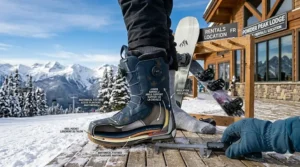
Getting your binding angles right might be the single most impactful upgrade you can make to your intermediate snowboard setup — and it costs nothing. Yet most intermediate riders are riding the factory default angles their shop set years ago and wondering why turns feel awkward.
Understanding the Basics
Your binding angle determines how your hips, knees, and ankles align on the board. Set them wrong and you’ll experience unnecessary knee strain or poor turning power. Set them right and the whole system clicks into place. According to data from surveys across over 5,000 riders, the most common setup uses a front foot angle between +13° and +18° and a back foot between -9° and -15° — a configuration called “duck stance.”
Intermediate Binding Angle Chart
| Riding Style | Front Angle | Rear Angle | Stance Width | Notes |
|---|---|---|---|---|
| All-Mountain (most common) | +15° to +18° | -3° to -9° | Shoulder width | Best for Canadian resort riding |
| Freestyle / Park | +12° to +15° | -12° to -15° | Shoulder width + 2–3 cm | Ideal for switch riding and park |
| Carving / Freeride | +18° to +24° | 0° to +6° | Slightly narrower | Better edge power on hardpack |
| Duck Stance (beginner) | +15° | -6° | Shoulder width | Classic starting point |
As a practical matter: start with +15° front and -6° rear. Ride a full day. If your back knee feels strained, bring the rear angle closer to zero. If you want more switch control, push the rear angle more negative. The total differential between front and back angles should never exceed 30° — that’s the threshold where knee stress starts accumulating.
Stance Width: The Quick Method
Three methods work well:
- Shoulder width method: measure shoulder width and use that distance between bindings (typically 52–58 cm / 20.5–23 inches for most adults)
- Shin length method: measure from your heel to just below your knee — this distance approximates your ideal stance width
- Jump test: jump off a chair and note where your feet naturally land — that’s your body’s preferred stance
For Canadian riders in colder conditions, a slightly wider stance increases stability when snow is variable or icy. Many riders visiting Whistler or Revelstoke widen their stance by 2–3 cm (about 1 inch) compared to their groomer setup — it helps absorb the unpredictable terrain transitions.
How to Choose Your Intermediate Snowboard Setup in Canada: 7 Steps
Choosing an intermediate snowboard setup doesn’t have to be overwhelming. Work through these steps honestly and the right board becomes obvious:
- Identify your primary terrain. Are you mostly on groomed runs (all-mountain board), terrain park (twin/freestyle board), or mixed conditions including off-piste? Most Canadian resort riders benefit from an all-mountain directional twin shape.
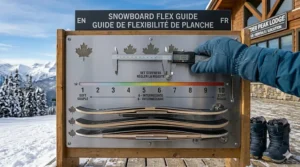
- Choose flex honestly. Intermediate riders often overestimate their skill level and buy boards that are too stiff. A medium flex (rating 4–6 on a 1–10 scale) is appropriate for most second-year to third-year riders. Reserve stiff boards (7+) for those genuinely riding advanced terrain with confidence.
- Size by weight, not height. The old height-minus-10-cm rule is outdated. Your weight matters more: heavier riders need longer boards for float and stability; lighter riders (including teens) need shorter boards for easy turn initiation. Most brands publish weight range charts — use them.
- Consider the Canadian conditions you ride most. East (Ontario, Quebec): icy groomers dominate → prioritize edge hold, medium-to-stiff flex. West (BC, Alberta): varied snow, powder days → prioritize float, versatile rocker/camber profiles.
- Set a realistic budget in CAD. Budget tier ($280–$420): Nitro Prime, Rossignol Evader, Salomon Pulse. Mid-range ($420–$600): Burton Ripcord, K2 Antidote, Nidecker Play. Premium ($600+): CAPiTA Defenders of Awesome.
- Factor in bindings and boots. A board is only as good as its bindings. Plan to spend $150–$300 CAD on quality intermediate bindings and $250–$450 CAD on boots. Your total setup budget should account for all three components.
- Verify Amazon.ca availability before buying. Not all products on Amazon.com ship to Canada, or they ship at significant added cost. All seven boards in this guide are verified available on Amazon.ca, with Prime shipping to most Canadian provinces.
Intermediate Snowboard Setup: Real Canadian Rider Profiles
Here’s where abstract advice becomes practical. Let me match real-world Canadian rider profiles to the boards in this guide.
Profile 1 — The Ontario Weekend Warrior Jamie, 28, rides Blue Mountain and Snow Valley on weekends, mostly groomed blues and occasional blacks. Budget: $700–$900 CAD for board + bindings.
Jamie’s home mountains are known for icy, groomed conditions with limited powder days. The K2 Antidote is the pick here — its stiffer flex handles hardpack well, and the versatility means Jamie doesn’t need to buy a second board when the occasional soft snow day happens. Pair with medium-stiffness bindings (Union Contact, for example) and a forward-leaning stance (+18°/-6°) for carving power.
Profile 2 — The BC Teen Park Rider Taylor, 16, rides Whistler and Cypress two or three days per week, obsessed with the terrain park. Budget: $500–$650 CAD for board only.
Taylor needs a twin board with lively pop and switch capability. The CAPiTA Defenders of Awesome is the obvious recommendation — it’s widely praised in the Canadian snowboarding community for exactly this use case. Set bindings in a duck stance (+15°/-15°) with a slightly wider-than-shoulder stance width for maximum switch confidence.
Profile 3 — The Alberta All-Mountain Adult Returning to Snow Morgan, 42, skied for years, tried snowboarding once ten years ago, now committed to making it work. Banff and Lake Louise home mountains. Budget: $400–$500 CAD.
Morgan needs something forgiving but not babying — a board that rewards the athletic instincts from years of skiing without feeling like it’s fighting those instincts. The Burton Ripcord is the match: directional shape feels intuitive for former skiers, the soft-medium flex rewards confident carving, and the Flat Top keeps edges from grabbing unexpectedly on hard Rockies snow.
Common Mistakes Canadian Intermediate Riders Make When Buying a Setup
You’d be surprised how many riders invest in the wrong setup and spend a whole season fighting their gear. Here are the pitfalls worth knowing before you open your wallet:
Mistake 1: Buying a board rated “beginner-intermediate” when you’re actually intermediate. Most boards marketed as beginner-intermediate max out at very soft flex ratings (2–3 out of 10). If you’re consistently riding blue and black runs, you’ve likely outgrown those boards. Look for boards rated intermediate-to-advanced with medium flex — they give you room to grow without feeling unstable.
Mistake 2: Ignoring Canada-specific conditions. American reviews dominate snowboarding content online, and many of them test gear at resorts with consistent powder and mild cold. Canadian riders — particularly in Ontario, Quebec, and Atlantic provinces — deal with ice, heavy wet snow, and freeze-thaw cycles that demand better edge hold and more durable base materials. Prioritize boards with quality sintered bases and good edge specifications for these conditions.
Mistake 3: Skimping on boots while overspending on the board. Your boots are the single biggest contributor to comfort and control. A $700 board paired with $120 rental-quality boots will underperform compared to a $400 board with quality $350 boots. Aim for a boot flex of 4–6 for intermediate riding, and ensure the boot fits your foot shape precisely — heel lift is the enemy of controlled turning.
Mistake 4: Not verifying Amazon.ca availability vs. Amazon.com listings. Many cross-border shoppers see a great deal on Amazon.com and assume it ships to Canada at the same price. Import duties, brokerage fees, and exchange rates often make those deals less attractive in practice. All seven boards in this guide are verified on Amazon.ca with standard Canadian Prime shipping eligibility.
Mistake 5: Setting binding angles from a YouTube tutorial filmed in the US. American and Canadian riding styles differ in subtle but real ways — particularly in Eastern Canada where hardpack and ice dominate. Setups optimized for Utah powder won’t always translate. The binding angle chart earlier in this guide is calibrated for Canadian resort conditions.
Canadian Safety Standards for Snowboard Helmets & Gear
Before heading to Whistler, Tremblant, or any of Canada’s over 270 ski and snowboard areas, it’s worth knowing what your gear needs to meet legally and practically. According to Health Canada, accepted safety standards for ski and snowboard helmets in Canada include EN 1077, ASTM F2040, Snell RS-98, and CSA Z263.1 — look for one of these certification marks on any helmet you purchase on Amazon.ca.
The Public Health Agency of Canada tracks snowboarding injury data through the Canadian Hospitals Injury Reporting and Prevention Program (CHIRPP), and the data is consistent: helmet use significantly reduces the severity of head injuries. Health Canada also recommends having bindings professionally checked once per year — poorly adjusted bindings are listed as a specific safety risk for snowboarders.
For intermediate riders specifically, wrist injuries remain the most common injury type. A pair of wrist guards worn under gloves (widely available on Amazon.ca in the $30–$60 CAD range) is one of the highest-value safety investments you can make at this stage of your progression.
Board leashes are also required at most Canadian ski areas. Make sure your intermediate snowboard setup includes a functioning leash that attaches your front binding to your board — this is both a safety regulation and a requirement of most lift tickets.
All Mountain vs. Freestyle Snowboard for Teens in Canada
This is one of the most searched questions in Canadian snowboarding circles, and it deserves a clear answer. Here’s the practical breakdown:
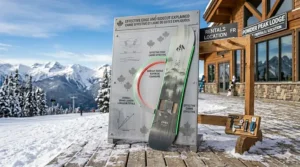
All-Mountain boards (like the K2 Antidote, Rossignol Evader, Burton Ripcord) are designed to perform acceptably in every terrain type — groomed runs, off-piste, light park, even light powder. For most Canadian teens who ride varied terrain and don’t have a clear stylistic preference yet, this is the safer default choice. The directional or directional-twin shape gives you float in soft snow and edge control on hardpack.
Freestyle boards (like the CAPiTA Defenders of Awesome, Salomon Pulse) are true-twin shapes with softer, more symmetrical flex. They ride switch effortlessly, pop higher off features, and feel more “playful” on flat ground. The trade-off is that they sacrifice some directional speed and powder float. For a Canadian teen obsessed with terrain parks at their home hill, this is the right category.
The honest advice: If you ride less than 20 days per season, get an all-mountain board — it rewards varied experience. If you ride 30+ days per season and your Instagram feed is entirely park clips, a freestyle board accelerates your park progression meaningfully.
A quick note for parents buying for teens: choose a board that matches current ability, not aspirational ability. An intermediate-advanced board handed to a genuine beginner creates frustration and risk. The boards in this guide are all genuinely appropriate for riders in their second to fourth season.
Boot Flex Rating Chart for Intermediate Snowboarders
| Flex Rating | Feel | Best For | Notes |
|---|---|---|---|
| 1–3 (Soft) | Very forgiving, easy flex | True beginners | Most intermediates will find this limiting quickly |
| 4–5 (Medium-Soft) | Responsive but comfortable | Intermediate all-mountain, teens | The sweet spot for second-year riders |
| 6–7 (Medium-Stiff) | Supportive, responsive | Intermediate-advanced | Ideal for riders pushing into harder terrain |
| 8–10 (Stiff) | Aggressive, powerful | Expert carvers and racers | Not appropriate for intermediate riders |
For most Canadian intermediate riders, a flex rating of 4–6 provides the best balance. Cold temperatures affect boot flex significantly — a boot rated 5 in a shop at 20°C may feel more like a 7 on a -15°C Whistler morning. Brands that use thermal-responsive foam (often noted in boot descriptions as “cold-weather flex”) compensate for this, and are worth seeking out for riding in Alberta or Northern BC.
FAQ: Intermediate Snowboard Setup Canada
❓ What is the best intermediate snowboard setup for Canadian conditions in 2026?
❓ What binding angles should I use for an intermediate snowboard setup?
❓ Can I buy intermediate snowboards on Amazon.ca and get free shipping in Canada?
❓ What is the difference between all mountain vs freestyle snowboard for teens in Canada?
❓ Does Health Canada have safety requirements for snowboard helmets?
Conclusion: Dial In Your Intermediate Snowboard Setup This Season
Your intermediate snowboard setup is the foundation of every run you’ll take this Canadian winter. Get it right — the right board flex, the right binding angles, the right boot flex for your home mountain’s conditions — and progression feels natural and exciting. Get it wrong and you’ll spend the season battling gear that doesn’t match where you actually are.
From the budget-friendly Nitro Prime to the park-hungry CAPiTA Defenders of Awesome, the seven boards in this guide cover every intermediate Canadian rider type. Use the binding angle chart, the stance width guide, and the rider profiles to zero in on your setup before you click “add to cart” on Amazon.ca.
One final thought: gear matters, but it doesn’t replace time on snow. The best intermediate snowboard setup is the one you ride consistently, in real Canadian conditions, through a full season. Buy smart, get out there, and build those runs.
✨ Don’t Miss These Exclusive Deals!
🔍 Check current pricing and availability on Amazon.ca for all seven boards listed in this guide. Prices change frequently — check now for the best intermediate snowboard setup deals before the season inventory sells out!
Recommended for You
- Best 7 Agility Ladder and Cones Training Sets Canada 2026: Transform Your Athletic Performance
- Top 7 Portable Fitness Gear Teens Love in Canada 2026
- Best Outdoor Gym Equipment Canada 2026: 7 Expert Picks
Disclaimer: This article contains affiliate links. As an Amazon Associate, I earn from qualifying purchases. If you purchase products through these links, we may earn a small commission at no additional cost to you. All prices mentioned are approximate CAD ranges at time of research — check Amazon.ca for current pricing. Products verified available on Amazon.ca as of May 2026.
✨ Found this helpful? Share it with your friends! 💬🤗
